



Editor’s note: This story was updated June 9.
WASHINGTON — Maybe it was only a matter of time.
On June 3, the U.S. Department of Agriculture’s Animal and Plant Health Inspection Service confirmed the detection of a New World screwworm (NWS) in a 3‑week‑old calf located in Zavala County, Texas, a rural county in the Lone Star State’s Rio Grande Plain. The flesh‑eating fly larvae were found burrowing into the young animal’s navel.
Then a second case emerged two days later in another calf about 6 miles from the first detection. By June 8, the tally of affected animals had risen to four, including a goat in Gillespie County, Texas, and a dog in Lea County, New Mexico, classified as the first U.S. case there. USDA has launched an epidemiological investigation and is inspecting other animals that share the household with the dog. Officials urge animal owners to check livestock and pets daily for wounds, maggots or lesions and to report any suspicious cases immediately.
A press release after the initial detection said the parasite was forecast to cross into the United States as early as last year, but that aggressive containment, tighter surveillance and new sterile‑fly operations held the line, at least long enough to prepare.
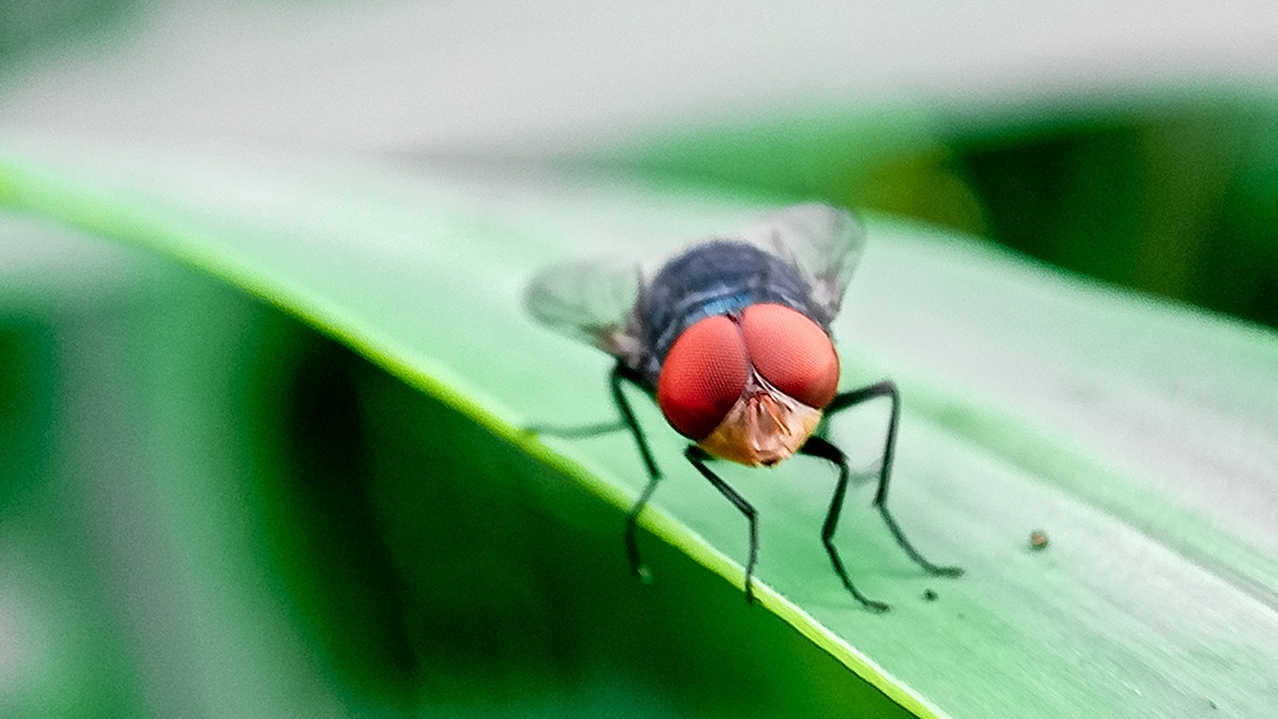
Like something out of Ridley Scott’s Alien universe, the parasitic fly’s life cycle is gruesome: females lay eggs in an animal’s wounds or body openings, and when the larvae hatch, they feed on live tissue. As the maggots burrow deeper into the flesh of warm‑blooded animals, they can wreak havoc, causing severe tissue damage and, without treatment, often prove fatal.
On a press call last week, officials spoke in language that often sounded more like a military operation than a public health update. Still, USDA officials emphasized that the situation, while serious, remains limited. Secretary Brooke Rollins said the agency and Texas officials moved immediately once the suspect case, in the small town of La Pryor, Texas, came in.
“We’ve established a 20-kilometer control area, a zone around the detection and [are] implementing quarantines, movement controls and surveillance in this area,” she said, noting that a “unified incident command team” with the Texas Animal Health Commission was on the ground. Rear Adm. Tim Schmoyer, who leads USDA’s Screwworm Directorate for APHIS, stressed that screwworm cases are manageable when caught early.
“The screwworm can be detected easily, and it can be treated,” he said, noting that the parasite is not a danger to the food supply.
In South Texas, when the first detection was made, Schmoyer said USDA had 26 personnel deployed and could “ramp up very easily and very quickly” if needed, backed by trailers, traps, lab supplies and ground‑release chambers for sterile flies. State officials stressed the importance of keeping the quarantine zone intact.
“It is very important that all animal owners understand the importance of not moving their animals out of this zone at this time,” said Bud Dinges, state veterinarian and executive director of the Texas Animal Health Commission. “No movement of warm-blooded species will be allowed out of this zone without an inspection by an animal health official.”
Unleashing the swarm. The New World screwworm was eradicated from the United States in 1966, and if officials have their way, it won’t be back for long. They are turning again to the method that worked once before: mass releases of sterile flies to crash wild populations before they can take hold.
USDA has expedited the targeted release of millions of sterile New World screwworm flies, stepping up both air and ground operations in South Texas. In the immediate La Pryor response zone, about 4 million sterile flies are being dropped by plane, and another roughly 4 million sterile flies are expected to emerge from pupae released on the ground. Those releases add to a separate aerial sterile‑fly program that was already in full swing along the border before this case was detected.
The swift federal and state mobilization followed more than a year of mounting anxiety as NWS crept steadily north through Mexico, breaching what had long been considered a reliable sterile‑fly barrier before closing in on the border.
A case last July in Veracruz, and later a confirmed infection in Sabinas Hidalgo, in the state of Nuevo León — less than 70 miles from Texas and on a major trade route — prompted the USDA to repeatedly halt livestock imports, question the reliability of Mexican surveillance data and label the parasite’s advance a “significant concern” as well as a national security issue.
Growing threat. Officials have been wary of the screwworm threat for some time. On June 1, Texas state lawmaker Don McLaughlin issued a letter to Gov. Greg Abbott, claiming the insects were just a mile away.
“For more than a year, I have joined Texas ranchers in sounding the alarm while federal regulators have moved at a snail’s pace,” he wrote. “Today, the threat is no longer hundreds of miles away. It is at our doorstep. Texas cannot afford to wait until the New World Screwworm crosses the border and begins devastating our livestock and wildlife populations.”
But at a news conference the next day, June 2, The Texas Tribune reported that Rollins refuted McLaughlin’s assertion.
“When that false information gets out, it causes significant panic,” she said. “And rightly so, especially if it’s coming from elected officials and the media.”
She acknowledged that a case had been detected just 25 miles from Texas and pledged stepped‑up communication. Meanwhile, behind the scenes, federal officials were already bracing for what was confirmed the next day: the New World screwworm had reached the United States.
“Highly treatable.” For now, officials are urging vigilance, not panic. TAHC and USDA are pressing producers and animal owners to monitor animals closely, keep wounds clean and covered and report anything suspicious.
Because the fly must lay eggs in or near a wound, prevention hinges on basic management. And if NWS is found?
“This is a highly treatable condition,” Dinges said. “If you do get a case, we may have tools in our toolkit to prevent devastating impacts.”
For her part, Rollins said the tools now at the nation’s disposal — from new fly‑production facilities in Texas and Mexico to a standing federal strike team — give the United States a fighting chance.
“If we all work together and follow animal treatment and the movement restriction guidance, there is no reason to believe that this incursion will result in any sort of establishment of the pest,” she said.