





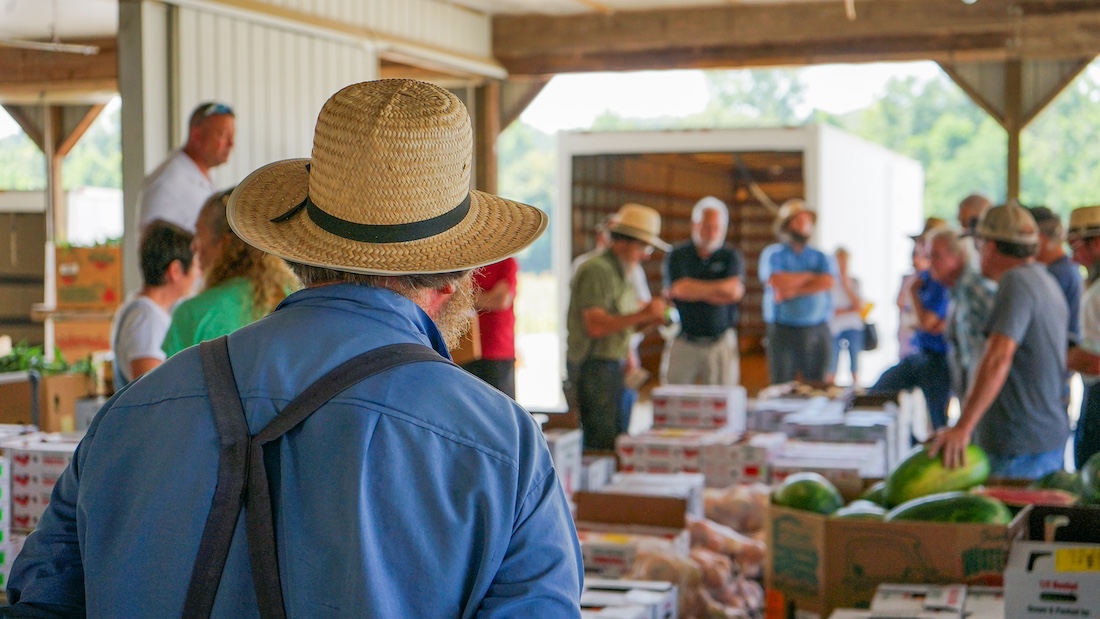
FREDERICKTOWN, Ohio — On Mondays, the activity begins at 11 a.m. at Owl Creek Produce Auction in Fredericktown, Ohio. The flowers are dropped off first, followed by buyers’ personal chairs and a slow flow of produce growers bringing their harvest.
An hour before bidding begins, Amish girls pick melons and squash, at the farm down the road, that will soon be sold in bulk just hours later. Another grower unpacks 500 pounds of high tunnel tomatoes, hauled from his farm on a flatbed trailer just three miles away.
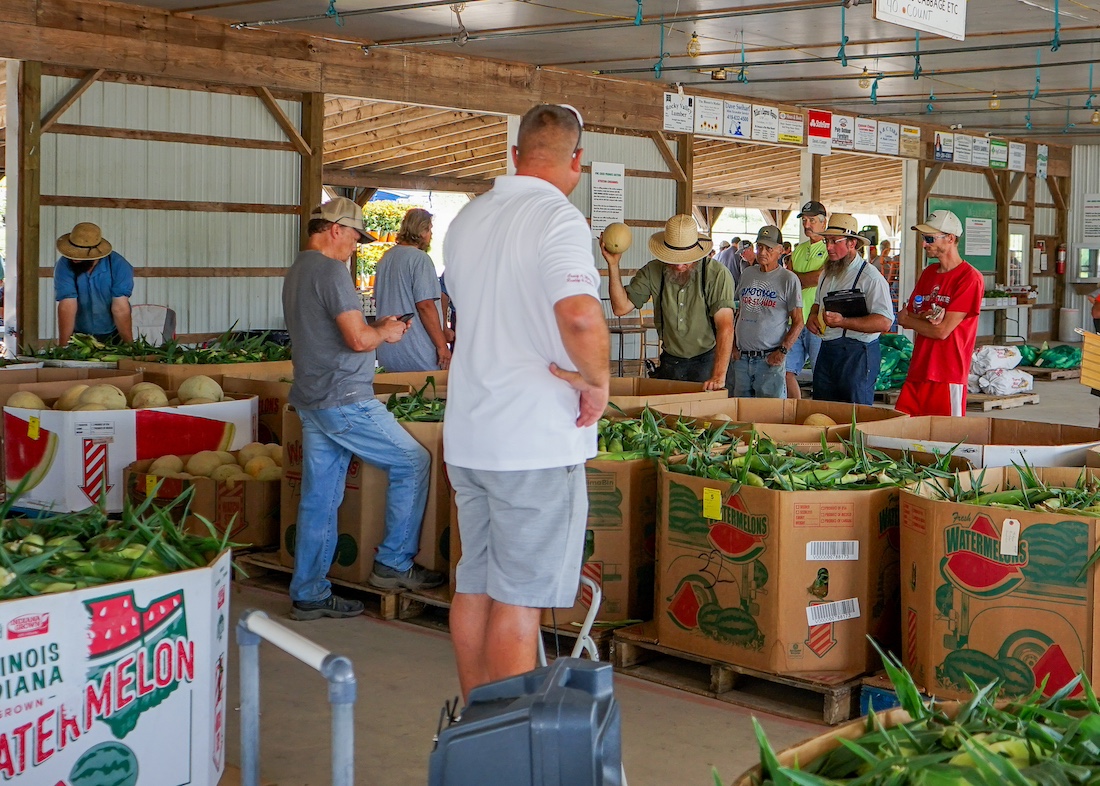
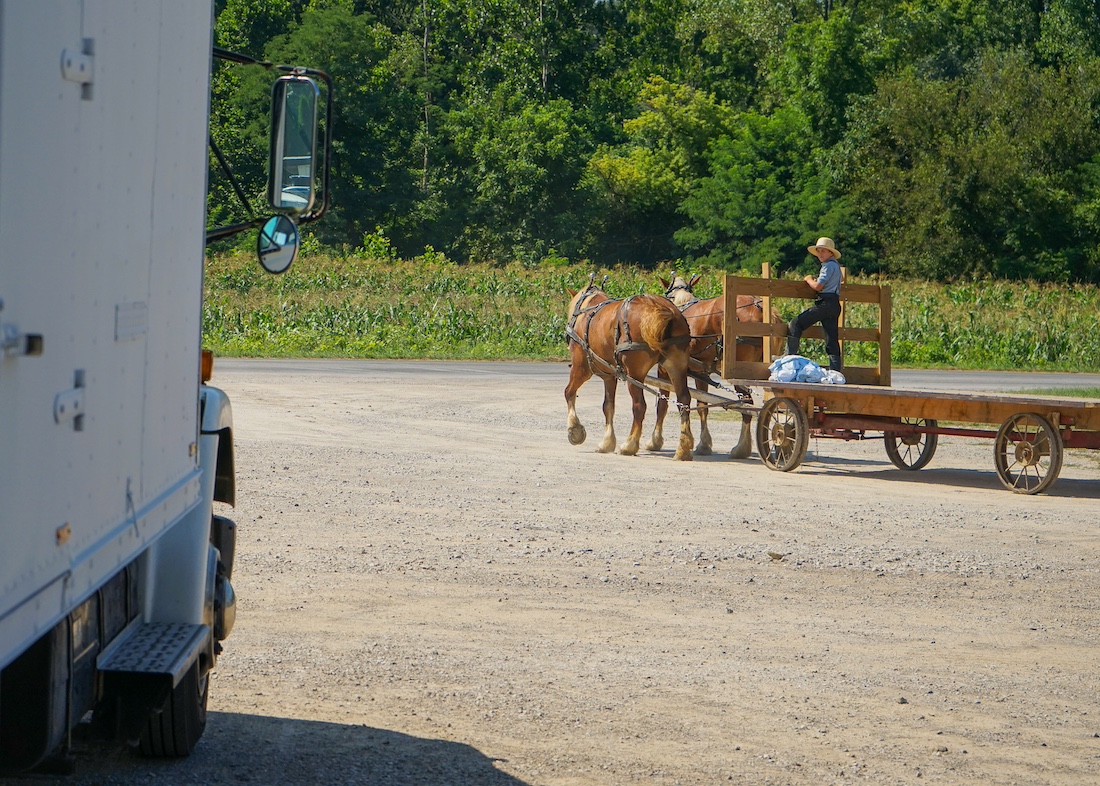
Within 20 minutes of the first bid, the marketplace explodes with buggies hauling long flatbeds of produce into a parking lot filled with hooves and tires. Produce bins of sweet corn and melons are set in rows across the auction barn, along with everything else grown fresh in the county.
Since 2006, the Owl Creek Produce Auction has served rural fruit and vegetable growers and their buyers along the Morrow-Knox county line. The marketplace is designed for their needs — cash transactions and loading ramps — but more importantly, a community ready to purchase, commune and procure Amish Country’s bounty.
Across Ohio, 12 produce auctions operate throughout the year, mostly in north-central, southeastern and southern Ohio — regions often too remote for Amish delivery routes. It is a first step toward getting Ohio-grown products closer to city retail shops.
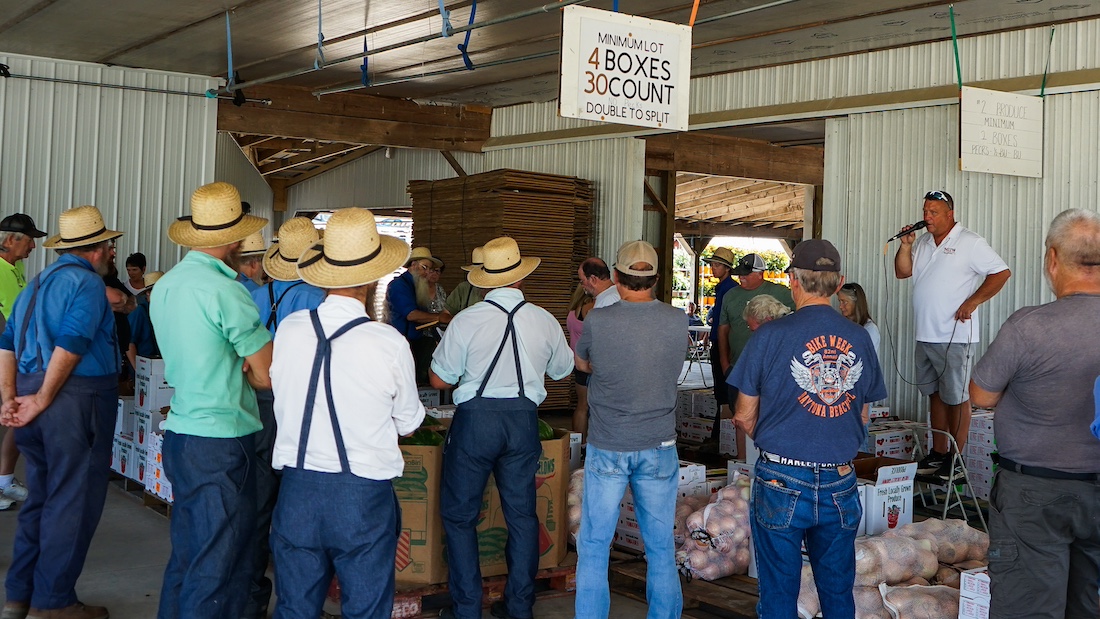
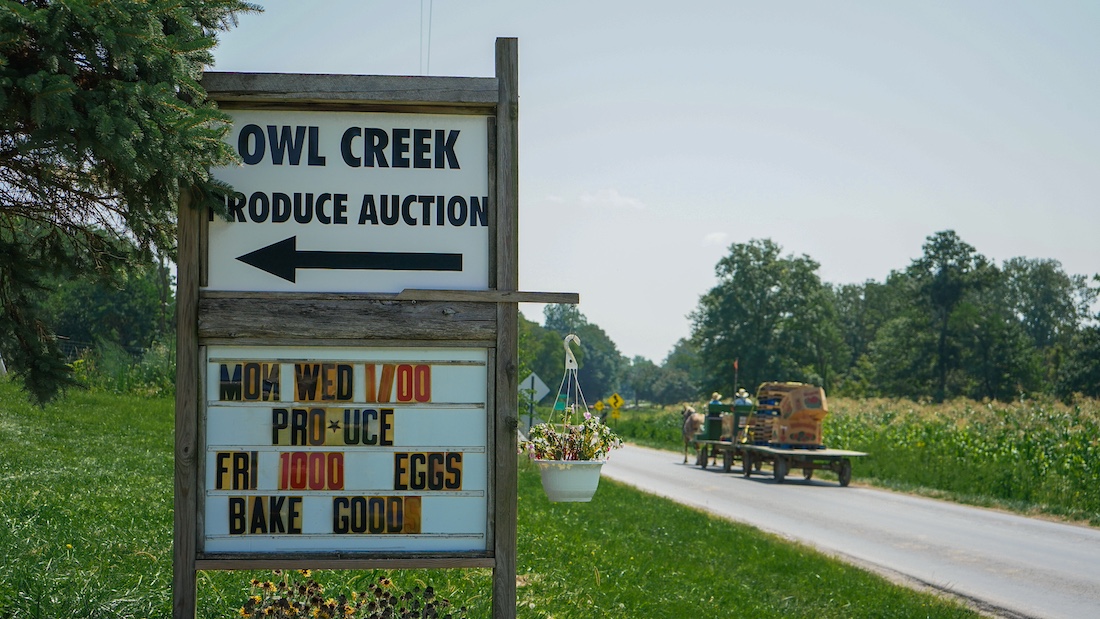
Andy Fher, who manages the auction floor, welcomes neighbors and families three days a week. On Mondays and Wednesdays at 11 a.m. and Fridays at 10 a.m., you can expect three hours of non-stop sales, almost year-round. The auction runs from April through late fall.
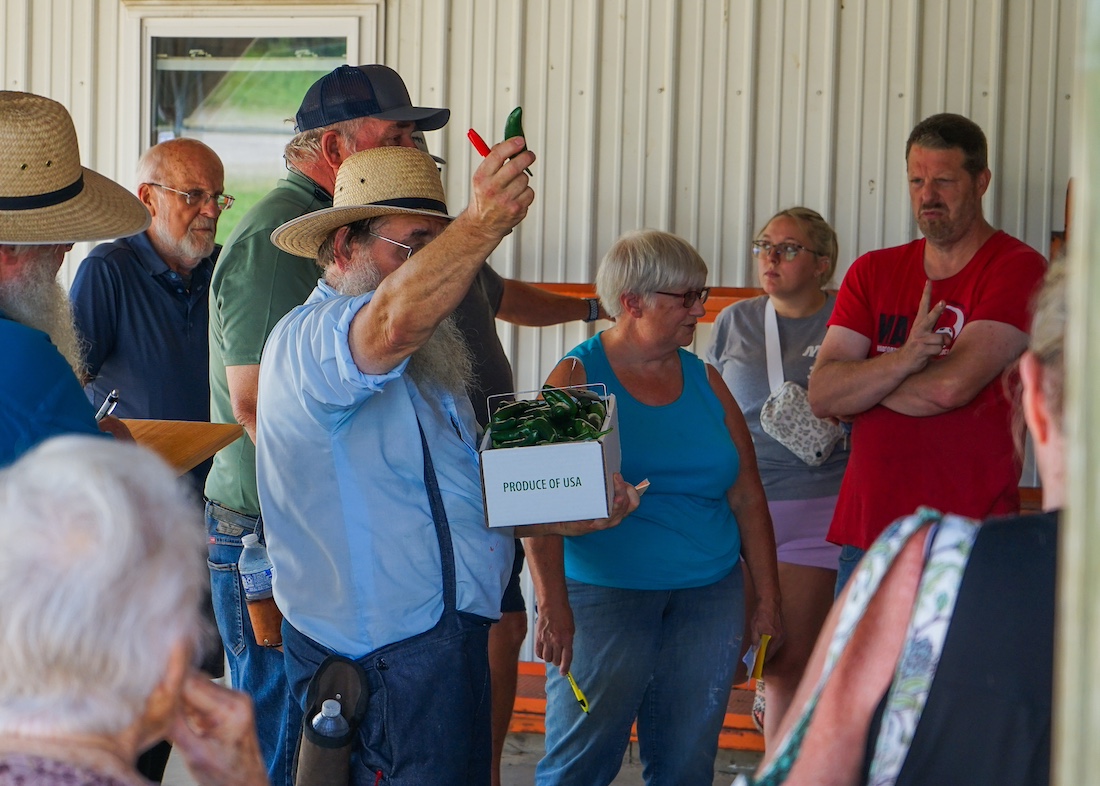
Of the bulk produce sellers, 99.5% are Amish, he explained. What is sold depends on the season. In August, onions, tomatoes and sweet corn filled the bulk section of the auction barn. Specialty products like rhubarb, jams, honey, berries, beets, beans and eggs are sold by a separate auctioneer.
But produce was not always the focus for the Amish community. “Dairy farming was going down and producers needed a way to make money,” Fher said. “Families raised produce instead of canned milk because supplies went up, but milk prices never did.” Produce was one of those ways to supplement income in the early 2000s.

Finding the perfect market
Participating in the auction guarantees products will be sold, regardless of quantity, crop or season.
Toni Stepp, of Morrow County, brought 12 dozen eggs to sell. Her family also raises steers and flowers, and she experiments with different sale days to find the best market.
“Markets are too flooded, and it’s harder to sell my eggs,” she said. “It’s because of the excess amount of road stands.” That is why she sets up her chair each week at the auction’s guaranteed, competitive sale if all goes right.
The most she has received elsewhere was $2 a dozen. She hopes the auction can offer more. As a buyer, too, she looks for good prices and fresh produce since the nearest grocery store is 20 miles from her home.
The audience at these auctions stretches beyond the county crowd. Grocery stores looking for local products, home canners, bulk buyers, resellers and wholesalers all frequent Ohio’s produce auctions, said Logan Minter, statewide field specialist and associate professor of specialty crops at Ohio State Extension South Centers.
“The strength of produce auctions comes from the ability to move large volumes of produce from wholesale markets to resale markets,” he said.
These auctions rarely advertise, relying instead on traditional Amish communication networks like mailers or the phone booth out back of some auction houses. Still, they effectively move goods from rural farms into urban centers and distribution hubs — for those who know where to find them.
Not every auction has endured. Since the pandemic, some have not survived, like the Bremen Farmers Auction in Fairfield County and the Rogers Flea Market in Columbiana County, which have closed their produce sales. Still, demand remains strong. “Holding steady and increasing,” Minter noted. Beaver Valley in Pike County is among the newest auctions, launched to meet local produce marketing needs.
According to Farm and Dairy research, 11 produce auctions operate in Ohio this season:
• Ross County Produce Auction (Ross County, Bainbridge, Ohio)
• County Line Produce Auction (Wayne County, West Salem, Ohio)
• Ohio Valley Produce Auction (Gallia County, Gallipolis, Ohio)
• Scioto Valley Produce Auction (Hardin County, Mount Victory, Ohio)
• Blooming Grove Produce Auction (Richland County, Shiloh, Ohio)
• Owl Creek Produce Auction (Knox County, Fredericktown, Ohio)
• Captina Produce Auction (Belmont County, Barnesville, Ohio)
• Farmers Produce Auction at Mount Hope (Holmes County, Millersburg, Ohio)
• Geauga Growers Produce Auction (Geauga County, Middlefield, Ohio)
• Chester Hill Produce Auction (Morgan County, Chesterhill, Ohio)
• Pelio Farms Produce Auction (Tuscarawas County, Newcomerstown, Ohio)



A local tradition
For many families, buying produce at auction is a summer ritual. Dean and Linda Shirea once grew their own sweet corn, but now they turn to the auction for bulk quantities.
As Fredericktown natives, the Shireas were heavily involved in the Percheron horse industry. Among the Amish, Percheron horses are valued for their strength and willing temperament, making them ideal for farm labor.
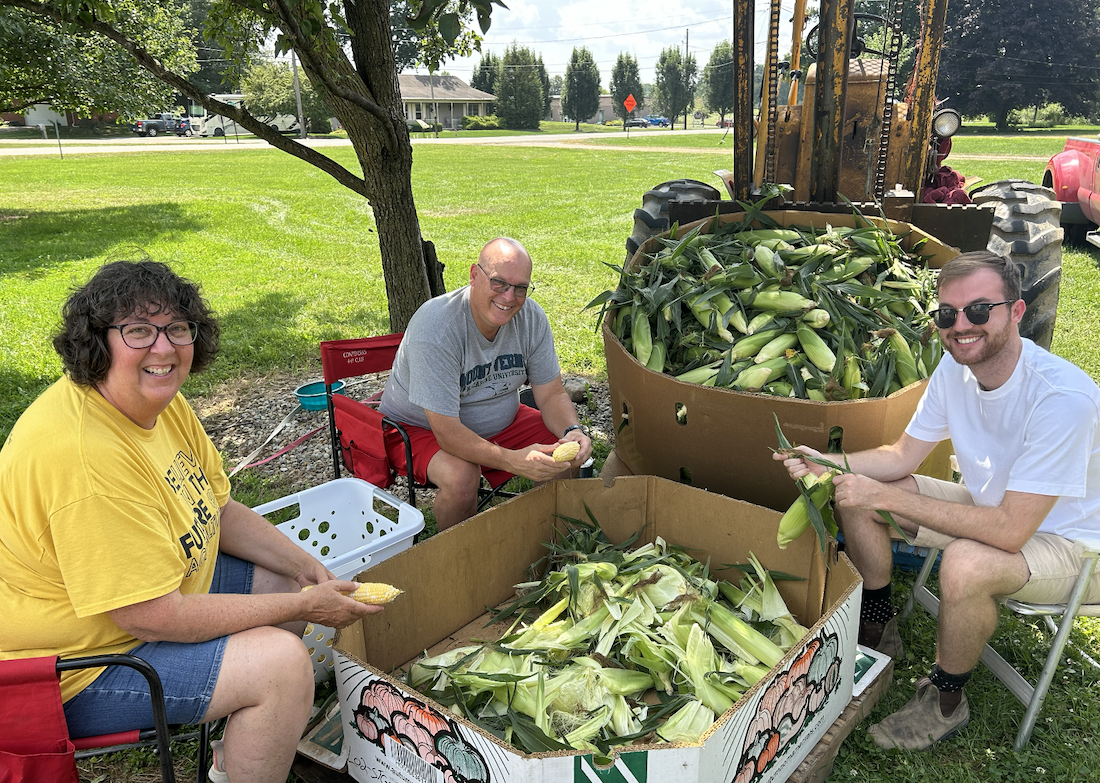
At the Owl Creek auction, Linda texted family members to come over at lunchtime to husk and process corn for the year. Dean worked the auction floor, checking with growers and hoping to buy 40 dozen ears for under $3 a dozen — well below the $6 per dozen typical in grocery stores. Market reports from the second week of August showed sweet corn selling for as little as $2 to $5 dollars a dozen.
When asked what they planned to do with the corn, she said, “We’ll cook and eat whatever we can by noon, then bag the rest.”
Once purchased, the bin was loaded onto their pickup, and husking and boiling began in the front yard as family members pulled in one by one to do their share.
Independent and affordable, Amish markets keep Ohio rooted in family traditions and local economies.
(Jake Zajkowski is a freelance agriculture journalist focused on food systems, farm policy and the rural Midwest. Raised working on vegetable farms in northern Ohio, he now studies at Cornell University. You can reach him at jzajko77@gmail.com.)




