


SALEM, Ohio — Jim Hershey gave up the plow long before no-till farming was credited with improving soil health. When he made the switch in the 1980s, it was a business decision.
He started farming in Lancaster County, Pennsylvania, in 1977, using conventional tillage practices similar to those of his neighbors.
But when hired labor on his dairy farm became unaffordable in the early ‘80s, he knew something had to change. Hershey realized he could keep farming if he reduced his time in the field by not tilling. He saved on labor and fuel and began a deeper relationship with the soil he stewards.
Hershey became an early adopter of no-till farming and later, a founding member of the Pennsylvania No-Till Alliance in 2005. Together with other key organizers, like former U.S. Department of Agriculture Natural Resources Conservation Service employee Joe Myers and Mercer County farmer Bill Cannon, they founded the alliance to encourage others to adopt no-till practices.
The group, celebrating its 20th anniversary this year, is widely recognized as one of the key reasons Pennsylvania has dramatically expanded no-till and cover crop acreage.
“We still don’t know everything about what is happening underneath the soil,” Hershey said. “But the alliance has been instrumental in helping farmers understand the value of cover crops and no-till systems.”
A true alliance
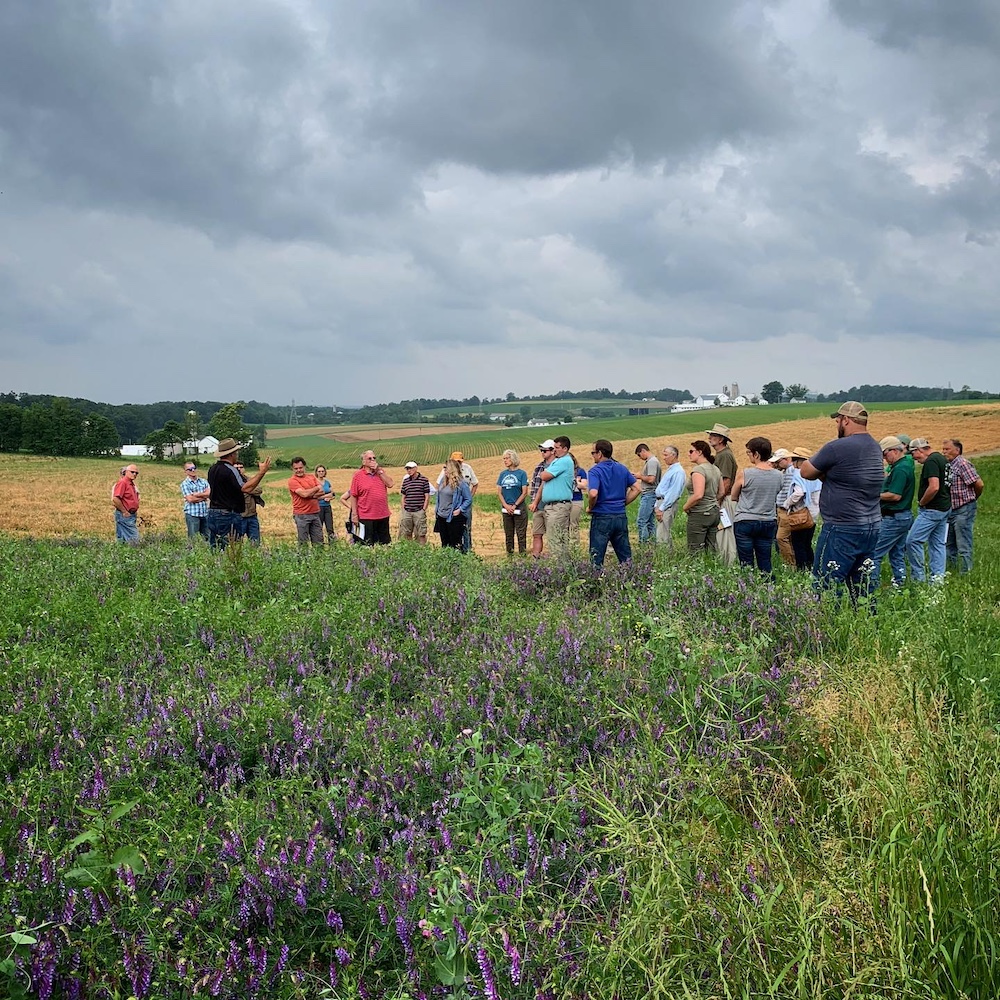
The Pennsylvania No-Till Alliance has always centered on farmers through phone calls, field days and farmer-to-farmer advice. Members offer practical knowledge on equipment to each other, build community and empower leaders to be unafraid to model sustainable farming, one neighbor at a time.
Since the phone chain and impromptu visits to talk to neighbor farmers started in the early 2000s, “Our participation and attendance have doubled in the last decade,” Hershey said.
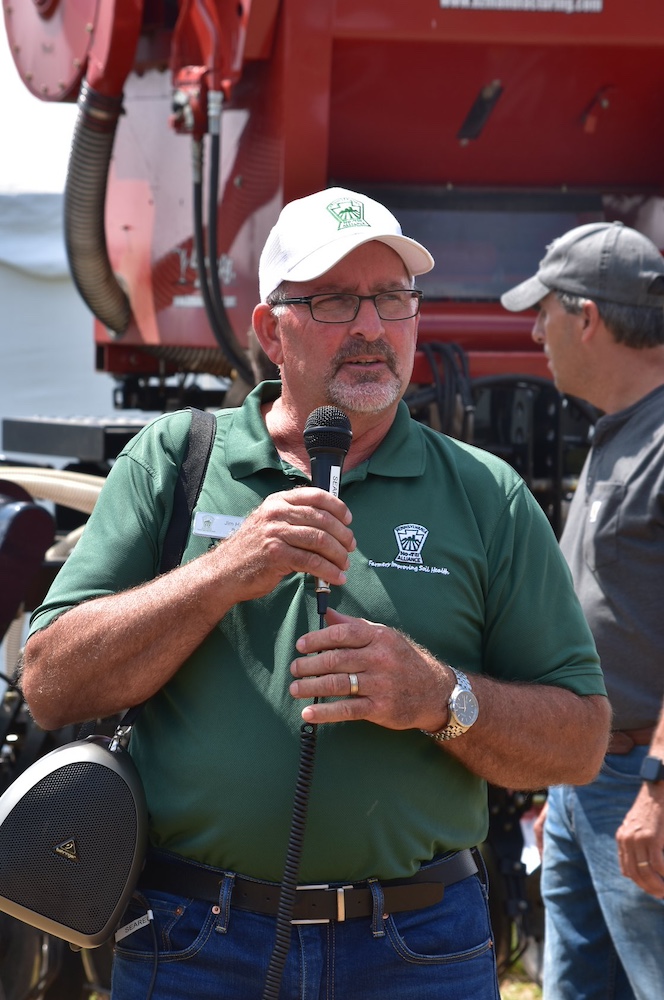
Throughout the year, 13 board members and long-time farmers are available via phone and email to act as a sounding board for questions, offering confidence and insight to other farmers.
“There are more phone calls made and received for problem-solving than ever before,” Hersey said.
Among its greatest accomplishments, Hershey said, is expanding its membership and board representation across the state, a milestone highlighted during this summer’s 20th anniversary field day events.
The Western field day, held at board member Ryan Graham’s farm in Butler County, is on July 22. It will feature a keynote from Canadian cover cropping legend Blake Vince, roller crimper demos, farmer panels on wildlife management and slug control and an equipment showcase. A “Meeting of the Minds” dinner will take place the night before.
The Eastern field day on July 24 will be hosted at Hershey’s farm in Elizabethtown, Pennsylvania. It will feature on-farm research with Penn State University, planting demonstrations, a soil pit and water infiltration exhibit and appearances by special guests, including Pennsylvania Agriculture Secretary Russell Redding.
The annual field days bring together the state’s ecosystem of conservation leaders.
From farmers to researchers, equipment dealers and watershed organizations — they all are working together to improve soil quality, productivity and profitability for future generations.
No-till adoption on all Pennsylvania cropland has risen from 30%, or 1.3 million acres, in 2012 to 37%, or 1.6 million acres, in 2022, according to USDA Census of Agriculture data. Cover crop planting, too, has increased, from 446,295 acres in 2012 to 642,477 acres in 2022.
Success in diversity
Farmers in the alliance are not all the same, each using diverse combinations of solutions to fit their goals and soil types. Membership includes many row crop and grain farmers, but also operations growing vegetables, sunflowers, tree fruits, forage sorghum and unique small grains.
The covers used and experimented with by members also bring additional diversity, including brown top millet, Egyptian clover, flax and radish.
Regardless of the crop or planting equipment used, every alliance member agrees on one principle: “The soil can handle a lot more stress than farmers realize,” Graham said.
Graham, who is hosting the Western field day, farms full-time and also runs some custom cover cropping in the region.
“While I was at Penn State in the 1990s, I went to the National Farm Machinery Show and realized, ‘Hey, other people can do this. I can do it too,’” he said.
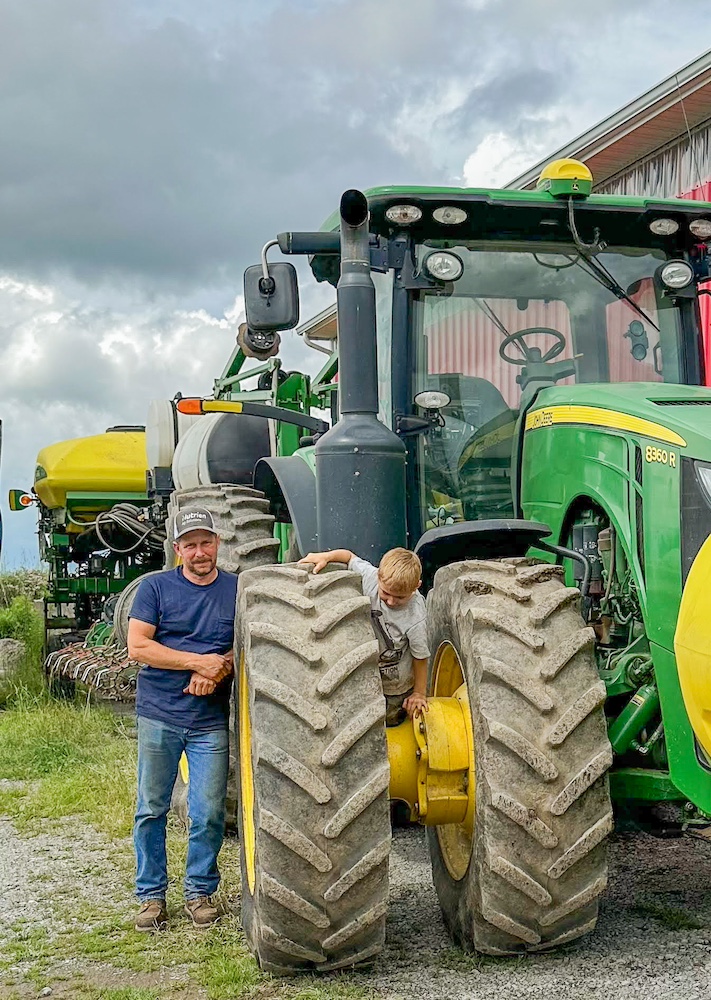
During college, Graham worked at Evergreen Farms with the Harpster family, one of the largest dairies in Pennsylvania. Watching the operation grow its own feed and experiment with cover crops built confidence in no-till systems and inspired him to leave the plows parked when he returned home.
What began as a way to reduce erosion soon evolved into a commitment to cover crop diversity. “I started realizing the value of diversity and the need to get more covers planted,” Graham said.
That mindset expanded quickly through involvement with the alliance. Today, Graham grows corn, hay, soybeans and wheat, rotating crimson clover, rye and wheat as covers. Since 2017, he’s been “planting into the green,” sowing directly into rolled, crimped cover crops.
Years of custom planting experience have helped demonstrate the success of these practices on neighboring farms.
“I try to make everybody else’s crop better when we were custom planting, so that helped show what success looks like on real farms,” he said.
One of the toughest selling points for no-till and cover crops, according to the alliance, remains the upfront cost of planting a crop, an “error in the system,” as Graham calls it. But whether conditions are wet or dry, “the soil is your partner,” and plenty of tools now exist to support farmers in the transition.
Thanks to the alliance’s peer network and expanding government programs that help cover costs, Graham believes there’s no better time to consider adopting no-till systems.
Registration for the PA No-Till Alliance’s field days is available online at panotill.org/news-and-events/