


On Christmas morning 1907, Samuel Burnett Young was born on the farm known as The Brandt place on Ashland Road, Ohio. He was the second born son to his parents, and he was named for his paternal grandfather, a successful and well-respected man in the community.
I have wondered if carrying the name of a revered man who made his living by farming and growing his land wealth so successfully might have impacted the way young Samuel saw his place in the world.
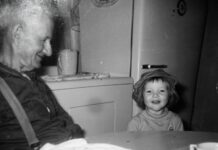
When I was old enough to drive, I found my way to Uncle Sam’s house and took him out for lunch. His wife had died, and he was about a 45-minute drive straight west from us. Though he visited often, it was never often enough, as we all loved him. Sam had become a treasured grandfather figure to me, and I enjoyed one-on-one visits with him.
I’ll never forget that he ordered a large salad with no salad dressing. No burger, no steak, no potatoes, just a plain chef’s salad. This was yet another way he was different from any fellow in my world, and it prompted me to ask how he had busted loose from familiar trappings, becoming his own man.
His story was remarkable, and his green eyes sparkled as he told it. I am sure my mouth dropped open in stunned silence as he revealed the path he had carved.
“I didn’t like farming, not one bit,” was how he began.
“But you praise my dad all the time for becoming a farmer!” I said with surprise.
He set his fork and knife down, paused a moment, then said anyone who can work as hard and successfully with no help from anyone, as my father had done, deserves high praise, “and don’t ever forget I said it!”
He was, he supposed, about 13. The family was living on a farm closer to his paternal grandparents near Jeromesville when he and a neighbor boy stealthily jumped a train and made a getaway.
“We didn’t take much with us, because we didn’t have much. And we both felt we had nothing to lose.”
The two were spotted by a sheriff in a small village in Indiana days later and Sam’s father was summoned to come from Ohio to get him. It was my grandfather, the oldest brother to Sam, who drove their father to Indiana to claim the wayward son on an autumn day.
“I got preached to by both of them the entire drive home,” Sam told me, still salty with the memory.
That Christmas, as he celebrated his 14th birthday with no fanfare, his punishment ongoing, this handsome, driven boy began laying the groundwork for his more thoughtful plan to start his own life.
After that, Sam would hitchhike or find rides to the nearest sizable town, enter boxing matches and claim the prize money. He was quietly saving up for another getaway, this time far less impulsive than the train jumping that had brought him nothing but punishment.
Sam was a boxer with self-taught finesse, and later would earn his place in a semi-pro boxing league. A professional studio photograph of a good-looking, olive-complected, physically fit young man in boxing gloves and shorts served as proof to what a legendary man my great-uncle was becoming.
But he spent days that felt like years, dreaming and feeding his undying hope for a better life. One day when he was 15 1/2 years old, Sam was plowing a field with a team of horses, the dirt under his feet tripping him up as he moved the team across the rough ground.
“It hit me like a brick. I could stay and do this forever or I could make a break for it and start the life I wanted.”
He left the horses standing in the field, and the determined boy took off.
“I didn’t know what I was doing, but it wasn’t this,” he said, his arm gesturing to indicate the drudgery of home, horses, and hard work.
Next week, Part 3
Get caught up, A story waiting to be told: Part 1