





ROSS TOWNSHIP, Pa. — Growing vegetables in western Pennsylvania is a tough business. It’s been made even more challenging by extreme weather events, like a soggy planting season followed by intense summer heat.
Jason Oddo, co-owner of COLDCO Farm in Penn Hills, said he lost nearly his entire crop of specialty peppers last year after those exact conditions caused bad bacteria to flourish among his plants. It meant losing several thousand dollars in peppers that would’ve been sold to area restaurants.
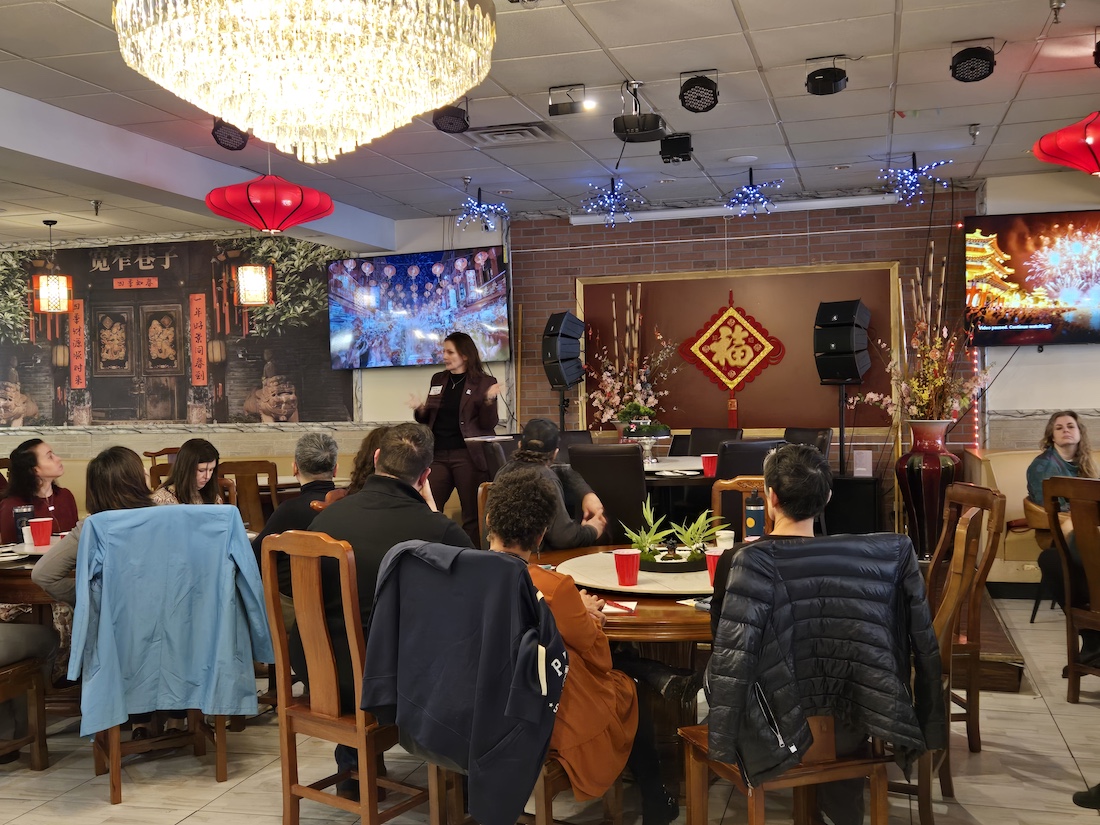
“We had to shift our whole business plan for the year,” Oddo said at a roundtable hosted Feb. 19 by the James Beard Foundation at Chengdu Gourmet restaurant in Ross Township, just north of Pittsburgh.
The roundtable was set up with U.S. Rep. Chris Deluzio to hear how climate change is impacting chefs and the small businesses and farmers who supply them, but it ended up being a broad discussion that also touched on the impacts of immigration enforcement, consolidation, and federal farm policy.
Russell Thorsen, associate director for Urban Agriculture & Farmer Outreach for Pasa Sustainable Agriculture, said the lack of a new Farm Bill is making it harder for farmers to participate in U.S. Department of Agriculture programs, like the Natural Resources Conservation Service’s flagship Environmental Quality Incentives Program.
Payment rates for EQIP projects have remained at levels that were passed in the last Farm Bill in 2018, Thorsen said. This means farmers who are participating in cost-sharing programs are
footing more of the bill to implement conservation projects on their farms.
The current Farm Bill expired in 2023 and has been extended several times, this time through September of this year, but an updated version has yet to be passed. The U.S. House introduced yet another draft of the bill earlier this month.
Restaurant workers said Immigration and Customs Enforcement crackdowns are taking a toll on their immigrant coworkers. They shared stories about legal asylum-seekers who have been detained at court appointments or made to wear ankle monitors. It’s had a chilling effect on the communities in which they live, with some restaurant workers not wanting to go out to get groceries or attend church.
While the name James Beard may be associated with fine dining, Anne McBride, vice president of impact at the James Beard Foundation, said they have chefs at every level who work with local farms and producers.
The challenges farmers are facing impact everyone up the food chain.
“Without a vibrant ecosystem of local farms that supply them, chefs canot having anything to cook,” she said. “They care about their community, the ecosystem in which they function, where their kids go to school, where their staff live and work.”





If restaurants and producers have LEGAL migrant workers, there is no problem. You simply show proper documentation and ICE moves on. The issue is when these places have non-documented help, which they do to cut costs, as they pay wages of 50 years ago – essentially slave labor. I know of one restaurant chain who helps Mexican immigrants to obtain citizenship, and pays a fair wage. Yes, it can be done. But not by those who capatalize upon their fellow man. Disgusting.
“They shared stories about legal asylum-seekers who have been detained at court appointments or made to wear ankle monitors. It’s had a chilling effect on the communities in which they live, with some restaurant workers not wanting to go out to get groceries or attend church.”
ICE can detain people with pending cases even when someone is following every rule, ICE has the authority to detain them at routine check‑ins, scheduled court hearings. or fingerprint appointments.
ICE has dramatically expanded the use of ankle monitors and other surveillance tools. Over 29,000 immigrants with pending cases are currently being tracked electronically.
The best current estimates put the total immigrant population (legal + undocumented) in the United States at roughly 52–53 million people.
How, pray tell, is any government supposed to efficiently process or vet 53,000,000 people?