



Tag: antiques

Halloween roots: How ancient Celtic farm rituals shaped the holiday
Halloween isn’t just modern commercial hype. Discover how the ancient Celtic festival of Samhain—rooted in harvest rhythms, herding livestock, bonfires and carved turnips—traveled across the Atlantic to become the traditions and trick-or-treating we celebrate today.
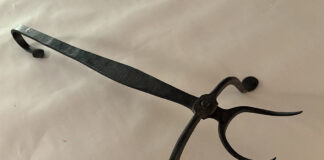
Smiths forked over plenty of talent to create prized utensils
Once a simple hearth tool, the pioneer toasting fork became a showcase of early American craftsmanship. Blacksmiths and whitesmiths used intricate filing, inlays, and punchwork to turn these mundane utensils into cherished wedding gifts and enduring folk art.
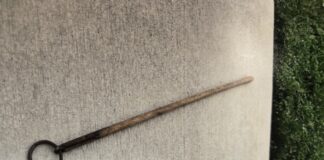
We need your help identifying this mystery auction item
Hazard A Guess Item No. 1311 comes from Noah Troyer of Holmesville, Ohio. He bought this item at an auction. The ring is 4 inches long and the handles are 50 inches long.
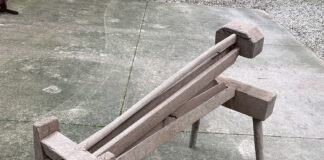
Flax braking and scutching: Pioneer methods for making linen
Antiques expert and journalist Paul Locher explores the pioneer-era process of flax braking and scutching. Discover how early Americans used wooden brakes, scutching knives, and community bees to transform harvested flax straw into fine linen and coarse tow.
Do you know what this mystery plow is? We need your...
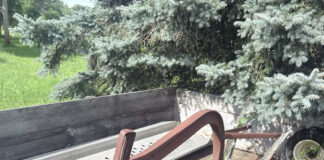
Frank from Huntsburg, Ohio, sent us this weird-looking plow to identify. Can you help us?
Mystery solved: The story of the joggling bench
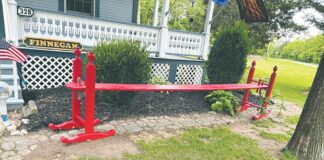
In a recent Hazard a Guess column, readers identify Mystery Item No. 1308 as a joggling board. Discover the 1803 South Carolina origin story behind this porch staple, why it became known as a courting bench, and how it was originally designed to help ease rheumatism.
The grueling history of growing flax in early America
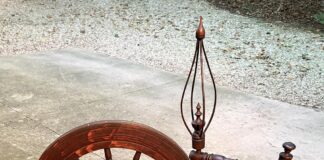
From Gov. George Yeardley’s Virginia colony to German settlers in Pennsylvania and Ohio, flax was essential for making pioneer linen. Despite its grueling, backbreaking labor, growing flax became a vital crop for early American survival.
How flax became the forgotten cash crop of 19th-century Ohio
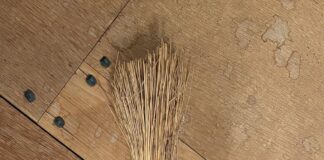
Long before modern synthetic fibers, flax was arguably the most vital crop across 19th-century Ohio. Learn about the history of this ancient plant, how settlers harvested it to make durable linen and linseed oil, and why its agricultural legacy is worth remembering today.

Finale: Civil War letters home
A chance discovery of Civil War letters in a local library uncovers the poignant story of Jeromesville's Boyd brothers. Through their own words, a local writer traces the brothers' service, the tragedy of wartime disease, and the lasting legacy marked on a hilltop cemetery monument.
Do you know what this mystery item from Kelleys Island is?
Give us your best guess for this new mystery item that sits outside a cottage on Kelleys Island in Lake Erie.