



Happy New Year! My New Year’s resolutions this year are . . . well . . . simply not to have any resolutions at all – at least, none that will cause me stress in an effort to fulfill them. Since retiring, I have made it a habit to remove as many stressful things from my life as possible, even if they include closing the chapters on certain hobbies, friendships and ways of life. Although some of these have been difficult at first, I embrace each change with an open mind and revel in the relief that follows. I am a loner by nature, and as I witness the world around me seemingly falling apart, a world filled with so much anger and negativity, I find myself withdrawing further from society. I really don’t need an excuse to turn to the out-of-doors to lift my spirits, but I find myself relying more and more upon Mother Nature and her beauty to get me through life.
Here in northeast Ohio, January is our snowiest month of the year, and although we don’t get nearly as much of the white stuff as we used to, I liken the unblemished, freshly fallen blanket of snow to a clean slate upon which to start off the new year.
One thing that has been a constant in my life for as far back as I can remember is my love of birds. It might be hard to believe, but January may just be one of the finest months of the year for enjoying our avian friends. Birds relish and rely upon the offerings we leave out for them during the challenging winter season, giving us a front row seat to their beauty and antics.
Visitors from the north
Many of our migratory songbirds, mainly insect eaters, wing their way south in the autumn, creating space for the northern species that arrive here at their southernmost destinations shortly thereafter. Species such as dark-eyed juncos, American tree sparrows, as well as periodic irruptions of finch species including pine siskins, common redpolls, crossbills and evening grosbeaks all offer fresh fodder for our searching eyes. Combining those species with the wide array of year-round residents such as cardinals, jays, woodpeckers, chickadees, etc., will have you reaching for your binoculars — as well as your checkbook! Yes, I resolve to keep the feeders brimming for “my” birds all winter, no matter what the cost, catering to their demands as necessary, and it is worth every penny.
There are scads of other species that arrive from the north and overwinter in this area, but depending upon where you live, some driving and searching may be in order to catch a glimpse of them. This is when the true art of “birding” comes into play, as birders grab their many different optics, networking and sharing sightings through various birding hotlines and online platforms in an effort to seek out as many of these northern visitors as possible. I’m sure, like I do, many birders harbor New Year’s resolutions that include amassing a yearly list that supersedes the previous one, a rewarding, stress-free goal!
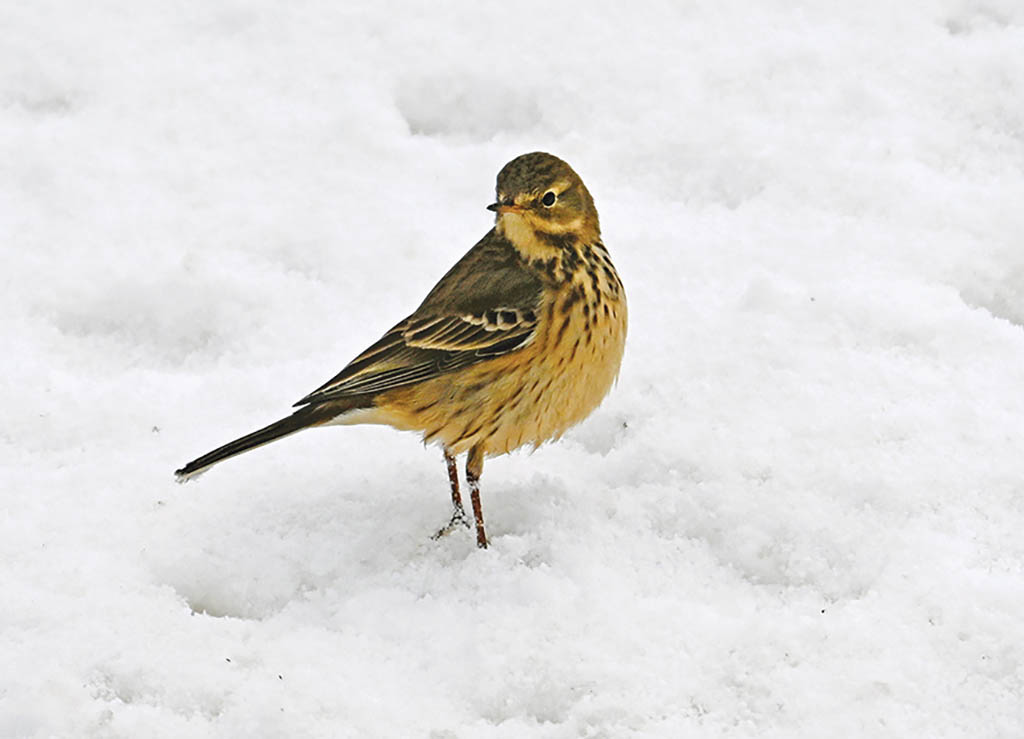
Head out to agricultural areas where the wide-open spaces made up of fields and pastures mimic the arctic tundra habitat of the north, and you are sure to see some special visitors. Mixed flocks of American pipits, snow buntings, Lapland longspurs and horned larks scour the landscape for fresh manure spreads. These putrid swaths consisting of a mixture of livestock dung and straw offer a variety of lifesaving seeds during the harshest of weather. Large flocks can be seen alternating between fresh spreads that are deposited daily on adjacent fields.
Bird of prey
There are quite a few majestic birds of prey that also wing their way south to this area in the winter. Northern harriers and rough-legged hawks find the open landscape hospitable to their hunting habitats, banking and quartering back and forth or hovering stationary over grassy fields and pastures before diving earthward toward their targeted prey. Several owl species also make the trip south; the tiny Northern saw-whet owl, standing a mere 7 inches tall and the timid long-eared owl, which stretches itself vertically to blend in with the tree trunks. Both species are challenging to locate yet incredibly rewarding to observe.
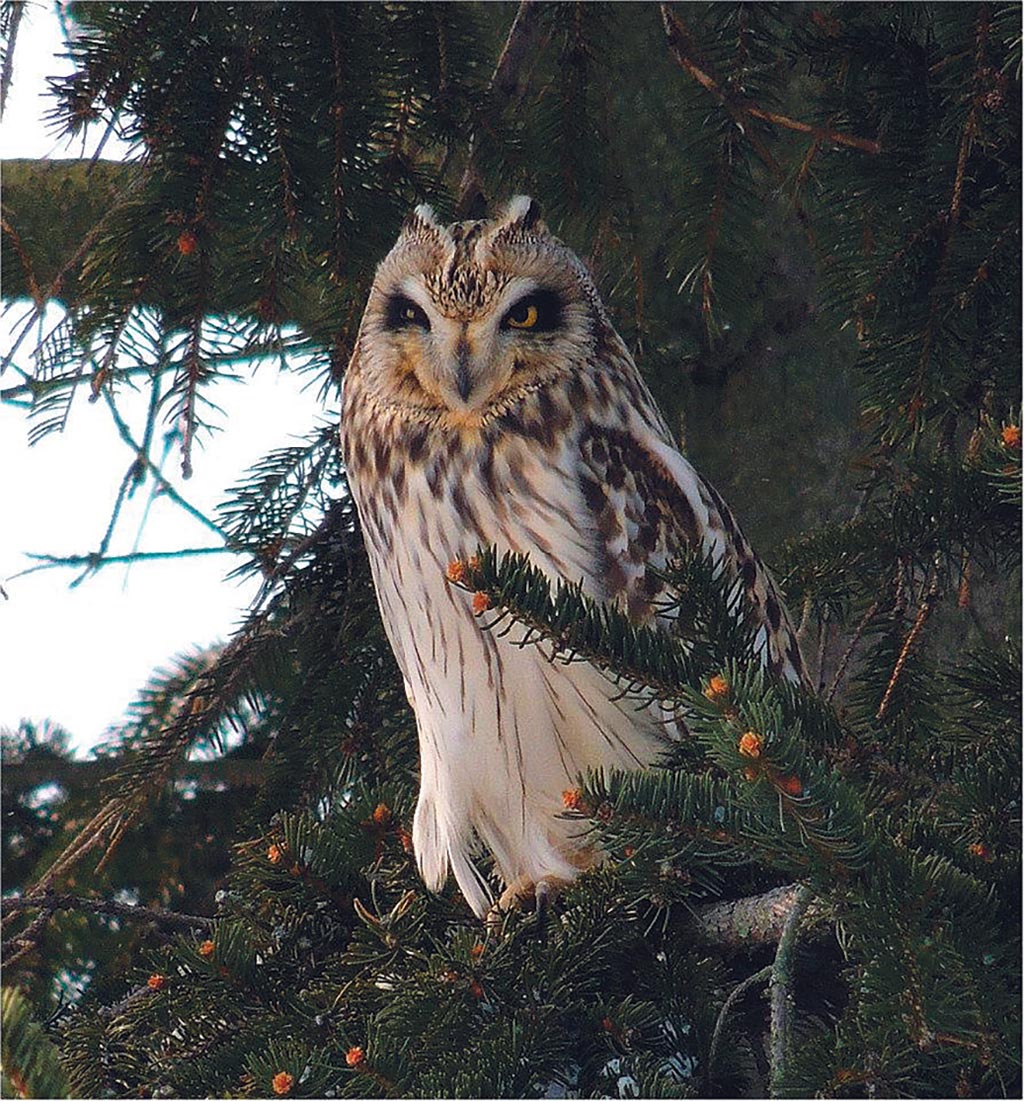
Much-loved short-eared owls attract large crowds as they make crepuscular and sometimes daytime appearances, giving their viewers quite a show as they swoop and dive, interacting like giant moths. Every few years, we experience an invasion of majestic snowy owls. These breathtaking white giants of the north irrupt southward during years when their prey is scarce, or when they have had an exceptionally productive breeding year and the resulting youngsters feel the need to disperse. This year is shaping up to be a snowy owl winter with many individuals having already been reported. I resolve to make an effort to get a good look at a snowy owl this winter, should one find its way into northeastern Ohio.
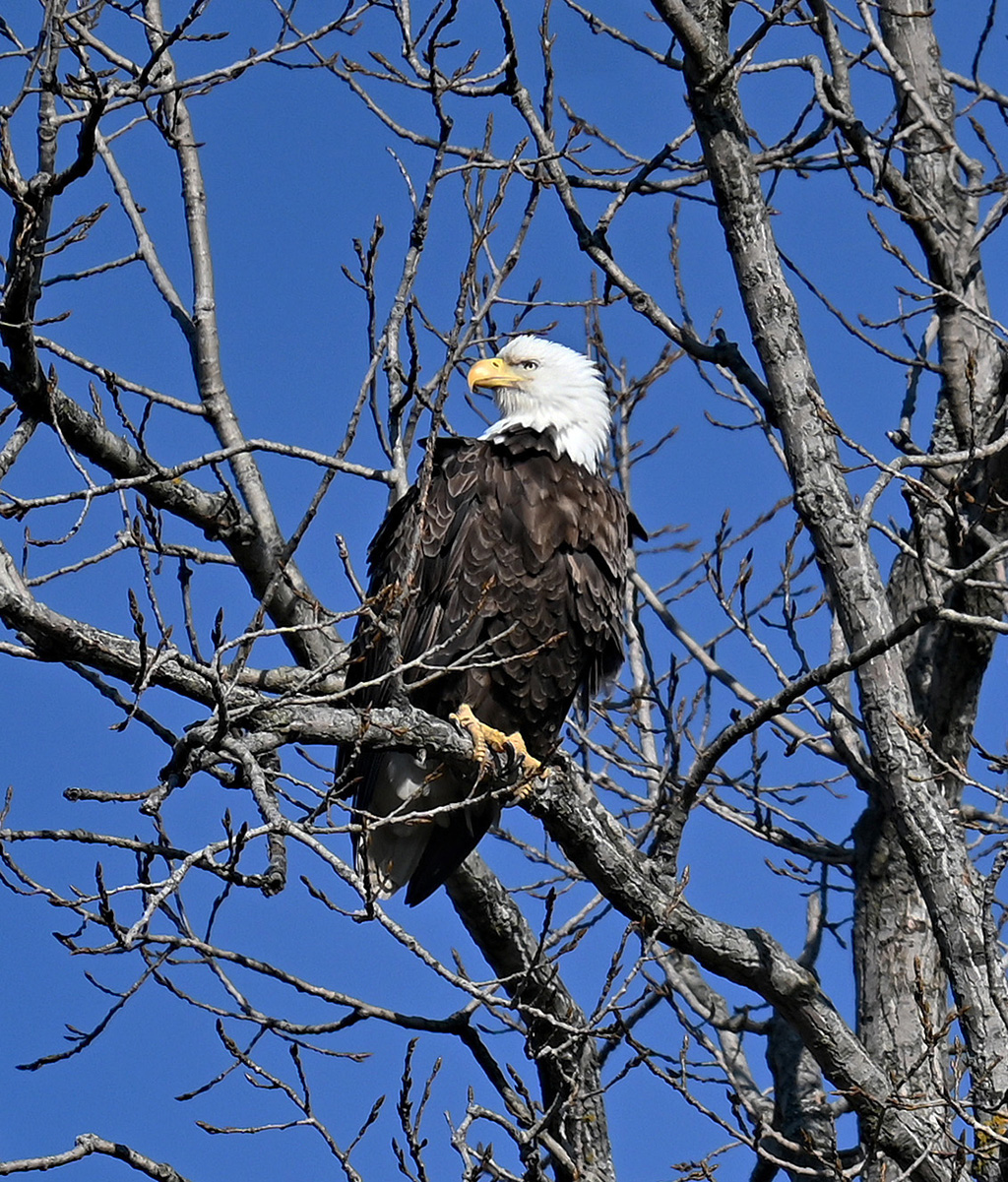
January is also the month when our two top avian predators begin to nest. The bald eagle and the great horned owl, rulers of the day shift and night shift, respectively, must start their families early in the year so that they have the time needed to not only rear their chicks but teach them to hunt before winter rolls around. I think of these birds sitting tight on their eggs as snowy squalls cover them like a giant comforter. The hoo, hoo-hoo of the great-horned can often be heard on crisp January nights, while the white heads and tails of bald eagles fairly glow in the sunshine as the birds cruise beneath an azure sky.
So, bring on the new year! Yes, my New Year’s resolutions this year really are for the birds, and that’s the way I like it, stress-free and enjoyable. I hope that yours will be as well!






Welcome back Tami! Your articles are by far the top read of F&D. I’m glad your retirement is working well for you – and you are doing exactly what you need to do, that is eliminate toxisity.
We here go through an enormous amount of seed for these winter fluffs. Our feeder is a very popular spot during these snowy days (8” last few days).
We have a number of the juncos – I call them snow birds because that’s the only time I see them. In fact, my theory is that they fall with the snow, and then melt away as the snow melts!!
Keep up the great articles – thank you!
Awe John, it’s good to be back! Thank you for your kind words! Love your junco analogy!
Awe John, thanks for your nice words! It’s great to be back. Love your junco analogy! Tami
So happy to see your column again. I live reading your nature based views of our world. I to retreat to nature when life seems too heavy because of pressing world affairs. I love “my” birds and even on a limited budget we feed them well. I have been a bird lover since 8 years old and my family fed them at our home in Euclid.
Thank you for your views and it is a treat to learn new facts from you.
Keep up the good work.
Great article, Tami! Happy New Year, too! Here in northern Summit County (we’re here at the Twinsburg, Streetsboro, Hudson nexus) we are seeing way too little birds this Winter. Troubling.
We went out and bought the usual bags of oil sunny seeds, cracked corn, and general birdseed mix-and all our feeders seem to be so empty! We’ve been here 42 years and find this really astounding. There are hundreds of acres of deep woods and undeveloped land behind us with creeks and ponds. And all we are getting now are a few juncos, a bluejay or two and a female cardinal.
We’ve heard some owls here late at night–have the owls been scaring away the songbirds?
Normally are backyard and feeders are “standing room only” for our avian friends. Not this Winter. We wonder what’s up?