

The fall season is a wonderful time of the year that combines the beauty of nature with family events. Halloween bleeds into Thanksgiving and then Christmas, although in the retail world, it appears to go from Halloween to Christmas.
At this point, you might still have some Halloween candy around. Perhaps your kids were even given some bags of goodies, and not all of the items were appealing. You may still be trying to decide, keep or toss. This approach, however, does not quite work for the forage you have harvested this year, even if it is less than ideal in quality.
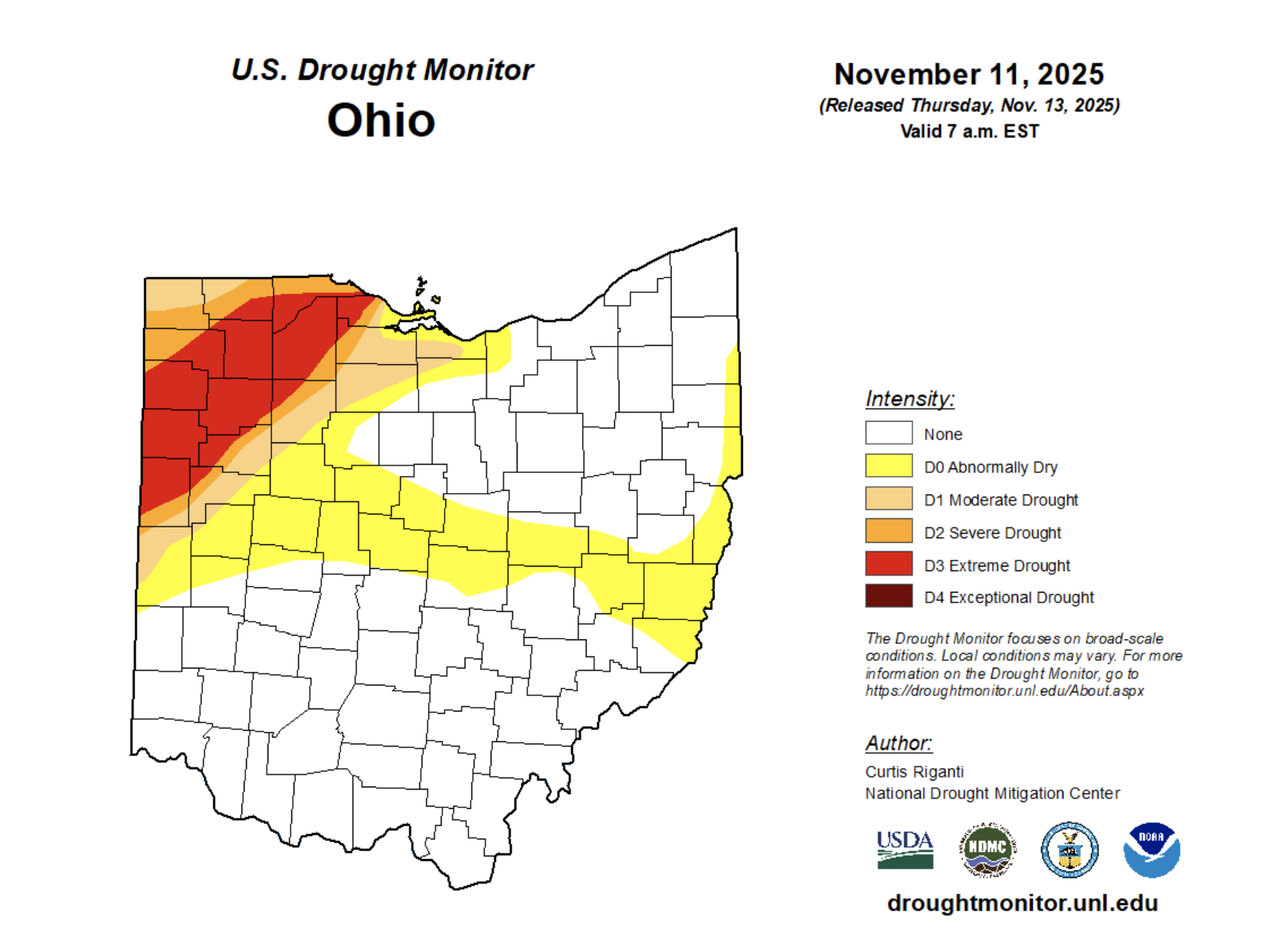
Last year was severely dry in many parts of Ohio, and a limited forage supply was a major issue for many farmers. The 2025 harvest season started out very wet, which delayed harvest of first cutting and low forage quality. Then, in July, conditions for forage growth became very dry and have remained so for many areas in Ohio (Figure 1).
These dry conditions negatively impacted later cuttings of forage (reduced yields) and caused corn for silage to stop growing within a short window of time, with rapid dry down in many areas. Across Ohio, there was a high degree of variability in corn growth and moisture level of the plant and grain.
During the harvest of grain, oftentimes a large diversity in grain moisture occurred within a given field. When corn grain harvest occurred this fall, many farmers had to leave sections of the field to wait for further dry down, usually with lower areas being high in moisture and the higher elevations being more ready to harvest.
For the corn silage, many farmers started getting ready for harvest when they suddenly realized that the whole plant dry matter was higher than desired at the start of harvest, much less so for when they would be able to complete the harvest.
Thus, this harvest season began with sometimes less-than-adequate forage supply from last year’s drought, and this year’s growth conditions resulted in less than favorable conditions for high yields of high-quality forage, including for hay crop and corn silages.
For further reflection on changes in corn silage composition, data were gathered from Cumberland Valley Analytical Services to compare three different time periods (2004-2025, 2022-2025, and 2025; Table 1).
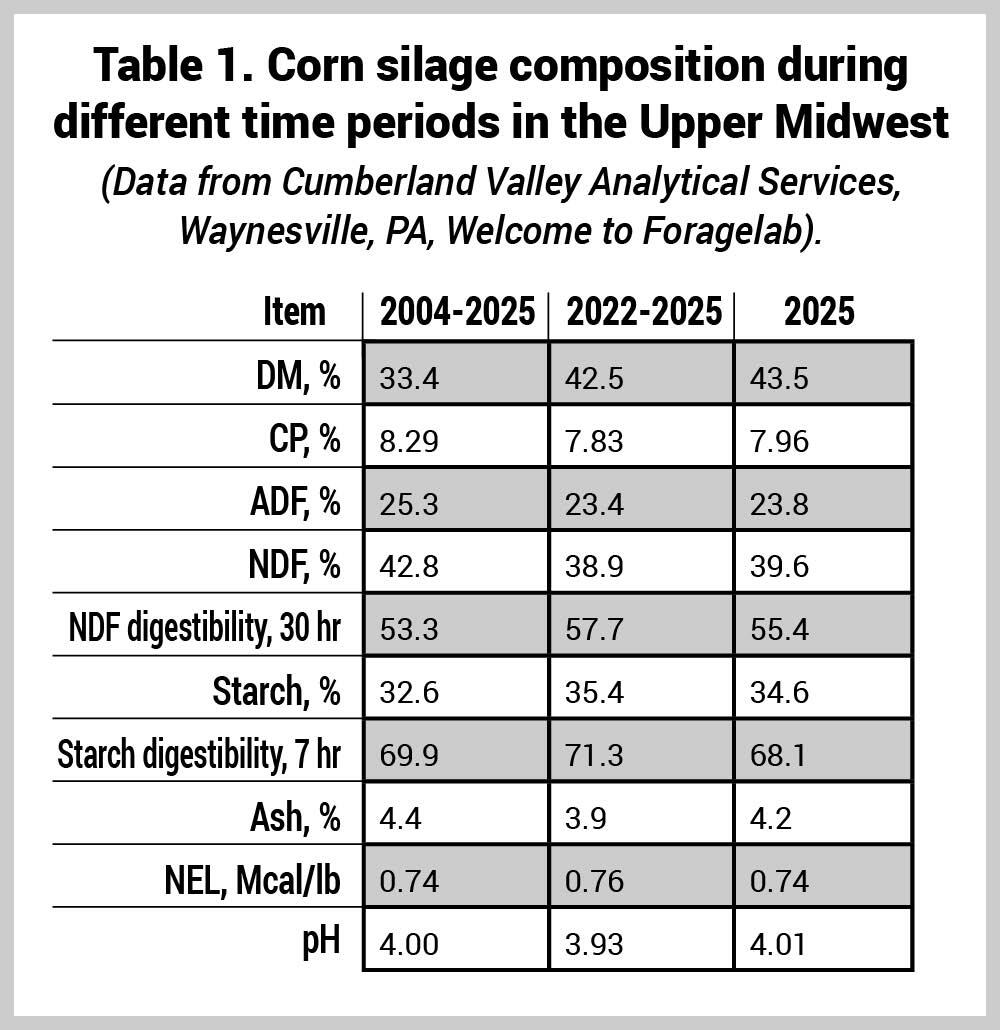
The dry matter percentage of corn silage has increased (moisture decreased) in recent years. This is a little surprising given that fewer upright silos are being used and more horizontal silos are being used (bunker and bags). Given less gravity with horizontal storage, the dry matter (DM) percentage is typically recommended to 32 to 35%.
The DM percentage for the 2025 harvest is about 1% higher than the previous three years. The crude protein (CP) percentage has declined in recent years and was not negatively affected in 2025 compared to the three previous years. The levels of acid detergent fiber (ADF) and neutral detergent fiber (NDF) have decreased, and starch has increased in recent years, reflective of the higher ear to stalk ratio.
Within the same time period, fiber and starch digestibilities and net energy for lactation (NEL) have increased. Reflecting on these attributes in 2025, NDF increased by about one percentage unit and NDF digestibility declined. Starch concentration dropped by about one percentage unit and digestibility declined. These changes seem small, but there is considerable variation among farms.
Generally, we assume about 68% of the samples will be within plus or minus one standard deviation of the mean. Assume you live in an area more impacted by the drought conditions and your corn silage was one standard deviation lower in CP (6.65% CP) and NEL (0.71 Mcal/lb) and your herd is producing 80 pounds/day of milk with 4% fat and 3.2% crude protein and the ration consists of 50% grain and 80% of the forage fed is corn silage.
This lower protein and energy in rations could reduce milk per cow by 2 pounds/day if the ration is not reformulated to compensate for these lower nutritional densities.
In summary, the corn silage on your farm may be variable among fields and times of harvest. You had to harvest what was available, but it is possibly drier than desired.
Hopefully, you will be able to allow it to ferment for at least 60 days before beginning to feed it, but analysis of its composition and working with your nutritionist to formulate rations based on its composition throughout the year will be vital for supporting high milk yields. You are now stuck with the crop in storage until next year’s crop. It’s not like a grab bag of Halloween candy where you pick out the chocolate and decide whether to keep or toss the remainder.