





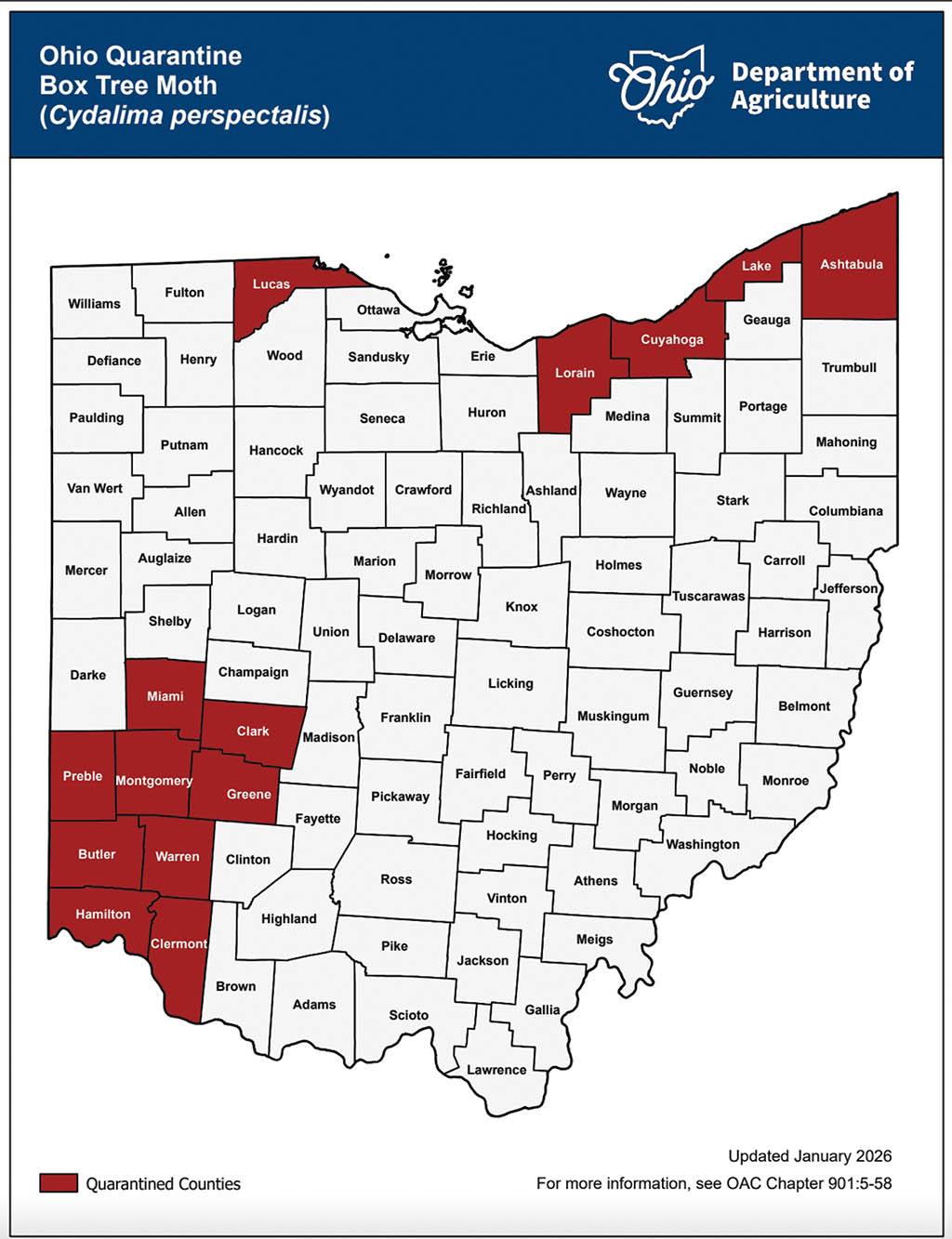
REYNOLDSBURG, Ohio — The Ohio Department of Agriculture is expanding the box tree moth quarantine zone to stop the spread of the invasive insect.
Beginning Jan. 30, the updated quarantine will include Preble, Clark, Cuyahoga, Ashtabula, Lorain, Lake and Lucas in addition to the existing quarantine which includes Miami, Montgomery, Greene, Butler, Clermont, Hamilton and Warren.
A quarantine will allow ODA to restrict the movement of boxwood shrubs. ODA is encouraging landscapers and residents in these counties to check the quarantine boundaries and not transport the plants outside of the area.
The extension of the current quarantine is due to the detection of the moth in new locations last May to October. Box tree moths were detected in Ohio in June 2023, near the border of Hamilton and Clermont counties.
Late last year, the entire state of West Virginia was put under federal box tree moth quarantine to ensure the safe interstate movement of boxwood plants.
The quarantine was established in December by the U.S. Department of Agriculture’s Animal and Plant Health Inspection Service, in cooperation with the West Virginia Department of Agriculture. Box tree moths were detected in Berkeley County on June 4, 2025 and in Morgan County on July 3, 2025.
What you need to know about the box tree moth
Box tree moths are an invasive pest from East Asia that pose a threat to boxwood plantings and the horticulture industry. Boxwood is an important ornamental shrub that is a valuable part of Ohio’s nursery stock economy.
State and federal will be conducting inspections and placing traps to monitor populations. Box tree moths are not a threat to native plants. Residents can look for and report any potential infestation by following these steps:
• Familiarize yourself with the insect’s appearance and evidence of damage on boxwood shrubs.
• Check any boxwood plants you have for signs of box tree moth life stages.
• If you find any evidence of infestation, take a picture and report it.
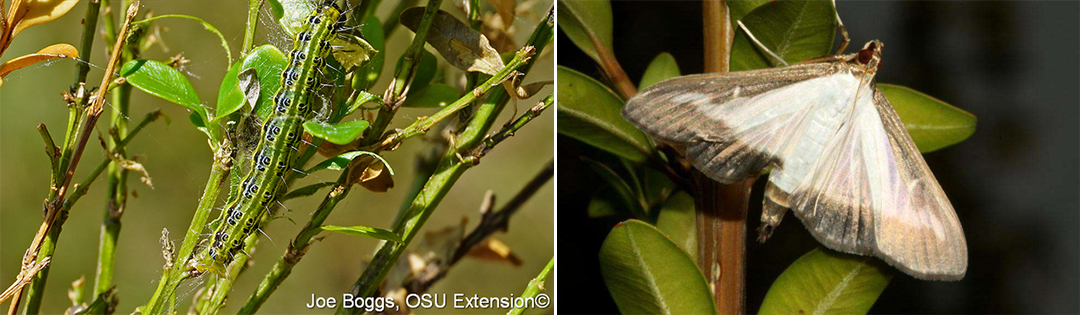
Evidence of damage includes chewed, cut or missing leaves, yellowing or brown leaves, white webbing and green-black excrement on or around the plant.
Box tree moth caterpillars are green and yellow with white, yellow, and black stripes and black spots. Adult box tree moths are nocturnal and have white, slightly iridescent wings, with an irregular thick brown border.
Federal and state officials are asking industry and the public to report suspected box tree moth sightings through the Ohio Department of Agriculture’s reporting tool: agri.ohio.gov/divisions/plant-health/invasive-pests/oppr
Infestations of box tree moth in West Virginia should be reported to bugbusters@wvda.us. If possible, include a good-quality photo of the specimen in the email report. For more information, click this link.
The USDA page on the box tree moth can be found here: www.aphis.usda.gov/plant-pests-diseases/box-tree-moth





Boxwood is not native to North America so it should not be sold, shared, or planted anywhere in the US. If we don’t grow boxwood, the moth cannot survive.
Karen, I read this article twice. The Box tree moth–eats/destroys ONLY boxwood plants?
You say it does NOT harm native plants. “Box tree moths are not a threat to native plants.”
Maybe the commercial landscaping crowd ought to be on this more–since only their revenue stream will be greatly affected? Sure, we homeowners’ boxwoods will be threatened, but let those who profit “pay the bill.”