
The groundhog saw his shadow the other day, calling for six more weeks of winter; however, even when he doesn’t see his shadow, it seems most years spring is just around the corner in six weeks.
While you are still fighting frozen water, now is the time to start planning for warmer times this summer.
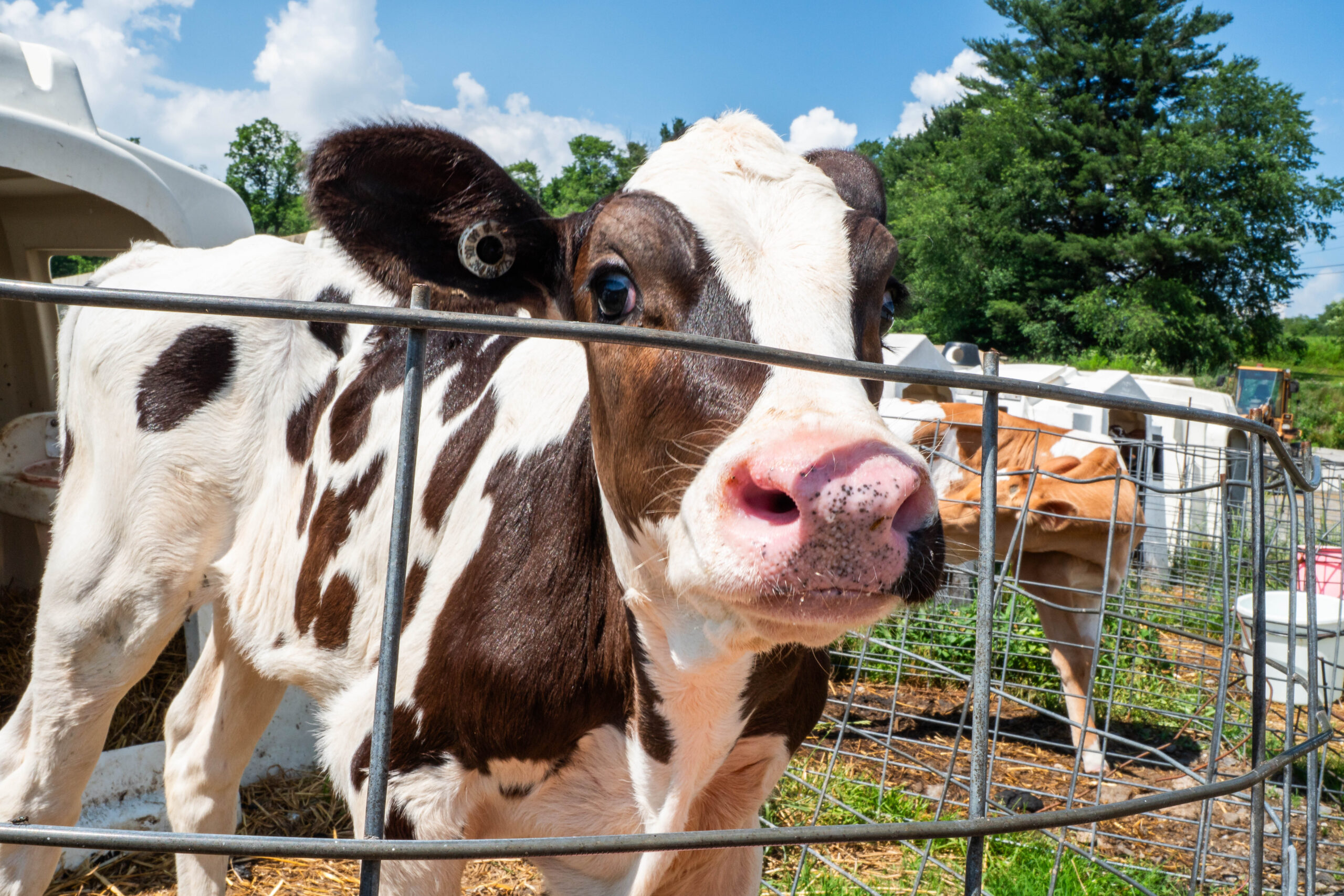
The Journal of Dairy Science recently published a study conducted in Wisconsin comparing the health and performance of hutch-housed calves with passive ventilation, in which the rear window was open at a 20-degree angle, and the bottom rear vents were open 50% for maximum designed ventilation. The other hutch had active ventilation: A solar-powered fan ventilation system was attached to the closed back door, and the bottom rear vents were set to 50% open, resulting in an internal hutch wind speed of 2.5 mph. The average Temperature-Humidity Index (THI) during this study was only 71±7.6.
This study was only conducted from day 3 to 28 after birth. There were many important differences between the actively-ventilated and passively-ventilated groups. In this study, there was no difference in the health status of the calves or weaning weight. However, actively-ventilated calves from days 3-28 were 31% more likely to still be in the herd at the end of their first lactation. Passively-ventilated calves were more likely to be called for fertility and reproduction issues, which are classic signs of heat stress.
Other studies suggest ventilation throughout the entire pre-weaning phase may be needed to see measurable differences in animal growth and performance. At the end of four weeks, when the active ventilation was removed, those calves may have experienced increased heat stress as they adapted to the passive ventilation only.
In the actively-ventilated hutch, the THI averaged 0.7 units lower than in the passively ventilated hutch. One hour after a calf returned to its hutch after being outside for an hour, significant differences in respiration rates were observed. The breaths per minute of the calves in the passive ventilation system decreased by 3.8 after being in the hutch for an hour, while the actively-ventilated calves experienced a decrease of 28.6 breaths per minute. The skin temperature in both the rump and neck of the calves also decreased more in the actively-ventilated calves, along with the decline in sweating rate. This would indicate a reduction in heat stress.
The air quality of the hutch was also impacted by the ventilation system. Airborne bacterial levels in passive ventilation were 29,800 cfu/m3, while in active ventilation they were only 3,466 cfu/m3. While there is no clear agreement on the bacterial levels that cause increased respiratory disease, one study suggests the level is as low as 15,000 cfu/m3.
The levels of fine particulates, formaldehyde and ammonia were also lower in the actively-ventilated hutches. While levels were below OSHA’s 8-hour human health exposure risk, some studies suggest the continuous exposure risk level for calves may be lower, and any improvement in air quality is beneficial.
There was also a difference in lying time between the two treatments. The active ventilation calves spent significantly more time lying both inside and outside their hutches. Passively-ventilated calves spent more time standing outside the hutch at night, while actively-ventilated calves spent the night lying outside.
One way calves improve cooling is by standing. While the study did not specifically evaluate lying location, it noted that at night, the actively-ventilated calves often lay right outside the hutch, where there was both a natural breeze and a breeze from the active ventilation system.
Another study, prior to this one, evaluated group-housed calves’ preference for improved natural (passive) hutch ventilation systems versus older calf hutch ventilation systems. In this study, calves were offered two hutches: one with only the front door open, and the other with two bottom ventilators and the back bedding door propped open.
In that study, during week four, calves showed no preference; however, as they got older, they preferred to spend most of their time in the hutch with improved ventilation. Throughout the period, calves preferred to be together.
The inside hutch temperature-humidity index was always lower in the improved-ventilated hutch, even when both calves were in it, than the baseline value for the non-ventilated hutch.
When searching for a solar-powered ventilation system with a battery backup for nighttime ventilation that provides 60 air changes per hour, several options were found for around $150. While adding fan ventilation systems to hutches may not be practical today, these two studies both show the value in doing everything you can to improve natural hutch ventilation.