




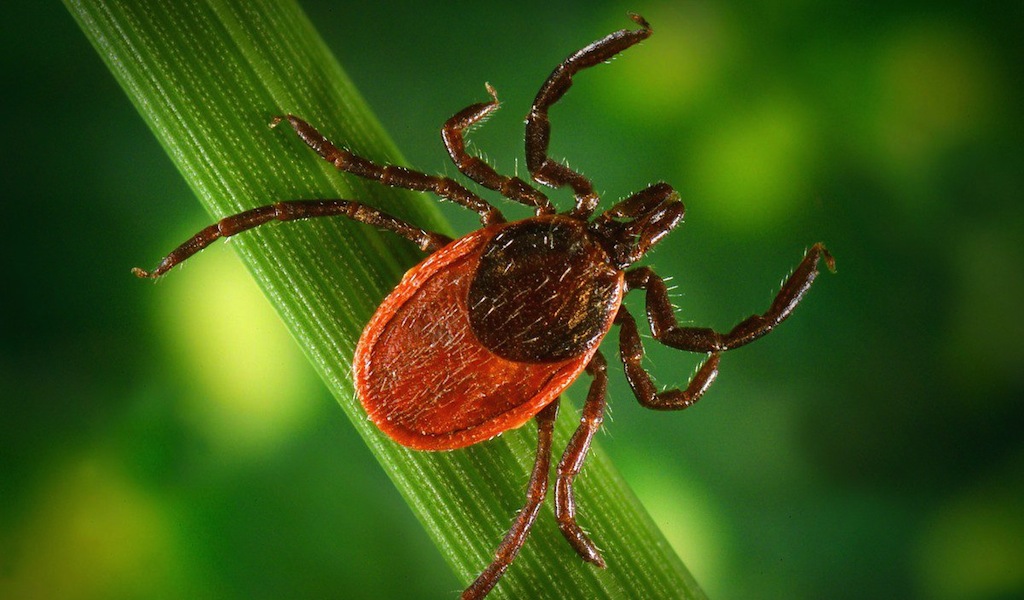
Have you heard the myth that ticks are only active during the warm summer months? I have heard multiple people say that this harsh winter cold we’ve experienced must have killed a lot of them off, but that is simply not true. Most ticks go through four life stages: egg, six-legged larva, eight-legged nymph and finally, adult. Ticks can take one to three years to complete their lifecycle, needing a blood meal at every stage to survive.
Ticks are resilient little creatures who will seek out microclimates to buffer the freezing temperatures. Leaf litter, soil and brush piles can help them stay warm by providing insulation against the surface air. Once it warms up, even if just temporarily, adults can once again become active and quest for their next blood meal.
Ticks aren’t just a nuisance; they can directly harm animals and spread diseases. There are many health impacts on livestock, including anemia, irritation, reduced weight gain, loss of condition and in severe cases death.
Protecting livestock successfully comes from combining management practices that include environmental management, routine checks and treatment.
Ticks thrive in vegetative, shaded and humid areas, usually near woods or the edges of fields. To reduce these habitats, you can mow and clear brush along pasture margins and fence lines, as well as move any logs or leaf piles that may have provided ticks shelter while they overwintered.
Routinely mowing and keeping grass shorter will also help reduce humidity at ground level, forcing ticks to move on to a better-suited environment. Pasture management can dramatically reduce tick encounters over time if done consistently.
Frequently observing livestock for ticks can be the first line of defense when it comes to protecting livestock. Ticks primarily attach to cattle in areas with thinner skin, soft tissues and high blood flow. The most common areas on cattle that ticks will be found are around the tailhead, on the udder, inside the legs, on the brisket, in the ears and occasionally on the face and neck. If you notice a large number of ticks in any of these areas, it may be time for treatment.
Having a good working relationship with your veterinarian will allow you to select the appropriate treatment. Always consult with a veterinarian before applying any product to ensure safety, effectiveness and to remain in compliance with withdrawal times. Even with chemical control, physical checks remain critical in detecting large tick populations.
Another good reason to have a veterinarian-client-patient relationship is that if any of your livestock animals are exhibiting any symptoms of a tick-borne illness, your veterinarian will be able to provide diagnostic testing in a timely manner.