




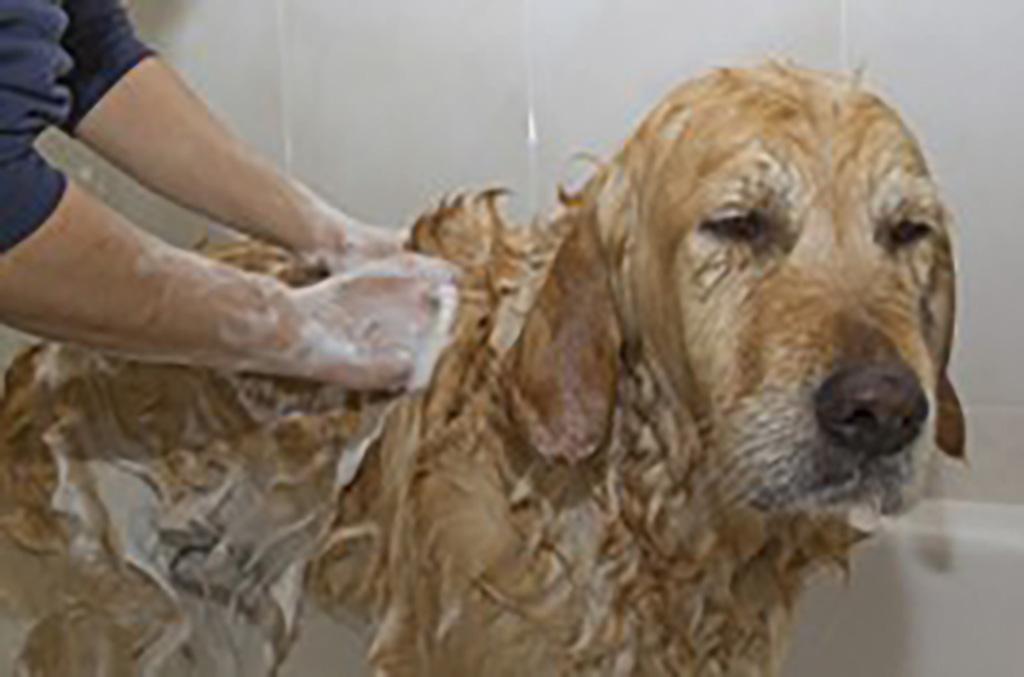
Brutus was one of our beautiful golden retrievers. He had the conformation of a winner in the ring; he just wasn’t the brightest bulb in the chandelier. One very early spring, he was exploring around our pole barn, likely trying to figure out why his buddy the cat was allowed inside and he wasn’t. While investigating a freshly excavated cavity under a corner, he likely thought he’d found another cat that had come calling — the black-and-white variety with a little head and a bushy tail.
You probably think you can guess the rest of the story, but not likely. After a brief wrestling match, which we’ll graciously call a draw, Brutus was treated to a variety of bathing techniques which included hydrogen peroxide, baking soda and Dawn dish soap. He was then relegated to his outdoor kennel for a good airing-out for a few days (and another bath).
In the meantime, I did some work at discouraging the squatter and filled in the makeshift den. Brutus was finally released from his temporary expulsion and returned to the house with just the faintest “odeur de skunk,” happily sleeping on our sofa like a congested walrus.
Round two (and three)
Apparently, the evicted skunk didn’t quite go away as far as I’d hoped, finding refuge in an old groundhog hole 10 yards or so out of our yard and along a treeline. Unbeknownst to me, the skunk had also become a mother of five. One evening, while Brutus was out doing his evening ritual, his sharp eyesight (the only sharp thing about him) identified the skunk with a trail of little ones. Time for round two. Results: the same. I think that there’s some scientific theory about such things.
After another cleanup and while being escorted to his exile lock-up, he spotted the same skunk with the same trail of little ones as they tried to escape these assaults. They were heading across a field, and Brutus — disregarding all commands — hot-footed it across a freshly planted and very muddy corn field for a final showdown.
Proving that the third time is not the charm, he was rounded up while rolling around nose-first in the mud, probably hoping to avoid a bath. I don’t know if the mud helped or if I was getting used to it, or if mama skunk just let the kids practice giving him a few squirts at a reduced volume. From that day on, I did my due diligence to try to skunk-proof the areas closest to our home. I’d like to think Brutus had learned his lesson, but that was never going to happen.
Nuisance calls
So, why all of this about Brutus? As a wildlife officer, you might think that stopping poachers at 2 a.m. would be the downside of the job. Not even close. Sure, that part of the job certainly has its risks and needs to be handled carefully, but that’s what wildlife officers are working to intercept and is their cherry on the proverbial sundae. They really want to catch the bad guys.
Nope, it’s those darn nuisance calls that every officer sort of dreads — and I’m not talking about the callers. I’m referring to the various four-legged, and sometimes two-winged, creatures causing trouble around the home and farm.
As Honest Abe Lincoln explained, “What kills a skunk is the publicity it gives itself.” Whether it’s that skunk wrestling Brutus, a woodchuck excavating the landscape, deer browsing rhododendrons or some flapping goose chasing you around the pond, most people want to talk to an expert with solutions. It’s the wildlife officer’s experience, training and availability that causes folks to reach for their phone to give one a call. The reason the officers sometimes dread those conversations is that the answers aren’t always easy ones.
Early in the discussions, it’s usually clear that the person calling is frustrated. More than once, I’ve had to hear an exasperated voice explain the problem and demand that someone should be required to “fix the problem.” After all, they would remind me, “I pay taxes.”
Permit me to let you in on a dirty little secret. I spent 27 years working as a wildlife officer and as the expected guru of all things wild. Currently, I’ve got raccoons ravaging flowerbeds, deer performing unwanted pruning chores, porch opossums gobbling cat food and a dog that’s taken up skunk wrestling. Yes, I have the same problems as you — and I’m still looking for perfect solutions.
If I’ve managed to learn anything, it’s that there just isn’t an unqualified remedy that can be found for all situations. There’s no perfect way to prevent issues short of moving to a condo and shifting those concerns onto someone else’s shoulders. If you own a home or piece of property, even in town, expect that an issue may occasionally occur. Wildlife doesn’t comprehend boundary lines or recognize a yard from a field. They only understand opportunity, safety, risk and danger. Like the U.S. Marines, they don’t see barriers; they see challenges. If they can crawl through, dig under, jump over or go around, they’ll be visiting.
Prevention
So, what do you do if you find your garden being assaulted by marauding rabbits or a wise old owl shopping for the freshest chicken dinner in the county? Like so many of life’s problems, the best solution lies in preventing it in the first place. Unfortunately, we often learn this lesson after some critter has already arrived and is causing its own unique ruckus. How often in our lives have we said to ourselves, “I should have…. (feel free to fill in the blank with any catastrophe, large or small).”
The issue really comes down to the fact that many people don’t know what to do, have little experience with wildlife and would like some help they believe they can trust. That’s where the Division of Wildlife and their officers and other employees can lend some guidance to help you formulate a plan. They can offer advice on prevention, explain the risks and the laws pertaining to wildlife, discuss in-season hunting and trapping possibilities and provide recommendations for removal services. They also offer a plethora of resources to help you understand the reasons those furry or feathered issues have come visiting. Contact the division at 1-800-WILDLIFE or visit www.wildohio.gov.
It’s also easy to research nuisance problems on the many internet sites that are springing up … some of that advice might even work. It’s best to check with the division before proceeding with some of that online advice — you want to be sure to stay within the law. There are also specialists you can hire to help remedy many of those problems.
We all need to understand that wild animals aren’t deliberately making our lives frustrating; they’re just squeaking out a living. When their little ones leave their nests and burrows and start tagging along with mom and dad, things can become complicated. The search for food is endless and to discourage them, you must make your property less appealing for them through deterrents, blocking or barriers. At times, removal may be the only recourse.
Since many of these animals are pairing up right now, right now is the time you should be closing off access under buildings, keeping barn doors shut and developing a defensive plan before the problem occurs. You may also want to keep a supply of peroxide, baking soda and Dawn.
And sometimes, we just have to acknowledge that we share this world with a bunch of critters. The more we learn, the more we understand, and sometimes, the more we understand, the more we can tolerate.
“Life is not about what I have done, what I should have done or what I could have done, it is about what I can do and what I will do.”
— Anonymous