


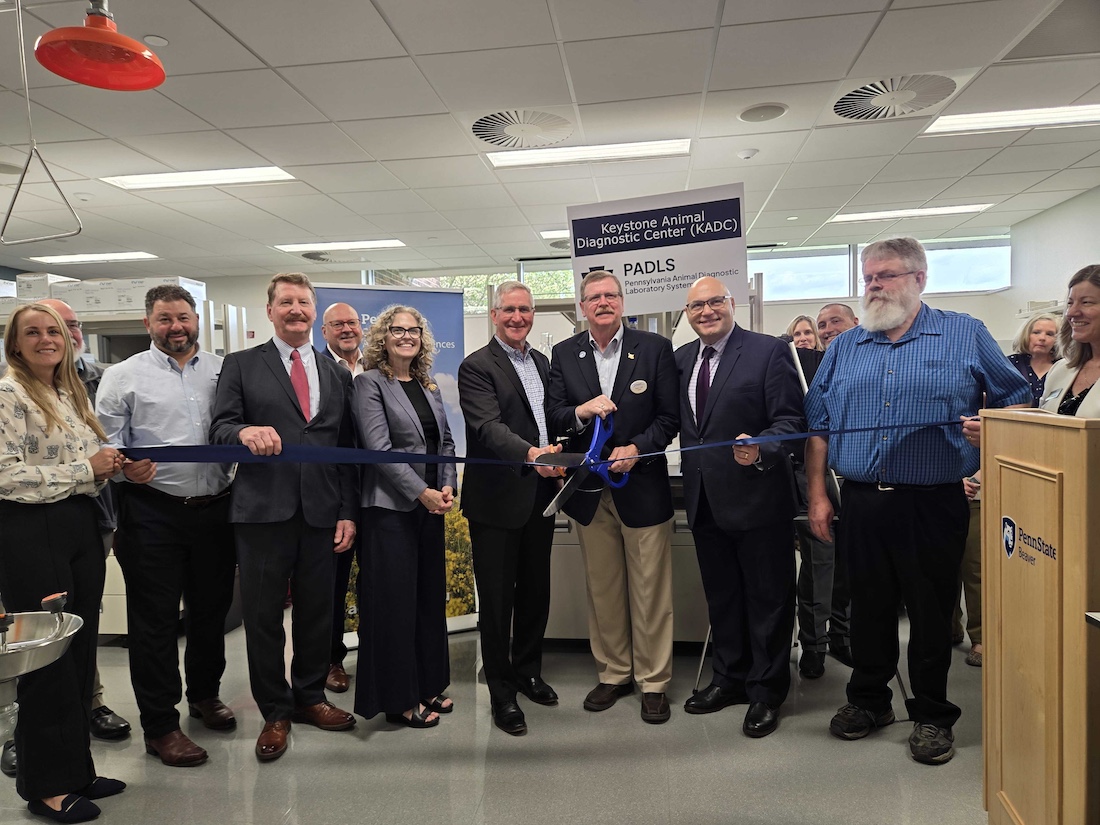
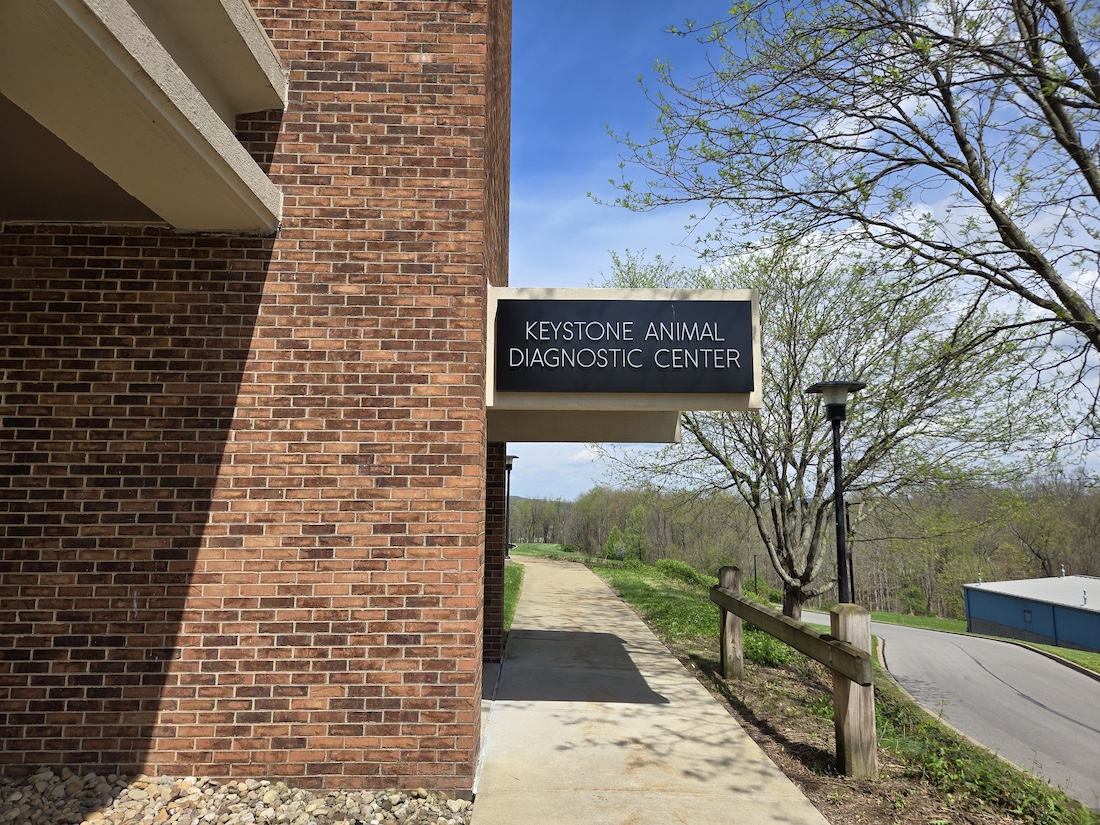
MONACA, Pa. — State and local officials gathered last week in western Pennsylvania to celebrate the completion of a new animal diagnostics laboratory. The Keystone Animal Diagnostics Center at Penn State’s Beaver campus was more than 20 years in the making.
That’s how long state agricultural officials and lawmakers have been discussing the need for an animal diagnostics lab on the western side of the state. Thanks to a $6 million investment from the 2024-25 state budget, the lab finally became a reality.
“I’m a proud papa here today. This is something we’ve dreamed about and worked on for many years,” said state Sen. Elder Vogel, chair of the Agriculture and Rural Affairs Committee, during the ribbon-cutting ceremony on April 16.
Vogel, who was a dairy farmer in Beaver County for many years, said their veterinarian was from West Virginia, and they sent samples to Ohio State University’s lab in Columbus when they had testing needs, as they got results more quickly that way.
The nearest state lab to their farm was at least a three-hour drive.
His experience was not an outlier. Although Pennsylvania has a system of three nationally accredited animal diagnostic labs, farmers and veterinarians in the region often sent samples out-of-state to be tested because it was more accessible than sending them to the nearest state lab.
That will all change now with the Keystone Animal Diagnostics Center, or KADC. Not only will closer access to a testing center save farmers time and money, but it will also ensure better overall animal health by providing quicker test results.
“With some of those same-day tests, that timing makes a real difference,” said State Veterinarian Alex Hamberg.
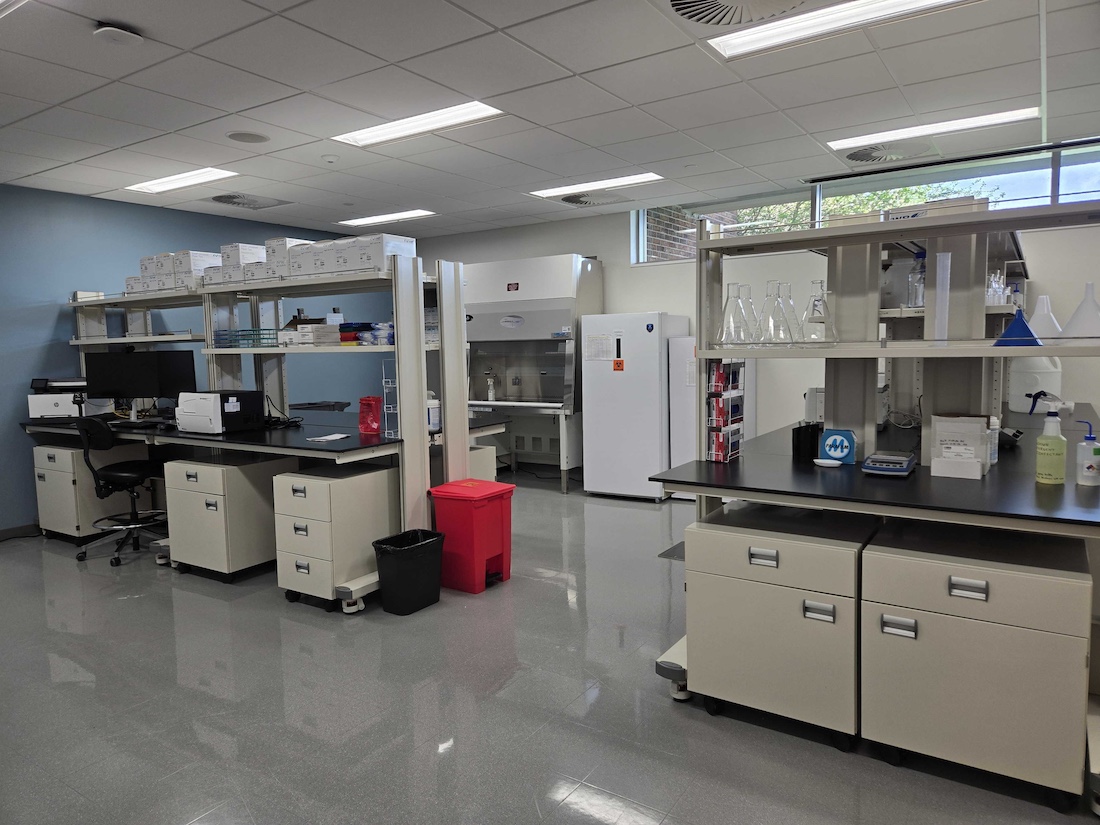
This new lab is the first to join the Pennsylvania Animal Diagnostic Laboratory System since the state established the partnership in 1991.
Keystone joins the system’s three other labs: the Pennsylvania Department of Agriculture’s lab in Harrisburg, Penn State College of Agricultural Sciences’ lab in Centre County and the New Bolton Center at the University of Pennsylvania School of Veterinary Medicine in Chester County.
The PADLS system itself was born out of the last highly pathogenic avian influenza outbreak in Pennsylvania, which killed 17 million birds in 1983 and 1984, according to state Agriculture Secretary Russell Redding. The state’s three labs existed at the time, but they weren’t coordinated or connected, Redding said, and couldn’t help with the overall response to that bird flu outbreak. All samples had to be sent to the USDA’s national animal diagnostics laboratory in Iowa.
In response, the General Assembly passed legislation to form the Pennsylvania Animal Health Diagnostic Commission to oversee the creation of PADLS to “facilitate an integrated approach to the diagnosis and investigation of disease in farm animals.”
The bird flu connection remains relevant today as the state continues to deal with another outbreak of highly pathogenic avian influenza that’s killed nearly 16 million domestic poultry since 2022. The Keystone lab will have the capacity to process 400 avian influenza samples per day, as well as testing for African swine fever, chronic wasting disease and rabies, said Ernest Hovingh, director of the Penn State Animal Laboratory at University Park and interim director of the KADC.
The lab, located in the Michael Baker building on Penn State’s Beaver County campus, is already accepting biological specimen samples from farmers, although it isn’t yet able to do all testing on-site until it is accredited through the American Association of Veterinary Laboratory Diagnosticians, Hovingh said.
For now, some samples received there are being sent to other PADLS labs for testing. The first phase of the Keystone Animal Diagnostics Center includes serology, parasitology and molecular testing services. The second phase of the center will include a necropsy facility in a separate freestanding building down the hill from the current lab. That should be open by summer 2027, Hovingh said.
More information
Farmers and veterinarians should consult the KADC website at vbs.psu.edu/kadc, email KADCHelp@psu.edu or call the lab at 724-773-3502 for information about sample submission and testing fees. Fecal testing for parasites can currently be done on site, providing rapid results. There is a refrigerator in the entryway of the center for farmers to drop off samples after-hours.
For emergency testing outside of laboratory working hours, call the Pennsylvania Department of Agriculture’s veterinary hotline at 717-772-2852.




Excellent article! Thank you, Rachel.
Our animals need this.