



SALEM, Ohio — Calls for a moratorium on permitting new injection wells in southeast Ohio are getting louder as more local governments and utility boards join in the effort to protect local water supplies from fracking wastewater contamination.
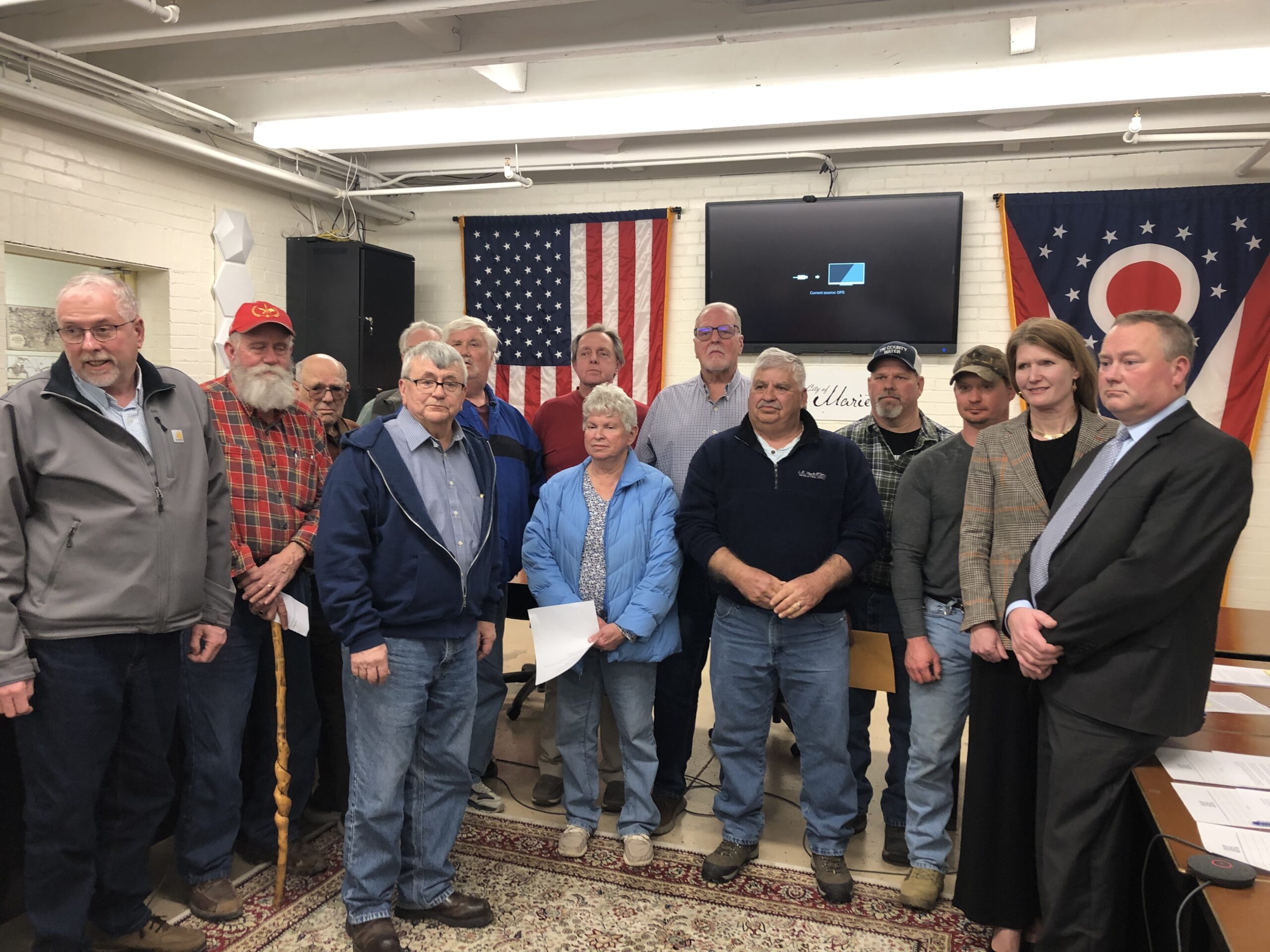
Representatives from nine water authorities and over 300 residents from Washington County, Ohio, signed a petition at a press conference on March 4 calling on Ohio Gov. Mike DeWine and the Ohio General Assembly to enact a three-year moratorium on Class I and II injection wells in the county.
The petition, which was hand-delivered to the governor’s office in Columbus on March 5, also requests a comprehensive study to determine the geological and groundwater impacts of such activity.
The Marietta City Council was the first to pursue this course of action when it passed a resolution last fall asking for the Ohio General Assembly to approve a three-year moratorium on permitting new injection wells.
Over the past several years, this brine (fracking) wastewater, a by-product of unconventional oil and gas drilling, has migrated from Class I and II injection wells in the county into gas wells owned by local well owners in Marietta and Athens, Ohio.
Now, residents, local government officials and water utilities alike are concerned that injection wells, which sit as close as two miles away from multiple water supplies, could contaminate local aquifers next.
“We cannot wait for a defining event (to) react. We have to react now before something happens,” said Jay Huck, Muskingum Township trustee, at the press conference.
Press conference
Those who signed the petition include representatives from the Warren, Putnam, Little Hocking, Highland Ridge and Tri-County water boards, government officials from Muskingum and Waterford Townships, the Village of Beverly and the City of Marietta, as well as environmental groups Buckeye Environmental Network and Washington County for Safe Drinking Water.
At the press conference, Bob Allen, treasurer and trustee of Little Hocking Water Association, said he already has a “great deal of experience dealing with contamination, unfortunately,” and doesn’t want to deal with more.
“We are the epicenter of C8 and forever chemicals,” he said at the press conference, referring to the Chemours/DuPont Washington Works plant just across the Ohio River. The plant has been leaking forever chemicals into the river for decades, and was one of the first known polluters to do so, bringing this public health crisis into the spotlight.
Forever chemicals, or PFAS, are toxic chemicals that do not easily break down in the environment, lingering “forever” and impacting environmental and public health.
According to Allen, on one side of the Little Hocking Water Association’s well field, there is Dupont (the source of contamination for these forever chemicals), and roughly one mile away on the other side are injection wells.
Like many others at the meeting, Allen is concerned about the proximity of injection wells to the association’s well fields and the amount of brine waste being injected into the ground.
In 2023 and 2024, Washington County accepted 11.9 million barrels of oil and gas wastewater, much of which comes from out of state. Dealing with water contamination, on top of the environmental hazards, can be costly or “unbelievable,” as Allen puts it.
Already, the association has to change out its water filters at least four times a year to deal with the forever chemicals in the water — Little Hocking Water Association services over 10,000 residents.
The cost: $120,000 each time they change the water filter. If brine waste were to get into Little Hocking’s water field, the closest aquifer is 16 miles away, which would require developing a new well field, laying water transmission lines, pump stations, etc — something the association estimates would cost them $50 million, said Allen.
“We’re a relatively small water system. We can’t afford it, neither can our water customers,” he said.
Many water boards, including Little Hocking, expressed frustration with the Ohio Department of Natural Resources — the regulatory body for Class II injection wells — and the Ohio Environmental Protection Agency — which regulates Class I injection wells — for “not accommodating their concerns” and continuing to permit new injection wells despite several wells in southeast Ohio already shut down due to brine migration.
ODNR told Farm and Dairy that “The Division of Oil and Gas Resources Management will follow both Ohio Revised Code and the Ohio Administrative Code regarding the regulation of class II injection wells. The division does not have jurisdiction over class I injection wells.”
Washington County is home to 19 Class I and II injection wells — two of these injection wells were permitted last year.
Failed injection wells
In southeast Ohio, seven injection wells have already failed, and six of those wells have been shut down by ODNR, according to Hillary Royster with the group Washington County for Safe Drinking Water.
In 2024, three injection wells in neighboring Athens County were ordered to stop operations after ODNR found that the wells were leaking and posed a threat to the county’s water sources.
Brine waste is also leaking into local gas wells in Washington and Athens County. Bob Lane and Bob Wilson, both owners of gas wells in Marietta and Athens, Ohio, found brine waste in their wells in 2019.
This prompted ODNR to conduct an investigation that found brine waste had migrated up to five miles away into 28 production wells. After one year of operation, the Redbird #4, a Class II injection well, leaked 4.2 million gallons of brine waste into these wells.
Lane and Wilson, who both spoke at the press conference, filed a lawsuit (ongoing) against several injection well companies in 2019, including Deeprock Disposal Solutions’ former CEO Brian Chavez, now an Ohio state senator and chair of the state’s energy committee; Deeprock operates several injection wells in southeast Ohio.
Chavez, who received the Oilfield Patriot Award from the Ohio Oil and Gas Association on March 5, recently had an ethics complaint dismissed against him for his ties to the oil and gas industry and his role on Ohio’s energy committee.
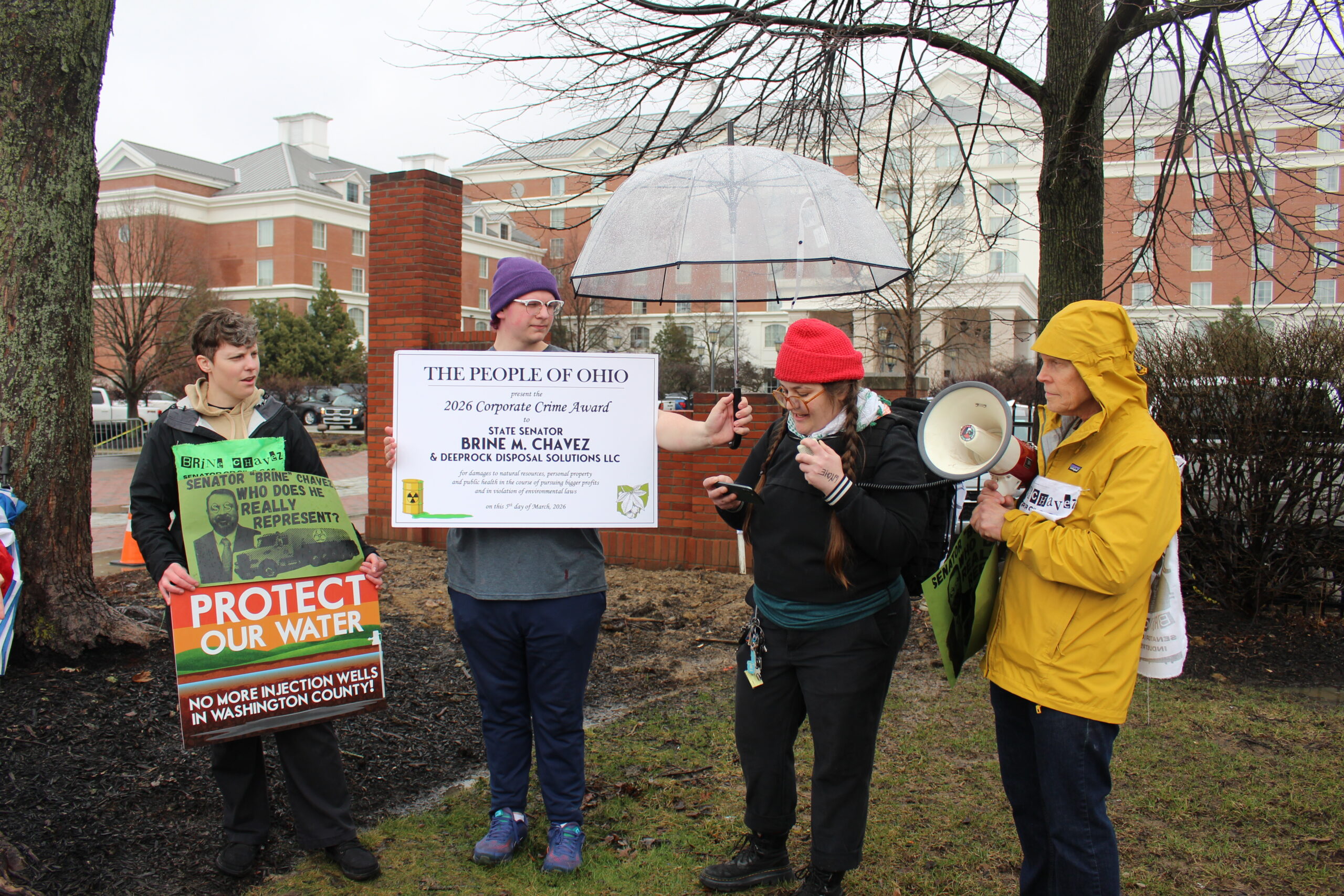
While these well owners, government officials and environmental groups are frustrated with local injection wells, they emphasize they are not against oil and gas drilling — many who signed the petition have ties or have worked in the oil and gas industry before. The goal is to ensure clean water for their communities.
“My dad worked in oil and gas, the whole family has. It’s something that, especially when you’re raised around here, you don’t want to talk bad about oil and gas,” said Royster, at a press conference on March 5 in front of the Ohio Statehouse.
“I respect that people need to make money. But, that said, it becomes a public health issue. Regardless if you make your money from oil and gas or not, you should be concerned about what comes out of your faucet and if that water is contaminated.”
(Liz Partsch can be reached at epartsch@farmanddairy.com or 330-337-3419.)




