




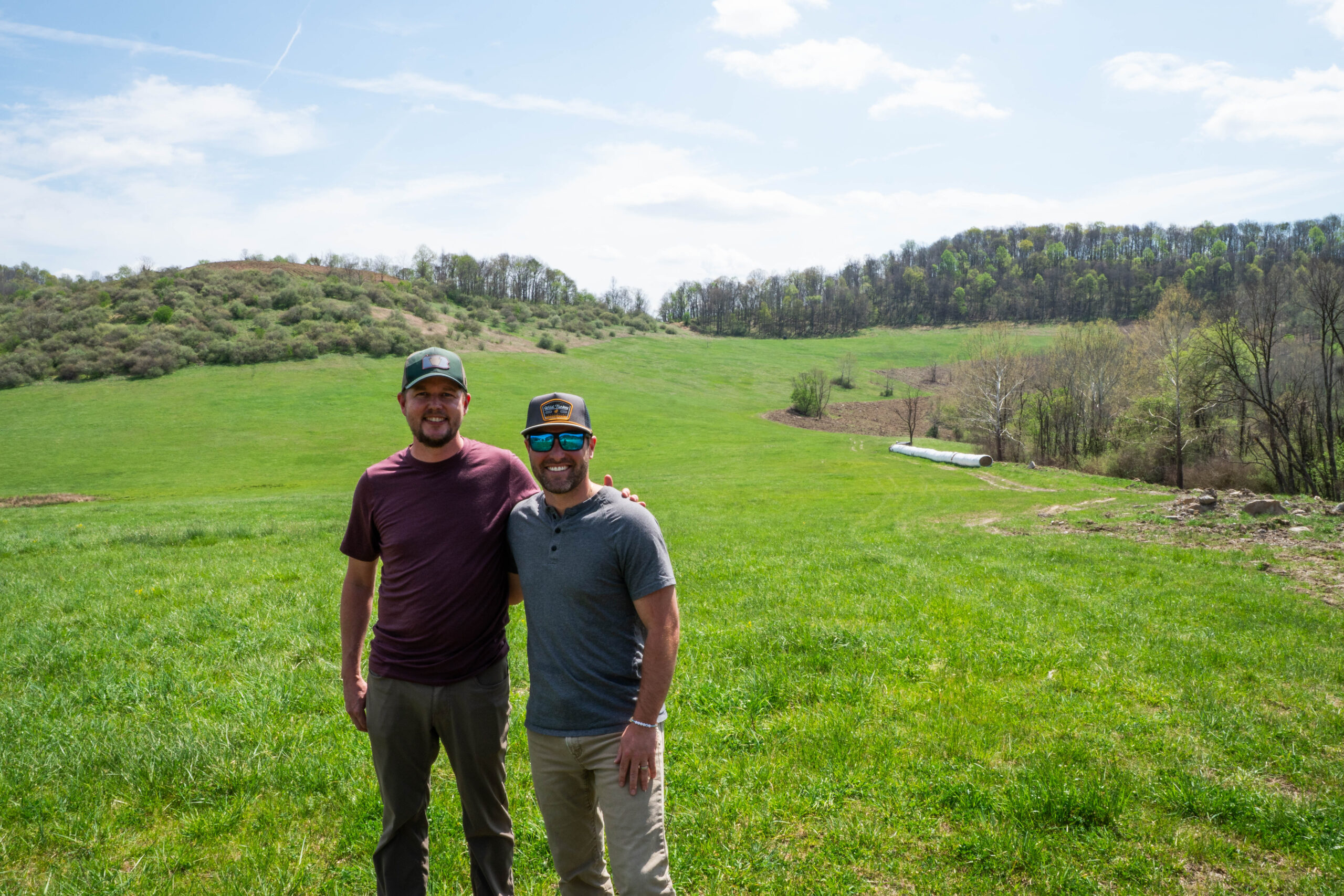
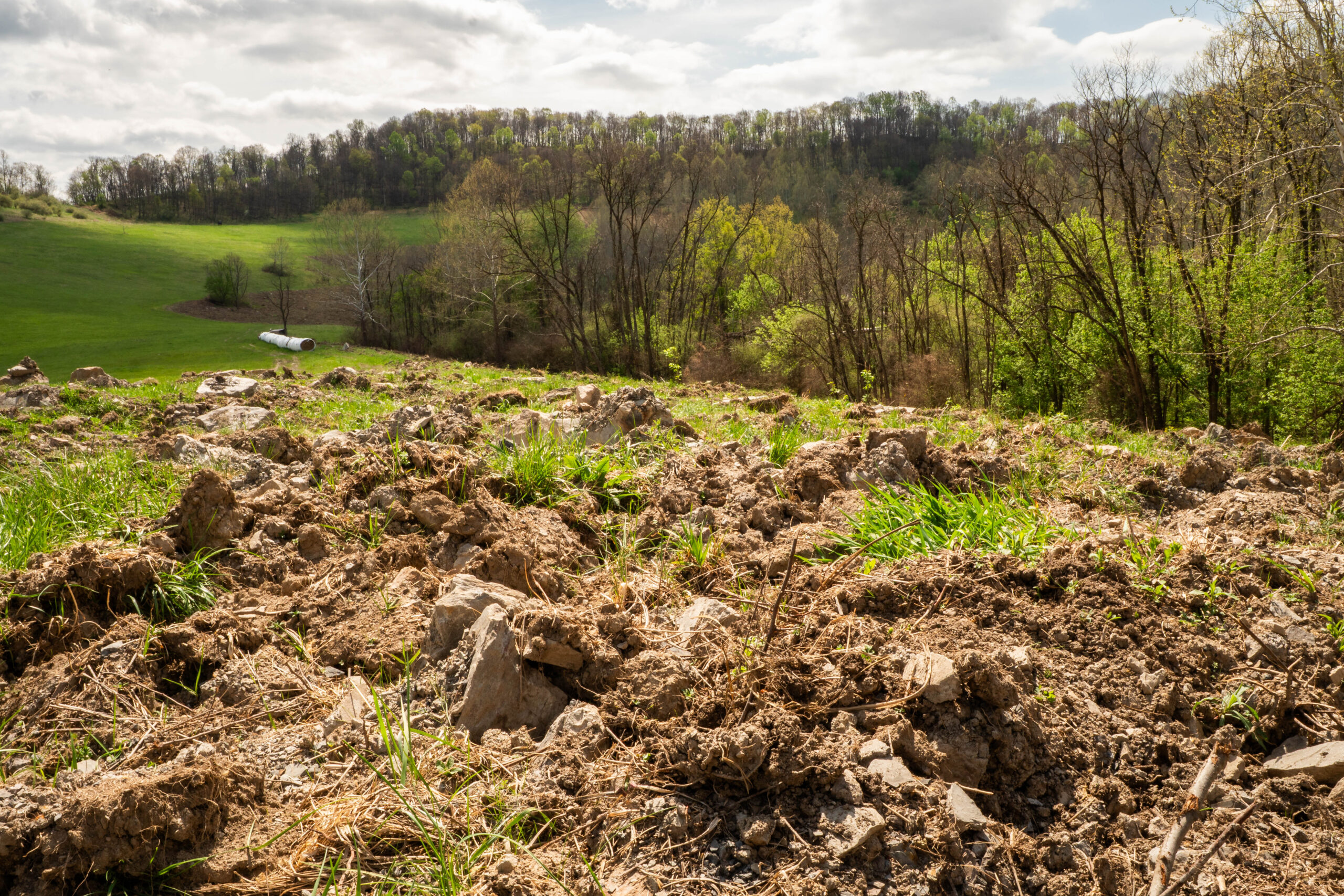
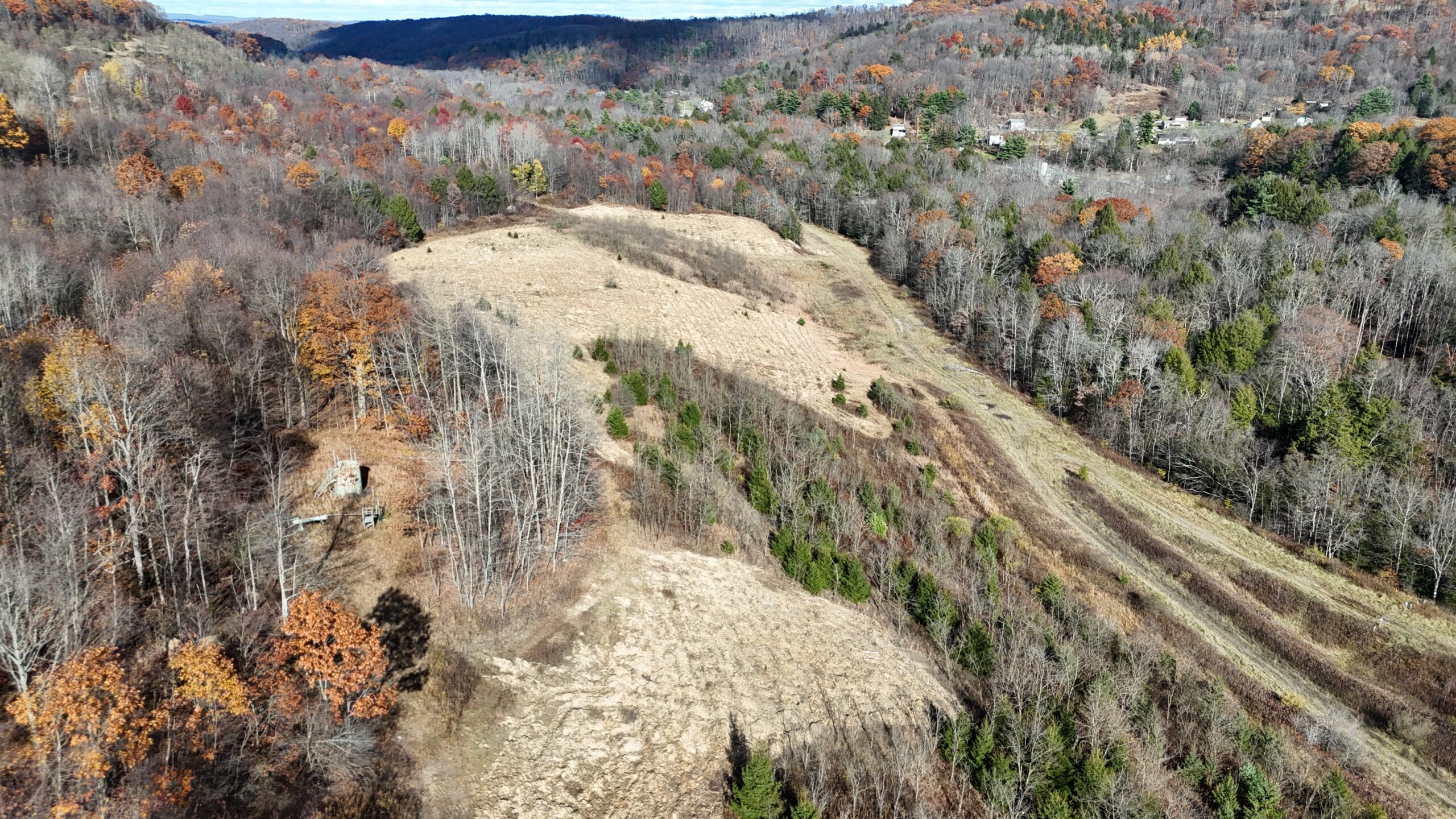
PHILIPPI, W.Va. — The sun’s heat beams down on an expansive grass field, dotted with patches of upturned earth, revealing dozens of rocks and rough soil. These patches of dirt may look unsettling to some, but they are a symbol of a new beginning.
Patrick Adrian’s property in Philippi, West Virginia, used to be strip mines, but now, with the help of non-profit Bosland Growth and financial backing from liquor company Suntory, trees will once again have the chance to fill out this landscape.
Adrian’s property is one of several in West Virginia and Pennsylvania that are having their land reclaimed by Bosland Growth, by planting a variety of native trees, including white oaks that may one day be used as bourbon barrels for Suntory.
This project will support the declining oak species, which is in high demand commercially, but is seeing fewer and fewer new growth in forests.
Decades from now, Adrian’s strip mine land could be home to these white oak trees and hundreds of other mature trees, supporting wildlife, sequestering carbon, providing timber for wood products and carving a legacy for future generations.
“More than likely, these landowners aren’t going to be the ones harvesting the trees with Suntory. 60 to 100 years from now, it’s going to be their future landowners or their descendants,” said Michael Knoop, vice president of Bosland Growth.
“But (landowners) really like the idea of planting the white oak for its wildlife value and the idea of it being a legacy that they can carry forward.”
A white oak crisis developing
Trees are an agricultural commodity, beneficial for both wildlife and for making commercial products. Specifically, the white oak tree is a significant food source for animals like deer, turkeys and squirrels, and provides habitat for a host of wildlife.
It is also used to make barrels, cabinets, flooring, doors, caskets, furniture, etc. That’s because “white oak is in vogue,” said Jenna Reese, executive director of the Ohio Forestry Association.
“Hardwood trends are very much determined by consumer fads and trends,” she said.
But this species is also on the decline: about 75% of all white oak trees across the eastern United States are mature — it takes 60 to 80 years for this tree to reach maturity — according to White Oak Initiative.
But seedlings from these trees are increasingly absent, with about 60% of acres surveyed having no seedlings, according to the initiative, or are unable to grow to reach maturity.
While white oak may be fine today, a lack of regeneration will be a concern 40 to 50 years down the line. The main threat facing the tree species is not its popularity, but the lack of forest management, says Reese.
“The concern lies in getting our white oaks from the seedling or sapling stage up into the overall canopy,” she said. “That’s where the issue is happening. We have lots of mature white oaks in Ohio’s forests, but we are not regenerating them like we should be to sustain the demand.”
Seedlings are unable to grow for a number of reasons, including pests, deer that eat the saplings and competition from invasive and native, shade-tolerant trees like maple trees.
“The acorns are making it into the ground at a high enough rate; they’re regenerating into seedlings and saplings, but they’re not making it up into the overall canopy,” she reiterated.
“We don’t have enough landowners engaging in forest management practices to make sure that white oaks thrive on their properties.”
Adrian’s property
For Adrian, managing the land is the main priority on his roughly 600-acre property in Barbour County, West Virginia:
“Our main purpose of this farm has been a lineage project. It started with my uncle and my dad. It’s about managing the land, managing the wildlife and then making it a part of our family,” he said.
The Adrian family first acquired the former strip mine and woodland in 2002 after a family friend sold them a portion of his 2,000-acre property.
Since then, they have used the property as a gathering place, hunting and fishing together and managing it for wildlife through grant programs at the National Resource Conservation Service.
But recently, the Adrians have turned their focus to revitalizing a portion of the property that is home to former strip mines, thanks to help from Bosland Growth and Suntory.
The land will soon be home to almost 32,000 trees, including white oak trees.
Bosland Growth
Bosland Growth was founded in 2023 to reforest degraded coal mining land in Appalachia.
Decades of digging and using heavy machinery destroys nutrient-rich topsoil and compresses the ground, restricting root growth and water drainage, making the landscape unsuitable for plants or trees.
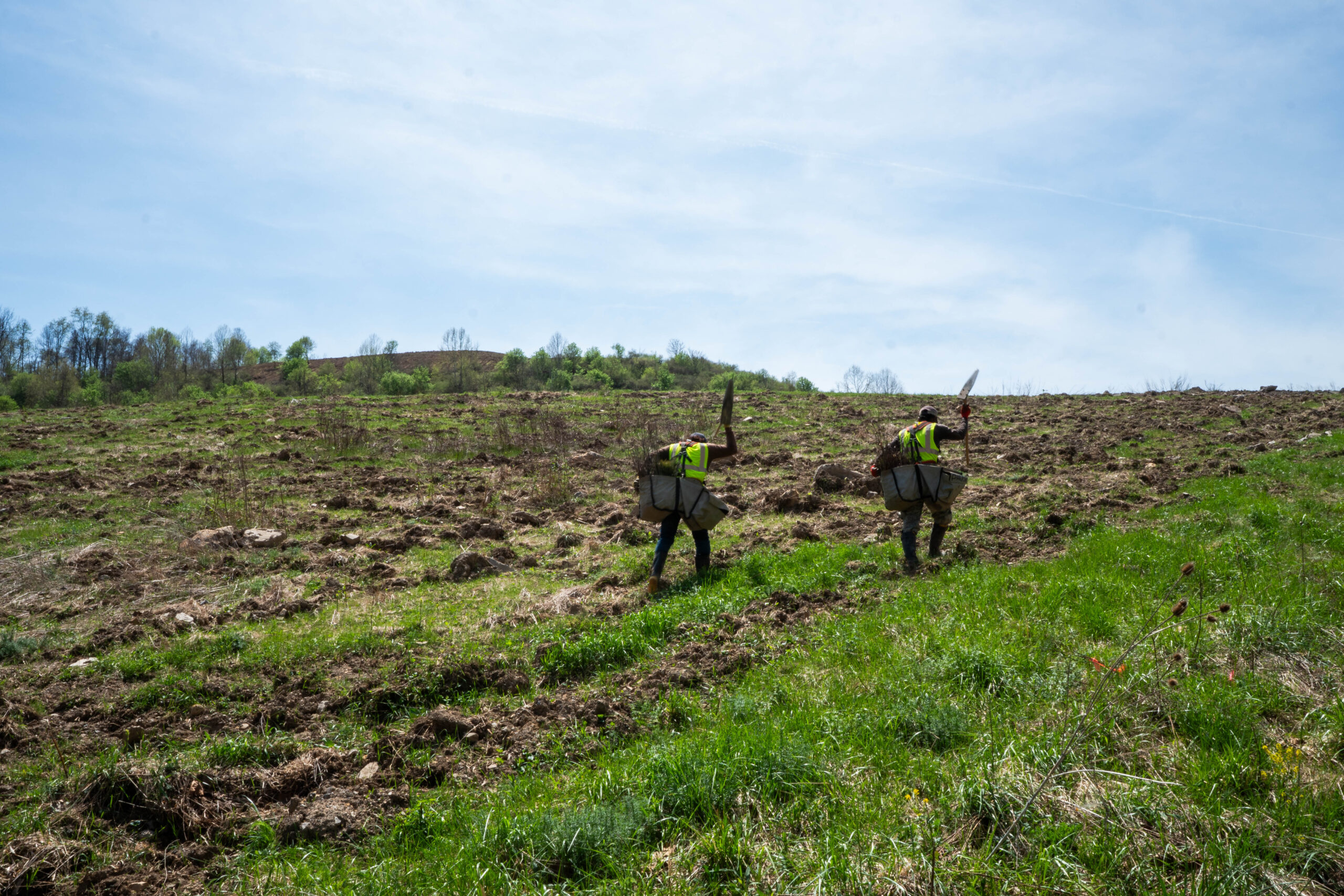
To reclaim this land, Bosland Growth has to conduct several months of site preparation to break up the soil. The group begins this work in the fall by getting rid of invasive and competing vegetation, like autumn olive: applying herbicide treatments before using a skid steer with a grinder.
Then, before or during winter, the group focuses on areas with heavy soil compaction, breaking up the soil with a bulldozer or a tractor that has a ripping shank.
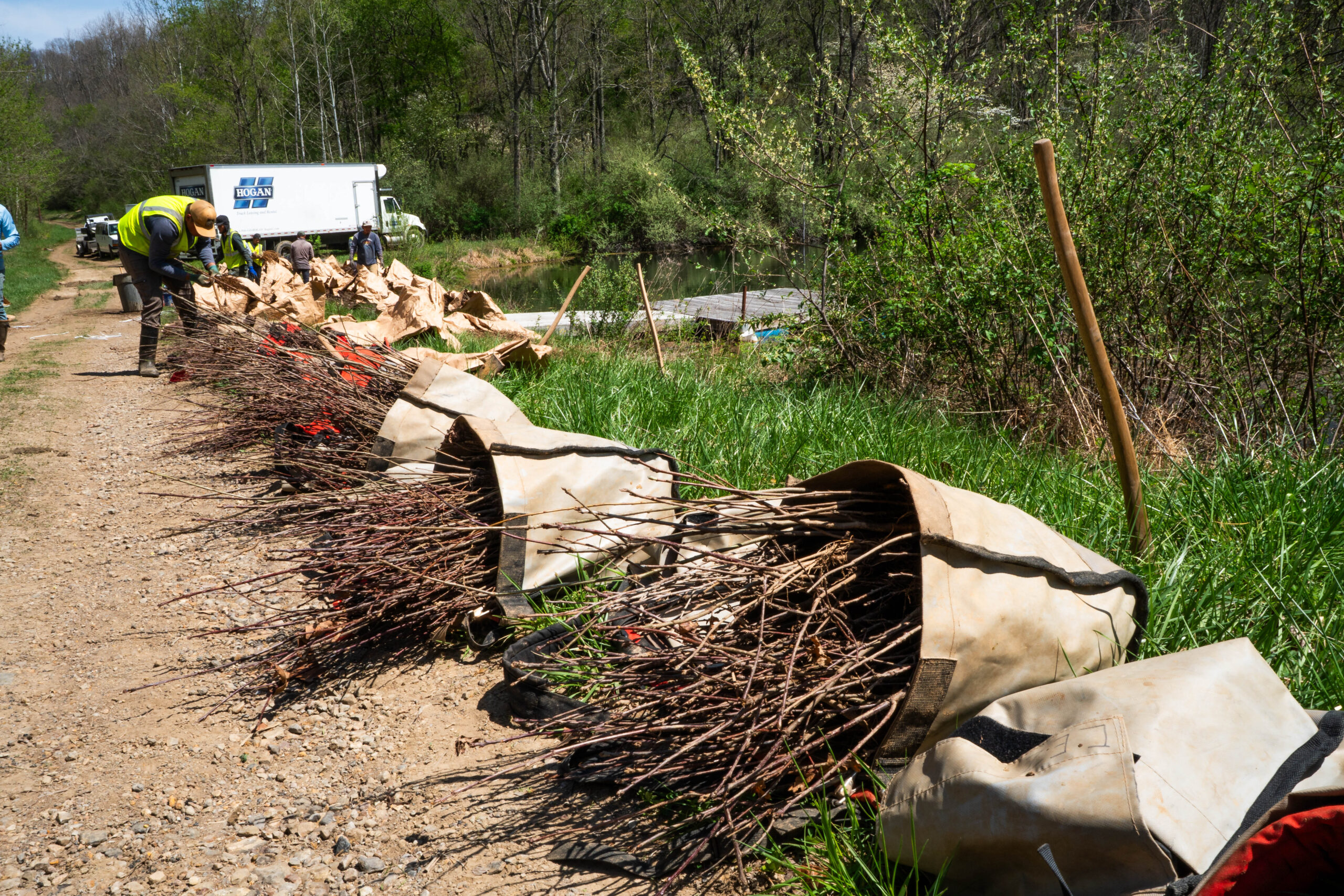
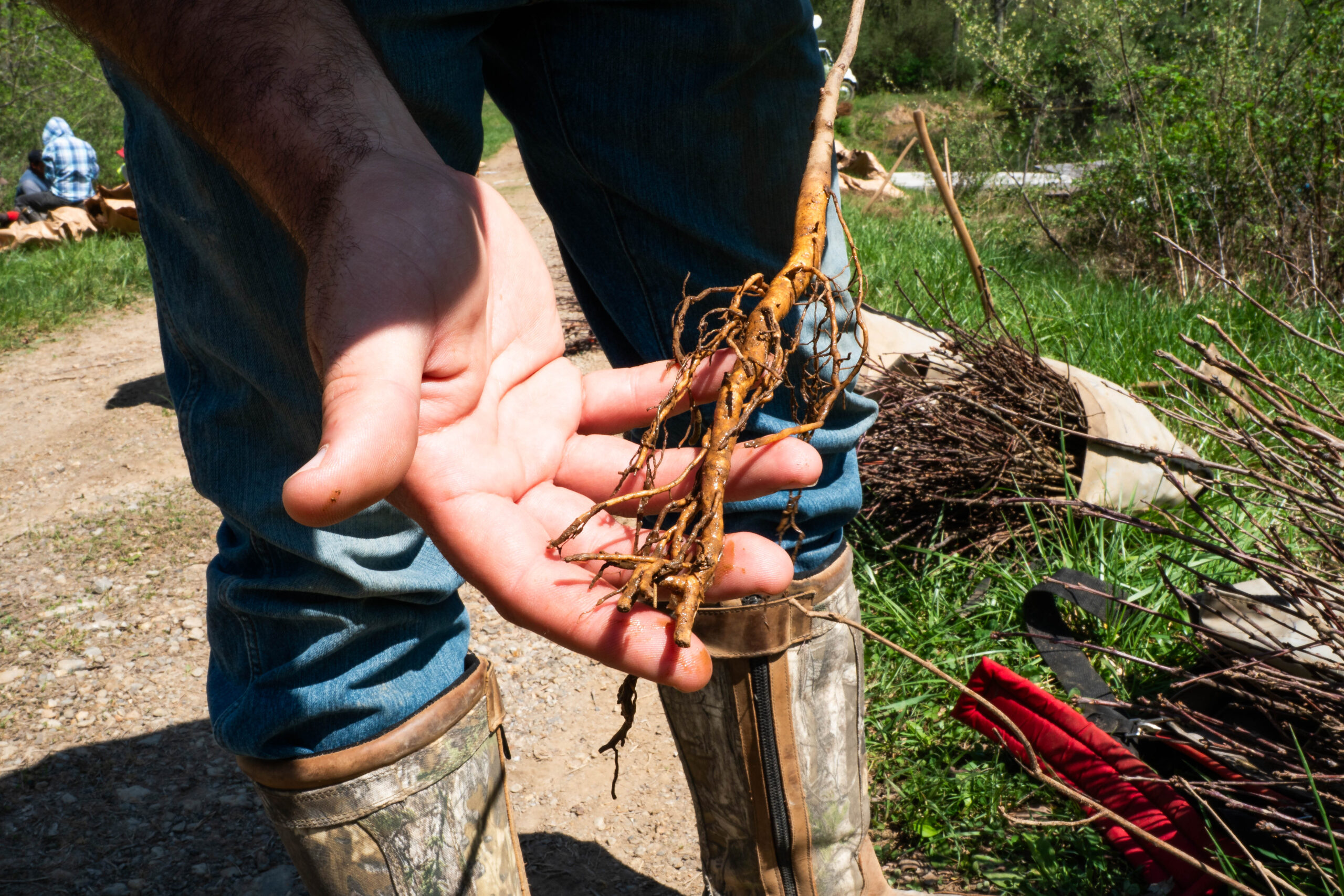
Conducting this work in the winter allows the soil to settle, freeze and thaw before spring planting, says Knoop. The group hand-plants 680 trees per acre on an eight-by-eight grid.
Over time, Bosland Growth continues to manage the land, which may include invasive species management, replanting and conducting work to restore the soil microbiome. After three years, the group hopes to see a 70% survival rate for trees.
Last year, the organization had its first tree planting on a property owned by the Western Pennsylvania Conservancy in Erie County, Pennsylvania, and saw an 80-85% survival rate.
This year, Bosland Growth is working on seven more projects, including Adrian’s property in Barbour County, West Virginia, and in Cambria County and Clearfield County in western Pennsylvania.
Private landowners receive a certain amount per acre for reforestation work, and in return, they agree not to cut the trees for at least 60 years and to keep the land in a forest-use capacity permanently.
“It’s the landowners’ decision whether they want to do any forestry after those 60 years” or harvest the timber, said Knoop.
Bosland Growth plants a variety of native tree species in order to support wildlife, improve water quality, sequester carbon and deter diseases, says Knoop, which includes dogwood, black cherry, pin oak, shagbark hickory and more.
In particular, Bosland Growth partnered with Suntory to plant white oak trees that will eventually be used as bourbon barrels for the liquor company.
Suntory
For Suntory, investing in reclaiming mineland is a way of giving back to what makes the business possible.
“We’re a company that’s really based on nature; our ingredients come from nature,” says Brian Golden, chief operating officer at Suntory. The company relies on corn, wheat and barley to make its spirits, including bourbon.
White oak trees also play an important role for the company, as bourbon barrels are required by law to be aged in new oak barrels. White oak is the ideal tree for many bourbon producers due to its non-porous capability, which prevents liquid from passing through.
Suntory is helping Bosland Growth pay for the cost of the reforestation work, and over time, will pay landowners for the growth of the trees on their property.
According to Golden, white oaks, like the ones set to grow on Adrian’s property, won’t be harvested for at least 100 years from now.
“To make a barrel, you need very good quality lumber. It’s got to be pretty wide. It’s got to have no knots in it and, typically, to get to that size and to be worth the effort of cutting down, the white oak should be in that range of 100 years plus,” he said.
When the oak trees are mature, Suntory will get the option to bid on the trees first if the landowner decides to harvest timber.
A century may be a long time, but Golden says it is part of Suntory’s long-term mindset: “It’s probably a little bit longer of a horizon than most companies would look at, but it takes a long time to make whiskey,” he said.
Landowner benefits
Suntory is not the only one investing in the future: Adrian is committed to managing the land for the long haul and encourages other landowners to do the same.
“A lot of people do not want anything to happen on their property. They want to keep it as is,” Adrian said. “You’re keeping it in a certain state, but you’re not really doing anything to help what’s there, and actually, it’s evolving before your eyes.”
Such is the case for Adrian’s property, on a portion of land he refers to as the “Bald Knob.”
“There was nothing on that knob. Now it’s covered in autumn olive, so it’s evolving in a way you don’t want it to,” he said.
Invasive autumn olive trees are common on former coal mining lands — the federal Surface Mining Control and Reclamation Act of 1977 required coal mining companies to revegetate the land.
At the time, autumn olive was commonly planted as an ornamental shrub and was desirable due to its ability to fix nitrogen that disturbed mine land lacks.
Adrian is hopeful that, eventually, the native tree plantings Bosland Growth is conducting on his land will deter future growth of this invasive species: “They’ll create canopies so that autumn olive can’t grow in those areas,” he said, adding the trees will improve the soil quality.
While Adrian was hesitant at first, he appreciated Bosland Growth’s ability to find a common ground: revitalizing only a few sections of the mine land at a time instead of the full area.
As Bosland Growth seeks more private landowners, Adrian recommends that other property owners invest in forest management and look to restore coal mining land to its former glory.
“When it’s a family property, it’s a legacy property, it’s something that’s been in your (family for) generations, change is very difficult. (But) you’ll find that just leaving the land as is doesn’t help anybody,” he said.
“It should be every landowner’s responsibility to love their land. If they love being on it and they want it to continue in the future, you have to help it,” said Adrian.
For more information on Bosland Growth, visit https://boslandgrowth.com/.
(Liz Partsch can be reached at epartsch@farmanddairy.com or 330-337-3419.)





NOTE TO PATRICK: Figure out a way to keep the white-tail deer from browsing your young white oak trees. We planted tens of thousands next to the Mohican Memorial Forest. The deer gnawed a lot of them…deer often preferring them over many other tree species. This preference is due to white oaks having lower levels of bitter tannins compared to species like red oaks, making the seedlings more palatable and easier to digest.
It’s one thing of you’re there 24/7–it’s another thing if you have 600 acres with no one around. To the deer, it’s like a big cafeteria. Even visuals, like foil gimmicks, cayenne pepper spray on trees, recorded loud noises–the deer seem to get used to a lot.
Nipping of the tender tops caused much deformation and stunted growth–even bucks using the larger trees as rubs.” BE PREPARED!