

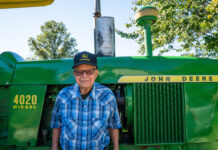
REPUBLIC, Ohio — Bob Ruffing is well into his day long before the majority of weekday warriors have finished their first cup of coffee.
Feeding, inspecting his cows and walking through pens that are as familiar as his own living room are his top priorities. It’s usually almost noon when his wife Janet sees him again; coming up from the house, he might spot a grandchild racing a sibling through the snow, running toward the barn or climbing aboard the tractor for a ride.
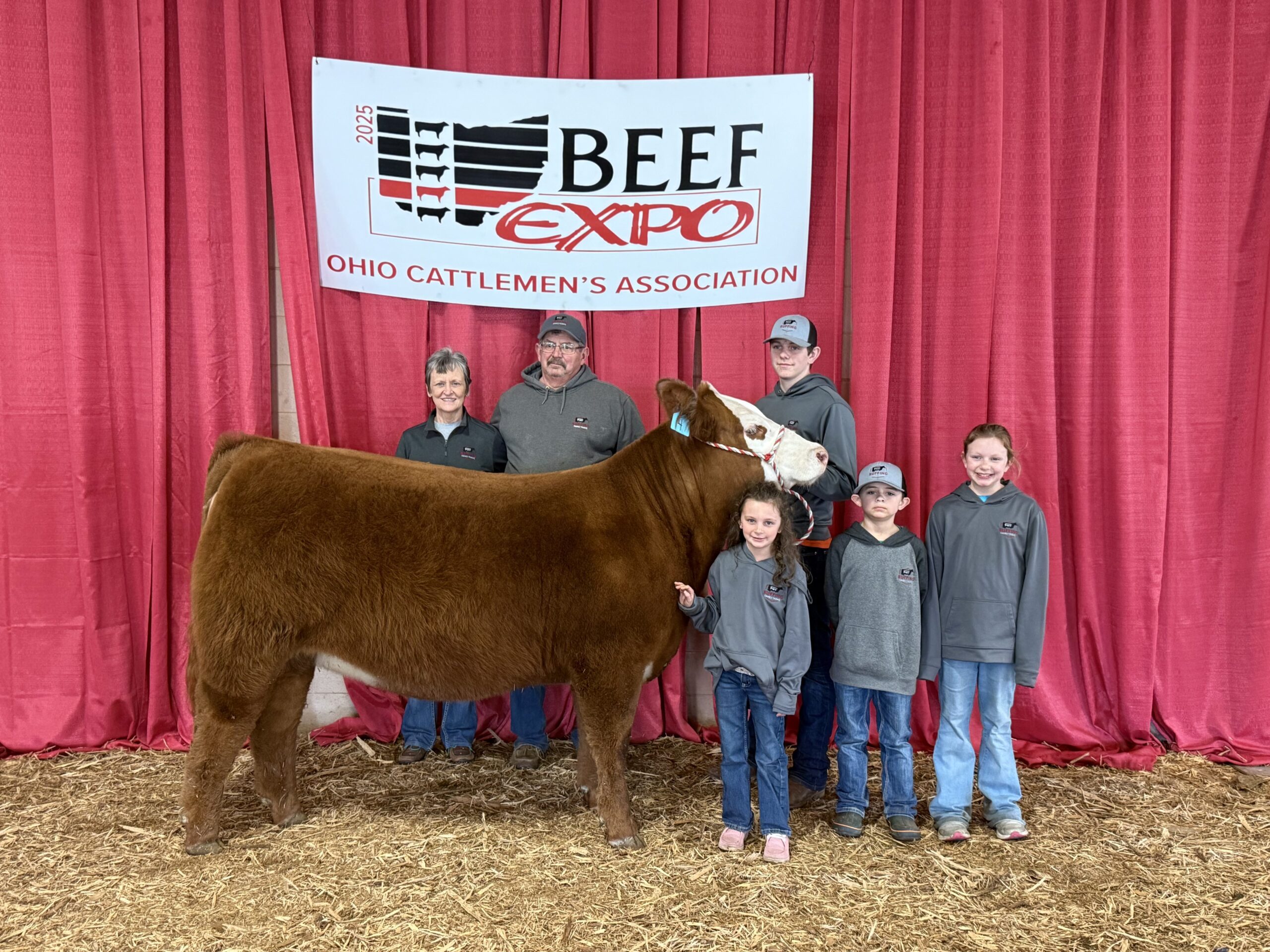
Bob calls Ruffing Family Farms, a Simmental-focused beef farm in Republic, Ohio, a “4-H project that went wild,” borrowing a line from his wife. It’s been a wild ride that today sees the family exhibiting their cattle every year at the Ohio Beef Expo.
Humble beginnings
The farm got its start with the youth development program that focuses on developing the head, heart, hands and health, but the family has been involved in agriculture for many generations.
Bob’s father was a farmer and so were both of his grandfathers. He spent his childhood at his grandfather’s house, where he was constantly surrounded by animals. Those early years on his grandparents’ farms planted the seed for a lifetime in agriculture that later included his children. But it was his daughters, Sarah and Becca, and their decision to show dairy feeders as their 4-H project in 1994, which set in motion the shift to the full‑fledged beef operation the family manages today.
“When my son Andy was old enough, they wanted to switch to beef calves,” Bob said.
Andy remembers well.
“We just kind of started doing the cattle thing when I was 4, helping with some cows,” Andy said. “Then we got a few, took a few more and a few more over.”
The family purchased some cattle from a neighbor who lived down the street. When that neighbor was ready to let go of their farm, the Ruffings eventually bought it outright, along with a portion of his remaining herd and equipment, too. They rented a second parcel for several more years to support the growing herd.
As the Ruffing children grew up and had their own families, the operation underwent yet another transformation. The elder Ruffings and their son Andy split the purchase of a farm down the road that was divided by the highway: Bob and his wife took over the barns and surrounding land, while Andy bought the parcel with the house. The family transformed what had been an old dairy farm into a beef-cattle operation, adding a treatment room, an alleyway system and other features to make handling cattle easier, all while Bob was still juggling farming with a full-time construction job.
“We cut the herd in half,” Bob said. “We had 50 cows at that place, and I told my wife, ‘We’re gonna go down from 50 good cows to 25 really good cows.’ So that’s what we did.”
Meanwhile, Bob was putting in 10-hour workdays four days a week on construction jobs, frequently working an hour or more away from home. He’s now retired from construction and enjoys the quieter pace of the farm. Janet, too; in a former life, she was a CPA and company controller. She’s a reformed city girl, Bob said of his wife, who can tube calves, give shots and assist with anything that needs to be done, even if she doesn’t always enjoy every task. The couple has been married for 46 years.
Today, the second generation of the family — Sarah, Andy and Becca — are raising families of their own and pursuing careers in fields from education to the electric industry.
“Everybody works away from home,” Bob said. He added that they’re all still involved on the farm in some way.
But the next branch of the family tree is already beginning to find its farming roots. Bob and Janet have eight grandchildren — two boys and six girls — and many of them are already fixtures on the farm.
During the summer, Bob’s eldest grandson Colton, the 15-year-old son of Becca and her husband Kyle, is there to help. “He can do just about anything around here,” Bob said. “He’s kind of my right-hand man in the summertime when everybody else is at work.”
Andy’s 9-year-old son, River, is not far behind.
“He’s anxious to be my other right-hand. He wants to help, make him do everything,” Bob said.
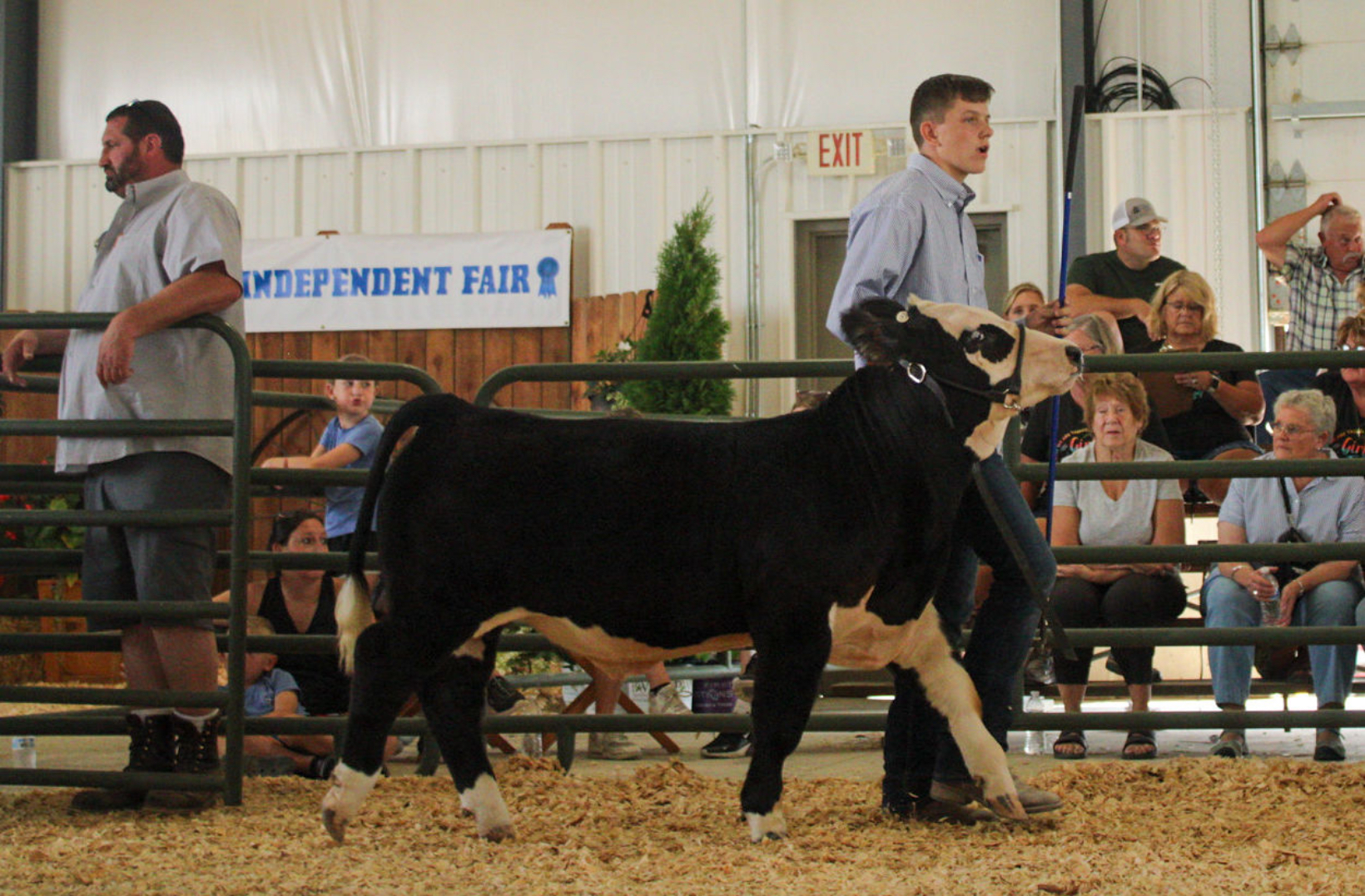
He’ll probably learn the most from right in the middle of the work, just like his parents did.
“I enjoyed 4‑H and some of the things I learned from it,” Andy said. “My wife was heavily involved in 4‑H too, and we’re excited for this to be the first year of our son doing 4-H.”
In the shadow of feed bunks and working pens, the children are making a lifetime of memories.
Show ready
But at the heart of it all are the cattle. With a focus on Simmental and some club calf influence, the Ruffings manage roughly 25 cows.
Regarding how they got started with Simmentals, it’s not a long story.
“Honestly, that’s what the neighbor man had,” Bob said.
The breed turned out to be a good fit over time. “They’re good mothers, they’re pretty docile, pretty easy to get along with,” said Bob.
The animals are able to produce a lot of milk and their calves are quick studies that get up and go without much delay. Plus, Simmentals have the right temperament: they’re good with kids.
“They don’t stick around here long if they’re mean,” Bob said.
Particularly at the Ohio Beef Expo, it makes a real difference for the cattle to be easy to work with.
The Ruffings have been taking part in the Expo sale for a number of years. They brought a heifer last year that turned out to be the best seller — the top Simmental cow, netting $10,500 — a highlight in Bob’s mind, not only because of the price but also because it was the product of his family’s hard work.
It was Colton, he said, who was the one who broke her.
“He started breaking her when she was a calf, worked with her, and he had her so tame.”
To demonstrate how submissive she was, River took her in the ring and walked her. When the sale was over and the heifer was gone, the moment hit the boy hard.
“The sale was over and River stood and cried and said, ‘Pa, why did we have to sell her?’” Bob recalled.
For him, though, it’s more than a transaction at the auction block. He’s stayed in contact with many of his buyers, including the family who purchased last year’s high-selling heifer, trading phone calls and pictures of their daughter showing the cow.
On the day they’re born, Bob begins assessing calves in an effort to identify those that could be Expo material. After that, the work is straightforward: breaking them to lead, cleaning them twice or three times a week, doing more hair work as show day draws near, and adjusting feed rations — one plan for heifers, another for bulls.
“It starts with the breeding,” Bob said. Matching the right bull to the right cow is the foundation. From there, there’s both science and luck. “Sometimes it’s just a game, too.”
The Ruffings strive to “pick it up a notch” every year by choosing new bulls, improving their herd of cows and bringing better cattle to Columbus than they did the previous year. Bob says they have two this year that he is especially proud of.
But pride, for him, is easy to come by. He views 4-H — really, where it all began — and the cattle as a proving ground for character that goes beyond banners and sale prices. His own kids worked for other farmers and at the local elevator, and he remembers people asking him how he raised such hard workers. Now he’s watching the same ethic take root in the grandkids.
His advice is straightforward for young people just starting out in 4-H.
“Once you start out, make sure you’re thanking your parents, grandparents or both, because they’re involved as much as you are,” he said. “You just got to decide that you’re gonna do the work. Try to make your project the best that you can make. The more work you put into it, usually, the better your project.”
He’s proof positive, in many ways, that it all comes back to you.




