


While wintertime in the embryonic settlements of the Ohio country was far more leisurely than the other hardscrabble seasons of the year, there were still jobs that needed to be done, beyond the regular care of livestock and endless feeding of the fire for warmth.
Winter was a time for tool maintenance. All of the implements that had been used so ruthlessly in the name of survival had taken a beating and were in need of repair or overall reconditioning. The brief respite of the snowy season was the best time to tackle those projects.
One of the primary tasks at hand was to repair harness. Of all the equipment regularly employed on the early farmstead, the leather harness used by the horses and oxen was the most fragile. Baked by the hot sun, surface rotted by rain, humidity and sweat, constantly under stress and strain, harness was generally in bad shape at the end of the farming season.
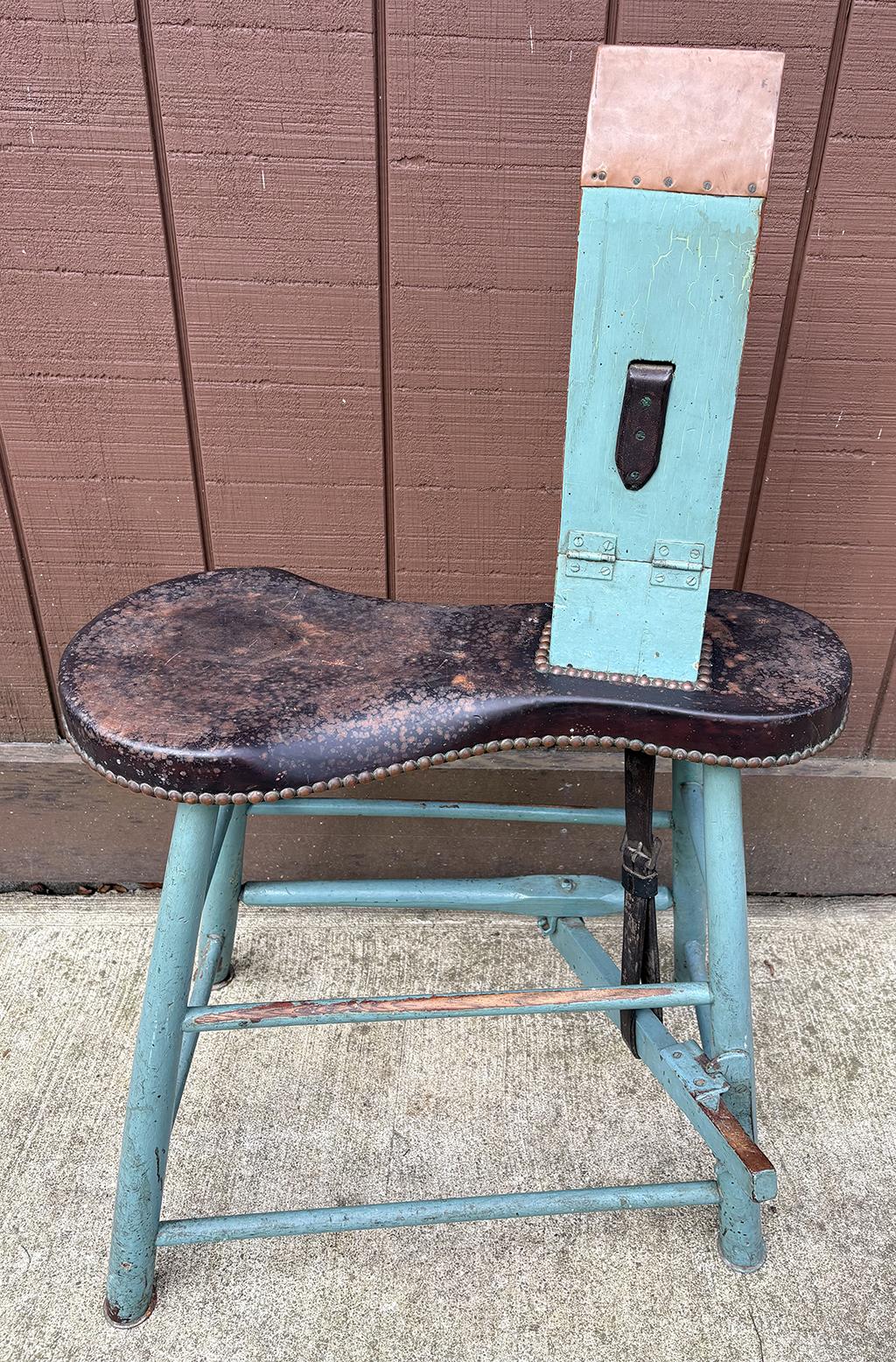
Harness horse
First of all, the breaks in the leather needed to be repaired. This was done by sewing it back together with a heavy needle and thread, sometimes splicing in sections of new leather where needed. This job was accomplished on a specialized piece of equipment called a harness horse or stitching horse. It was one of the very few pieces of equipment that the farmer had the luxury of sitting down on to operate and was compact enough that it could be brought inside so that the work could be done by the warmth of the fireplace.
The harness horse was a four-legged bench, with the top plank shaped roughly like an hourglass. One end served as the seat for the person doing the sewing. Built into the opposite end was a tall wooden vise composed of two jaws which clamped together to hold the harness.
In most cases the clamping action of the vice was controlled by a foot treadle. A leather strap ran from the treadle up to one of the jaws. The jaws were closed by stepping on the treadle, which was held in place by a metal ratchet at foot level. A heavy spring anchored in between the jaws caused them to spread apart when the treadle was released from the ratchet. In some examples, the jaws were clamped together by the tightening of a wooden screw that went between the two sections.
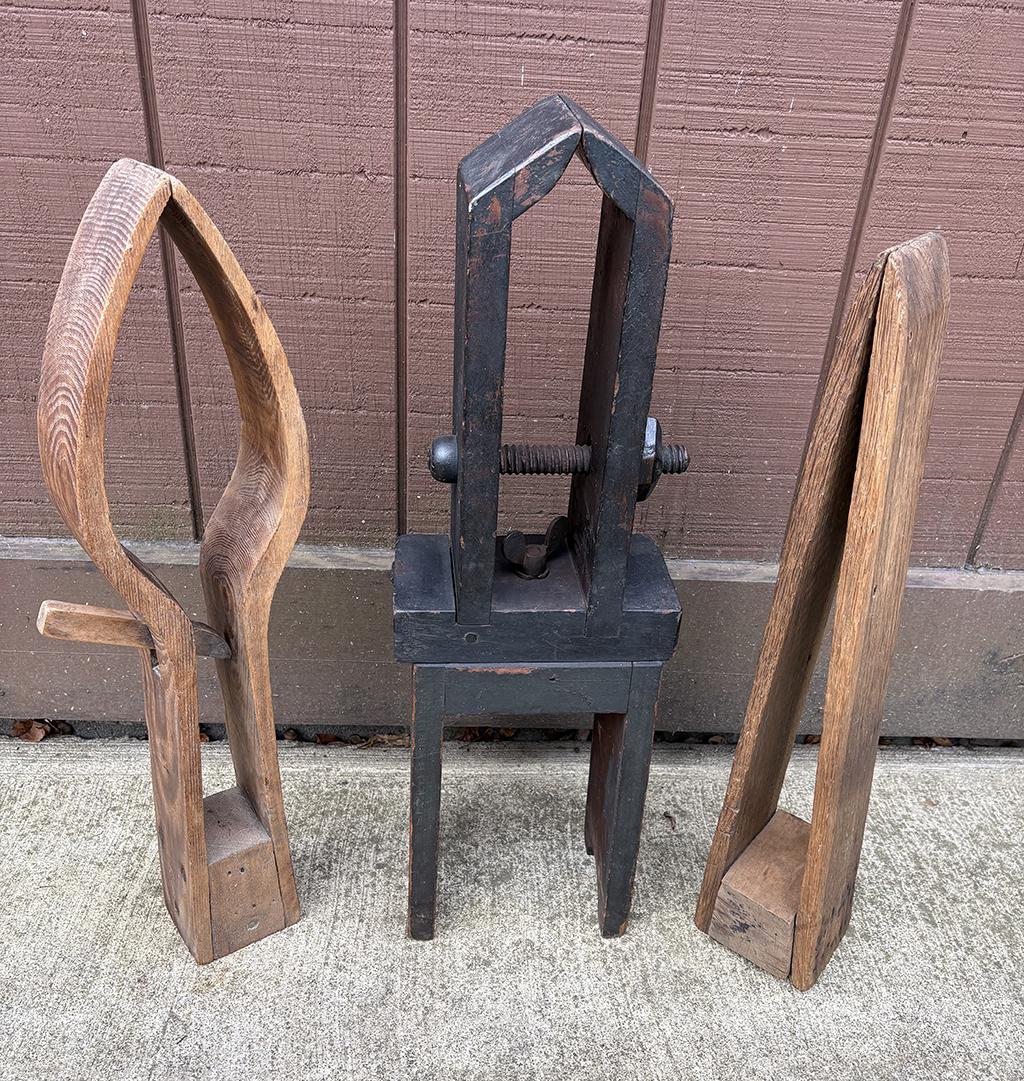
Farmers who did not have a harness horse could use a harness clamp. This type of clamp consisted of the same type of jaws but was held between the knees rather than being anchored to a bench. Some of these were constructed to have natural permanent tension, while others were tightened with a wooden screw or had a built-in lever which allowed the jaws to be tightened or loosened.
In some cases, the seats of harness horses were padded or covered with leather, and the jaws were covered with smooth metal such as copper to prevent the grain of the wood imprinting the leather.
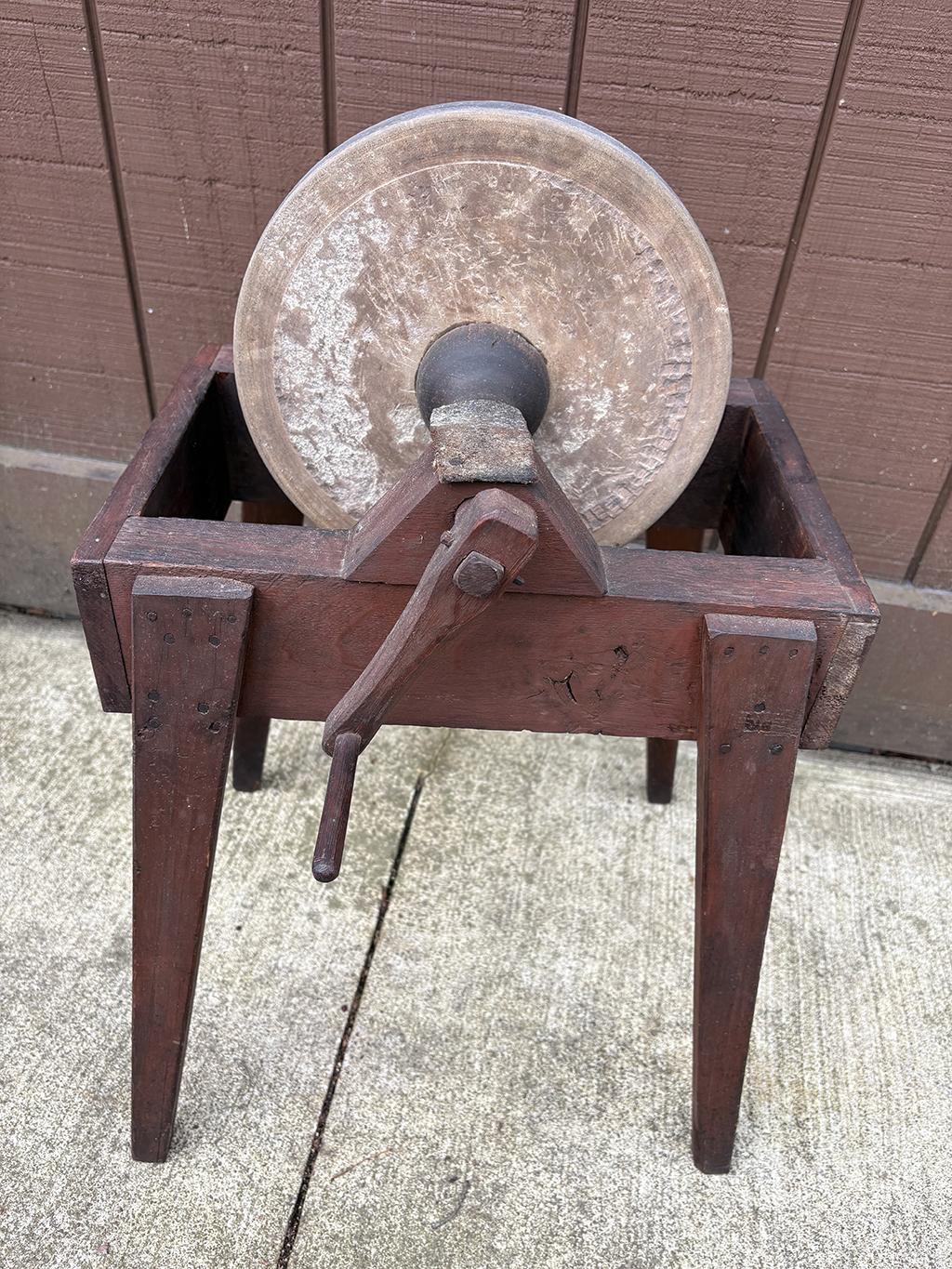
Sharpening tools
Winter was also a time for sharpening tools, such as butchering knives dulled by fall’s efforts in that vein. Garden hoes, axes, augers, grubbing hoes, scythes, grain cradles, reaping hooks, froes and numerous other tools also needed to be sharpened for the coming spring.
For this task, most farmers had — or at least had access to — a grindstone or whetstone. Whetstone (or hwetstan) derives from the old English word “whet” (meaning to sharpen) and the old Saxon word “stan” (for stone). Tools, cutlery and weapons were sharpened by the use of friction using a stone usually composed of solid talc or steatite. While rectangular sharpening stones set in a wooden case were available to most farmers, others had small circular grindstones set in a light wooden frame which could be cranked by hand. As time went by larger grindstones set in heavy wooden frames and revolved by a foot treadle became widely available.
Tool handles
Farmers also had to repair handles of tools which had been broken or become badly splintered by hard use during the previous seasons of labor. Most had ready access to a draw knife which enabled them to rough out new handles from pieces of wood at hand. Local wood turners also could provide new handles — for a price.
Additionally, tools were given a good cleaning and oiling during the winter so they would be ready for more hard use as soon as the snow melted and the ground thawed.