



So, the filthy, smelly clothes worn during the past week have been washed using the best primitive technology available, and hung out to dry. What’s next?
Ironing, of course. And in a time when the electric iron wasn’t even envisioned in the most remote of dreams, pressing clothing was a chore beyond onerous.
For this task women relied on the use of the sad iron, made all the sadder, perhaps, by the level of toil it entailed. Actually, the term sad iron has nothing to do with its association with hard work usually done on “blue Monday.” It derives from an Old English word that means solid, heavy or dense.
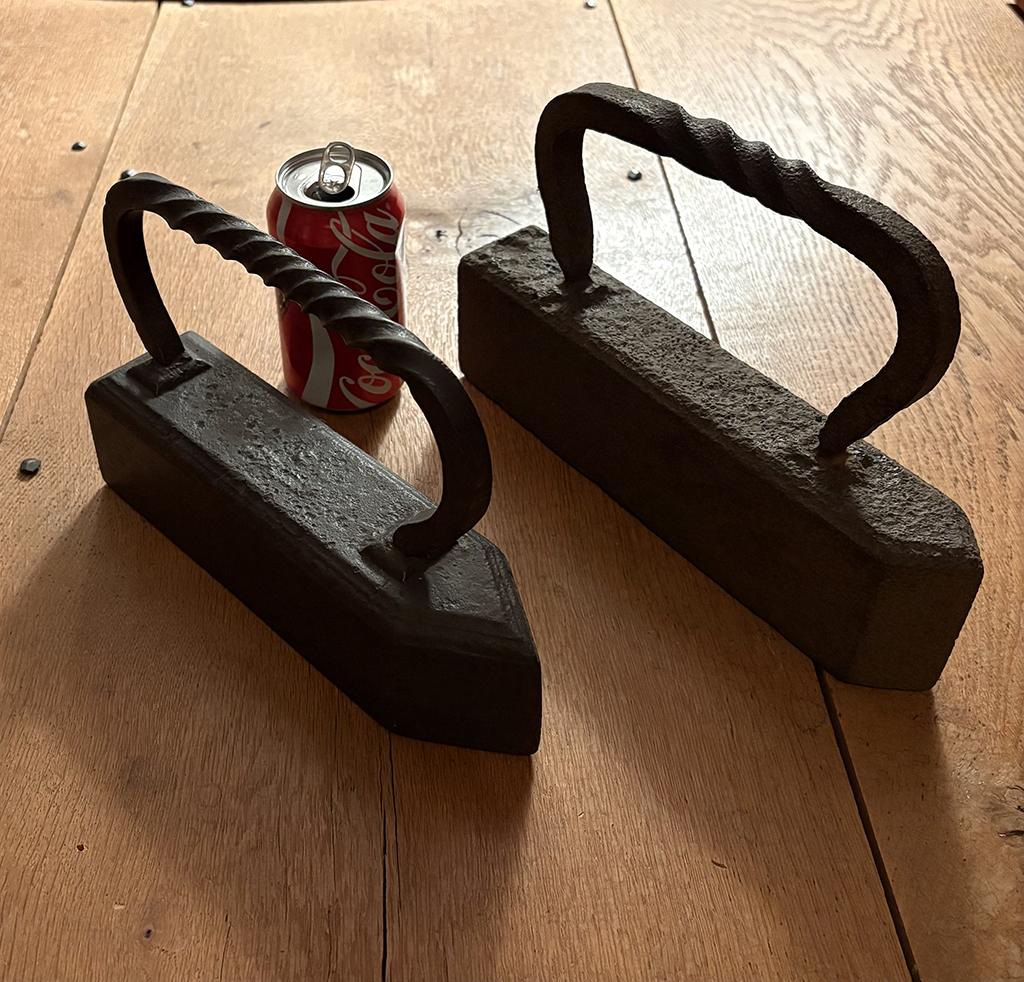
Sad irons, in their most basic form, were boat-shaped chunks of cast iron having an integral handle. These irons derived their heat either from being set on a trivet over hot coals in the fireplace or sitting on a cast iron wood-burning stove. Sad irons could retain heat only for a short time, after which they had to be reheated.
Because of this, many women had multiple sad irons so that one or more were heating while the one in use was cooling. Eventually, stove manufacturers began incorporating rails along the side of the wood box to serve as a rest for irons being heated.
The first real improvement in ironing technology came with the invention of the so-called slug irons. These were named for the fact that they incorporated removable slugs of iron which were configured in the same shape as the body of the iron. These interchangeable slugs could be heated and then inserted into the body of the iron through a trap door at the back. When one slug cooled off, the user simply ejected it and installed a hot one. Slug irons were made of both iron and brass, but the slugs were usually iron.
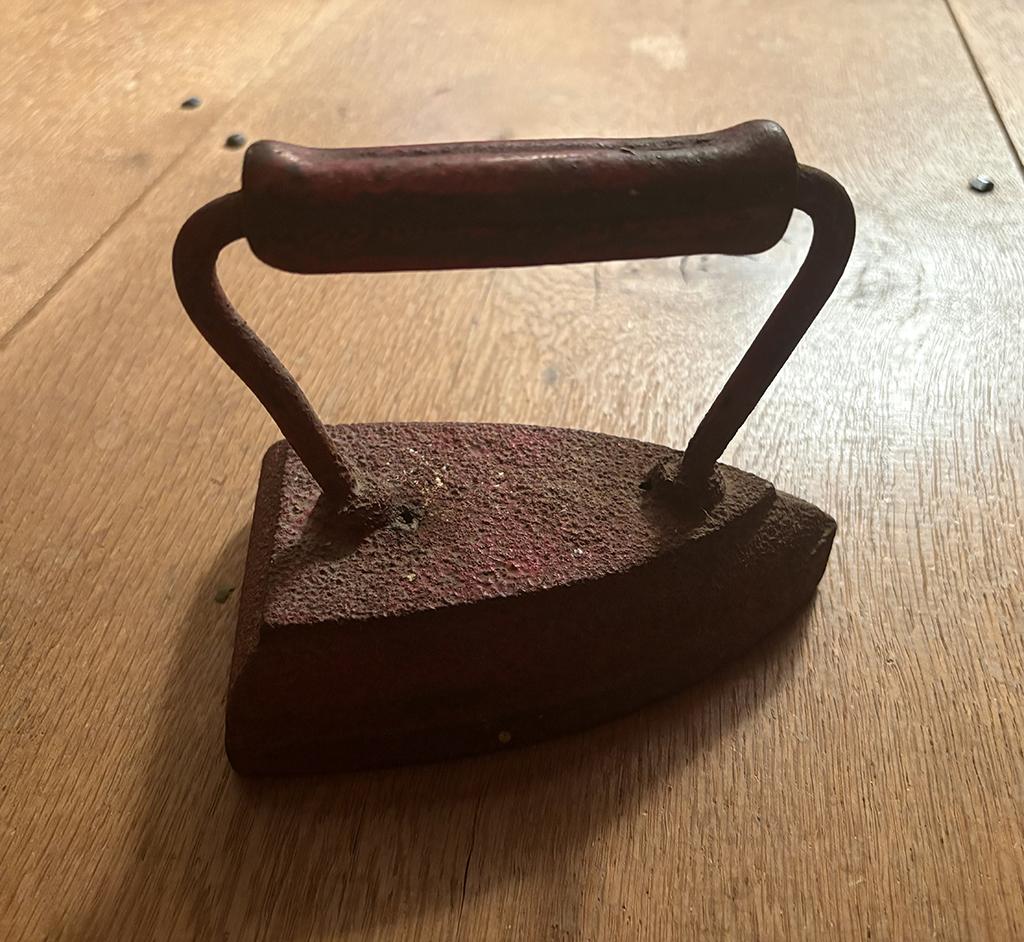
Another improvement offered by the slug irons was having a wooden handle. This resulted in easier handling of the iron and probably fewer burns.
Larger versions of the sad iron, used to press broad areas of garments, were known as tailoring irons. These weighed several times what a typical sad iron did.
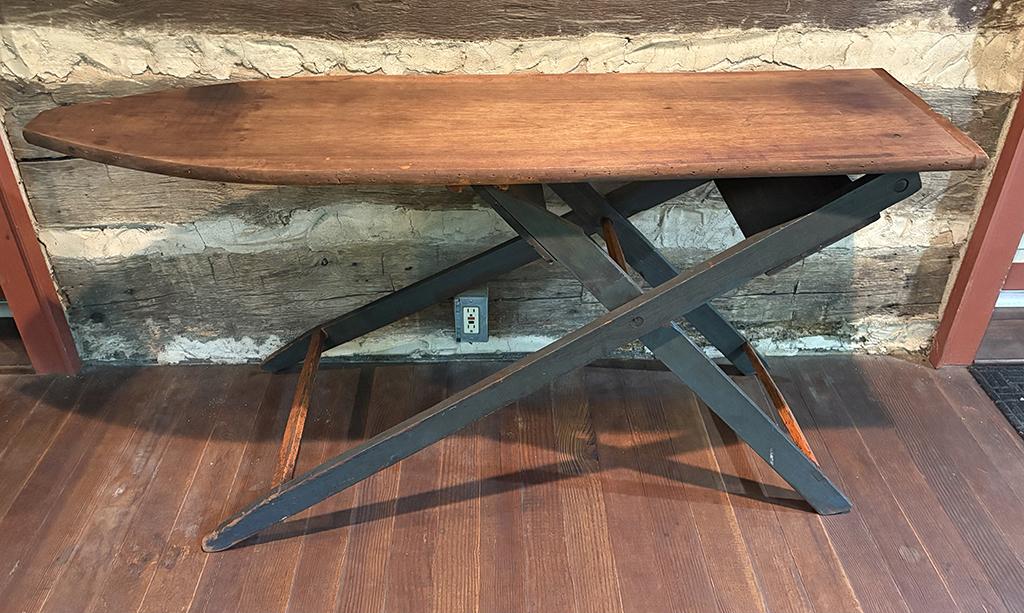
The ironing itself was performed on a — wait for it — an ironing board. Amazingly, after more than two centuries, the American ironing board has changed little in its configuration and construction. Early ironing boards were of all-wood construction and their owners often painted them with colorful decorations.
Separate from the primary ironing board was a smaller, narrow model often called a sleeve board. Designed to sit on a tabletop, the sleeve board was used for quick touch-ups when company was going to drop by. Usually heating one iron and using a sleeve board was enough to iron the most obvious parts of clothing.
Even worse than ironing, however, was the process of pleating and fluting. Because women’s garments in the 19th century incorporated many ruffles and pleats, those details required an entirely different skill set, as well as specialized equipment to accomplish.
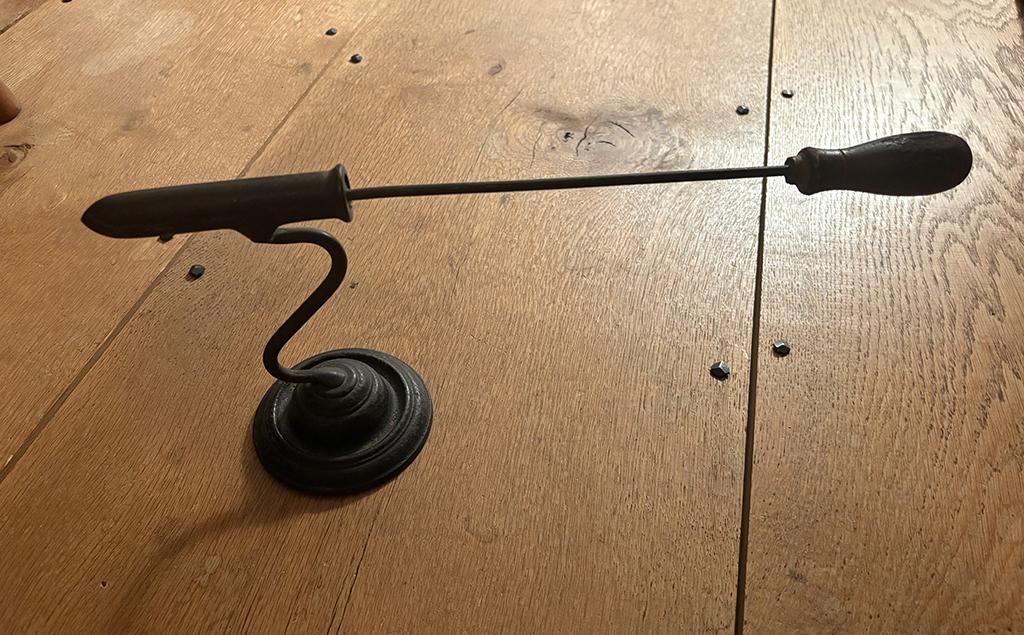
The main tool for this task was the tabletop gophering iron, a two-piece mechanism for heating fabric without scorching it. The gophering iron consisted of a torpedo-shaped iron slug attached to the end of a metal rod. On the opposite end of the rod was a wooden handle which did not transmit heat to the user’s hand.
The slug was heated in the fire until it became very hot, at which point it was inserted into a brass or iron sleeve which was configured to the shape of the inserted slug (kind of like a gopher going into a hole … I guess). Heat radiating through the metal sleeve allowed for the shaping of pleats and ruffles over it.
With the advent of the electric iron, changes in fashion led to less detailed women’s garments. With the development of wash-and-wear fabrics, most of the tools described above disappeared from the scene, to be relegated to the display cases of museums.
And while most households still have an iron and ironing board as standard equipment, much of the drudgery of yesteryear associated with ironing has been markedly reduced from what it was in pioneer days.