


Here in Jackson County, we experienced two difficult years of forage production. In 2024, we had to deal with D4 drought conditions — the highest level of drought — in much of the county, which led to a shortage of hay within our region.
In 2025, we saw an extremely wet spring, with 13.89 inches of precipitation here at the Jackson Agricultural Research Station from March to May. It led to many challenges with farmers not being able to get equipment into the fields and leading to over-mature grass and weed growth within many hay fields. This results in the challenge of having poor quality grass and other non-desirable plants in our hay fields.
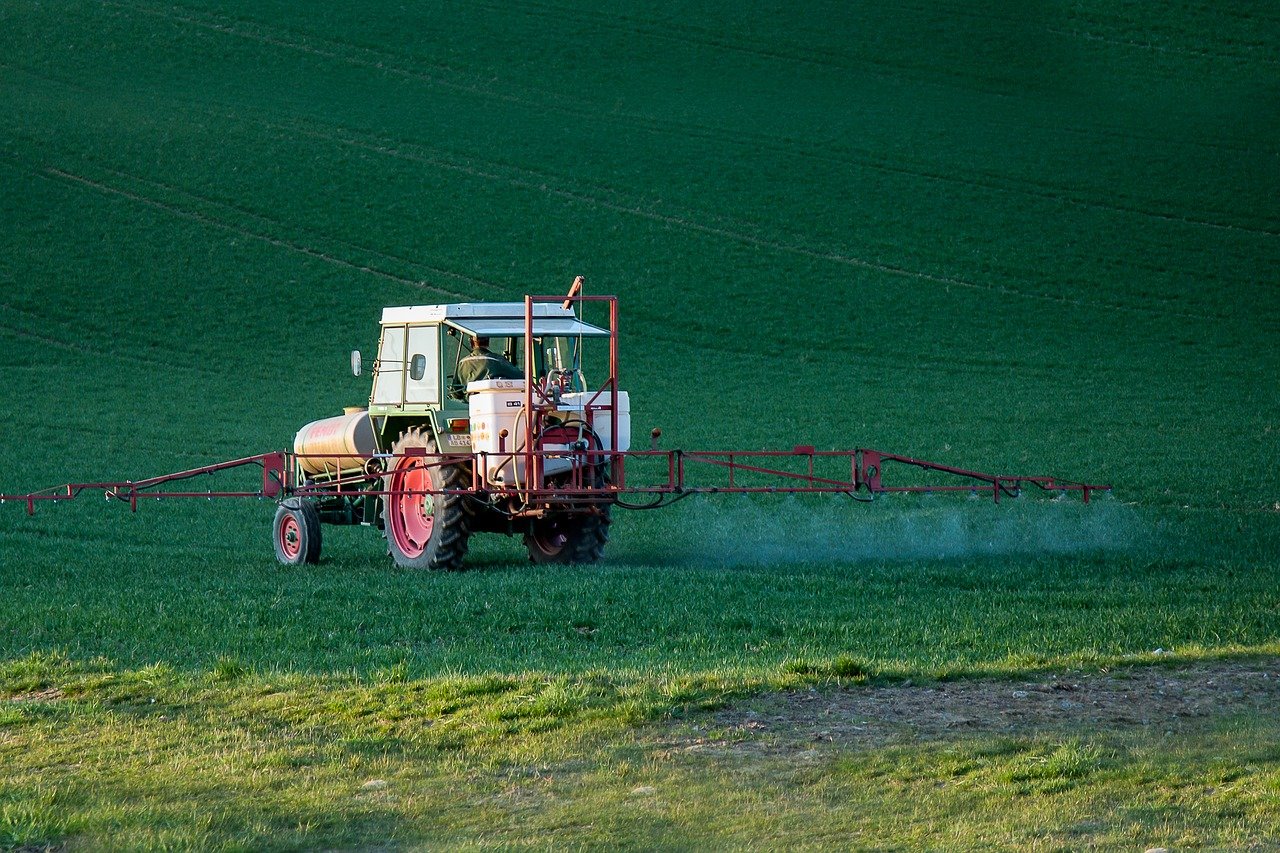
Many have a weed control method of mowing before the weeds produce seed, which can be an effective cultural strategy. However, chemical control may be necessary in some cases. You can purchase many herbicides without a pesticide license; however, there are some that are classified as Restricted Use Pesticides.
Pesticide license
RUP requires users to have their pesticide license to apply the product to the intended site. As always, any herbicide that you intend to use must be followed exactly as the label describes. So, like the old saying goes, it is better to have it (your pesticide license) and never use it, than need it and not have it.
Pesticides are regulated differently in every state. In Ohio, the agency that regulates pesticide use is the Ohio Department of Agriculture. They are the agency that hosts pesticide exams for producers to receive their license.
Licenses are classified as either private or commercial. According to ODA, a private pesticide license in Ohio is required for individuals who apply or supervise the use of Restricted Use Pesticides on their own or rented property for agricultural purposes. A commercial pesticide license in Ohio is a certification from ODA that allows individuals and businesses to legally apply pesticides for hire, to someone else’s property, or for certain government entities. This article will focus on the private applicator’s license.
In Ohio, all private applicators must pass a “core” exam, which is the foundational knowledge required for all certified pesticide applicators, covering topics like label comprehension, safety, environmental protection and state laws. Next, you must test the category you intend to spray.
Categories include the following:
Category 1 – Grain and Cereal Crops
Category 2 – Forage Crops and Livestock
Category 3 – Fruit and Vegetable Crops
Category 4 – Nursery and Forest Crops
Category 5 – Greenhouse Crops
Category 6 – Fumigation
Category 7 – Specialty Uses
Registration for pesticide exams can be found at www.planthealthrenewal.agri.ohio.gov/apps/PesticideExamRegistration.
In cooperation with ODA, Ohio State University Extension provides study materials for all the exams to producers. Study materials can be purchased at local extension offices or online at www.extensionpubs.osu.edu.
Recertification
Once you have received your pesticide license, you must recertify it every three years by attending a three-hour-long pesticide recertification training at your local OSU Extension office and sending a renal application to ODA.
Many extension offices host these recertification trainings during the winter months, as all licenses that are set to expire will do so after March 31 of that year. Recertification credits can be obtained at any time during that three-year period, but you must have one hour of core and at least two hours of category recertification content.
You must cover all of the categories that are on your license to continue holding that category. For example, you hold categories 1, 2, 3 and 4. If you attend recertification for core, categories 1, 2 and 3, but not 4, then category 4 will not be on your new license, and you would have to retest for that category if you wanted it back.
So, as we move into the late fall/winter season, consider investing in yourself to help prepare for the 2026 season. For more information, visit the OSU Pesticide Safety Education Program site at pested.osu.edu/privateapplicator.