



Isn’t it amazing how far technology has come in animal agriculture? We are way past the days of being forced to make management decisions based on group performance.
Although you are feeding and milking them in a group, you have the tools to measure and evaluate the individual animal. Heifers can be genetically tested to determine what specific traits they inherited from their parents and if those traits give them a better chance of excelling in your herd.
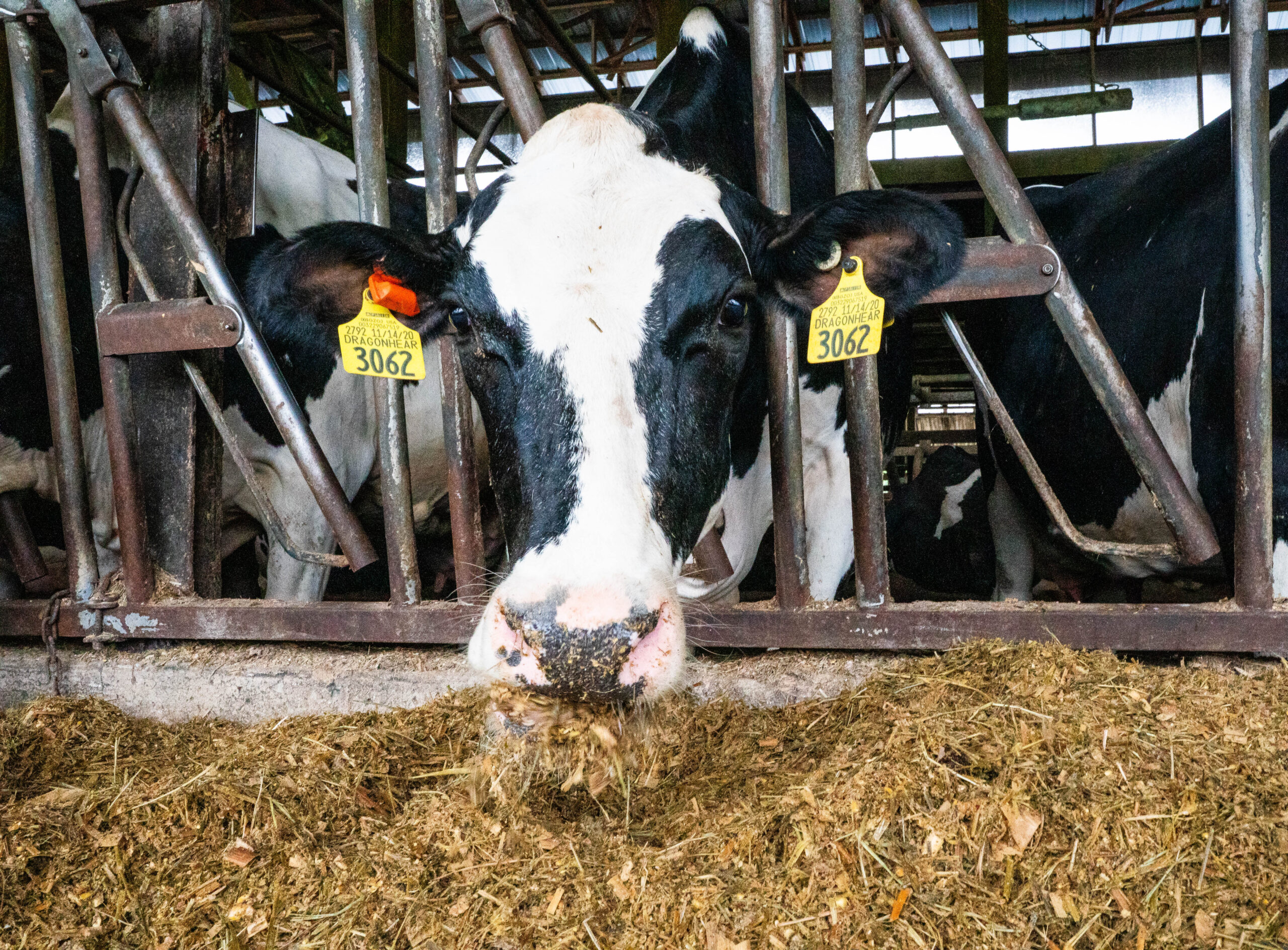
We can give each cow an ear tag or insert a bolus that continuously monitors their activity level, rumination and body temperature, which tells us their health status. There are inline sensors that can be used in the parlor to give us real-time measurements of an individual’s somatic cell count and milk component production.
While we can be left to wonder what the next technology will be, the bigger question may be what we can do with all the information we are collecting now.
It may be difficult for us to admit, but even those of us in the academic world struggle with managing large amounts of data. When we conduct research, we start with a question and collect the data we think will help answer that question.
It is a different beast when you collect data and then have to decide what questions it can answer. Dairy producers have an enormous amount of data that can be used to make meaningful management decisions.
The most difficult decision is knowing what questions to ask and how to ask them. Most of the time it comes down to getting started. Once you have asked the first question and found the answer, future questions come a little easier. So, how do you get started?
Know your goals
Before you start thinking about digging through spreadsheets and computer reports, it is helpful if you have set goals for your operation. Goals give you targets that help you focus on potential questions. We recommend making S.M.A.R.T goals. SMART stands for specific, measurable, attainable, realistic and timed. These can be for anything, but for the sake of this discussion, I will limit them to production goals. You may decide that you want to maintain a somatic cell count below 200,000 over the next six months. Maybe you want to decrease your heifer age at first calving from 25 to 24 months of age in two years. As you implement changes, you can ask the data if you are making progress or have achieved your goal.
Organize your data. When you have created your list of goals, you then need to organize and assemble all of the data. You will have data that is stored in a variety of platforms. You may have all of your milk production, cow monitoring, health and reproductive data in a single program or they may be collected in a couple of different systems. Your feeding information may be in another program, as could be your barn environmental data. Every program will allow you to download data into spreadsheets, so you should create those reports to put all of the information in a format you can work with.
As you create these reports, you need to understand how each piece of data is reported. You may have the option of downloading production reports that give you the daily average, or you can get by each milking event.
Your activity monitor software may only allow you to generate a report based on 12-hour blocks of time. I would suggest you download that data in the shortest time interval possible. You then have the ability to summarize it in a larger block of time if you need to.
Know your averages and create benchmarks
Once you have all of your data combined into a form you can work with, the first question you can ask is, “What are my averages?” You can be creative at this point. Average your data over several different time periods to see where you are at. For example, you could average herd milk production by year, month, week, day and by individual milking. Present these averages in a way that you are most comfortable reviewing. You may like to look at them in a spreadsheet, or you may prefer a line graph. Maybe a bar graph makes it clearer. That is purely up to your preferences and what makes the most sense to you.
These individual averages now become your benchmarks that you can compare to industry standards. This is where you may find your strengths and weaknesses. This is also a point where you can go back to reassess your goals. You may have thought your production per hour of parlor operation was too low, but after determining your average, you see that you exceed that industry benchmark. You may decide that it is no longer a goal and develop a new one, or you may alter the goal to create a new target.
Use the data that can answer your questions. In every statistics class I have ever had, the instructors have always reminded us that correlation does not equal causation. The classic example is that you can find a positive correlation between ice cream consumption and shark attacks.
This means that as ice cream consumption increases each year, the number of shark attacks also increases. We can easily see that the two are not actually related. We eat more ice cream in the summer months and more people also go to the beach in the summer, but merely eating ice cream does not cause shark attacks.
You need to keep this in mind as you start asking questions of your data. Once you decide on a question, you need to pick the data types that are most likely to help answer your question. It is possible that the answer will be found from data you didn’t originally consider, but you should start with the data that is likely to point you in the right direction.