



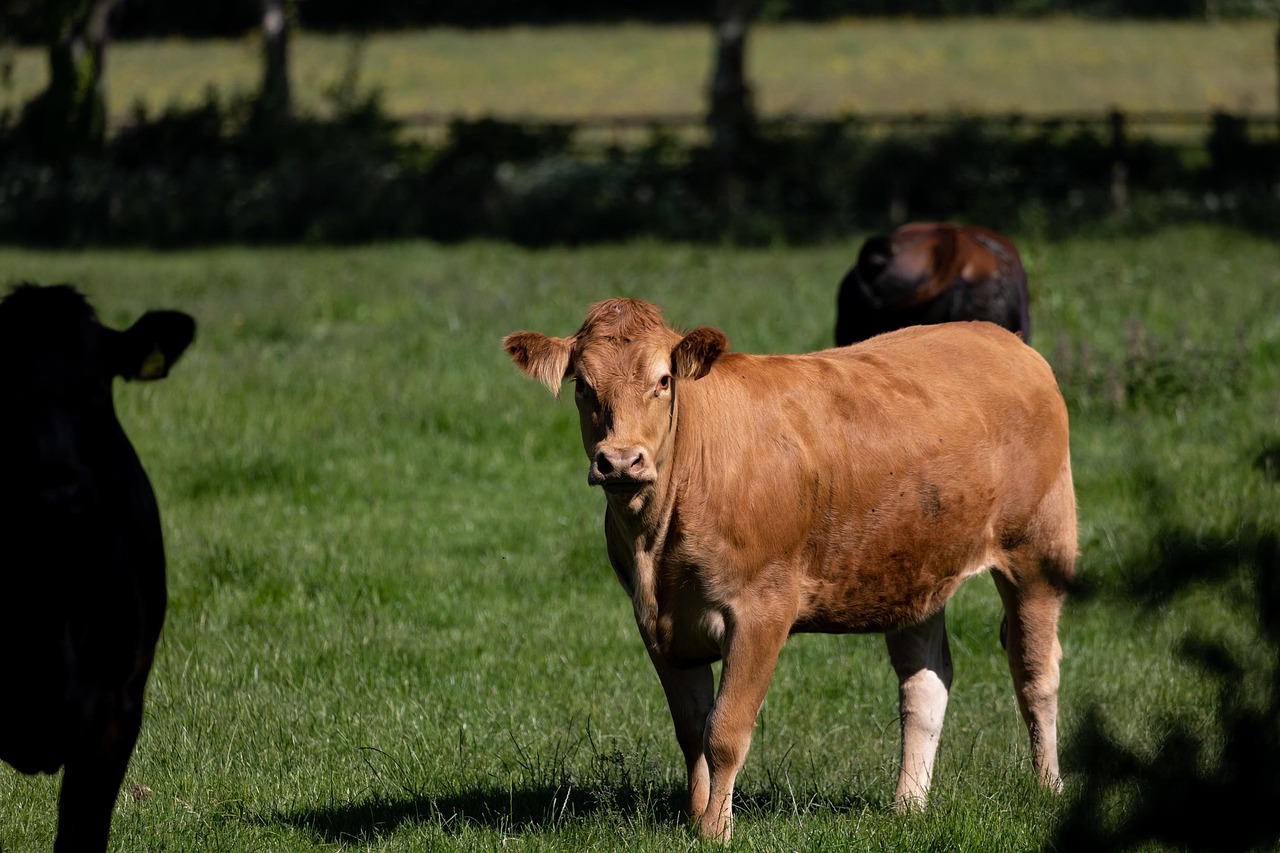
I assume that you have seen the graphs documenting how the United States cattle population is the smallest it has been since 1951. Although the total numbers have reduced, producers have compensated by selecting for greater beef yield per head. This increase in steer carcass weight has brought along with it an increase in mature cow size and an increase in feed requirements.
With feed cost accounting for up to 65% of total cow maintenance cost, researchers have been working to develop tools to identify individuals that have lower feed intake requirements or utilize consumed feed more efficiently, leading to reduced production costs.
When we consider ways to reduce the forage needs of our herd, an obvious starting point is to discuss mature weight. The National Research Council’s Nutrient Requirement for Beef Cattle publication estimates that for every 100-pound increase in body weight, her daily dry matter intake requirement increases by about 1.5 pounds (Nutrient Requirements of Beef cattle, Okla State Univ. Extension pub E-974). More recent research has shown that this average may actually be closer to 2.5 pounds per 100 pounds of increased body weight. It makes sense that the larger our average cow size, the more forage we need to budget for each animal.
In an intensive grazing operation, we can see how this can impact our stocking rate. If we consider that the average Ohio pasture will produce 7,000 pounds of dry matter each year, and that a cow eats about 2.5% of her body weight in dry matter each day, every 100-pound increase in mature weight decreases our stocking rate by about one cow per 25 acres.
We can also see the impact on the amount of hay we store for feeding in the winter. A 1,000-pound round bale, at 18% moisture, provides 820 pounds of dry matter. During a 150-day winter feeding season, you would need six bales to feed a 1,300-pound cow versus seven bales for a 1,500-pound cow. That is before we account for wasteage in both scenarios.
I would not be offended if you rejected my suggestion of monitoring mature cow size. After all, we know that larger cows also tend to wean larger calves, and we are paid on the weight of the calf. It is estimated that for every 100-pound increase in mature cow weight, they wean an additional 10 pounds of calf.
The question is, given our grazing example above, does that 10-pound increase in calf weight produce more profit than having an extra calf? A 1,000-pound cow will wean a calf that is equal to about 48% of her body weight, whereas a cow that is 1,500 pounds is closer to 42%.
An Oklahoma State University study that examined mature cow weight, pasture stocking rate and calf performance on farm profitability revealed that net return per acre was reduced by about 10% when cow weight increased from 1,150 pounds to 1,350 pounds.
I point all of that out to now say that there isn’t an ideal cow size. The ideal-size cow is dependent on your management and available resources. While we can’t identify the perfect-sized cow, we can select for improved feed efficiency within the cows that we have. There are on-farm evaluations and genetic selection tools that you can utilize to identify individuals that use your forages more efficiently without compromising production.
First off, you can conduct your own evaluation. In another study out of Oklahoma State, they fed a group of heifers only average-quality hay for a period of 70 days and looked at their average daily gain. Gains ranged from -0.2 to 1.6 lbs per day. Given the issues we have had over the last two years and the general challenges we have in making the highest quality hay, this can be an on-farm tool to evaluate your current replacements.
In addition to on-farm evaluations, there are several genetic selection tools you can use when making your breeding evaluations. All of the respective breed associations provide Expected Progeny Differences that predict feed intake and/or feed utilization efficiency. Dry Matter Intake EPDs predict feed consumption post-weaning, with a higher value indicating they will eat more feed. Residual Average Daily Gain predicts a calf’s ability to gain more weight on a similar amount of feed. Residual Feed Intake predicts how much more — or less — feed a calf will eat when compared to an average calf of similar size.
To avoid the risk of single-trait selection, there are also selection indexes that predict the economic value of a calf as it relates to feed efficiency.
The American Angus Association has their $EN index, which predicts the savings on feed energy costs, with a higher value being better. Similarly, the American Simmental and the Red Angus Associations have their $GAIN indexes. These indices compare dry matter intake and calf average daily gain to identify those individuals that excel in both.
It is important that when you choose to use a selection index to know what EPDs are used in its calculation to ensure they align with your breeding goals.
Producers have the tough job of balancing maximizing production while minimizing production costs. Traditionally, feed has been a cheap and readily available resource in the Eastern U.S.
As we continue to struggle through periods of drought or excessive rain where we are either lacking the quantity of forage needed or we simply cannot make the quality hay we would like, it is to your advantage to begin to place selection pressure on managing forage inputs for your cattle.
Fortunately, we can make evaluation and selection decisions that take both sides into account.
So, my recommendations are as follows:
- Challenge your heifers during their early evaluation to see who can perform with limited resources.
- Select bulls that provide moderate mature weight, dry matter intake and maternal milk.
- Incorporate efficiency EPDs and selection indexes into your genetic evaluations.
If you would like to see the references I provided in this article and hear a more in-depth discussion of this topic, I would encourage you to check out Oklahoma State University Extension’s Sun Up TV channel on YouTube and look for the video discussion provided by Dr. Bob Weaber.