



Persistent rains have pushed the production calendar back considerably, and many in our area still have fields that need to be planted.
As forage supplies were depleted from the lack of production during 2024, it may be important for producers to find solutions for those empty fields that can maximize forage-production potential.
As we shift into the heat of summer, there are viable options that you can consider to add to your forage reserves. In 2019, Ohio State University Extension evaluated yield and quality of annual forages planted in July. You can access that report at go.osu.edu/forages19.
Corn
Although it is much later than we would like, late planted corn may still be your best option. Potential yield estimates are quite variable, ranging from 4 to 10 tons of dry matter per acre. Of the forages evaluated, late planted corn provided the greatest dry matter production and highest total digestible nutrient value.
Your normal management practices shouldn’t change much from a normal spring planting. There is information from the University of Illinois that indicates you can cut nitrogen applications by 10%, but proper weed control and nitrogen applications will still be important. You will also need to consider changing out to a short-season hybrid (85 to 95 days).
Sorghum
Your next best option will be from the sorghum family. Forage sorghums have a maturity range of 75 to 120 days with a yield potential of 4 to 8 tons of dry matter per acre. The late planting will only allow for one cutting, but the crude protein will be slightly higher than corn silage (8.1 vs 6.8) with slightly lower TDN.
Others in the class, like sorghum-sudangrass and sudex have faster maturities with lower yield potential. With a 40-to-50-day maturity, there may be opportunities for two cuttings.
There are brown midrib varieties of all that will provide improved digestibility. It is recommended to supply 100 to 150 units of nitrogen to have a successful crop. You should also be prepared to harvest these crops in a timely manner. As they mature, the quality drops rapidly, and if allowed to fully head out, quality can be very poor.
Corn and the sorghums will need to be harvested as a wet forage. They will also carry elevated risk of nitrate or prussic acid poisoning if stressed from frost or drought as they near harvest.
Your other consideration is what will happen with the field after this crop is harvested. Harvest timing may push you out of a window to follow the crop up with a fall small grain planting.
Dry hay
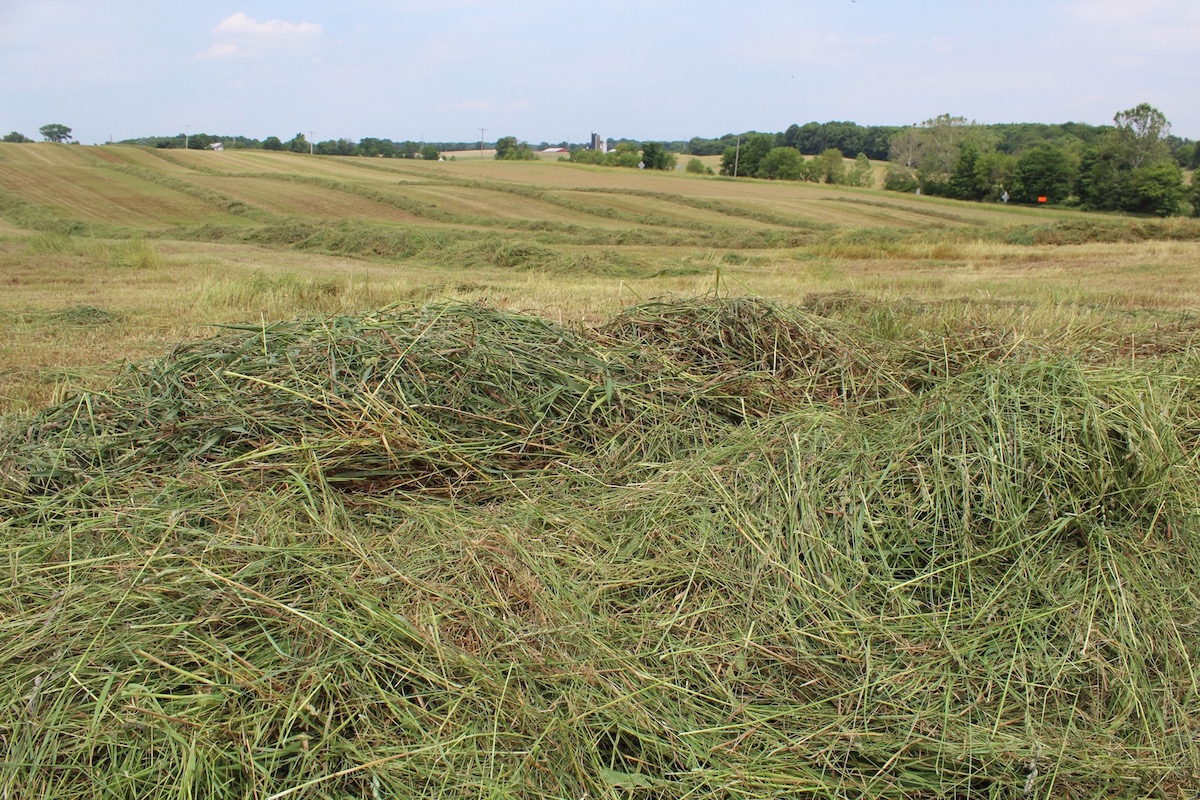
If you want the possibility of making additional dry hay, you can consider a millet or oats. Pearl millet has been the go to summer annual for many. It is regarded for being drought-tolerant and safe from prussic acid poisoning.
There are newer millets that may also be worth your attention and I would suggest you evaluate all members of the species to find what will work best for you. Pearl millet has show to provide 1 to 3 tons of dry matter per acre. Similarly, July planted oats will have a comparable yield with the highest potential crude protein of your summer annual options (approximately 15%. These planting will also benefit from applications of 40 to 60 pounds of nitrogen. They will also mature fast enough to give you options to follow with a winter annual small grain.
Upcoming programs. I would like to take the opportunity to make you aware of a couple of programs coming up in Wayne County, Ohio. The Wayne-Ashland Dairy Service Unit will host its annual Dairy Summit and Twilight Tour July 15 at Zido Valley Dairy, 3024 S Jefferson Road in Wooster.
The main event sponsors are Lowe & Young Equipment, Slicker Farms and Avodah Contractors. The Dairy Summit will begin at 3 p.m. with topics focusing on OSU manure application research and the impact of perennial forages and manure application on soil health. The Twilight Tour will run from 6-9 p.m. There will be a variety of food trucks available for dinner options, and attendees can view the tradeshow and tour the dairy facility.
Second is a feeding clinic on Aug. 8 at the OSU Wooster Campus shop. The all-day program will discuss factors affecting feed quality, feed mixer management for delivery of quality feed, evaluating your feeding program and developing feed mixing protocols. T
he event is free and lunch will be provided, but attendance is limited to 20 participants. You can find additional information on these programs by visiting the events calendar for the OSU Extension office in Wayne County at wayne.osu.edu.
As always, I wish you a safe and prosperous growing season.