


Ohio cattle producers are facing another challenging year as extreme weather continues to impact forage quality. Following a record drought in 2024, the 2025 growing season brought heavy spring rains and scattered summer storms, complicating hay harvest and drying.
According to forage analysis conducted by Ohio State University Extension, many hay samples collected from across the state show nutrient levels well below the requirements for beef cattle, particularly during late gestation and lactation.
Spring-calving cows require approximately 49% total digestible nutrients three months before calving, increasing to 60% TDN at peak milk production. However, OSU Extension data shows that grass hay ranged from 25.3% to 59% TDN, and haylage from 42.8% to 58% TDN.
Mixed hay and legume hay performed better, with TDN values reaching up to 69.6% and 61.9%, respectively. Crude protein levels varied from 5.83% to 21.7%, while cows need at least 7% before calving and 11% during peak lactation.
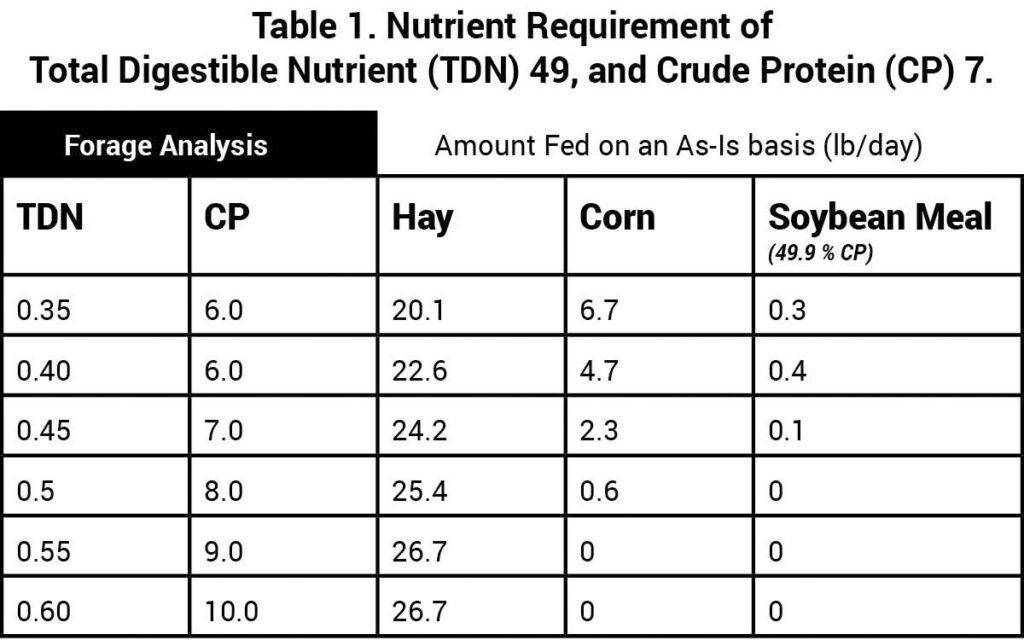
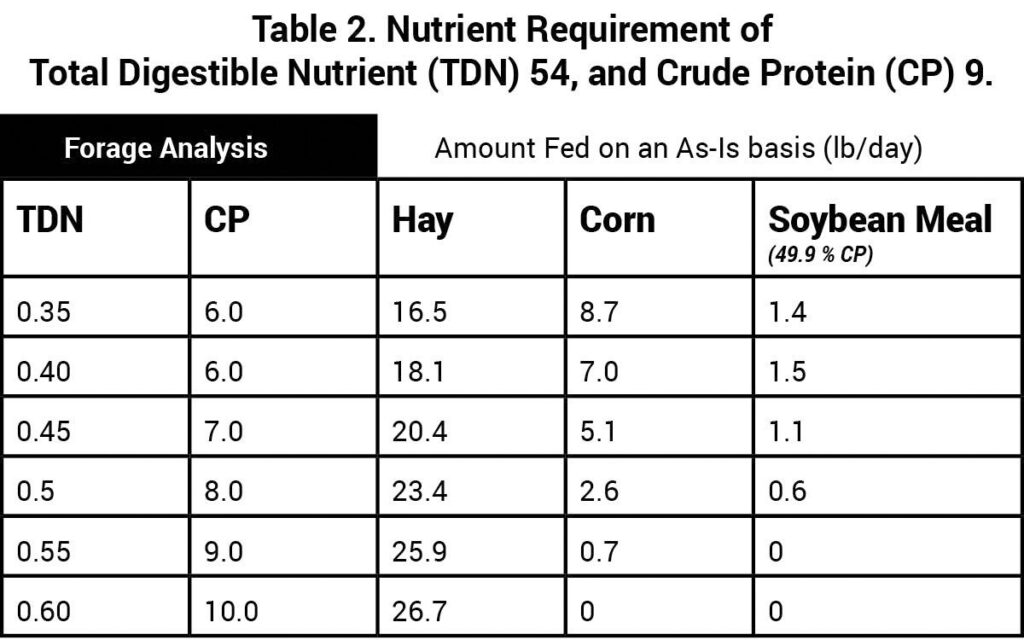
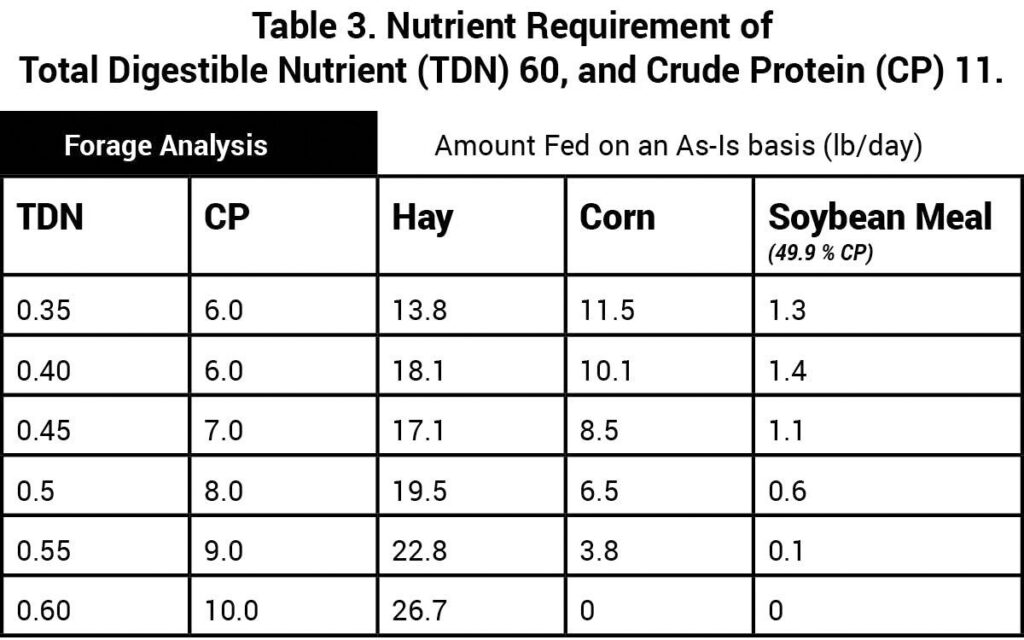
The tables shown illustrate how varying forage quality affects feed requirements for a 1,200-pound cow consuming dry matter at 2% of body weight. Each table corresponds to a different stage of production: late gestation, calving and peak lactation. The values show the pounds of hay, corn and soybean meal (49.9% CP) needed to meet nutritional demands.
Given the wide variability in forage quality across Ohio this season, laboratory testing of hay is essential before winter feeding begins. While visual cues such as color, texture and smell may suggest general condition, they cannot accurately reveal nutrient content.
Only a forage analysis can determine critical values like total digestible nutrients and crude protein, which are necessary to formulate effective rations. I hope this convinces you to use a hay probe — available through most county extension offices or local feed suppliers — and to follow proper sampling protocols to ensure reliable results. The cost of testing is minimal compared to the value it provides in optimizing feed efficiency and herd performance.
With livestock prices remaining strong and grain prices relatively low, now is the time to evaluate your forage inventory and work with a nutritionist to develop a feeding strategy that supports animal health, reproductive success and overall productivity.