


Yearly Archives: 2026

OPSB schedules local hearings for 2 proposed natural gas plants to power data centers
The Ohio Power Siting Board is hearing public comment on two more proposed natural gas fired power plants — one in Fairfield County and one in Pickaway County. These two projects would join a handful of other natural gas fired power plants planned in central Ohio that are providing round-the-clock energy for data centers.

Six new inductees honored by West Virginia Ag and Forestry Hall of Fame in...
The West Virginia Agriculture and Forestry Hall of Fame celebrated six new inductees at its annual banquet. The honorees represent decades of outstanding leadership, innovation, and service in agricultural education, public policy, sustainable forestry, and youth development.

Jeromesville honors Civil War heroes at heritage tree dedication
As part of the America 250-Ohio celebration, Jeromesville dedicated a native white oak tree to its history. In this column, the keynote speaker shares the moving stories and letters of three local Civil War brothers who left their Ashland County farm to fight for the Union.

How to protect yourself this “Cyclospora summer”
Cyclospora outbreak linked to lettuce sickens hundreds in Midwest. Learn symptoms, risks, and expert tips from OSU and PSU to safely enjoy fresh produce.

Congress is out to lunch: USDA proceeds with 23% job cuts
With lawmakers in session for only a handful of days this summer, Congress is failing to provide oversight for a sweeping USDA reorganization. Alan Guebert details how the agency plans to slash its workforce by 23% and move headquarters out of Washington, D.C., without a budget fight.
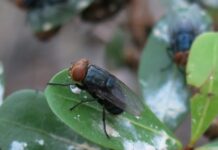
New World Screwworm: A continuing problem on farms
The New World screwworm has been detected in the U.S. for the first time in over 50 years. While the pest thrives in warm climates, livestock transport makes Ohio herds vulnerable during summer. Ohio State University experts explain how to identify NWS, treat wounds, and protect your animals.
3 strategies to overcome summer grazing challenges
Struggling with weeds, overgrazing or the midsummer pasture slump? Sandra Trushel of Ohio State University Extension outlines how to use flexible rotational grazing to break selective grazing cycles, fight weeds, and protect your grass through dry July and August weather.

Don’t let your soil turn into chocolate milk
Recent summer rains are washing away valuable farm soil. Columbiana SWCD’s Pete Conkle breaks down how cover crops protect fields from erosion, improve soil health, and boost nutrients. Learn how to start small with an oat and radish mix and explore application methods like drone seeding.

Farm and Dairy Weekly Rundown: Episode 66 (7-16-26)
Reporters Liz Partsch and Paul Rowley give a rundown of the top stories in Farm and Dairy newspaper for the week of July 16, 2026.
Hose water and vinyl seats: How we survived 1970s summers
Remember when summer survival meant drinking from a garden hose, sliding down scorching metal slides, and riding in cars with sticky vinyl seats? Columnist Kymberly Foster Seabolt takes a nostalgic, humorous look at how we survived childhood heat waves in the 1970s without air conditioning.