





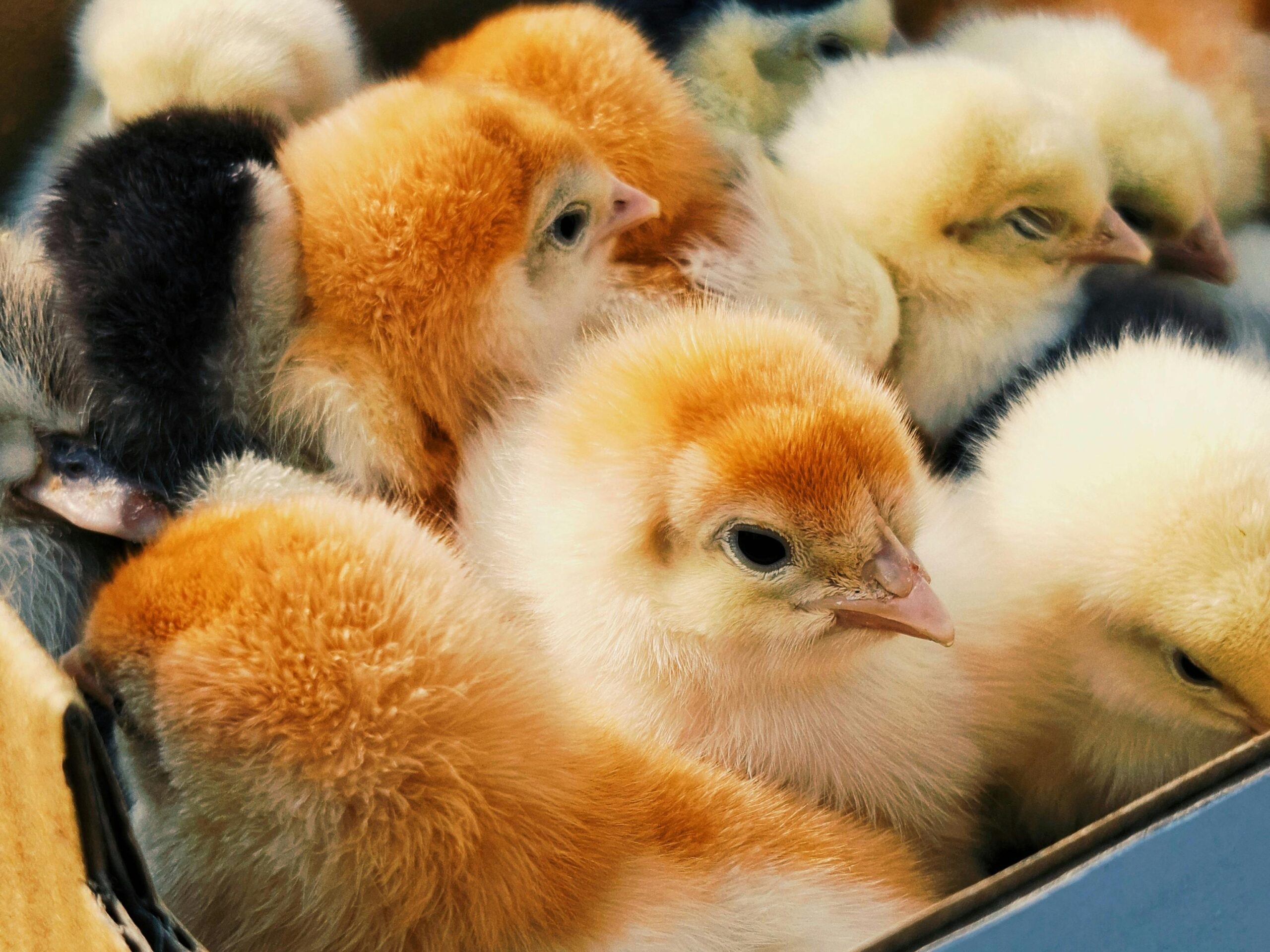
SALEM, Ohio — The U.S. Postal Service will move just about anything: live, buzzing beehives, coconuts and potatoes with addresses scrawled right on the skin (as long as postage is affixed), even boxes of bouncing baby chicks who start life by literally flying the coop.
Among the oddities in the mail stream, cardboard cartons of day‑old chicks have been a mainstay since 1918, rattling across the country in the dark, chirping their way from hatcheries to homesteads and industrial broilers. The Postal Service handled more than 41 million live poultry shipments through its air network in 2024. Hatcheries ship the birds when they’re only a day old, and as long as they arrive at their destination within about 48 hours, the chicks can safely go that long without food or water.
When everything goes right, it’s a fragile but functional system; when it doesn’t, the results can be grim.
“Saddest thing to see”
Catherine Wolcott, a Geauga County poultry producer, raises more than 6,000 birds a year alongside her family, with chicks arriving at least once a month. Over the years, they’ve added land, built a barn to overwinter more birds and opened a farm store to sell meat directly to customers.
Wolcott orders her chicks from a small hatchery in Pennsylvania; she could switch to one close enough for in‑person pickup, but her hatchery sells the slower‑growing Ranger birds her family prefers at the lowest price she can find. They also have responsive customer service, which she likes. Plus, making the drive would mean a 10‑hour round trip, so the family opts to have chicks shipped instead. Along the way, Wolcott has become intimately familiar with the vulnerabilities of sending live animals through the mail.
“More people need to know about the issues,” she said.
At first, her main problem was communication. In the winter, the local post office sometimes failed to call as soon as chicks arrived, potentially leaving them to catch their death of cold. Wolcott eventually wrote a letter to the postmaster and began calling early in the morning to check on shipments herself. Once she finally reached someone and was able to convey how important that communication was, things improved. Since then, she said, everyone has been on the same page and the chicks are doing fine.
But better local communication couldn’t fix what came next.
“Last summer was the worst season as we received multiple dead batches of chickens, and it is the saddest thing to see,” she said. “We had never received full boxes of dead birds, ever.”
She suspects some of those losses were due to birds being shipped in the heat of the afternoon during 80‑degree days, then “stuffed in a corner without any airflow.”
Wolcott is reluctant to blame the hatchery — she sees them caught between customers and a postal system that occasionally fails birds in transit — but said the experience has shaken her confidence in the way chicks are handled once they’re on the move. In fact, the strain on small hatcheries has become so acute that some are stepping back from shipping altogether.
In an April 13 post, Mount Gilead, Ohio-based Eagle Nest Hatchery announced it would discontinue shipping live baby chicks after seeing what it called “an unacceptable level of loss during transit,” saying that while chicks left the farm healthy and well packed, the shipping process itself had become too unreliable to guarantee their safe arrival. The farm framed the move as an ethical decision, prioritizing animal welfare over sales and shifting to local pickup only.
For a farm planning butcher dates a year and a half in advance, a lost shipment throws off the entire production calendar. Losing a batch can mean smaller birds at processing time and no way to reschedule with a fully booked processor.
In a statement, a representative for USPS said “We are aware that there are unfortunate rare instances where loss of life occurs with this type of shipment. In these cases, we actively look into the incident and local Postal Service teams work with affected customers to address their concerns and determine timely solutions.”
In a September 2025 audit, the agency’s Office of Inspector General found that while the Postal Service “works continuously to improve practices for the well-being of lives,” it has failed to consistently communicate network changes, left gaps in its policies for handling live birds and did not adequately oversee all of its shipments — problems that can lead to mass deaths and “damages (USPS’s) relationship with bird shippers, customers and animal welfare advocates alike.”
Even as Wolcott presses for better treatment of shipped birds, animal‑welfare advocates are calling for a more radical shift: In an open letter last year to Postmaster General David Steiner, Farm Sanctuary president Gene Baur urged USPS to end the mailing of live animals altogether, pointing to poorly monitored disease risks and preventable mass deaths like an incident last year where thousands of chicks were found dead at a Delaware distribution center.
“The full scale of this problem will remain hard to determine without more transparency. Many more animals are likely dying than those reported in the media, and the USPS does not report the number of live animals it ships annually or how many die within its system,” he wrote.
Breakdown
Not all producers are in a position to drive across state lines to pick up birds, and even when they can, mail remains a lifeline. Todd Clark, who runs a 5‑acre homestead in Hartville, Ohio, relies on shipped chicks from a hatchery in Iowa. For him, mail‑order birds are central to a household food system he and his wife began realizing on their five‑acre homestead after watching the documentary “Food, Inc.” Since then, his family has built up a mixed flock of layers and broilers, trading eggs and meat with neighbors.
USPS guidance makes clear that safely mailing live animals depends on close cooperation from shippers and tight control of transit conditions. Carriers are instructed to safeguard animal welfare by minimizing time in transit and avoiding temperature extremes. The Postal Service urges advance notice from mailers and tells field staff to keep live animals, especially day‑old chicks and other birds, inside regular, closed postal vehicles for no more than a few hours whenever possible.
Most of Clark’s shipments have gone smoothly. But one misrouted box exposed how fragile the mail‑based system can be when the standards break down.
“That one-day shipment of birds, instead of coming to Akron, Ohio, and then coming to Hartville, where we live, went to Akron, Georgia, and got stuck there over a weekend, and then got shipped to us,” he said.
Clark said every chick died after spending three days sitting on a loading dock before being shipped back.
The Postal Service will honor indemnity claims for insured shipments of mailable, live, day‑old poultry when birds die due to Postal Service handling (as long as mailing rules were followed and the shipment was reasonably safe for transport), when birds are lost because the container is damaged while in Postal Service custody or when the entire insured package goes missing in the mail. Clark’s hatchery replaced the chicks at its own expense, a gesture that cemented his loyalty. But no refund could shake the sinking feeling that washed over him when he opened that box.
“The chickens are a blast. (They) have personalities. You know, I have one that every time I fill my bird feeders out front, she jumps over the fence and goes to look to see what I dropped. And she’s the only chicken that does that,” he said. “You get really attached to these animals. They’re amazing animals, and it really makes you appreciate where your food comes from.”
Vulnerable time
As baby chicks move through a strained shipping system, veterinarians say even short delays or temperature swings can be deadly. Timothy McDermott, an Ohio State University Extension veterinarian and poultry educator, now steers backyard flock owners toward picking birds up directly from NPIP‑approved (National Poultry Improvement Plan) hatcheries. That’s a voluntary 1930s-era cooperative program meant to control hatchery-disseminating poultry diseases.
“I’m a huge fan of going to the hatchery to pick up baby chicks to mitigate having them shipped,” he said.
That’s mainly for health reasons, he said. Chicks are uniquely poised for travel by mail because they are full of enough yolk to go a couple of days without food or water. But they are still extremely vulnerable to temperature swings and air quality.
“Shipping baby animals is one of the most risky times in their lives, and they can be negatively impacted by cold or any number of other things,” McDermott said. Moreover, he noted that young birds can become stressed from being sent in the mail, and that can predispose chicks to disease, particularly respiratory problems that may develop after transit. Starting with birds from NPIP-approved hatcheries, McDermott said, helps reduce the risk of introducing diseases such as salmonella or mycoplasma into backyard flocks.
“My biggest worry is that they would get too cold in the first few days of life, because that can have a tremendous negative impact on them, because they need it warmer than what we need it,” he added. A day‑old chick in a brooder should be kept at about 90 to 95 degrees Fahrenheit, conditions that are a far cry from the inside of an unheated mail truck.
McDermott noted that while chickens are often viewed strictly as livestock, they are highly social and engaging animals, and many people form bonds with them much like they would with pets such as horses, cattle or calves.
“The bond between humans and animals is pretty profound. It can be pretty impactful,” he said.





The postal system cannot be held responsible,if a customer chooses to send day old chicks through USPS.
Buyers have a choice when purchasing livestock- either drive ten hours to Pa.,or take your chance
of receiving dead chicks.Could an Ohio hatchery be contacted,a special order made? Buy local,everybody wins.
The choice is yours.We really should not talk about convenience here,but lives lost.
Thank you.
Most of the time USPS does a great job shipping chicks, turkeys, guineas, ducks, and geese. We’ve had success with all these over the last 30 years. But, please, USPS employees, don’t leave chicks under an air conditioning vent in the office, or in the back window of the rural delivery car on a sunny day!
USPS “tracking” is available for chick shipments, as well as if you sign up for “Informed Delivery.” That tells you online what’ coming in your mail and should be delivered to you that day.
The United States Postal Service (USPS) is the only commercial courier that handles nationwide mail-order transport for live day-old poultry.
TIPS:
Strategic Drop-offs: Do not leave boxes at the retail counter early in the day. Coordinate directly with a major USPS Postal Hub and drop off right before the daily Express Mail pickup deadline to minimize total hours spent in a box.
Hold for Pickup Labeling: Clearly write “HOLD FOR PICKUP” along with the recipient’s phone number on the exterior. This prevents chicks from being loaded onto standard residential delivery trucks where temperature extremes cause high mortality.
Avoid Holiday Weekends: Only ship on Mondays or Tuesdays. This buffers against unexpected transport delays that can stretch into Sunday or a federal holiday.
Hatch Time Limit: Ensure chicks are shipped within 24 hours of hatching. They must reach their final destination within 72 hours total while they are still sustained by their internal yolk sacs.
Packaging Modifications–Weather-Calibrated Ventilation: Use an approved cardboard chick box with punch-out holes. In colder months, leave most holes closed to retain body heat; in warm weather, punch out all ventilation holes to prevent fatal overheating.
Secure Flooring Mat: Line the bottom of the box with an absorbent excelsior wood-shaving nesting pad. Never use slick newspaper or loose cardboard; chicks require a textured surface to prevent permanent leg deformities like splayed legs.Nutritional Gels:
Glue a small portion of egg carton or a small dish to the floor and fill it with hydrated Premier 1 Supplies GroGel or specialized nutrient gel. This provides vital hydration and stress recovery without spilling water during handling.
Controlled Heating Elements: When shipping fewer than 25 chicks or in sub-50°F weather, tape a 72-hour or 96-hour specialized shipping heat pack to the wall or under the pad. Do not allow chicks to make direct skin contact with the heat packs to avoid thermal burns.
Submit a “Hold for Pickup” Request: When placing the chick order, request that the box be routed directly to your nearest USPS Sectional Center Facility (SCF) Hub or local post office rather than your home address.
Pre-Alert Your Postal Workers: Call your local mail branch early to notify them that a live shipment of 25 or more poultry is arriving. Give them your phone number so they can call you immediately when the sorting truck unloads at dawn (typically between 5:30 AM and 7:00 AM).