

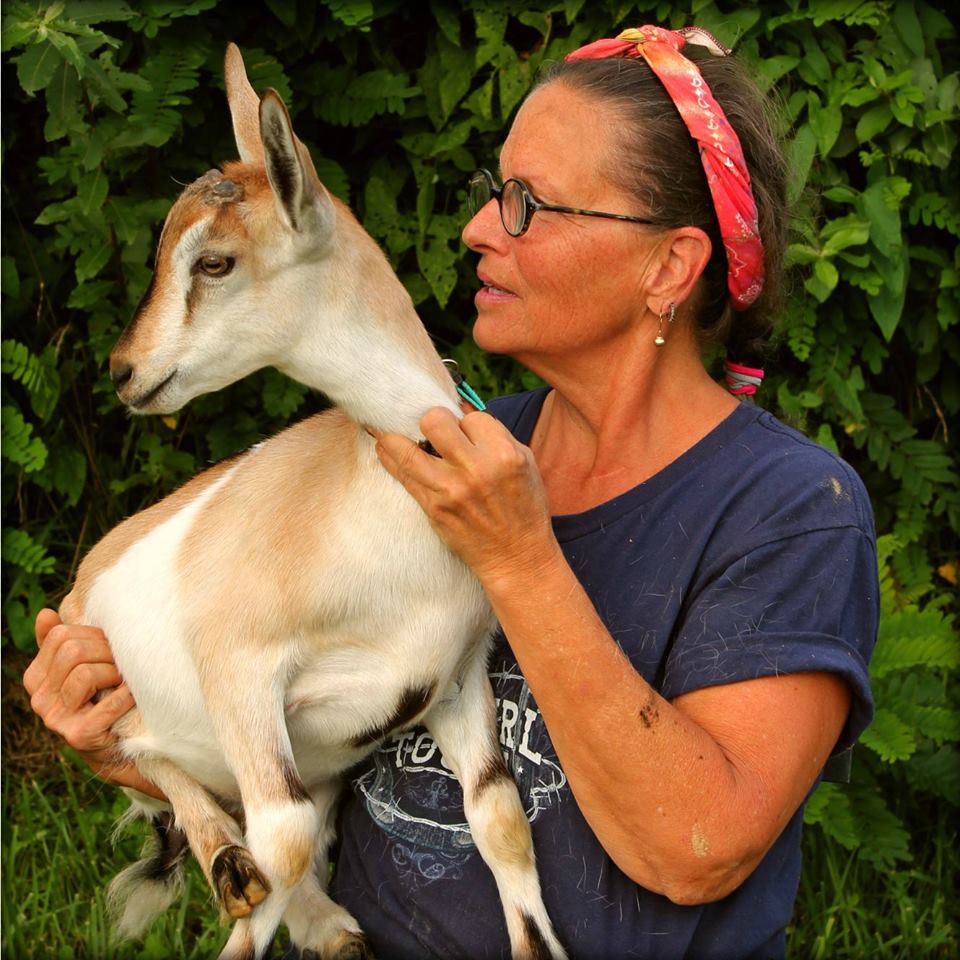
SALEM, Ohio — Annie Warmke never thought she would leave her farm in Muskingum County.
“I thought my ashes (would) be here,” she said.
But when life took a turn in 2023, leaving her unable to care for the land and no one interested in taking it over, she knew she had to find a way to keep it as farmland.
“We never intended to sell the farm. We wanted it to stay agriculture, to stay in a stewardship modality,” Warmke said.
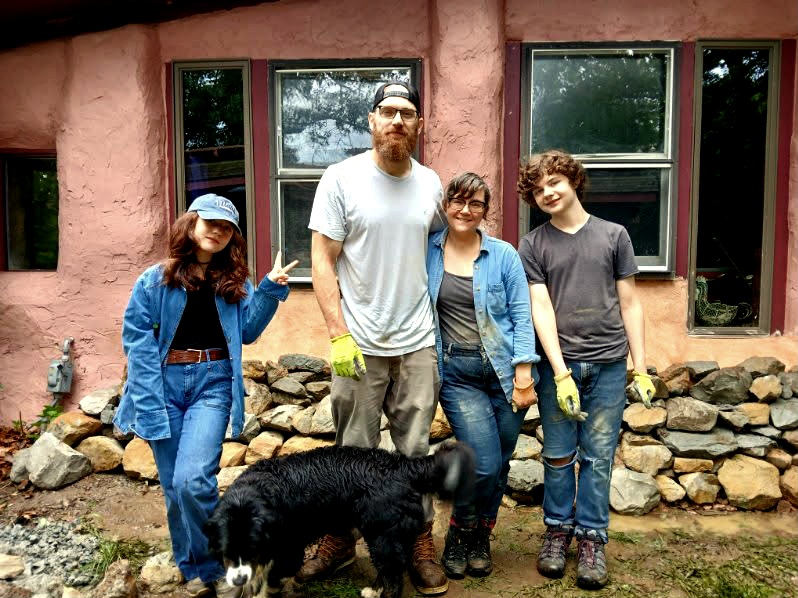
Meanwhile, Sarah and Jason Ricks dreamed of owning a farm to raise their kids on: “It’s our calling to be farmers,” Jason Ricks said. But for years, they have struggled to find affordable farmland.
“Every time we went to put in an offer, a lot of times we would get outbid or we were going to put ourselves in a situation where we’re buying this for way more than what it’s worth, and would (struggle to pay off a mortgage),” Sarah Ricks said.
That’s when the Farmers Land Trust came in.
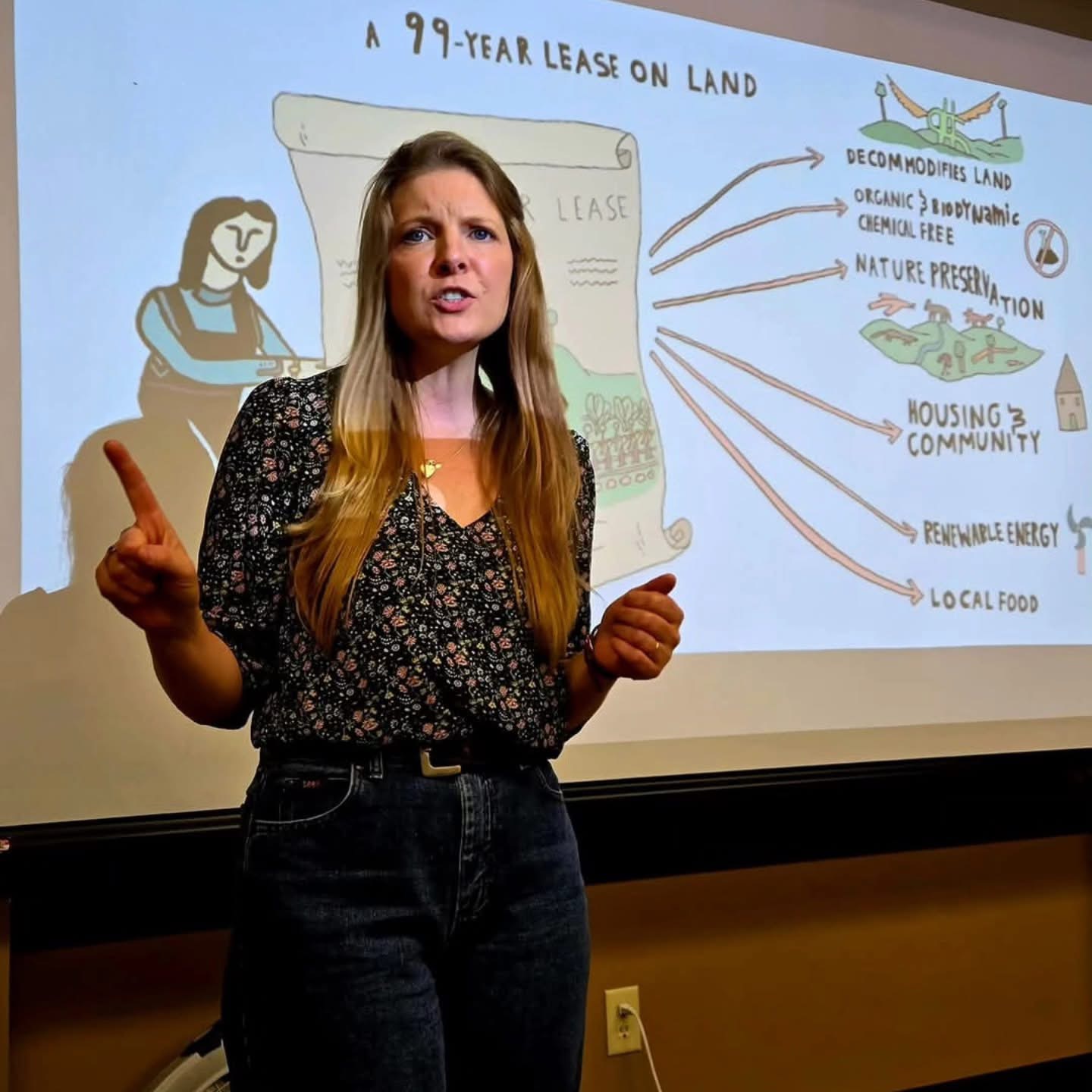
The Farmers Land Trust is a nonprofit national land trust that helps farmers transition their farmland to the next generation by establishing community-managed farmland. The nonprofit pays to own the title of the farmland, while the next farmer tends to the land through a 99-year lease.
Through the program, Warmke was able to ensure her farm, Blue Rock Station, LLC, was not developed and continues to feed the local community. It also opened the barn doors for the younger generation — Sarah and Jason Ricks — to get involved in agriculture.
“This is a way for next-generation farmers to get secure, affordable, equitable land access,” said Kristina Villa, co-executive director and co-founder of the Farmers Land Trust.
Farmers Land Trust
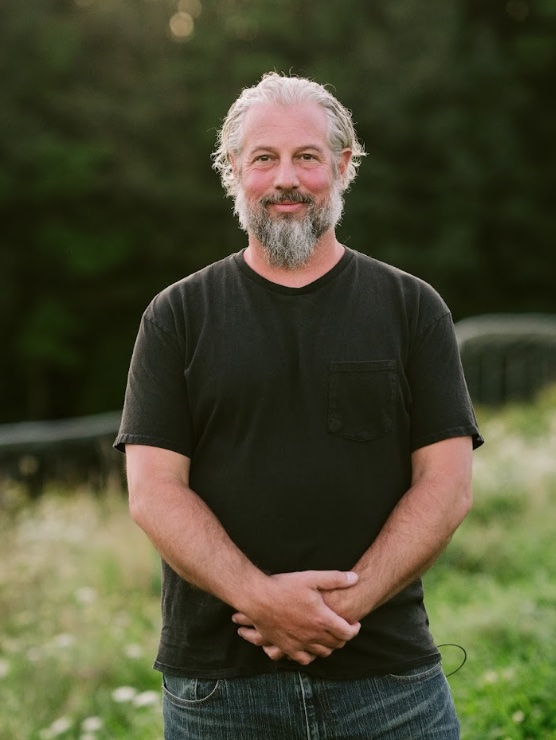
Villa and Ian McSweeney, co-executive director and co-founder of Farmers Land Trust, formed Farmers Land Trust in 2023, after decades of experience in the agriculture industry, where they had a front row view of the emerging farmland crisis: the cost to purchase it.
McSweeney realized this while working with a community-supported agriculture farm in 1984, in Massachusetts. CSA farms are where people become members of a farm, paying a subscription fee to receive a portion of the harvest.
This farm served as a model for other CSA farms for over 25 years, but they didn’t own the land they were on, he said.
“They couldn’t afford the land they were on. The price was too high,” McSweeney said. “That really struck me that if they, as this institutional founding CSA farm that’s really developed this viable business model that’s sustaining them, can’t afford the land, so many others can’t afford the land, too.”
Villa had a similar experience working at an organic farm in Tennessee in 2013. It was there that she learned how to farm, but quickly she realized that she wouldn’t be able to afford farmland herself.
Each year, farmland is becoming more expensive. Between 2023 and 2024, Ohio’s cropland value rose 9.7%, reports the U.S. Department of Agriculture National Agricultural Statistics Service. Two decades earlier, farm real estate prices in Ohio were $3,180 per acre.
Today, farm real estate prices are $9,350 per acre in the state, reports the American Farm Bureau Federation.
Villa and McSweeney met in 2020, bonded by a similar goal of solving this farmland crisis. This led to their eventual launch of The Farmers Land Trust. The nonprofit organization, based out of Cookeville, Tennessee, uses the Farmland Commons model, where it buys the land — through fundraising efforts — and establishes a 99-year lease agreement with the next farmer.
The lease is overseen by a community board made up of nonprofit organizations and the next generation farmer. The farmer gets to manage the land and live on the farm while working with the board to make decisions.
Warmke’s farm is now managed by Sarah and Jason Ricks, through partnerships with the Women Food and Agriculture Network and the Women’s Peacepower Foundation.
Before selling her land to The Farmers Land Trust, Warmke had to get the farm appraised by a certified appraiser, giving them a price point to ask for from The Farmers Land Trust. The Warmkes also had a say in who the next farmers would be.
The Ricks were selected earlier this year.
Blue Rock Station, LLC
Warmke bought her 38-acre farm in Gaysport, Ohio, in 1994, while living in Florida. That first summer, she planted fruit trees on the property and, for the first two years, would bounce back and forth between Ohio and Florida, staying in the summers and trimming fruit trees in the winter.
Efforts on the farm ramped up in 1996, when Warmke and her husband, Jay Warmke, started building a sustainable home made out of recycled materials: “85% of the building is reused or repurposed in some way,” Warmke said.
In November 2005, Warmke and her husband moved into their unfinished sustainability home and began transforming the farm.
“We understood that if we were going to make a living at farming, it had to have many baskets with eggs in it, so when one basket went away, we would not lose anything we had accomplished, let alone the farm,” said Warmke.
Warmke bought turkeys, chickens, goats, llamas and pigs. She eventually sold eggs and hosted tours with llamas that would trek around the farm with guests. Warmke also hosted classes at the farm and hired interns to learn farming practices.
In 2018, she built a food forest out of her woodlands — a self-sustaining ecosystem that mimics a natural forest to provide food.
Things were going great until 2023, when she fell and broke her leg. The injury left her learning how to walk again, and tending to the farm became difficult.
“I couldn’t walk on the land. I still have some trouble with that, but the real issue was I didn’t have energy. I couldn’t care even for myself,” Warmke said, who didn’t have any relatives interested in taking the farm over. But if she were to leave, not just anybody could care for the land, either. She needed to find someone who had a plan to keep it sustainable farmland.
Sarah and Jason Ricks
From a young age, Sarah Ricks had an interest in growing her own food. She spent weekends on her grandfather’s hobby farm in Morrow, Ohio, tending to his garden.
Meanwhile, Jason Ricks, a first-generation farmer, studied food science in Ivy Tech Community College in Richmond, Indiana; his interest in agriculture started with brewing beer.
Together, the two started making home-crafted beer in the early 2000s, sourcing hops from local farmers. This interest in agriculture heightened in 2019, when they started growing tomatoes, lettuce and other produce using hydroponic towers.
But at the time, Sarah and Jason Ricks had limited space to expand; they lived in Columbus and had to grow produce in pots.
“The dream was to be able to produce the majority of our own food, and there was just no way to do that on a small scale. And why just produce food for just for us? We could expand out and produce food for our community as well,” Sarah Ricks said.
They wanted to raise their kids on a farm, too, adds Jason Ricks. This kicked off their search for farmland, but finding that land was a grueling task.
Affordable farmland was hard to come by: “I didn’t want to be in debt and struggling,” Sarah Ricks said.
This lack of affordable farmland is also pushing the average age of farmers up. In 2022, the average age of producers in the United States was just over 58 years old, according to the Ohio Farm Bureau.
Millennials are interested in agriculture, Sarah and Jason Ricks said, but a lack of access due to rising farmland costs is preventing the younger generation from getting involved.
That’s when they met Villa, co-founder of the Farmers Land Trust, who encouraged them to apply to become the new farmers of Blue Rock Station, LLC.
According to Sarah Ricks, it was a perfect fit. Their farming goals aligned with the requirements of farming through the Farmers Land Trust, including using regenerative farming practices and being chemical-free.
“Not only does (Farmers Land Trust give you) access to land, but it also makes sure that the people who get access to that land are (farming regeneratively),” she said, adding they don’t have the added pressure of immediately producing food because they don’t have to pay off a mortgage. Instead, they can focus their time and energy on regenerative food production.
When Sarah and Jason Ricks first visited Warmke’s farm, they knew Blue Rock Station was where they wanted to plant roots: “We had this connection with the place; we couldn’t deny it,” Jason Ricks said.
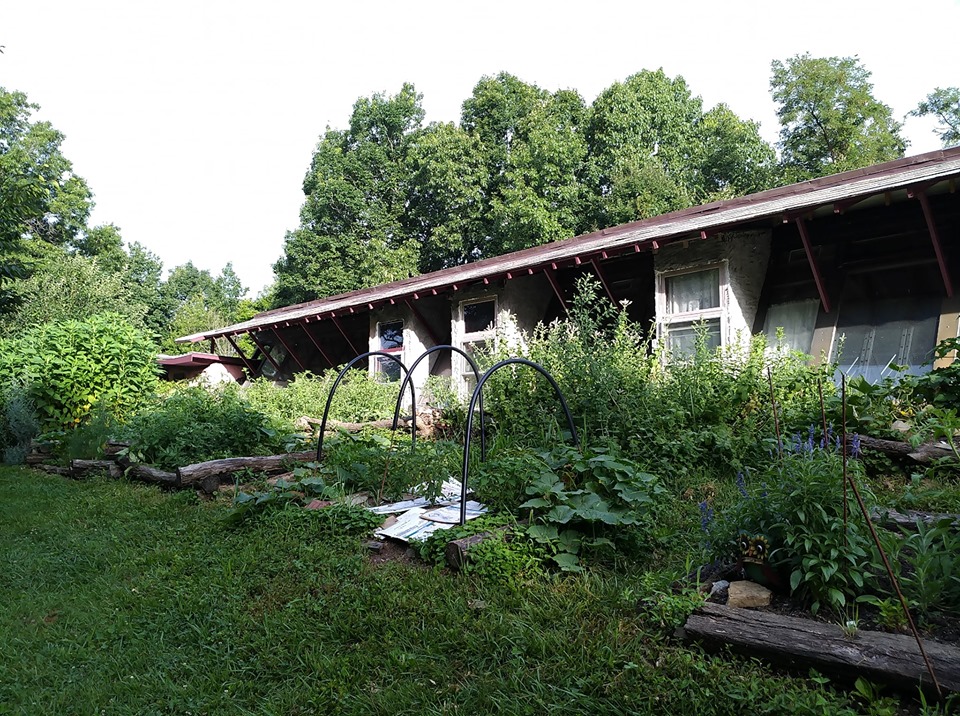
A new future
Even though the farm is owned by a community board, Sarah Ricks says the farmer still has full autonomy over the decisions regarding land usage.
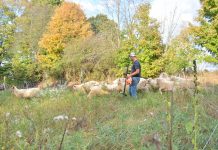
The couple moved onto the farm in August. Currently, they are focused on building up the soil nutrition for next spring and have plans to raise goats and chickens.
Warmke decided to transition her land through Farmers Land Trust because she wanted to support the next generation.
“When I realized they could come without debt, that meant that was an entry for possibly intergenerational wealth if they came with children,” Warmke said. “It just felt like I was helping to create a bit of a revolution in agriculture.”
Villa adds that the Farmers Land Trust is a great option for aging farmers who are struggling with what to do with their land while also supporting young farmers.
Warmke and her husband are a great example of those who were “aging out” and had the opportunity to help select the next generation owners that would take over the farm, Villa said.
In addition to Warmke’s farm in Ohio, Farmers Land Trust has helped transition 12 farms across seven states, including in Michigan, Tennessee, Wisconsin, Maryland, Arizona and Washington.
Some of these farms are operated by a group of individuals, rather than one farmer, like its East Tennessee Farmland Commons, where five organizations are managing the farm and providing community housing.
Ultimately, Warmke says she chose to transition her land through Farmers Land Trust because it was her “insurance policy” that it would stay farmland.
“If you own land, and you don’t know what’s going to happen to it when you can’t own it anymore, or you die, or you have family conflict, and everybody’s going to fight over it, then this process is a dream come true, because what it does is it protects your hard work,” Warmke said. “It gives you a sense of an insurance policy that when you move on to something else, or you die, you know that land is going to be stewarded and not sold to a developer.”
For more information about The Farmers Land Trust, visit https://www.thefarmerslandtrust.org.
(Liz Partsch can be reached at epartsch@farmanddairy.com or 330-337-3419.)




