





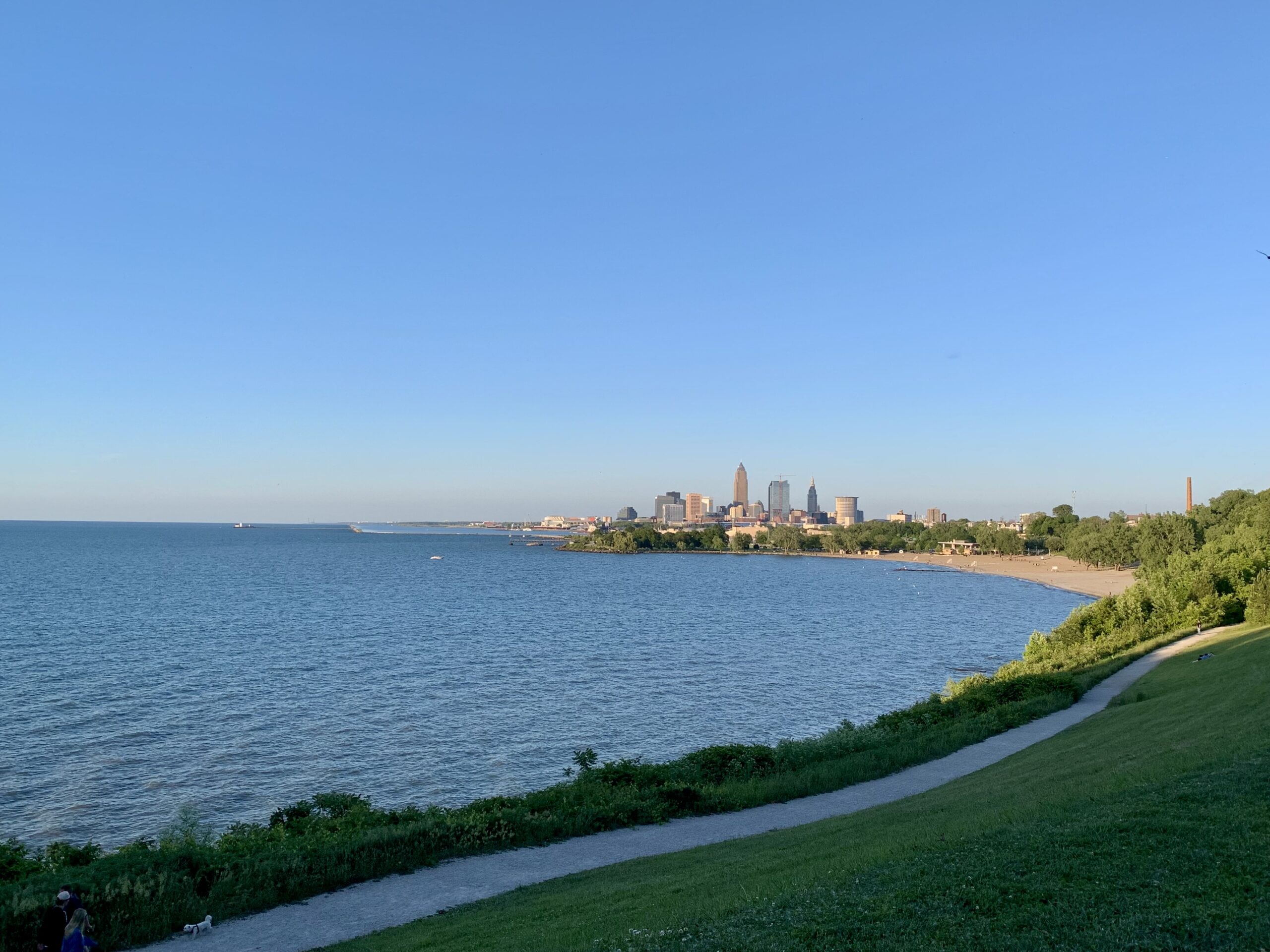
SALEM, Ohio — Lake Erie is showing signs of improvement thanks to reduced nutrient runoff, according to an expert speaking at a Nov. 24 freshwater science webinar called “Critical Issues and Emerging Threats Facing Lake Erie,” hosted by Ohio Sea Grant and Stone Laboratory. Those nutrients drive the persistent harmful algal blooms that scientists have been tracking in the lake for decades.
“We are seeing a statistical decline in the nutrients running off our landscape into Lake Erie,” said Chris Winslow, director of Ohio Sea Grant and Stone Lab. Since 2014, he said, there’s been about a 6% to 10% decrease in runoff, which is something to admire.
“Lake Erie is a beautiful case study of environmental restoration,” Winslow said.
Despite progress in nutrient reduction, the Great Lake continues to face both longstanding and novel challenges. Winslow highlighted that while overall water quality indicators show some improvements, Lake Erie is still considered “in poor condition” according to a landmark 2017 joint report by the United States Environmental Protection Agency and Environment and Climate Change Canada.
“I would argue that some of this will be updated, probably in the 2024 report, because we’ve been doing some really great things in the environmental space in Lake Erie,” he said.
Key areas of concern linger on, including beach advisories tied to E. coli from combined sewer overflows and ongoing impacts from toxic chemicals, although mercury levels in fish are decreasing. Restoration efforts, such as wetland construction under the H2Ohio program, are showing promise for habitat recovery.
Despite some encouraging signs, the path forward for Lake Erie isn’t without complications. Climate change may throw a wrench in the progress made. Winslow pointed out that air temperatures in the Great Lakes region are about two degrees Fahrenheit warmer than in the past, and water temperatures are rising even faster.
“From 1900 to roughly present day, we are definitely seeing an increase in temperature of the Great Lakes region,” he said. This change influences ice coverage, precipitation patterns and fluctuating lake levels, all of which impact communities along the shoreline.
“And so we’ve got to, as we address these issues in Lake Erie, do this through a lens of, like, can we address them despite the fact that the temperature’s changing?” he said.
The webinar wasn’t all doom and gloom. Winslow highlighted some successes in fisheries management and invasive species control. Walleye populations remain strong, yellow perch are thriving in the western basin and connections that could allow invasive species to enter from the Ohio River have been effectively cut off. The Sea Grant team continues to monitor aquatic invasive species closely, while programs like the Great Lakes Aquaculture Collaborative and the Clean Marinas initiative promote sustainable practices and environmental stewardship.
Microplastics and other emerging contaminants remain a concern, with efforts underway to reduce single-use plastics and improve recycling rates. Staff at Ohio Sea Grant and Stone Lab conduct beach and marina plastics cleanups to address the issue. But there’s too much going into the water to begin with.
“Half the plastics that are used are what are called single-use plastics, so they’re used once and then discarded. Right now, only 10% to 20% of plastics are recycled,” Winslow said.
The webinar series aims to bring applied research directly to the public, focusing each quarter on issues ranging from human health and aquaculture to harmful algal blooms and community decision-making.
Winslow discussed the work conducted by Sea Grant and Stone Lab, providing an overview of his team of experts addressing critical and emerging threats to the lake. Their research spans a wide array of topics, from business retention along the shoreline and inland aquaculture development to aquatic invasive species, emerging contaminants and coastal resilience. He emphasized that the issues discussed at the webinars are not only scientific concerns but also community-driven.
The session concluded with a reminder that addressing Lake Erie’s challenges requires long-term commitment and collaboration between researchers, communities and government agencies. The statistical decline in nutrient runoff is a positive step, but as Winslow acknowledged, it is only “a long way towards that progress” needed to fully address harmful algal blooms and restore the lake to health.
“What we try and do at Ohio Sea Grant and Stone Lab, and we can do it with your help, is to basically do research that informs that management policy and a change in behavior,” he said.




