



Editor’s note: Story was updated Aug. 28
MORROW, Ohio — In the backwoods of Warren County, Ohio, passing a 20-acre fenced pasture and working farm is not unusual. Livestock graze in rotating pastures, hoop houses shelter vegetables and mushrooms grow in a climate-controlled barn chamber. A farm market sits at the center of the property.
But this farm is not owned by a single household. It belongs to more than a hundred.
Aberlin Springs is an agri-community, also known as an agrihood, built by Leslie Aberlin in 2018, the owner of Pendragon Homes. Aberlin is a home developer with a deep connection to food and healthy living.
It’s the first and only housing development of its kind in Ohio, one centered around a working farm where residents contribute to and help sustain the land’s agricultural roots.
“I’ve got a bunch of homeowners who are out working in the fields and their kids who enjoy working on the farming,” Aberlin said. “It just doesn’t fit in the norm.”
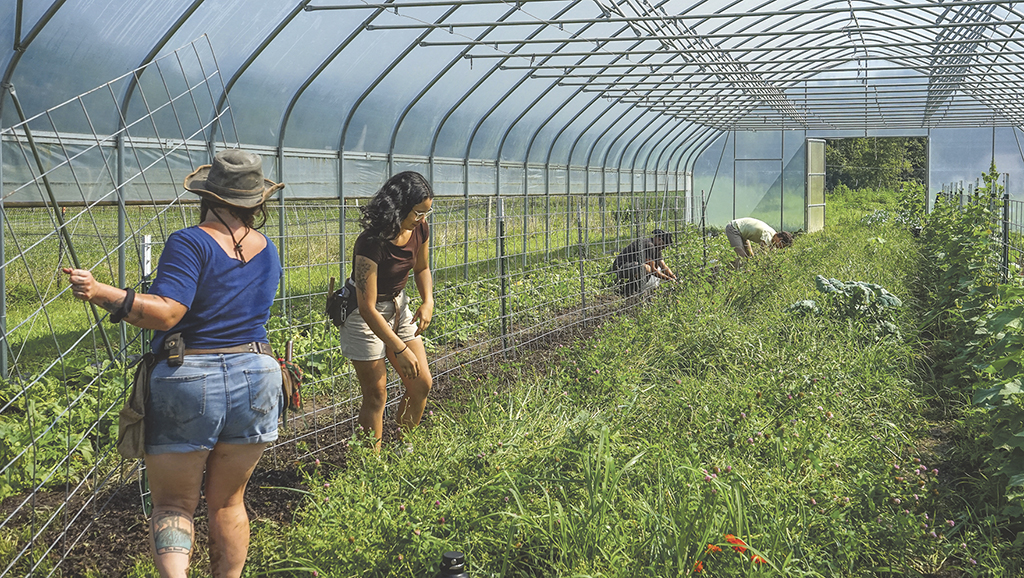
Shared by neighbors, the land is home to chickens, sheep and pigs, tended by a full-time farm manager and livestock keeper, with help from seasonal workers and resident volunteers. Community gardens line the edge of the property. Trails weave into the woods. A pool, clubhouse and market dot the community. On any summer day, you might find children helping with morning farm chores, teenagers learning to farm or a group of parents teaching animal care beside the resident donkeys and Kunekune piglets.
In a world where farmland is steadily disappearing to development of all kinds, this neighborhood offers a glimpse into a possible future that marries the two seemingly incompatible land uses.
Not the norm
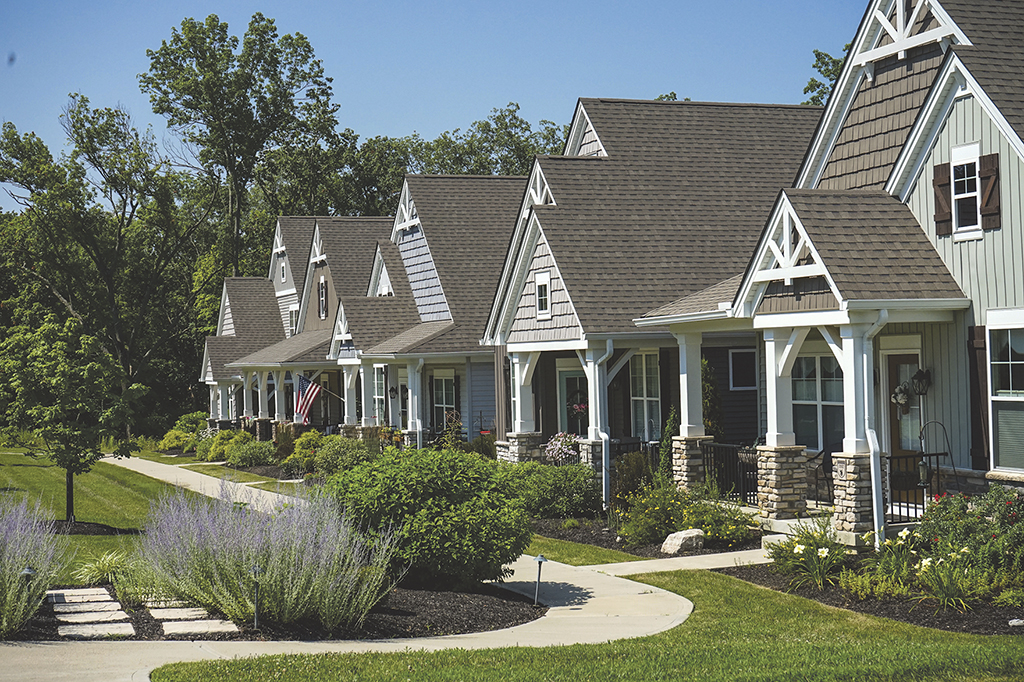
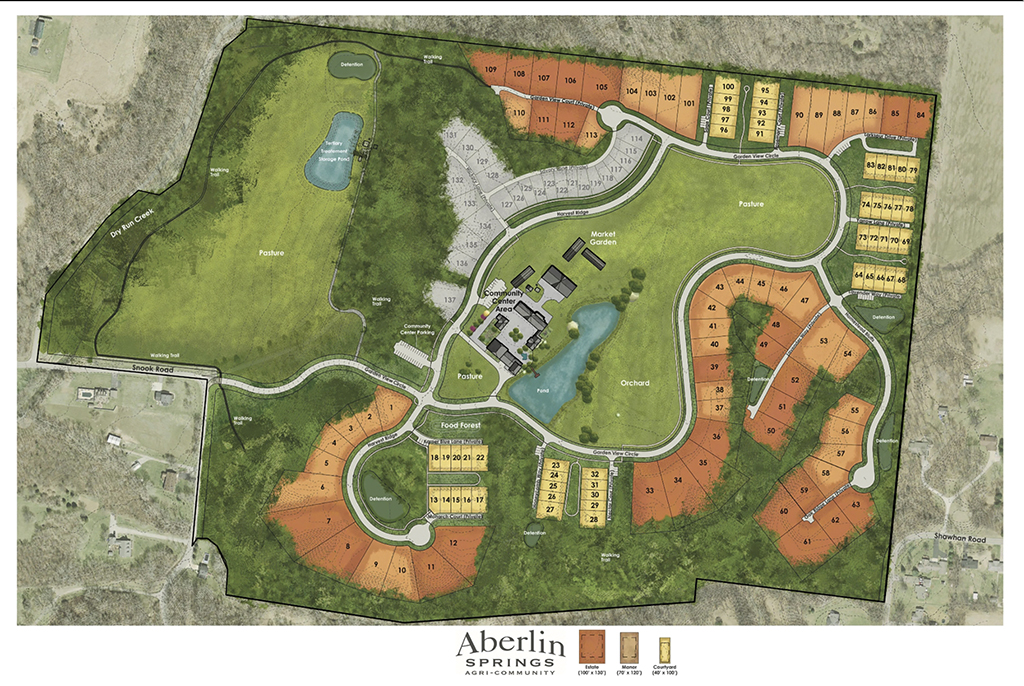
The neighborhood is a mix of single-family homes and low-maintenance courtyard homes for all different types of residents. The structure of the neighborhood and its governance is based on golf course communities. Just like golf courses must support the clubhouse restaurants and turf greens, at Aberlin Springs, homeowners support the farm property and production of local foods. The purchase of a home comes with a capital contribution fee of $2,500 when moving in, then a $2,500 homeowners association fee per year; $350 of that annual HOA fee goes to the farm.
The community has 137 total lots available, and 95 are sold so far.
“It’s the most diverse community I have seen in my career,” Aberlin said. In the agri-community, there are 42 children under 14 years old, two couples over 80, 19 single women and residents of eight nationalities.
Everyone who lives in the neighborhood stays for a different reason, according to Aberlin. One-third of the residents are highly involved in the farm and its products — volunteering, participating in the community supported agriculture program, purchasing from the market and contributing new ideas to make the farm their own. Another third benefit from the harvest of fresh produce but may not spend much time on the farm, and one-third might not engage in farm life at all, she said.
Regardless of participation, “the way we fund the farm here is everybody who lives in this community is required by the HOA agreement to be a member of the CSA (community supported agriculture).”
Homes in Aberlin Springs range from $520,000 to over $1 million, a lifestyle investment, Aberlin said, for living in one of the healthiest development communities in the world, where almost everything you might need is grown, raised and available at a store a short walk away from your doorstep.
But just as with any agribusiness with heavy overhead, Aberlin is used to the pushback on how this project started: “Who’s got that kind of money? You can’t get the loans for that type of project.”
“Homeowners have money,” she said. “We have land, and people need the locally-produced food, so it totally makes sense to start a farm and bring in the young people, because they can’t afford to buy the land and have all the infrastructure.”
There are an estimated 200 agrihoods across the U.S. in at least 30 states. A 2023 article in ProBuilder, a trade publication run by the National Association of Home Builders, pointed to agrihoods as a growth opportunity for planned community developers, in a time when cheap land is scarce and consumers have an increasing desire for health and wellness.
A 2018 study from the Urban Land Institute found that agrihoods may get stronger public support than typical housing developments because of the connection to working farms and farmland. This, in turn, could lead to increased buy-in from stakeholders like public officials and investors.
The ULI suggested in the study that local governments could create land use and zoning policies to encourage the development of agrihoods, like one rural community did 40 miles west of Chicago. Kane County, Illinois, enacted a protected agriculture/limited development zoning designation to protect farmland and encourage farm-oriented communities in areas facing development pressure. This resulted in the Serosun Farms development, a 110-unit housing plan on 400 acres of land that includes 300 acres of preserved farmland.
Vision for a healthier future
Leslie Aberlin started Pendragon Homes in 2004. The company builds luxury custom homes across the greater Cincinnati and Dayton area. Aberlin Springs is her newest home-building project.
The property was once Aberlin’s family farm, which she decided to take off the market after an autoimmune disease scare that left her inspired by natural foods. She started to think twice about the social norms of modern healthcare and nutrition, and how she could be in charge of her health, if the fresh, healthy food was her own.
She committed to the idea, and the original farmhouse was renovated into the current office, which now sits in a Swiss-style courtyard.
Antioch College originally had a case study designed for an agri-community settlement near Yellow Springs, Ohio, but when the university backed out, Pendragon Homes and its experts stepped in.
Their vision considered everything from zoning requirements to the emotional needs of citizens. They also implemented a private septic system. Instead of water and waste going back to city utilities, the property has a water treatment system and retention pond. Treated water irrigates pastures to create nitrogen-rich, affluent soil where the animals graze, eventually refilling the underground aquifer on the property.
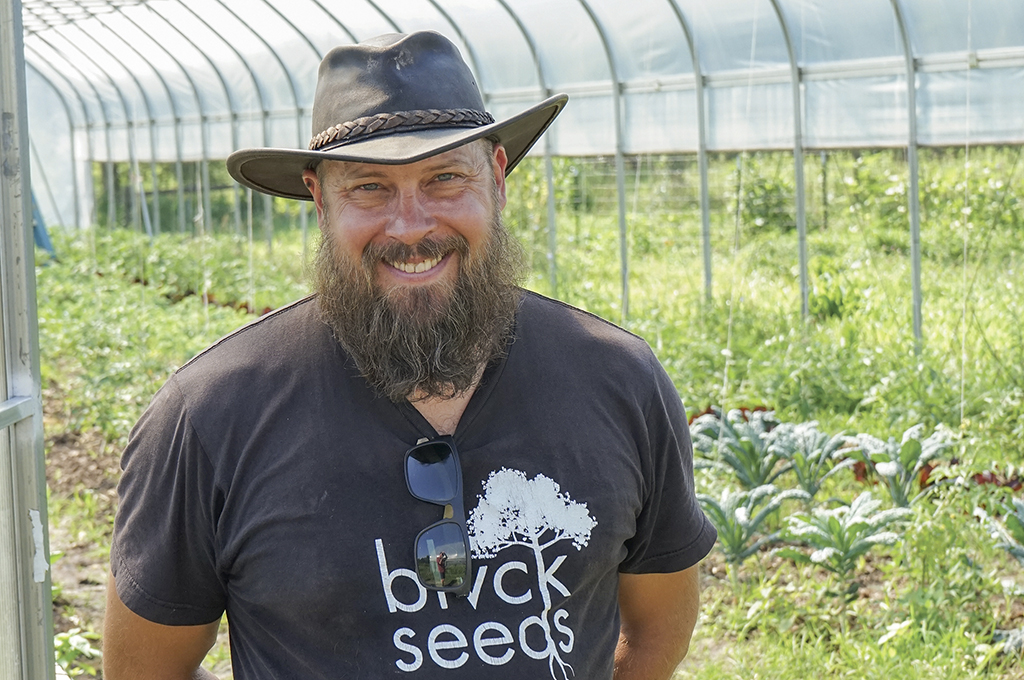
Sharing the responsibility of a successful neighborhood is Nathan Reidel, the farm manager. “He’s a community guy,” Aberlin said, which is the key to making an agri-community really work. “You need a farmer, but somebody who works well with the community.”
Reidel manages the outdoor vegetables, including broccoli, carrots, onions, green beans, Chinese cabbage, squash and corn — all items in the CSA that each household can pick up each week. He also works in the permaculture fruit tree orchard, with 300 trees, that serve as one of the first natural buffer strips between the home development and the farm.
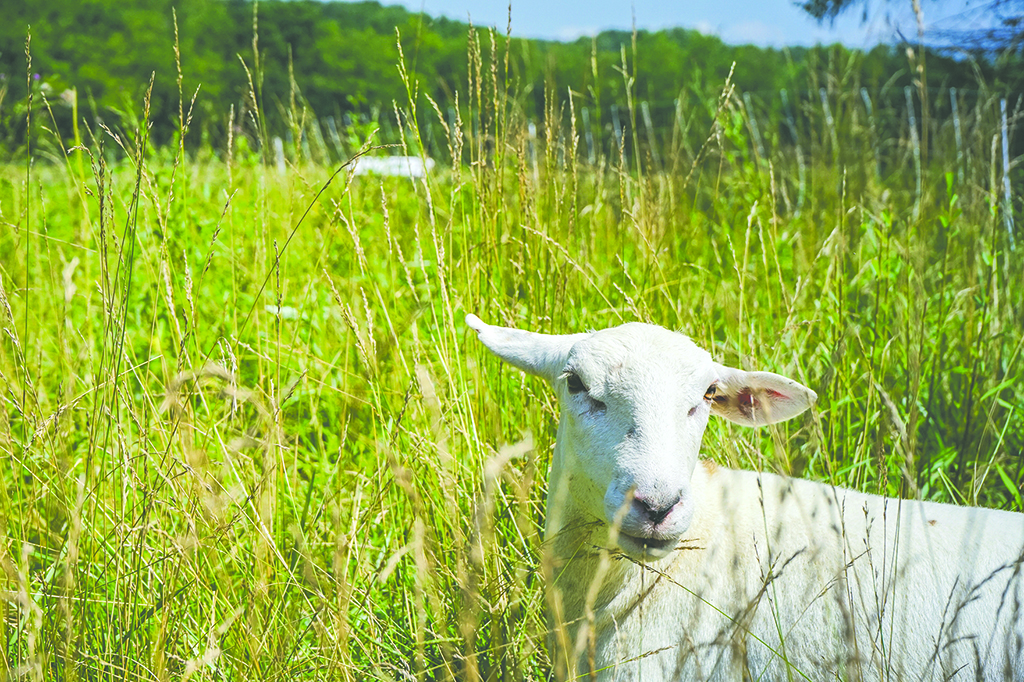
Another farm manager handles the livestock, managing the movable chicken trailer for over 130 meat birds, a flock of lambs and a passel of pigs, also raised for meat and available for purchase in the market.
“Farming directly for your clientele is awesome,” Reidel said.
The farm doesn’t have any certifications or titles that identify its style of farming. The Aberlin Springs website states that the farm follows regenerative farming practices, following Polyface Farm guiding principles by Joel Salatin and names Salatin as a mentor.
Reidel has worked to implement a regenerative production system and one with a closed-loop circular farming system that recycles materials around the farm. They also use beneficial insects without chemical pesticides in their market garden.
“Weeding for us is not a cosmetic thing. It’s only if we need to do it,” he said.
Since the product is not marketed beyond those living in the neighborhood, there is no need for agency oversight or marketing distinctions.
In an hour walking the farm, Reidel and his team are working the vegetables, hikers are using the trails early in the morning, children and their mothers are playing.
Residents like Robin, a retiree living in the neighborhood, volunteer to feed the livestock and complete chores every morning. He doesn’t have farming experience like the rest of the staff, but he’s one of many members of the community contributing to the food on their plate. The pastures where the sheep graze, which are the plots that he checks on, is only a quarter mile walk from his front door.
“I think everybody who is engaged really wants community,” Aberlin said.
Editor’s note: Edits were made to reflect full capital contribution fees, resident name and full range of home values.





Fantastic job on putting this well written and truthful article of the front page ! The best and most positive front page article in months! Very well written and thank you for helping to keep Farm and Dairy a positive news source. ❤️