



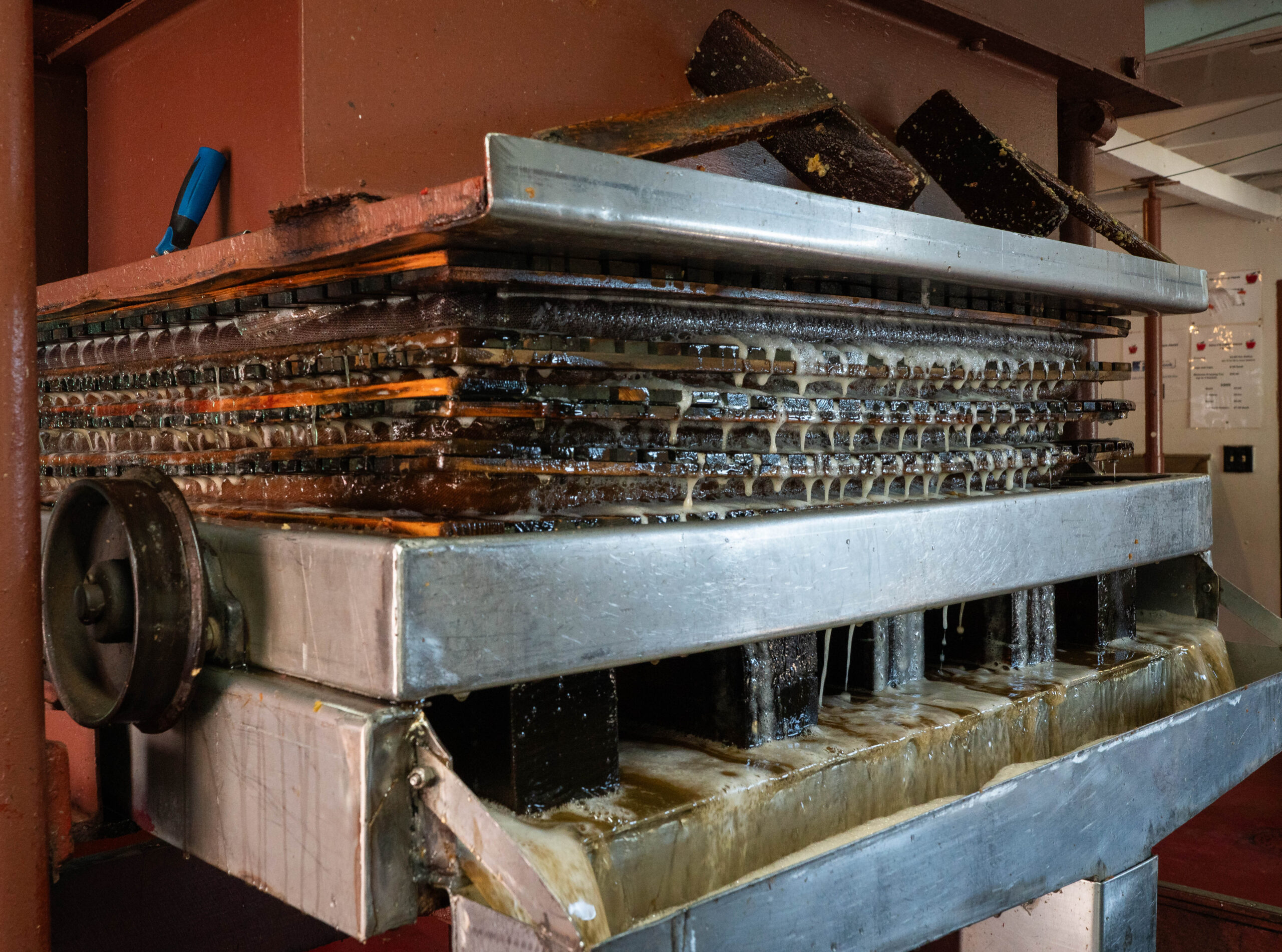
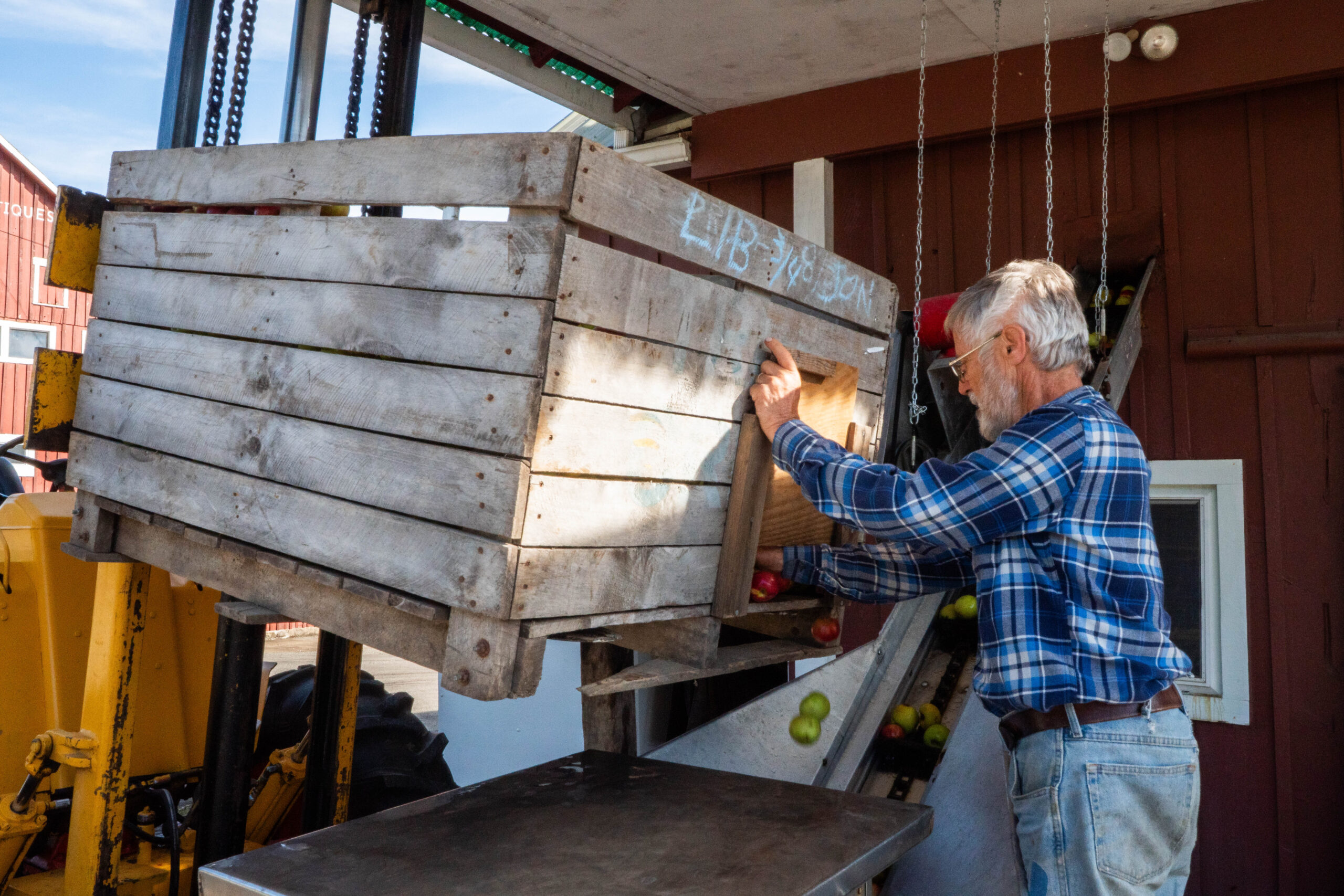
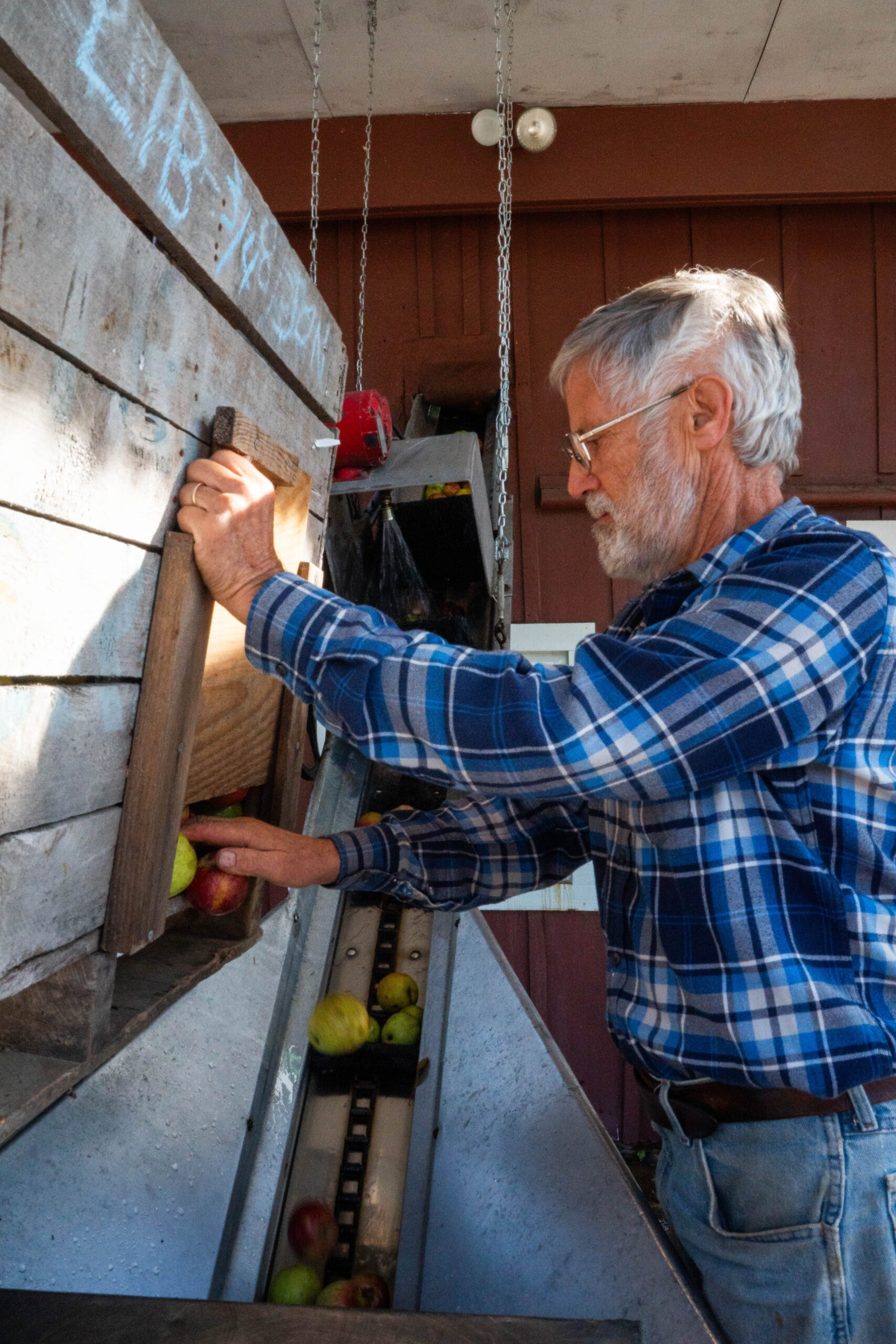
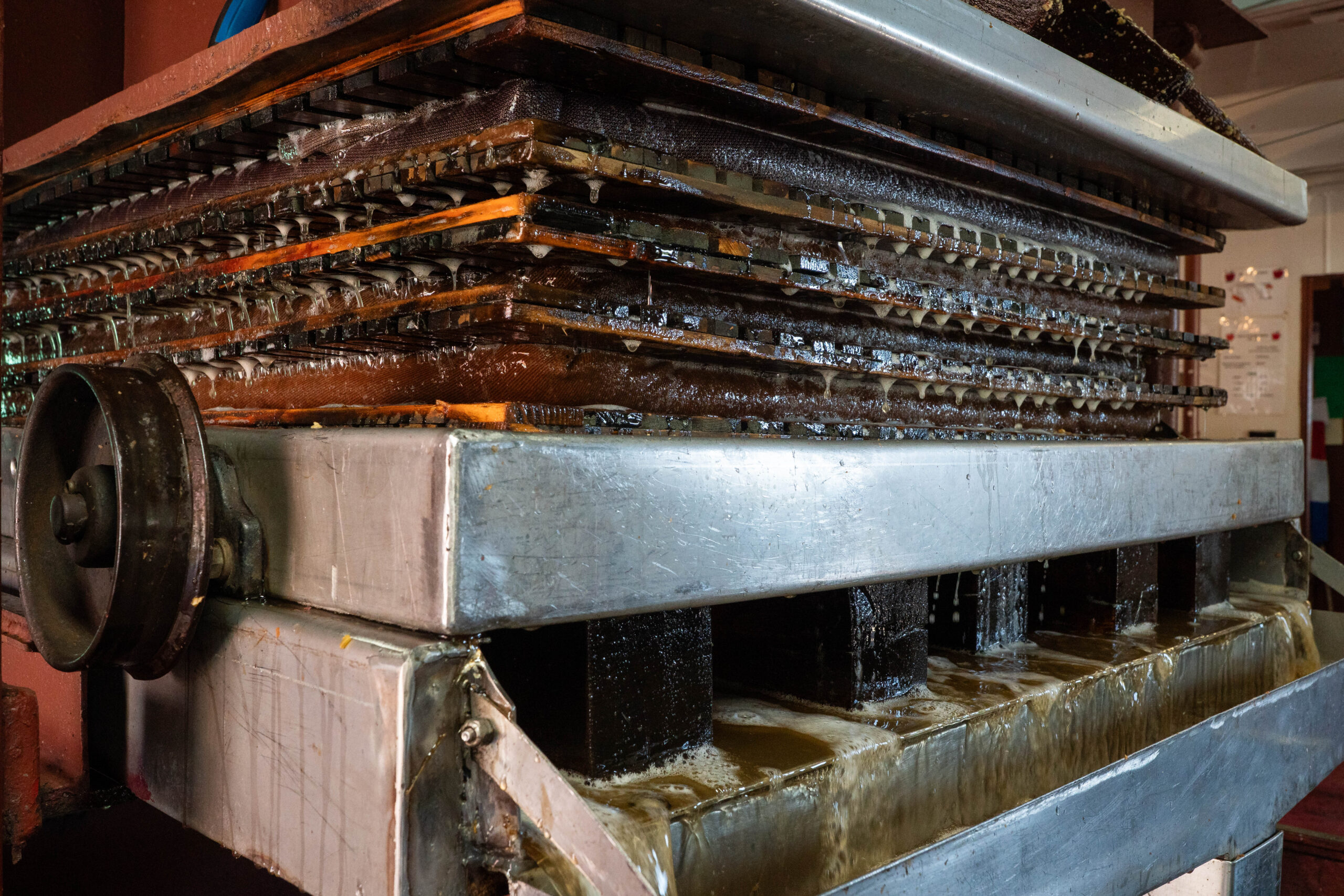
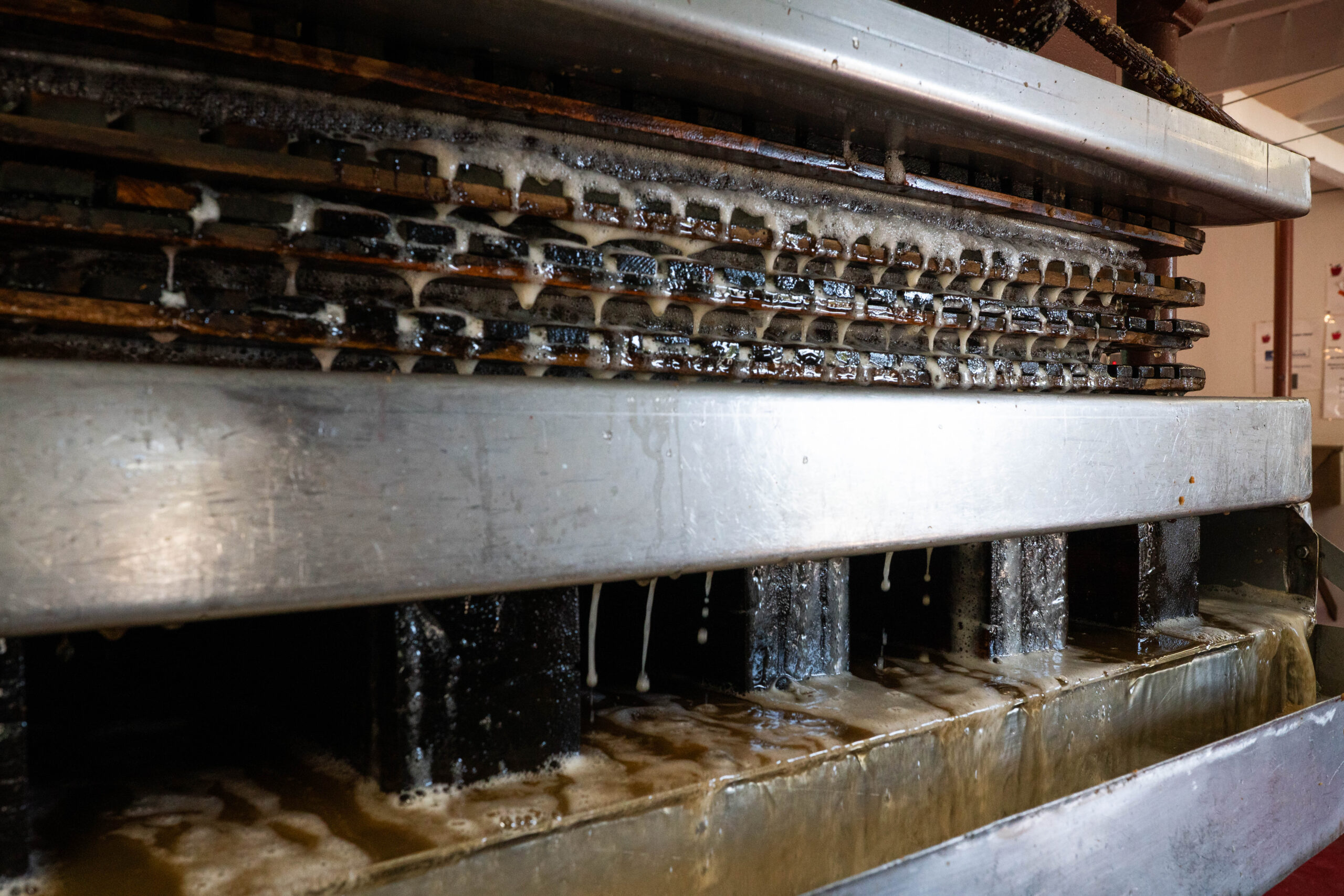
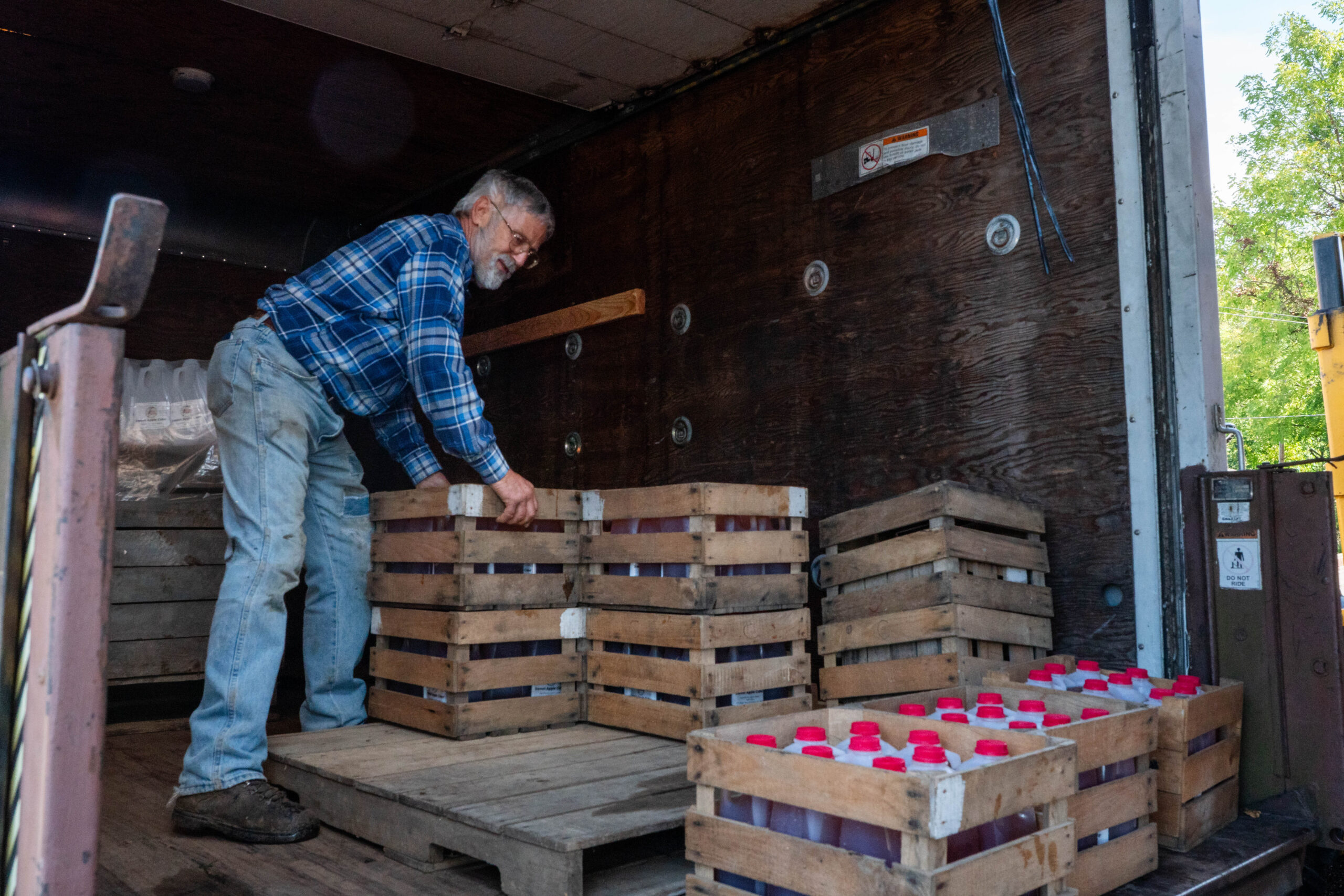
HARMONY, Pa. — Local farmer Don Kretschmann loads whole apples into a conveyor belt before they are chopped, spread out and layered on wooden panels. Minutes later, fresh apple cider cascades down the cider press before funneling down below into barrels at Sally’s Cider Press.
At this cider mill, it isn’t just farmers who can use the press; anyone can see this magic for themselves.
“I look at it as a family thing. If you have mom, dad and the kids, they got a couple apple trees. You get the kids outside, away from the TV, and you bring (the apples) in here, and then you sit here and you watch,” said Don Davis, second-generation owner of Sally’s Cider Press.
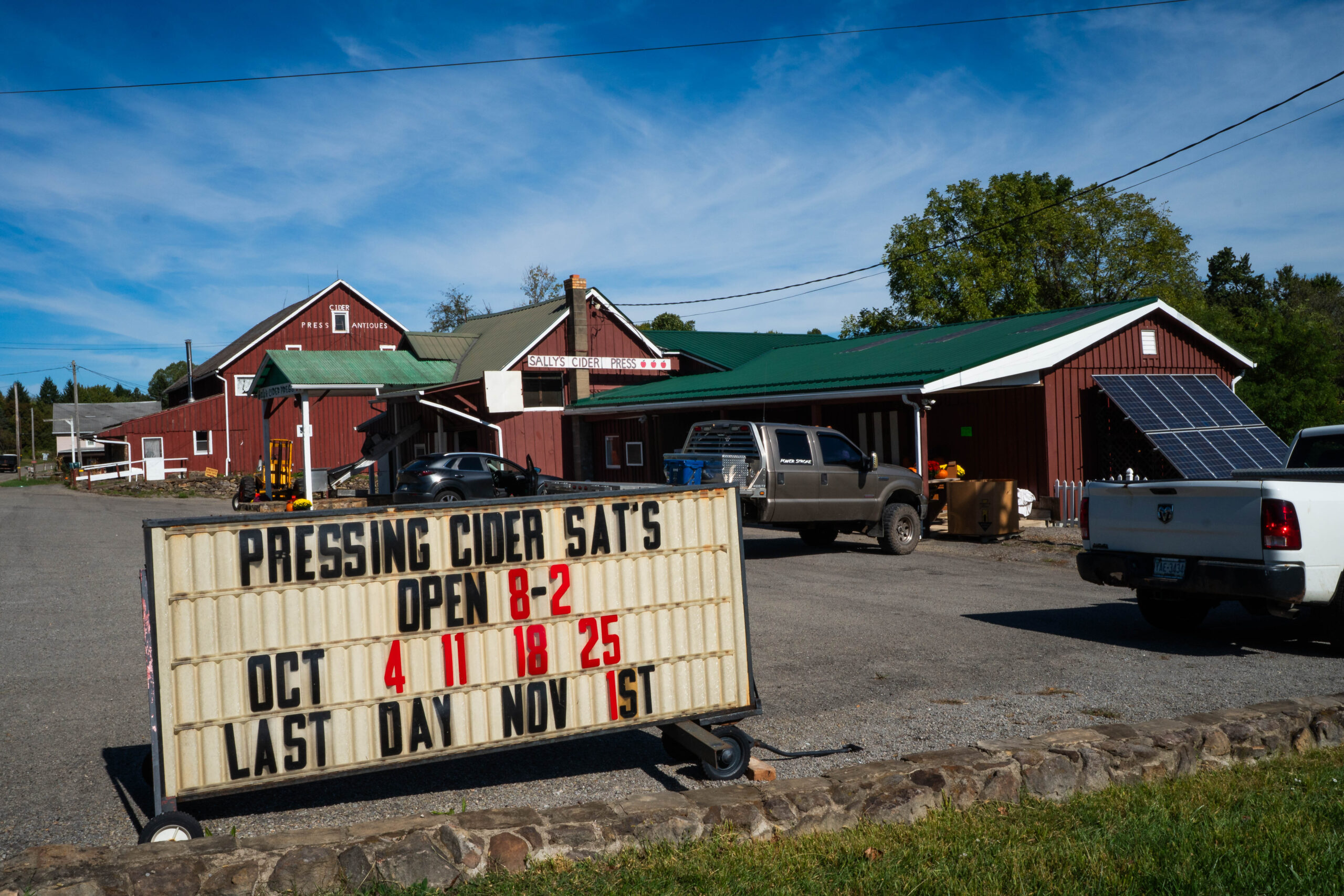
The Davis’ cider mill, open for only eight weeks each year, has hosted farmers market vendors and the public for pressings for over 50 years, in addition to making their own cider.
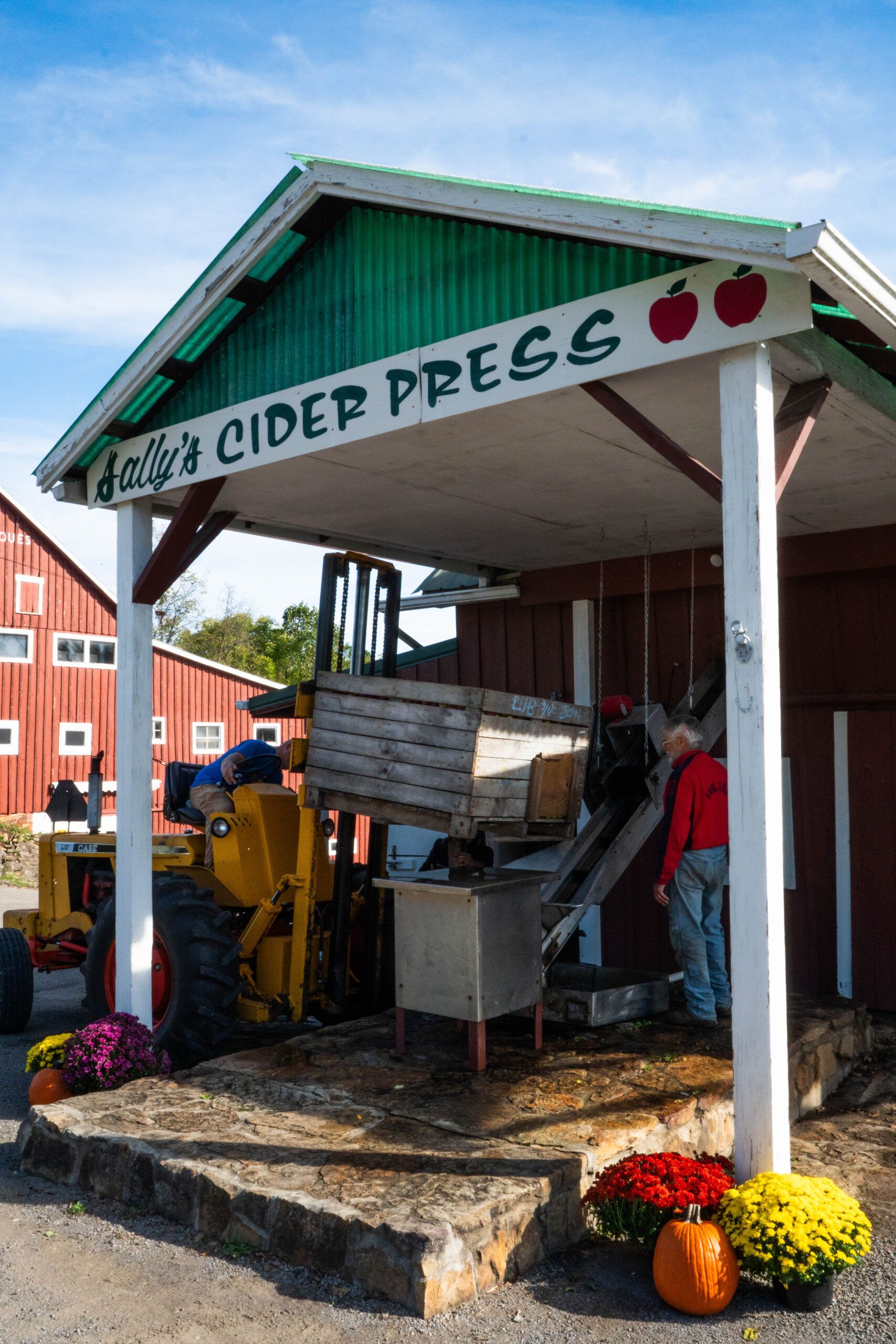
Sally’s Cider Press
Sally’s Cider Press dates back to the early 1950s, but the Davis family first acquired the cider press in the mid-‘70s.
The cider mill was opened by Davis’s father, Thomas Davis, who named the mill after his wife, Sally. Thomas, a former school teacher, bought the cider mill because “he thought this would be something good for his retirement,” Davis said.
Davis was 12 when his family first took over the cider press. “This was my fall,” he said. At the time, the press was open on Tuesday, Thursday and Saturday, hosting both farmers and the public.
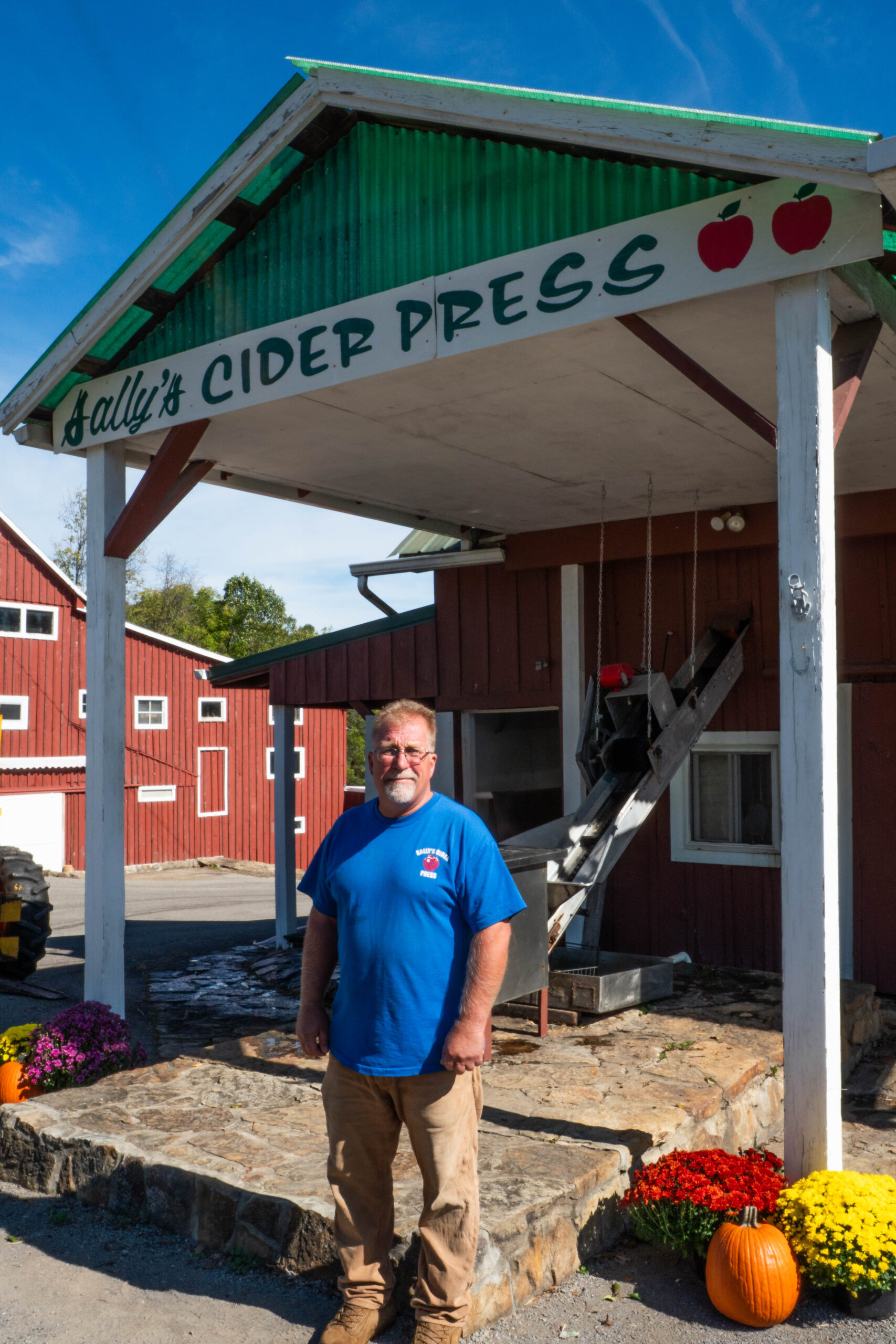
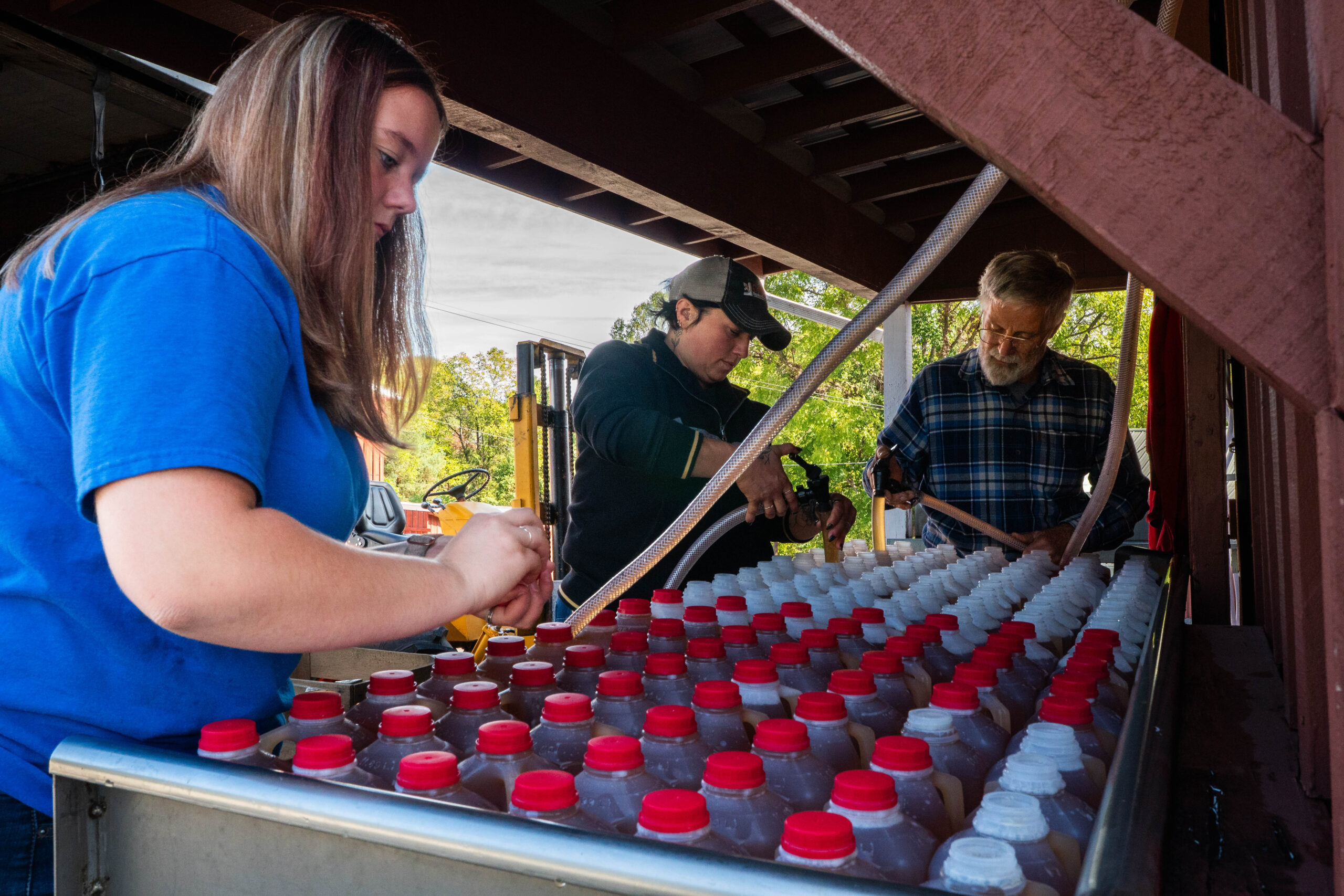
The cider press has been home to many family memories. It’s where Davis met Bill Kristophel, who would later become his father-in-law. Every day after school, the two would clean the cider press together. Today, Kristophel still hangs out at the cider press on Saturdays, labeling jugs.
“There’s a lot of good memories, a lot of good Saturdays, just hanging out and working the press,” Davis said.
Not much has changed over the years, except for some updates to the building and equipment, including a small hydraulic press in the basement. The cider press, however, is still the same one used since the ‘50s.
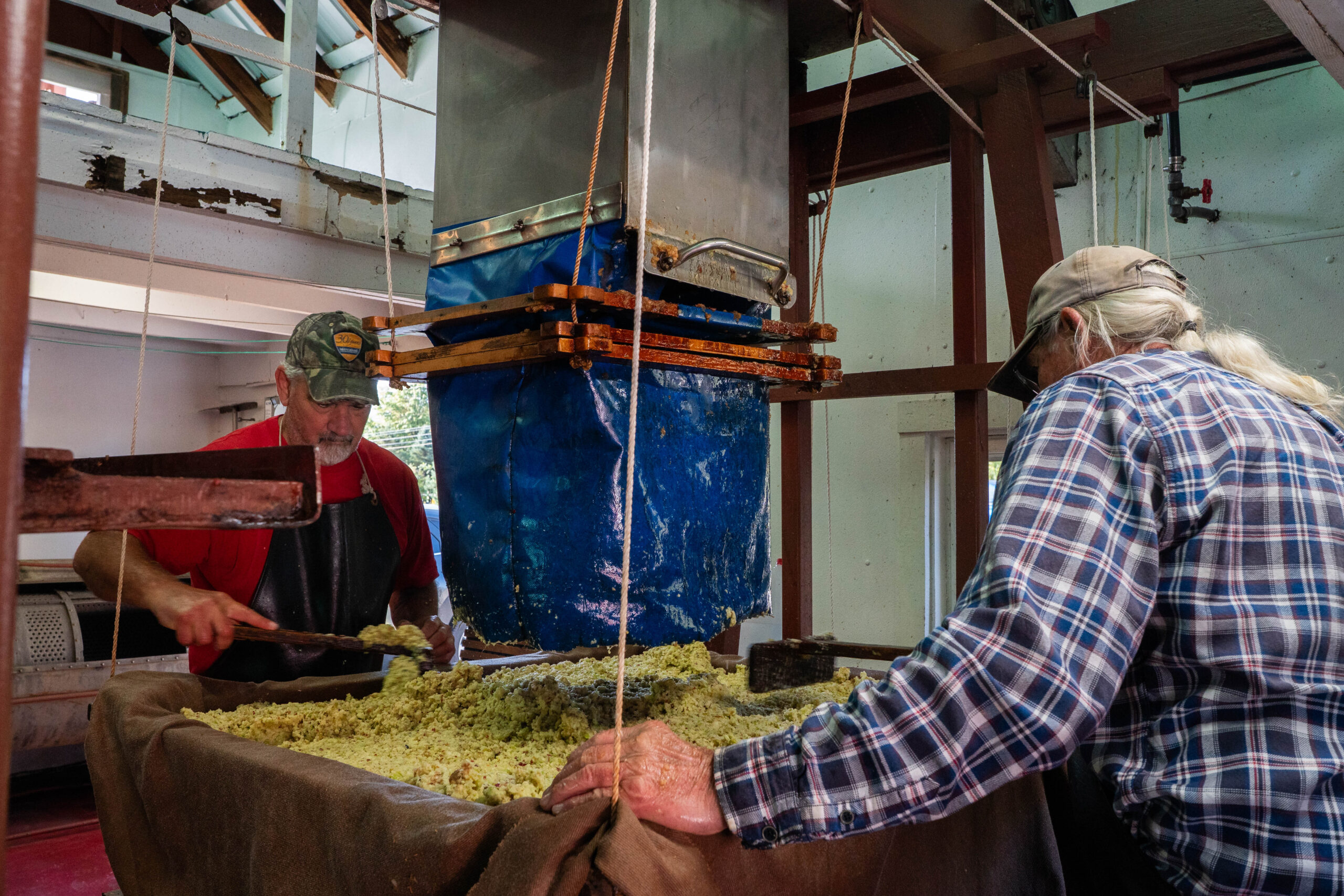
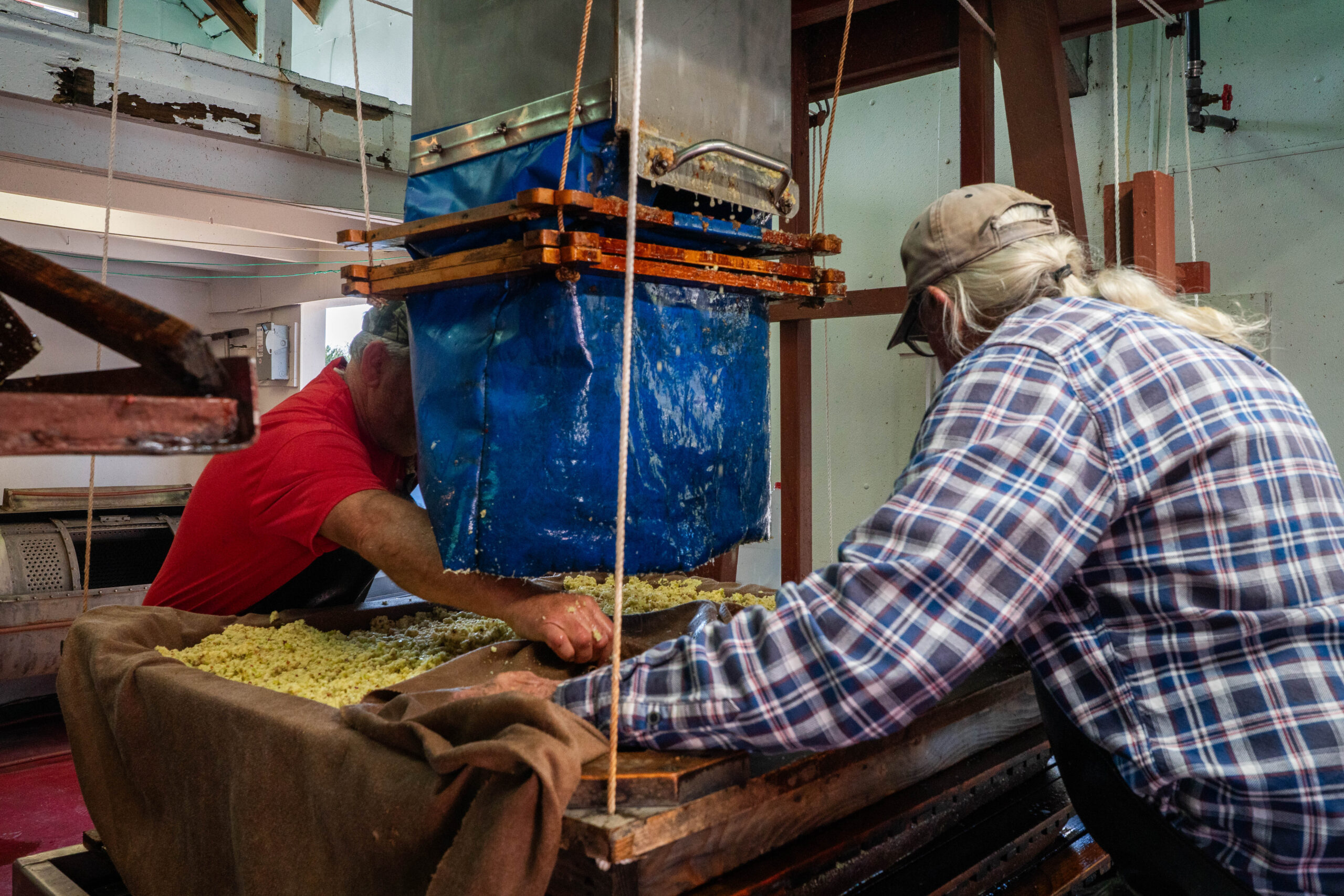
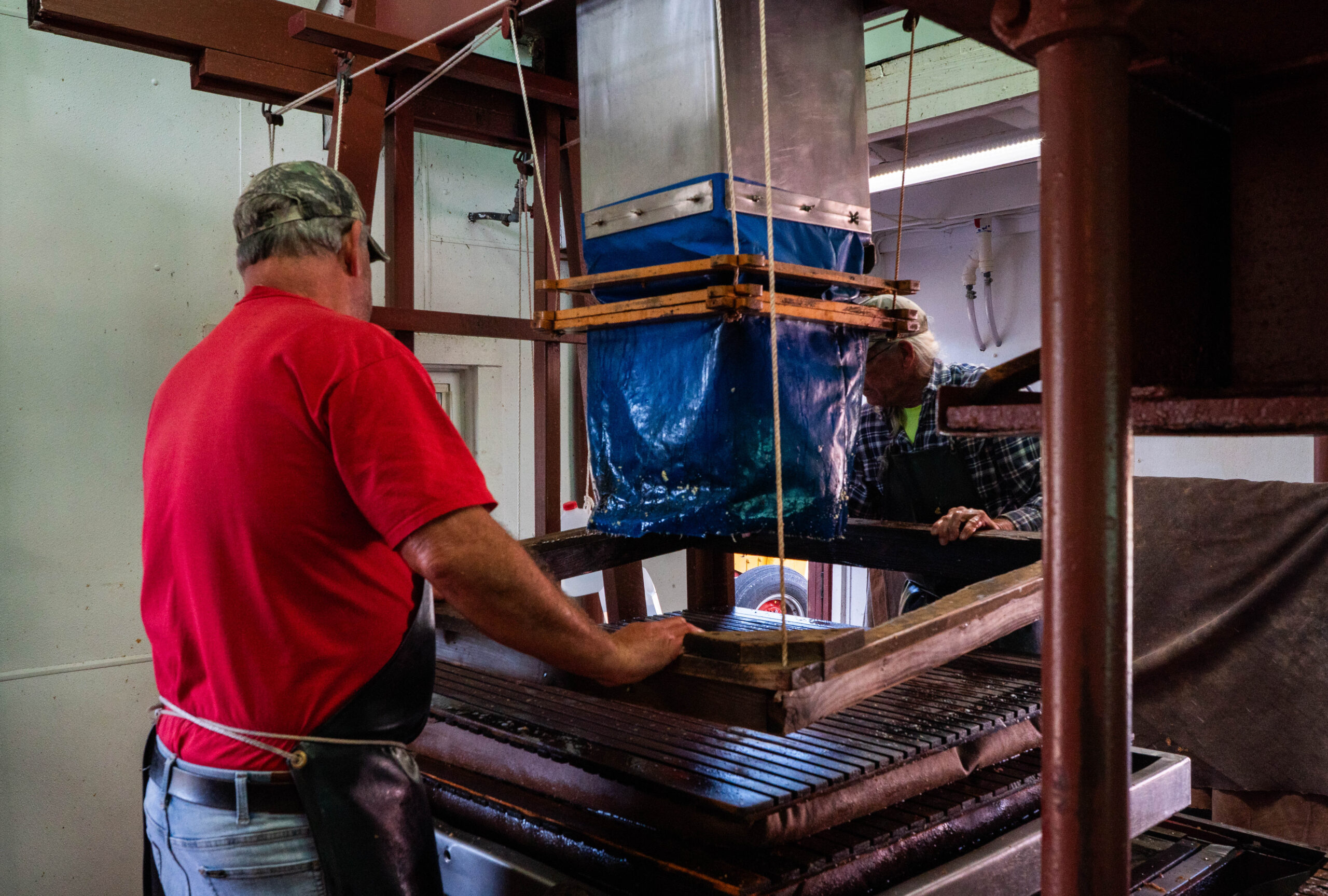
The cider press process begins outside, where apples are loaded into a conveyor belt before entering the cider mill to be chopped. Then, the chopped apples fall down a metal shoot onto a wooden panel with a cheesecloth, where workers spread the apples.
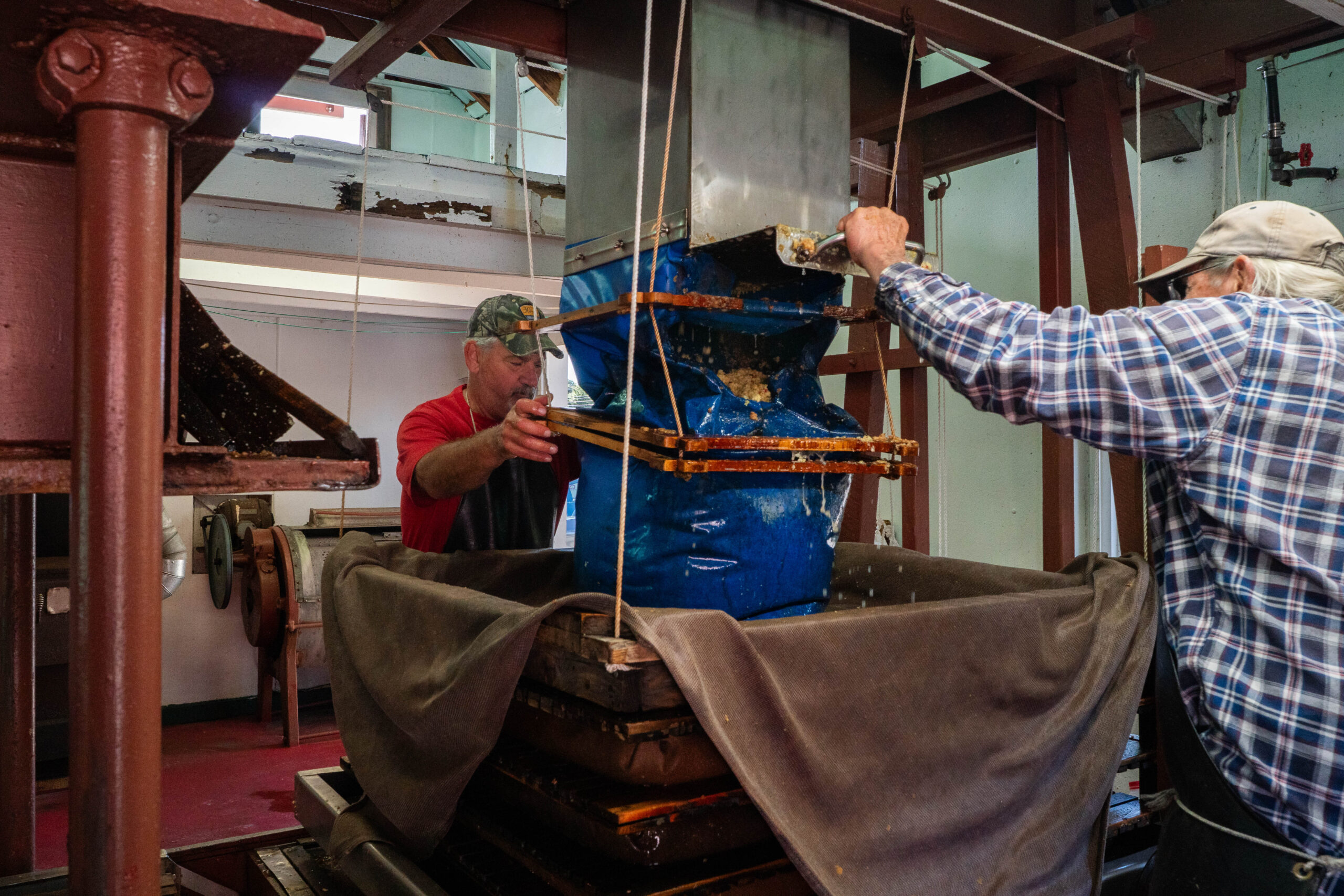
The cheesecloth is closed, and another wooden panel is added to continue layering until all the apples are gone. When the apple palettes are ready, they are moved over to the cider press that lifts the wooden panels up, hitting a metal sheet that squeezes the apples to extract the cider.
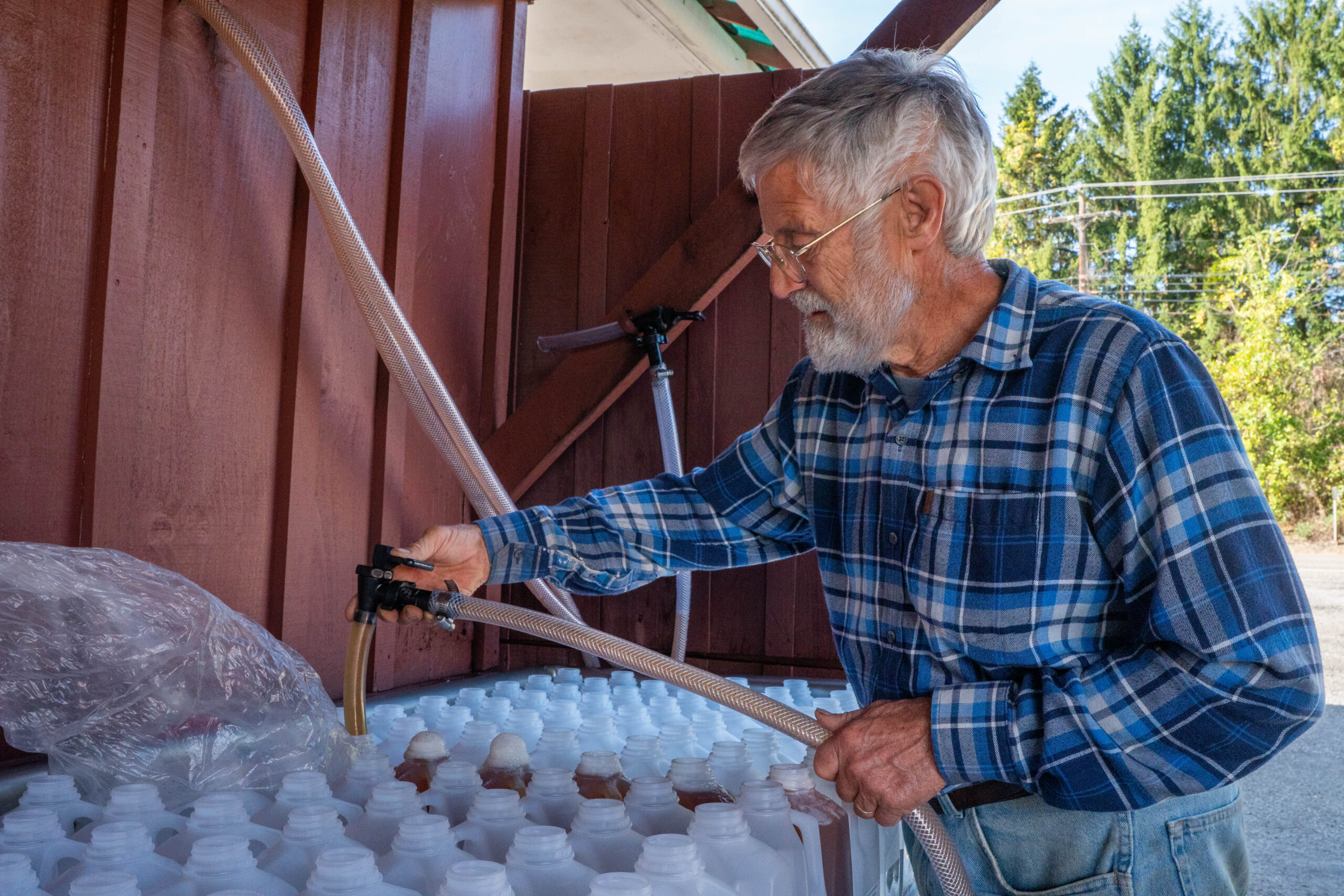
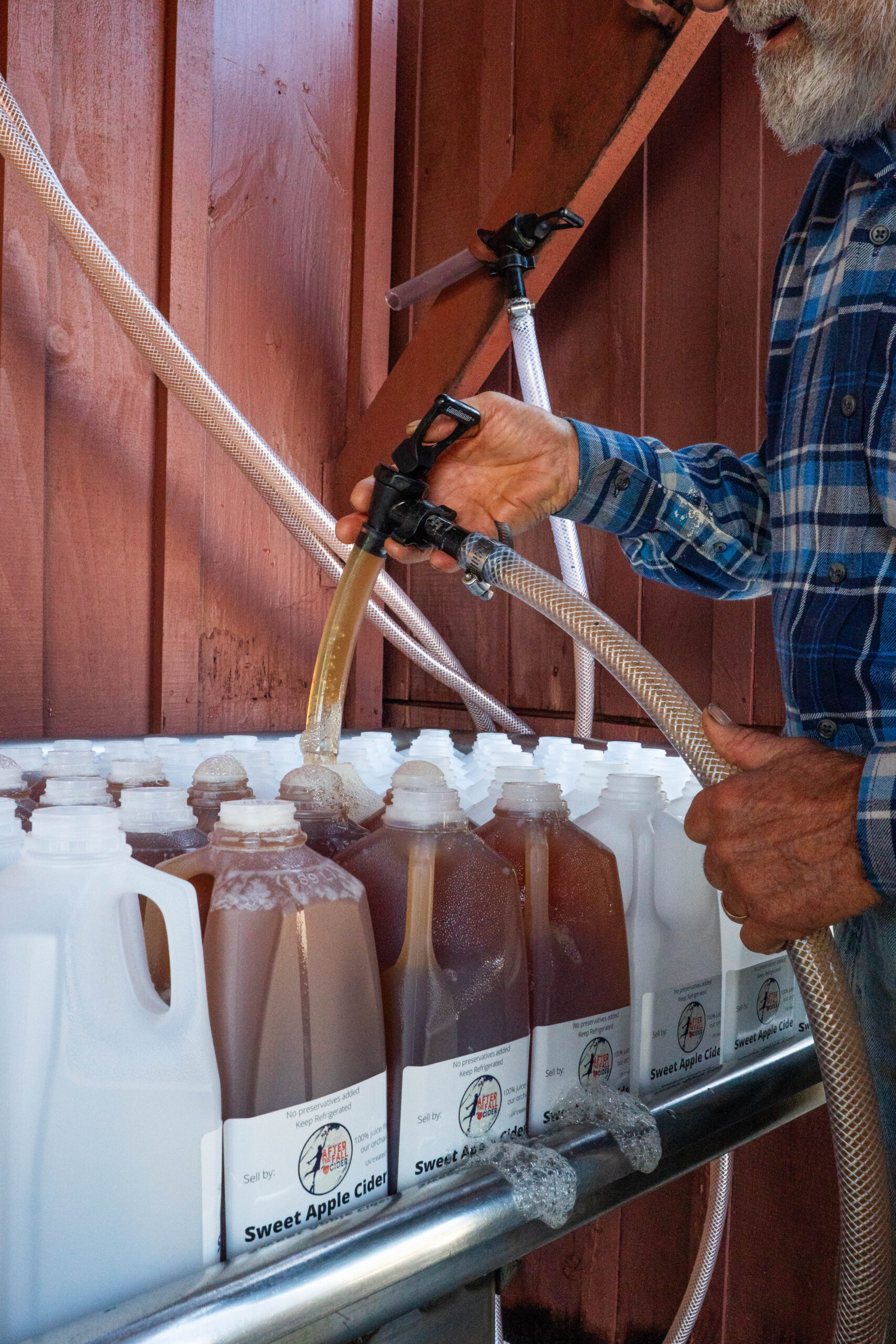
The cider is funneled into barrels below the press, and tubes outside are used to fill up plastic jugs.
At Sally’s Cider Press, both families and farmers market vendors get to witness this process for themselves. The press is open to farmers market vendors on Thursdays and to the public on Saturdays from 8 a.m. to 2 p.m. through Nov. 1. Public pressings must have a minimum of five bushels of apples.
According to Davis, visiting the cider mill is the perfect fall family activity. Families bring their own apples to be pressed, and get to fill up their own jugs of cider to take home.
“It’s something that your family did together. How many families can actually say they did that together?” said Davis. The Davis family has also been making their own cider since owning the mill, which is for sale at Sally’s Cider Press.
Cider mills are important for farmers
Vendors also frequent Sally’s Cider Press to make their cider for farmers markets, with some of the same ones coming back every year.
Kretschmann is one of these farmers market vendors who presses cider every Thursday from the apples grown on his farm, after the Fall Cider in Rochester, Pennsylvania, co-run by his daughter Maria Kretschmann.
Pressing the apples into cider allows farmers to use their full crop, Kretschmann says. “That’s the beauty of cider,” he said. Typically, only a quarter of his crop is good for eating apples, which makes local cider mills valuable.
“Otherwise, what are we down to? You only have stuff that gets shipped in. What do you do with all those local apples that can’t be sold for number ones in the grocery store?” Kretschmann said.
He adds that it’s especially important to support cider presses, as few exist in the state anymore.
Davis, who works full-time as a contractor for First Energy, questions whether he will open again every season. Running a cider mill can be difficult; every year, the costs to run the mill goes up and the business depends on how plentiful the apple crop is, Davis said.
But each year, he opens up the cider mill again because of friends and family.
“Saturday, usually family and friends come in … and we have a crockpot full of food here for lunch on Saturdays, and somebody usually brings breakfast,” Davis said. “People standing (in line for the cider mill will go) ‘something smells good,’ and we’re sitting in here eating,” he said with a chuckle.
(Liz Partsch can be reached at epartsch@farmanddairy.com or 330-337-3419.)




