


When you see information relating to honeybees about how many flowers it takes to make a teaspoon of honey, have you ever wondered how that information got tabulated?
Over 50 years ago, Grant D. Morse from New York calculated that a honeybee must fill and empty her honey sac about 60 times to fill a teaspoon. In doing this, she needs to visit anywhere from 1,000 to 1,500 typical florets to fill her sac just once! How does a forager recruit so many of her sisters to help harvest all that nectar when it is ready?
Morse studied bees in an observation hive and realized it was a monumental effort at times to recruit her coworkers to come and find the best nectar sources. He observed early in the morning, many bees, other than successful foragers from the previous day, made no move or effort to go out and scout for a new floral source. Many bees, perhaps the new or inexperienced bees, wait for the guidance and stimulation provided by the recruitment dances of the experienced scouts.
This practice of waiting to be shown where a source of nectar is located is thought to be more efficient because an average worker bee in the summer may be limited to foraging for approximately 15 to 20 days. The previous two to three weeks of the bees’ life were devoted to cleaning the hive, feeding the brood, making wax, processing nectar into honey and guarding the nest.
Transitioning into a forager requires orientation flights that will allow her to find her way back to the hive, and is thought to be a new and complicated task that may take a few days to be successful. Morse observed a great number of foragers dancing on the frames to communicate and recruit new sister foragers to join them. As many as six or so on each side of a single frame were often identified and often found on the lower two-thirds portion of the comb that is nearest to the exit.
This information really supports my field observation of how long it takes for bees to find and actively start feeding on a new open feeding source of sugar in a new bee yard. Expect at least a day, or perhaps two, I have found, before your source of sugar in a new location will be found. When a new location is started, you will see the numbers throughout the day gradually increase, but usually, it takes one to two days for full recruitment, and the feeder is totally maximized.
Clock watchers
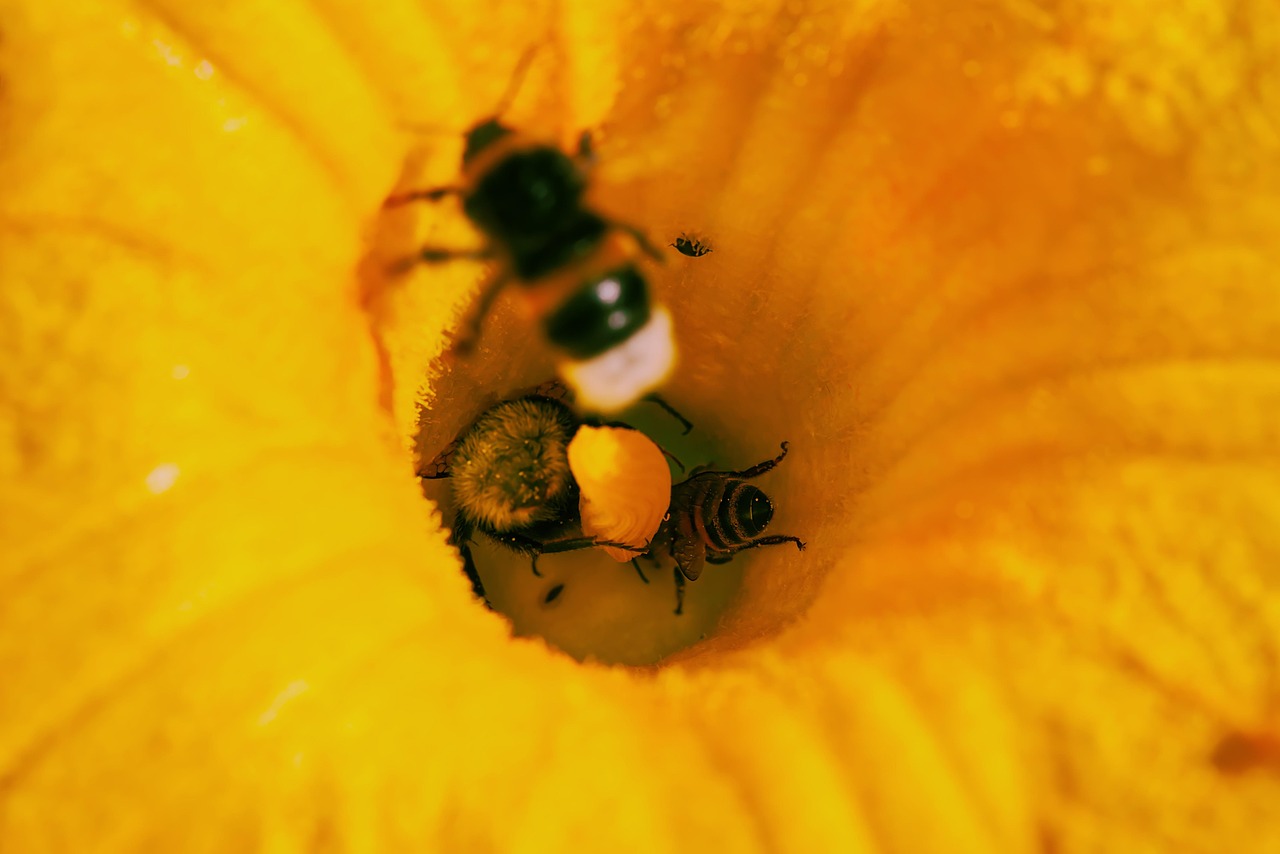
Many flowers, such as pumpkins, bloom early in the morning, and the bees will respond to this and work the flowers heavily, gathering pollen until the flowers shut down and they forage for more productive forage. Studies have shown that bees can be taught to “tell time” in relation to events that will yield and produce the most nectar.
A study that involved setting out sugar water at approximately the same time each day resulted in many foragers actively waiting for the sugar water to be refilled at the precise time of day as trained. Once the bees were trained to receive their resupply of sugar at 10 a.m. each day, if the sugar was delayed by five to 10 minutes either early or late, a significantly smaller number of foragers were active. This ability to find and remember a reward-based scenario prompts me to believe they also know and identify my pickup truck when I pull into the beeyard to refill my feeders. I have observed very little or no activity in and around my feeders when empty. After filling the containers, within minutes, the bees will start to come, and within an hour, the feeders will be covered with bees — each five-gallon feeder will be empty within another hour. Think how many bees it requires to consume 15 to 20 gallons of sugar water within an hour. Flight time is shortened to be sure, but it would still take many hungry bees to consume that amount of sugar in a few hours.
This time of year, as the last few nectar-producing asters are blooming, I can only encourage you to provide an additional sugar boost for your bees to ensure they have enough stores to make it through winter. Many beekeepers ask me if they should put in pollen patties or other proteins at this time of the year, before winter. It is my opinion that it is an unnecessary expense and could lead to other issues, such as providing a place for small hive beetles to hide and flourish or attracting mice if the proper mouseguards are not in place.