




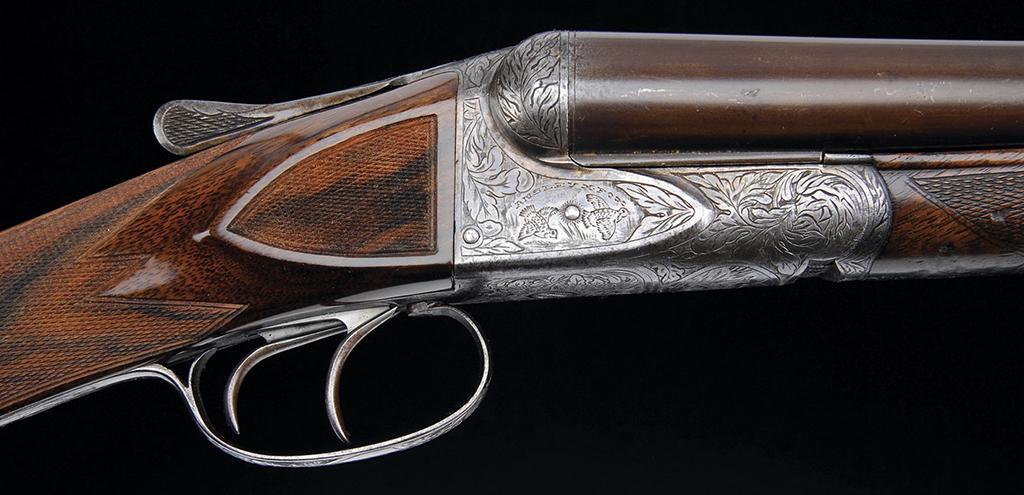
If you share my interest in bird hunting, you’ve had the pleasure of wandering aimlessly through the uplands looking for a dog. Sometimes you find them resting beside your vehicle, sometimes straggling behind with some kind of mocking grin, and on rare occasions they’ll turn up on point or ready to flush — at least that’s what I’ve heard. It’s then that you have the opportunity to experience the boom of your own shotgun.
While the dog’s names may be something like Shadow, Gunner, Ranger, Gus, Briar or Bramble — names only used at home or within earshot of local clergy — some traditionalists also give a pet name to their favorite shotgun. While Davy Crockett adored his Betsy, and I’ve loved my old Elsies, there’s a 64-year-old story of one man’s shotgun which bellowed its own name from the duck blind, “BO WHOOP.”
The sportsman’s sportsman. Nash Buckingham was a sportsman’s sportsman — the Mark Twain of the marshes. Born in 1880, Nash was the author of nine books, hundreds of magazine columns and was an activist in the wildlife conservation movement. His 1934 book “De Shootinest Gent’man” is still revered by readers and first editions continue to be sought by collectors.
An avid shotgunner and wing shot, he was considered an authority on bird hunting and the methods, dogs and tools used to hunt them. He spoke eloquently about the necessity of enforcing game laws and was a staunch advocate of the Migratory Bird Treaty.
Losing the favorite
He also had his favorite shotgun, a HE-Grade Super-Fox 12 gauge. The old side-by-side was made in 1927 by the A.H. Fox Company in Philadelphia and was bored tightly for waterfowl hunting. It was often proudly displayed to friends, gunned the fields and photographed in use. He loved that gun and its memories — and he managed to lose it.
On Dec. 1, 1948, Nash and his friend Clifford Green were hunting near Clarendon, Arkansas. They’d spent the morning in a duck blind and were headed back to Green’s car. Upon arriving, a game warden showed up to check their licenses (Sure, let’s blame the game warden!)
Recognizing Nash, the warden asked to see Bo Whoop, the most famous shotgun in America and one that he had read about in many magazine’s hunting stories. Like a kid admiring Ruth’s bat, the warden carefully handled the writer’s gun while asking about his best shots, best dogs and best memories.
He gently laid Bo Whoop across the rear fender while listening intently to the renowned author tell story after story. They wrapped up their visit, Nash and Green bid farewell and they drove off; Bo Whoop still resting on the fender. After many miles, the pair realized they’d left Nash’s baby on the fender and returned in a panic, but, like a lost dog, Bo Whoop had just disappeared. Nash Buckingham was heartbroken.
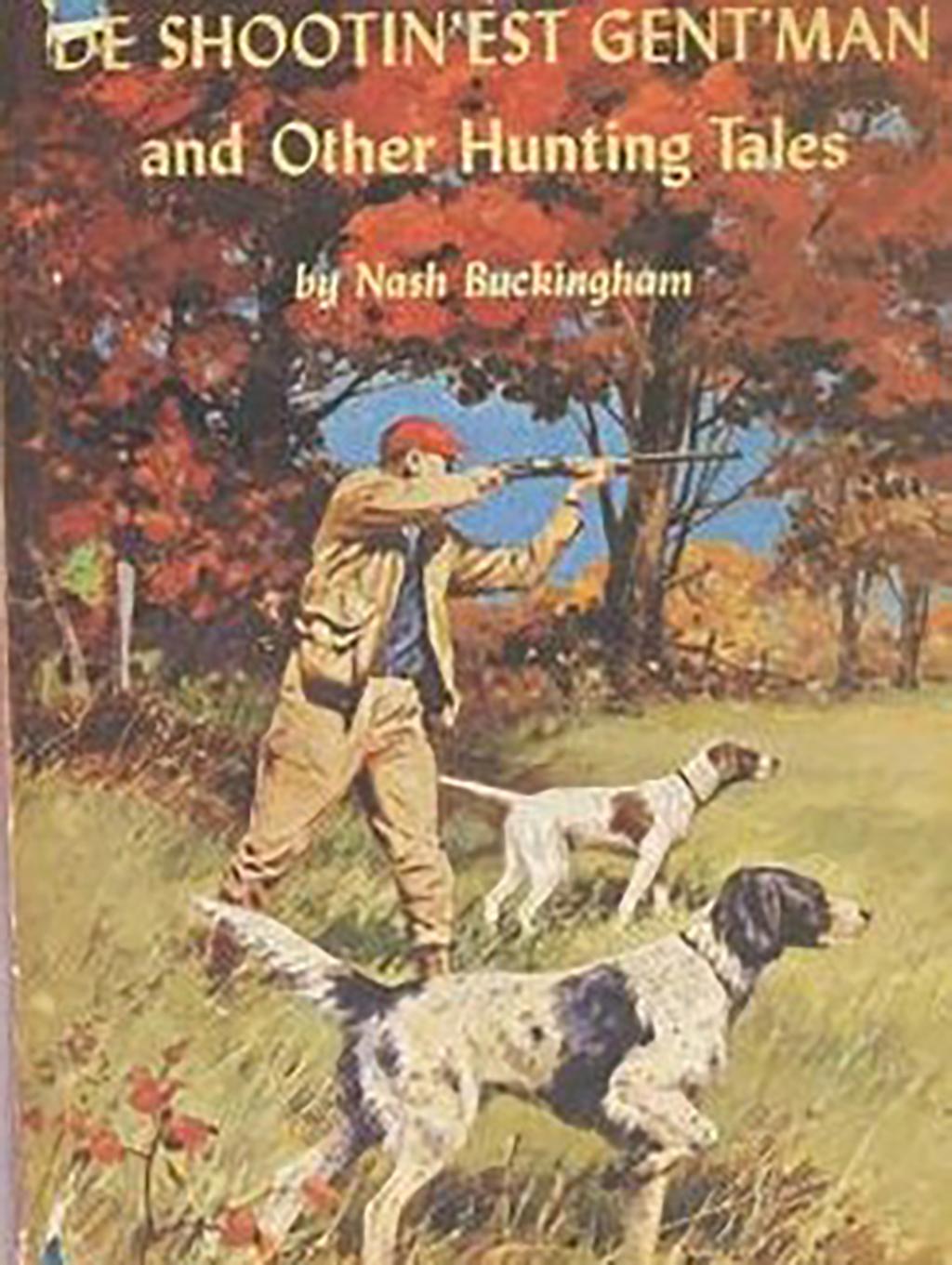
He spent several years hunting for the Fox, lamenting the loss, likening it to the death of a treasured hunting dog. He placed ads in newspapers, offered rewards and asked wardens and police to be on the lookout. He never found it. The loss and search created a legend. In 1950 two friends made Nash another Fox, named Bo Whoop II, but it was still only a replacement. Nash died in 1971, never having found his old favorite.
Surprise discovery
Then, in 2006, the unlikely occurred. A Georgia man had inherited a shotgun that had been purchased by his grandfather in the 1950s. The old Fox had a broken stock and the newest owner decided to take it to a competent gunsmith for repair. The smith spotted Buckingham’s name on the gun and told the owner of the gun’s historical significance. The shotgun eventually would make its way to auctioneer James Julia who confirmed its authenticity and the Fox went to the block. Bidding crept up in $5,000 increments until it sold for $175,000. With the buyer’s premium, the final cost was $201,250, the third-highest sum ever paid for an American shotgun.
The original Bo Whoop and Bo Whoop II are now displayed together at the Ducks Unlimited Headquarters in Memphis.
Non-toxic shotgun shells
While we’re on the subject of waterfowl hunting, it might be a great time to refresh ourselves a bit about non-toxic shotgun shells. Since 1991, regulations have stipulated that only non-toxic shot may be used to hunt waterfowl.
Studies and observations of waterfowl had shown that traditional lead shot, especially the shot distributed over marshes and waterways, was being ingested by feeding ducks and geese. The resulting lead poisoning was having long-term effects on the resource. Ammunition manufacturers, working with waterfowl biologists, scrambled for solutions.
Steel was the first approved shot-type and it remains the most popular and economical choice. Unfortunately, those that had entrusted their vintage American classic smoothbore doubles made by Fox, LC Smith, Ithaca and Parker had a problem. These new loads were far too hard for their welded-together barrels and it wasn’t long before those old joining’s separated. This rendered the gun unusable unless very costly repairs were completed. It looked like these old guns had seen their twilight in the duck marshes. Bo Whoop and its cousins might need to be permanently shelved.
Fortunately, in a world where manufacturers continuously evaluate and improve their products, additional shot materials were tested that were both non-toxic and effective. Today, waterfowl hunters have several excellent choices, some safe enough for use in those vintage guns.
Steel shot. The most popular type of shot used for waterfowl hunting. Steel is effective for decoying birds and costs less than other alternatives. The low pellet density of steel shot compared to other alloys requires larger pellets to obtain similar ballistics. Steel ammo can push 1700 fps as pellet speed can overcome the lack of pellet density in some cases. The most popular steel shot sizes for waterfowl are #2 and BB.
Tungsten shot. Tungsten pellets are the densest pellet currently used for waterfowl hunting. TSS (Tungsten Super Shot) pellets have a density of 18 g/cc and are almost pure tungsten. These heavy pellets pattern extremely tight with small pellet sizes (#8 and #9 shot) and are effective at extreme ranges of over 60 yards — even though most shooters are not. While TSS is the best performing pellet for waterfowl, it is also the most expensive. TSS pellet sizes can be reduced by 2 to 3 sizes compared to lead and 5 to 6 sizes for steel.
Tungsten alloy. Offers balance of dense tungsten with a more affordable price, it’s the densest material shot on the market, offering increased efficiency at distance. Hevishot pellets are a tungsten-based alloy. With a density of 12 g/cc. Hevishot is marketed as a heavier than lead alternative which has a density of 11 g/cc. Popular Hevishot pellet sizes include #4 and #2. Hevishot can increase pattern density and range of pellets beyond steel’ capabilities. Hevishot pushes pellets at about 1300 fps and ammo can be reduced by two pellets sizes compared to steel for the same ballistic results.
Heavyweight pellets are also a tungsten alloy. Federal Ammunition builds the loads for waterfowl and turkey hunting. Heavyweight pellets are ballistically superior to both steel and Hevishot. Waterfowl loads are most common in 1 3/8- and 1¼-ounce loads in pellet sizes of #4 and #2. The high density of Heavyweight allows for a decrease of up to four pellet sizes compared to steel and 2 pellet sizes compared to Hevishot to achieve the same results.
Bismuth. The softness of Bismuth pellets makes them ideal for older guns that can’t stand up to modern ammo with hard steel shot. Bismuth was the first non-toxic ammo to be offered as an alternative to steel shot. It’s been surpassed by denser alloys, but still holds a niche with those vintage side-by-side shotguns. Popular bismuth sizes for ducks include #4 and #6 (also good for small game). Number 1 shot is recommended for decoying geese, while 2, BB, BBB and T shot is preferred for pass shooting.
“How kind it is that most of us will never know when we have fired our last shot.”
— Theophilus “Nash” Buckingham