





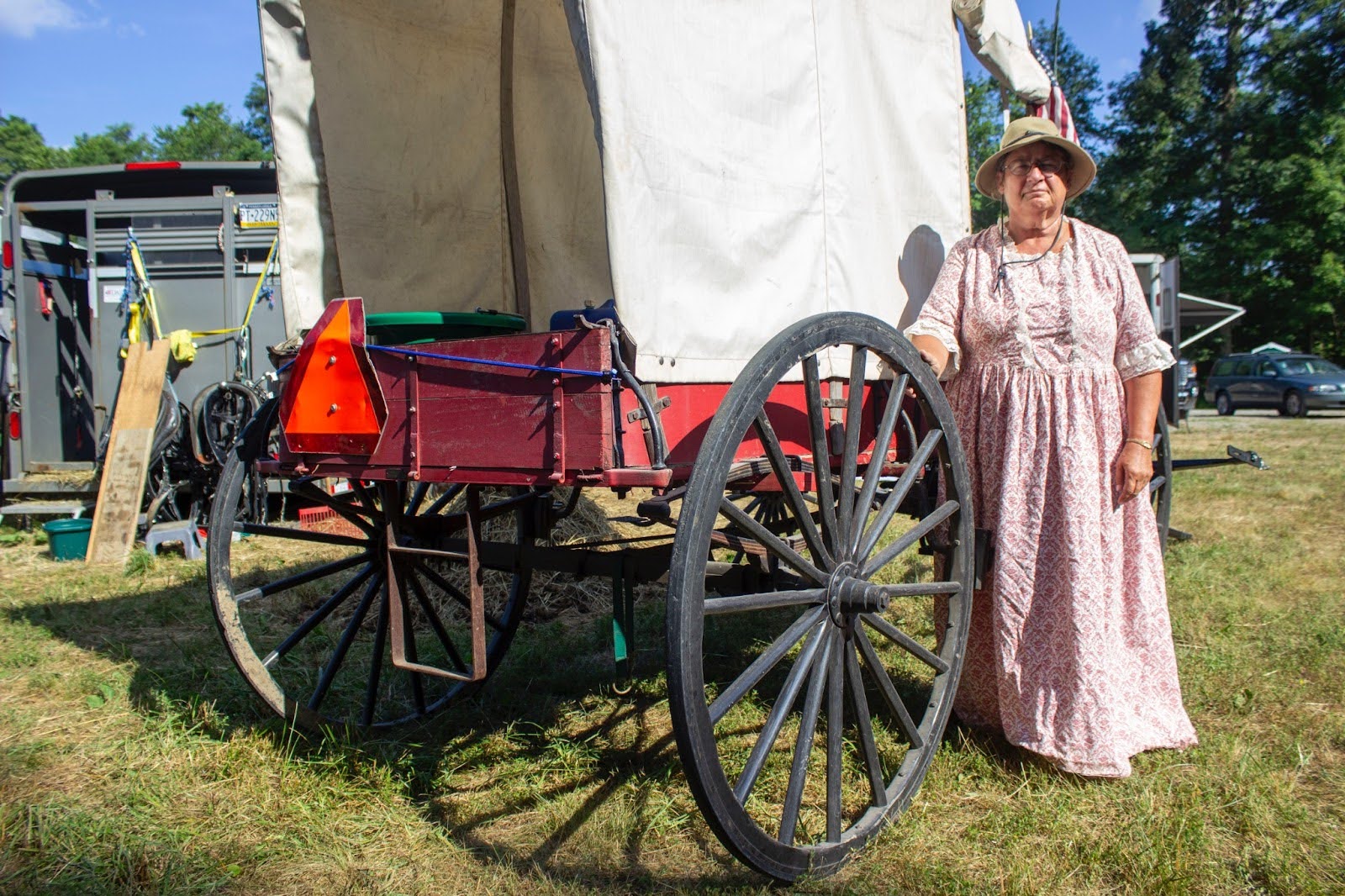
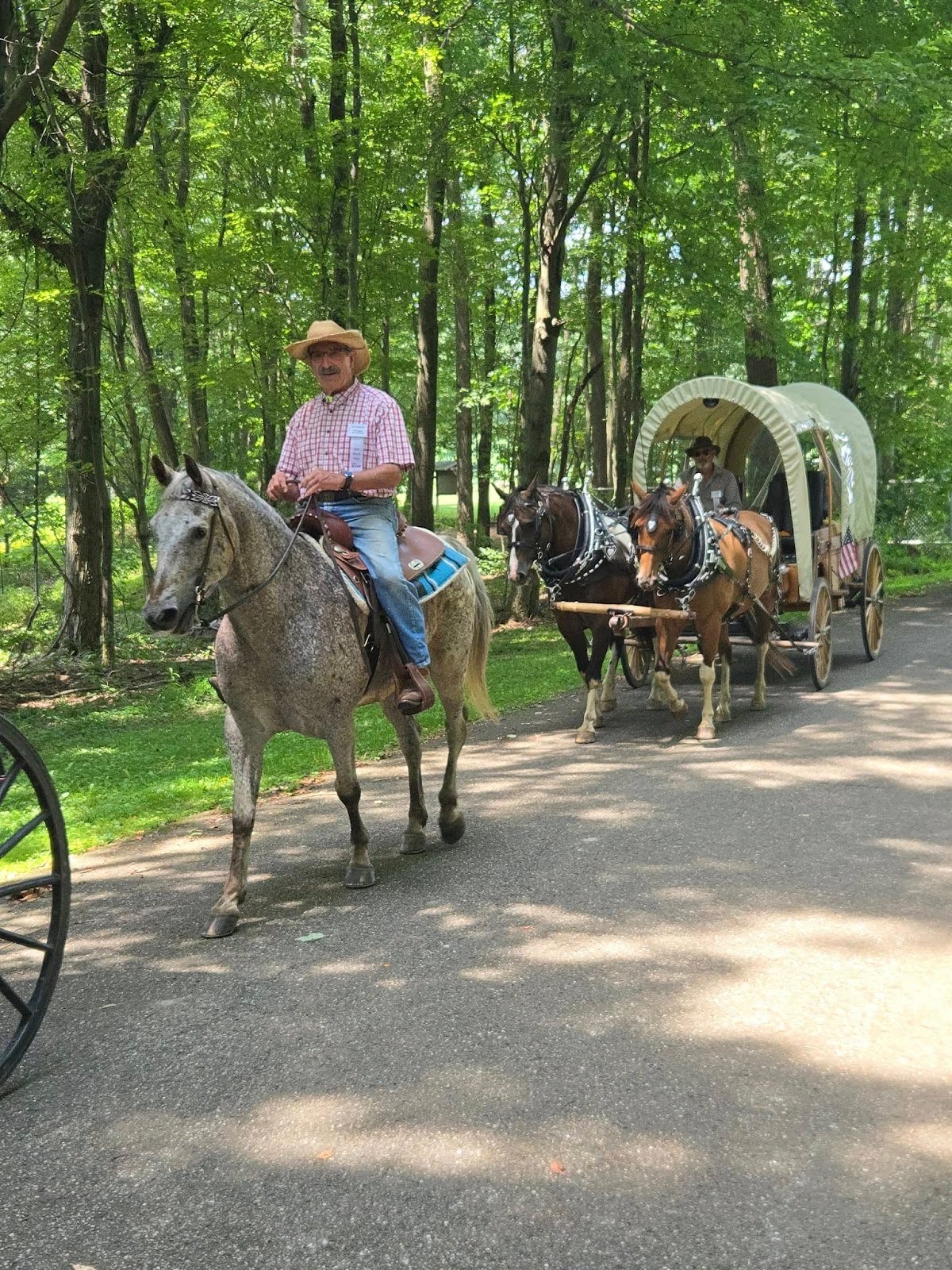
FRANKLIN TOWNSHIP, Ohio — Silver and Diamond flicked their long tails that swayed gently in the warm summer breeze as they nibbled on hay at camp after a long day’s journey. The two horses had just completed an 18-mile round trip through the rolling hills surrounding Lisbon, Ohio, hauling antique wagons along winding country roads following a path once blazed by pioneers centuries ago.
The route walked by those horses, leading to Scenic Vista Park in Columbiana County and back, was the longest of the week for these wagon teams and their riders. But according to their owner Betsy Connor, the effort was deeply rewarding.
“I live for it,” she said.
Connor is president of the Ohio Wagon Train Association, a group that has taken to the roads every summer since the 1960s. Each July, members pitch their tents in camps hosted by friends and spend a week retracing history, traveling back in time by horse and wagon in the heart of Columbiana County.
“It’s very, very beautiful,” Connor said. “That’s been the highlight, how lovely the roads are. We rode down some beautiful lanes, and you think you’re in the middle of nowhere, but you’re never far from Salineville or Lisbon.”
The group tries to stay off main roads as much as possible, favoring township or county roads that are more isolated and quiet.
“They’ve been real good,” Connor said, noting the light traffic on these routes which often cut through wooded areas, offering an especially scenic backdrop for the journey. To keep everyone safe, the riders use radios to coordinate around traffic, sending messages to the wagons with reports scouted from ahead.
Authenticity is key to the experience and the group’s immersion. Some wagons are over 100 years old, packed with water buckets, lunch sacks and slickers so riders are ready for a sudden washout. Connor said that many of the wagons come from auctions or are sourced from businesses such as those located in Ohio’s Amish country around Millersburg and Walnut Creek. She purchased her own from a fellow member, an antique “spring wagon” made by the Schwab Wagon Company, which stopped producing them around 1925. Although Schwab no longer makes wagons, the company continues to operate today, manufacturing ambulances and fire trucks from its base in Elizabethville, Pennsylvania.
Connor noted that her wagon, which is over 100 years old, is true to the frontier style and even bears the original maker’s name. The wagons in the train all sport non-pneumatic tires, which lack modern air cushioning, and some participants don period-appropriate attire. Connor herself wore a lightweight frontier dress paired with an old cowboy hat, faded and sun-bleached after 25 years on the trail.
“We’re not going back as far as the Revolution. This is late 1700s, early 1800s when this was all being settled,” she said. “We try and stay true to the pioneer age.”
Still, a few modern comforts ease camp life the week they’re there: Portable restrooms and a communal tent offer convenience and a gathering place in the shade, while some old traditions live on around the campfire. One evening, they cooked hobo pies, cast-iron pressed pockets filled with canned fruit, cheese, ham or peanut butter and jelly between two slices of buttered bread.
“Monday night was hobo pie night, so that was fun. We made 25 hobo pies for all of us,” Connor said. “We made it hobo pizza night. And so we had sauce and the pepperoni and lots of cheese.”
In the iron, you hold it over the fire for about a minute, turn it over for a minute more and voilà.
Having participated since the late ’80s, Connor says it’s the connection between people and horses that keeps her returning year after year.
“They enjoy working. They get used to the routine and do very well,” she said.
So, who signs up to live like a pioneer, if only for a week?
“You have to like horses,” said Pete Dasco, a newer member who still rides regularly. “And you have to enjoy some camping, and just the camaraderie.”
For some of the attendees, the wagon tradition runs deep. Some grew up attending the annual event with family over the years. Others found their way into it later in life, drawn by a different rhythm of life and the opportunity to disconnect.
“This is probably the most camping I do annually,” Dasco said. “And I’ve always liked horses even though I got one later in life.” He added that he enjoys being outdoors and even the challenge of getting his horse to follow his lead. Fortunately, among a troupe of wagon enthusiasts, there’s bound to be a few seasoned horse whisperers.
“You get a lot of education. A lot of these folks have been at it for, you know, many years. You learn from each other,” he said.
The wagon train’s charm recently caught the eye of Peter Wilson, mayor of Lisbon, who stopped by their camp as the teams prepared to depart and posted on Facebook about their journey.
“It’s really interesting what they’re doing,” Wilson said in an interview with Farm and Dairy. “I’m really happy they chose Columbiana County and Lisbon.”
The event captivated passersby, inspired by Wilson’s post. Lisbon residents shared their excitement over catching sightings of the wagon train on the move. For those on the saddles or riding alongside, they’re happy for the chance to reconnect with history, nature and one another. “A lot of people, you know, are interested in the past and that type of way of life,” Wilson said.





We would love too see and talk to these amazing people who are trying to teach and preserve our past.
Will you be anywhere locally that we could come down and visit with all of you and learn about the history and hear stories?