


MILLERSBURG, Ohio — Drawn by a stubborn belief that ordinary people are actually motivated more by kindness than their online personas would suggest, a woman with the chosen name Sea Rhydr first set out on horseback across the United States over 25 months between 2011 and 2013.
She wanted to see the country for herself, crossing 5,000 miles at a walking pace to test whether face‑to‑face humanity could restore her faith in the world. It did, for a while.
But when she got off the trail and began to readjust to normal life, she found that some of the same people who had been hospitable to her were, on social media, “just dreadful.”
Now she’s saddling up again.
“What I’m really hoping to do is go back out and find out that in real life, these people are still kind and welcoming and generous and curious, right? And then all of that social media thing is just some weird game people are playing, right?” She said in an interview.
And this time around, she wants to see what, if anything, has changed.
“I may eat my words, but what I found last time is the world is not so scary as we’re being told it is.”
‘Who Is My Neighbor?’
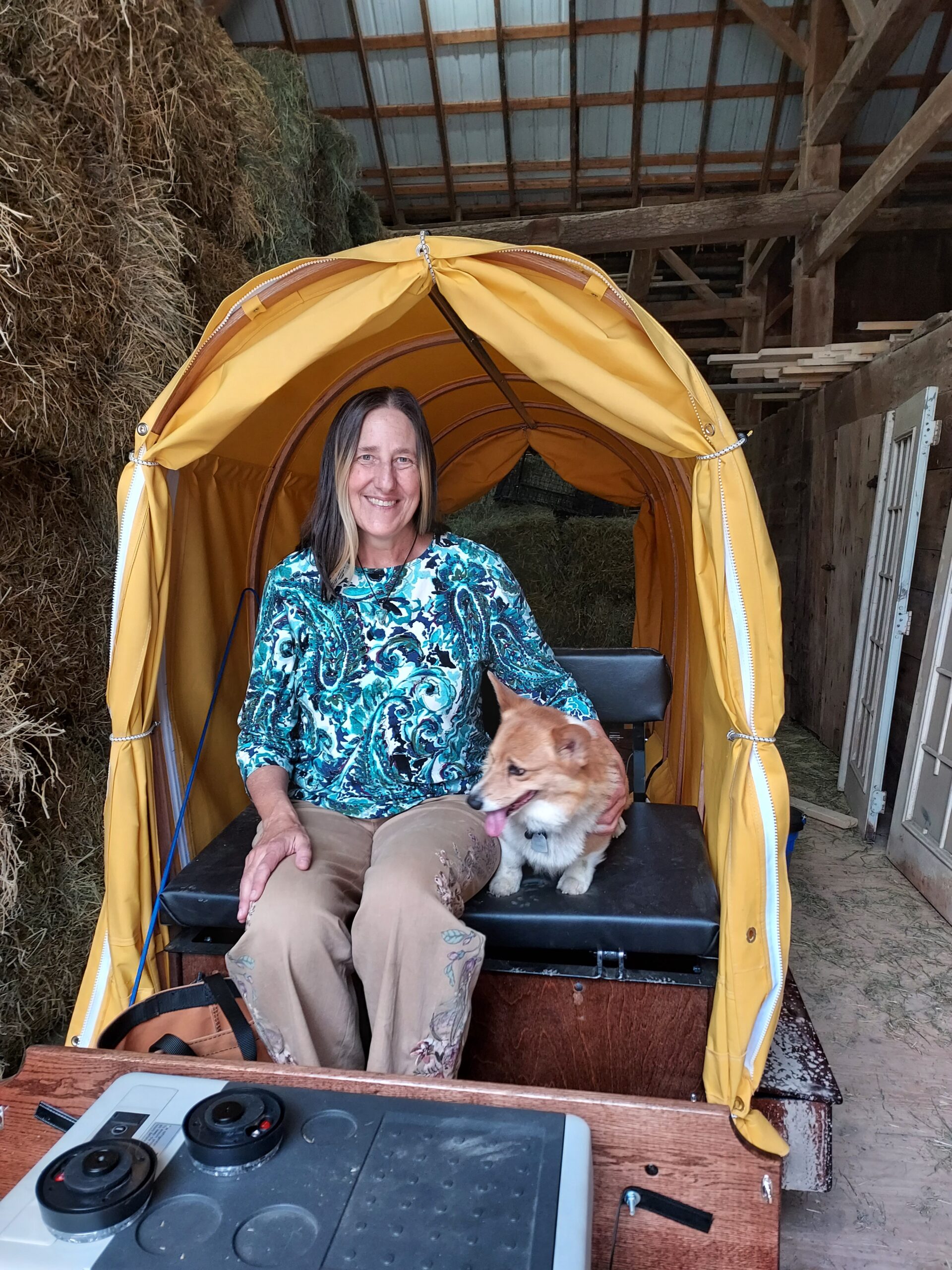
On the phone from an Ohio farm where she was packing a wagon called “Mustard Seed” and preparing two pint‑sized ponies for the first leg of her next cross‑country journey, Rhydr, 60, recalled her previous trek as the best thing she’s ever done in her life.
“I felt more alive and more myself,” she said.
Her soon‑to‑be‑released book, “Free Range Rodeo: Horseback Through the Apocalypse,” distills the stories, encounters and hard‑won lessons from that first ride, capturing how weeks of slow, face‑to‑face travel across the country reshaped her sense of fear, benevolence and what it means to be a neighbor.
Along the way, she walked up to strangers’ doors asking for a corner of pasture to camp in and “literally, 95% of the time they said, ‘Oh, yeah, you can totally stay here.’”
Often, that invitation grew into much more.
“By the end of the trip, at least half the time, I was being invited in for a meal, for a bed, for a shower, for some laundry. What did I need? It was just shocking.”
Then she went home, logged on, and couldn’t recognize her newfound friends — some of the same people who’d opened their doors to her were mean, prejudiced and contemptible.
Her new project is a methodical interview tour of America for a YouTube series she’s calling “Who Is My Neighbor?” The name is inspired by the central question of the biblical parable of the Good Samaritan.
Looking for real voices
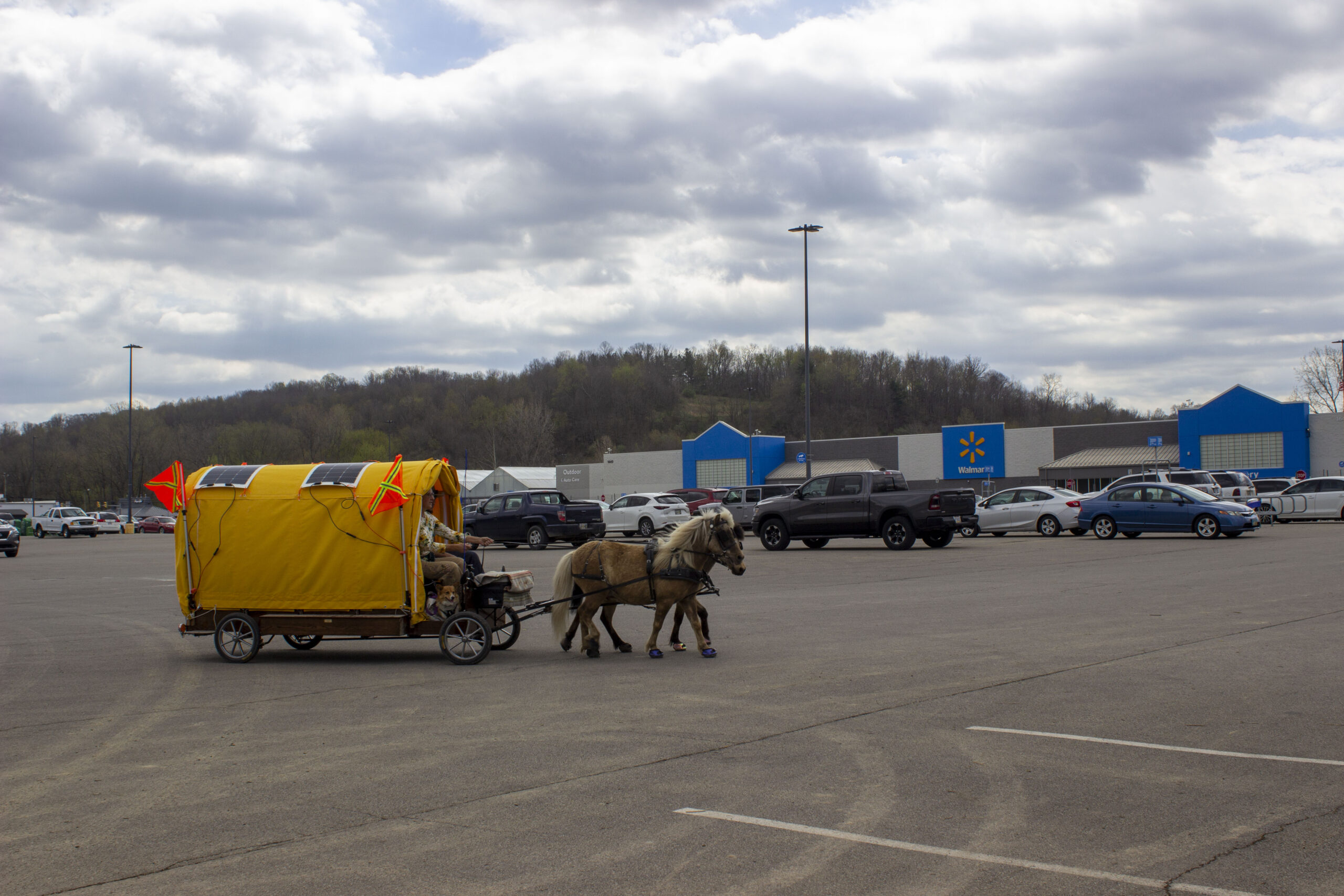
Hitched to a 400‑pound covered wagon built by Amish craftsmen in Pennsylvania, Rhydr’s ponies, Franklin and Theodore — named after her favorite presidents — will pull her wherever people invite her to go. She has no set destination, no itinerary to follow. She drove her old minivan, nicknamed “the Nun,” in five-hour bursts before fatigue set in all the way from her home port in Lopez Island, Washington State, where she’s lived for the last nine years, to the Keystone State to pick up the wagon, stopping to make camp in colorful locales along the way.
Departing from a Walmart parking lot in Millersburg, Ohio, on April 13, Rhydr followed her gut down a rail‑trail south toward early hosts near the village of Killbuck, the Bridge of Dreams and Howard. She logged 12.3 miles despite a few unexpected detours, ultimately finding that the wagon’s tight turning radius would require a longer front axle before the journey could safely continue. For now, she’s in a holding pattern, the ponies settled into a pasture and the wagon providing snug, weatherproof shelter. Once she’s back on the road, she’ll keep drifting west on an open‑ended route through Indiana and southern Illinois, going wherever new invitations and her ponies can take her.
“People underestimate ponies all the time,” Rhydr said, noting they comfortably trotted eight miles in an hour days before and “were asking for more.” She’ll have her 8-year-old Corgi, Thick, by her side, too, the other member of the team.
Rhydr said she wants to see the country with a documentarian’s eye like Dorothea Lange and find its frontier spirit through her storytelling like “Little House on the Prairie.” At every stop, she’ll ask people she meets the same 25 or so questions.
“Starting with, you know, what is your name, and can you describe yourself in five words? And then just, what is your life like? How are you living? How long have you been living here? What are your challenges? What makes you happy? What did you have for breakfast?”
Behind the whimsy of tiny hoof boots her ponies wear and the bright yellow wagon cover over her head, Rhydr hopes she can help carve out a small community online that helps challenge America’s yawning estrangement.
“With social media making things more and more divided, I want to try and find a way to bring real stories of real people, completely uncensored in their own voices, to a place, to the comments, where we can all share in those stories,” Rhydr said. At the end of each video, she will ask her interview subjects to pose one question to the entire country, then invite viewers to answer in the comments, “so maybe we can get some discussions going.”
Rhydr hopes that the series provokes the kind of encounters the internet doesn’t.
“We meet each other when we slow down,” she says. “If you’re at a human pace … you’re going slowly enough to have those conversations and to meet people where they are. And I wish more of us were doing that.”
The mission Rhydr is undertaking sounds like something only a writer or a philosopher would dream up, a quest to learn and to grow wiser. Her health, however, is fading. Rhydr has degenerative disc disease and polycystic kidney disease, now at stage four. She’s done the brutal math of U.S. healthcare: Because coverage is tied to home states, leaving Lopez Island for life on the road means walking away from her insurance altogether, a trade‑off she has chosen to make in order to take this trip.
“I can’t just stay home hiding from the world,” she said. “If I’ve got a few years left, I might as well do something with them, especially something fun.”
Common ground
Long before the wagon and the ponies, there was just a traveler who wanted to write, and another writer willing to take her in. Novelist Karen Fisher, Rhydr’s longtime writing mentor and former housemate on Lopez, will be following along much like everyone else on Rhydr’s blog and YouTube channel. But she believes the prize Rhydr is after is much greater than clicks, views and likes.
“I do hope that she finds what she’s looking for, which is common ground with people, and I absolutely believe it’s still there,” Fisher said.
She admits she couldn’t do what Rhydr is attempting.
“I am kind of a shy person, and just the whole idea of walking up cold and knocking on someone’s door and saying, ‘Can I sleep in your front yard?’ (Is) sort of mortifying, you know? But I think that’s part of the challenge and part of the pleasure she gets out of it is, you know, what’s going to happen? She’s that kind of novelty seeker. So good for her. But no, the answer is, no, I would not do that.”
Still, Fisher is grateful that Rhydr is setting out on her journey, one that will be measured both in miles and conversations, where she’ll help strangers make intellectual and emotional connections while steering a medium built to mock, monetize and inflame toward empathy.
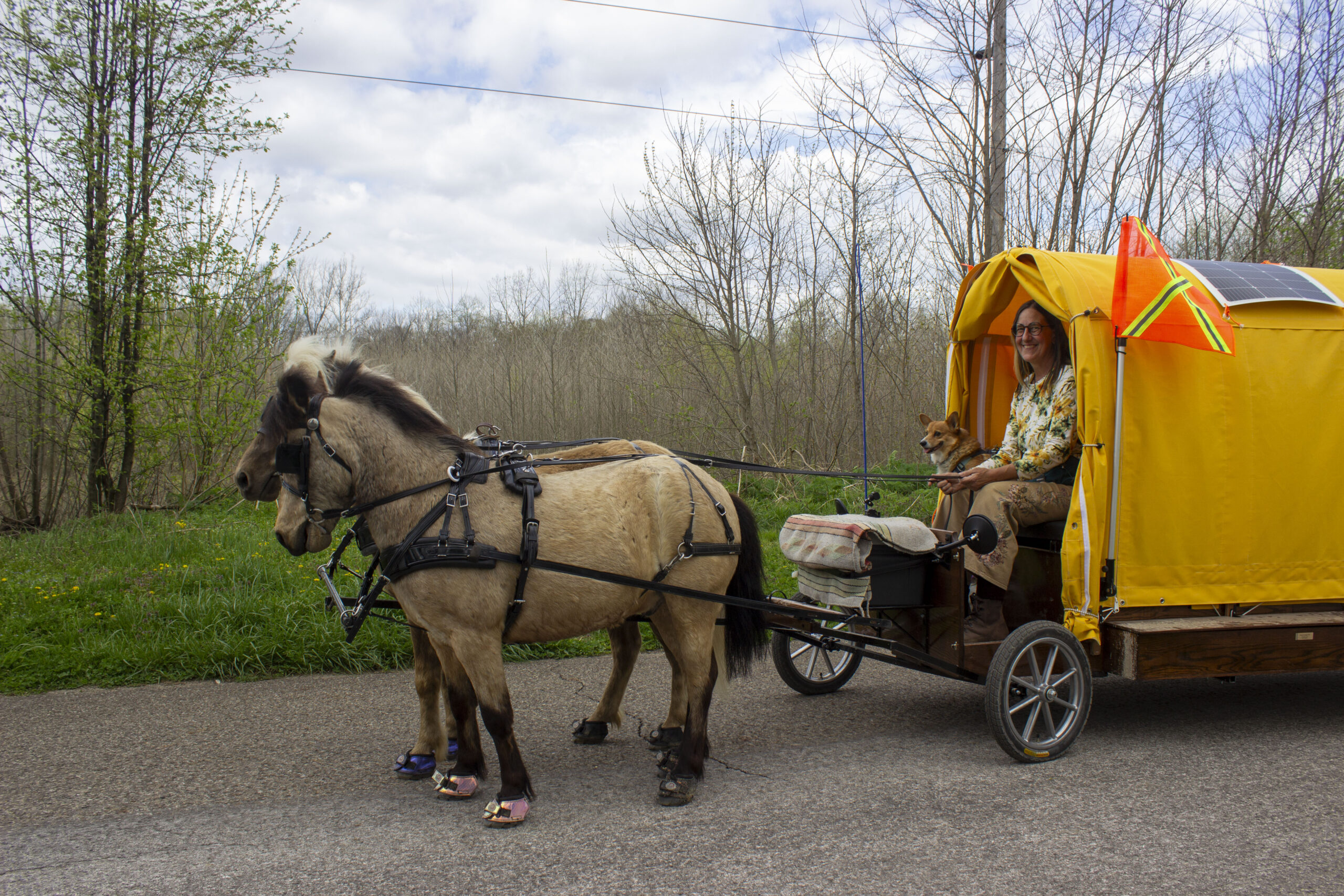
(Paul Rowley photo)
“You know, it’s one of the things social media has been really great for, is bringing us real people and their real lives in a much more accessible and less-produced way. So I’m just looking forward to the show.”
On the eve of her departure from Ohio’s Amish country, Rhydr was clear‑eyed about what she could control and what she had to leave to chance. She reflected on the role fate has played in her adventures: On her last long ride, she spent days crossing the desert quietly wishing for a single stalk of broccoli, only to be waved down by a stranger who popped open her trunk to reveal a heap of the vegetable she was happy to share. This time, Rhydr has to be especially deliberate about what she carries — a solar-powered fridge for her restricted diet, medicine, dog food for Thick, treats and gear for the ponies, spare wagon parts and hardware to keep her tiny caravan rolling — but the deeper preparation is the same: trusting that if she moves slowly, tells a good story and meets people where they are, the road will offer what she needs, and perhaps show her what life is really about. Cues from the universe abound.
“I feel like the most important thing you need to do something like (this), beyond courage and good manners, is a story. People respond really well to a story. If you’ve got a good story, people want to be part of it. They want to help you, because you’ve got a great story. And so if you’re thinking about doing something like this, really think, you know, what’s your story? What makes you unique?” She said. “I think that we’re just hungry for real stories.”




