



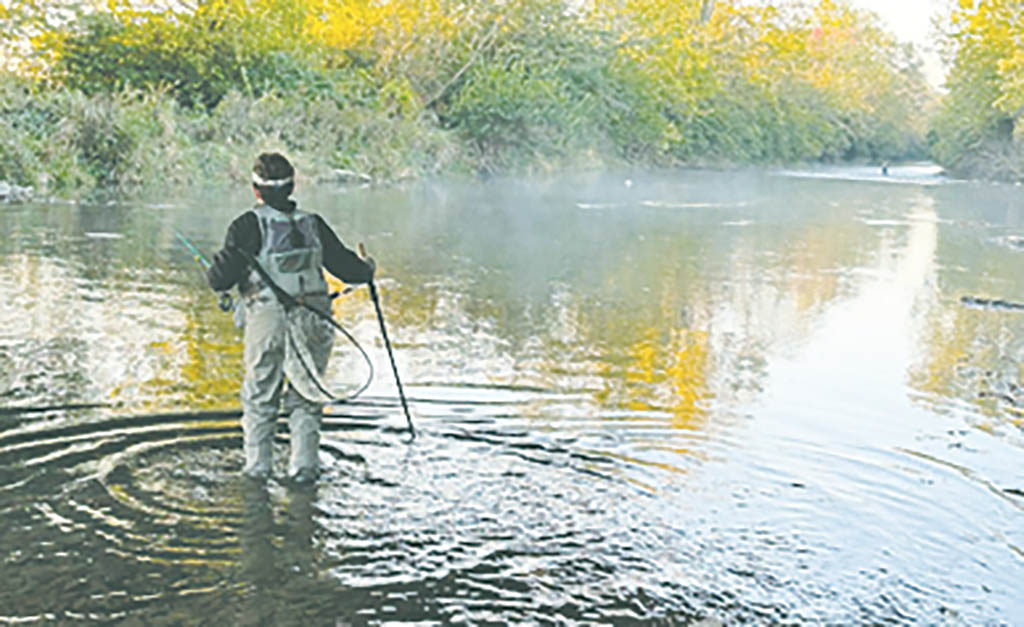
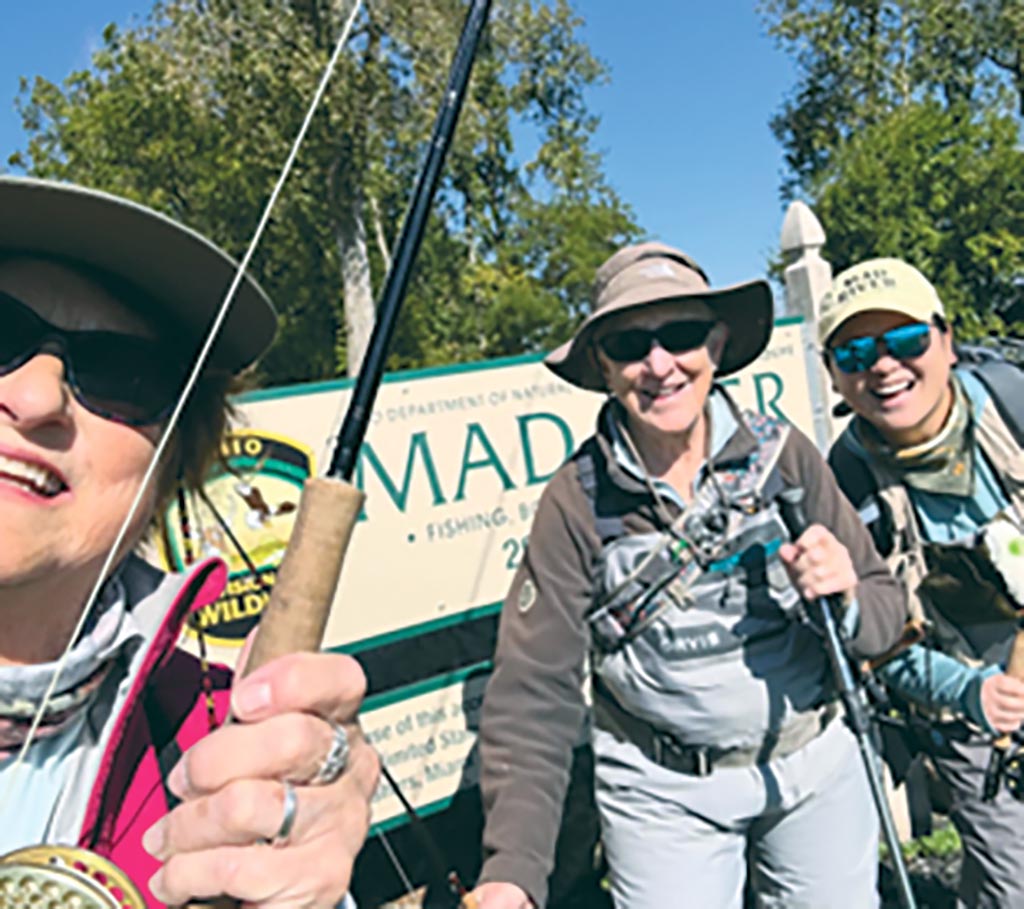
The week has been a little unusual. While it’s now well into the upland game season, the summer-like temperatures seemed far too warm to run a dog around the fields for very long. It just felt like it was time to break out the fishing equipment and take a walk along a stream. It didn’t take much to convince me and the Mad River was waiting.
I grabbed my old Orvis Far and Fine fly rod, a reel loaded with a five-weight floating line and my waders then began to search my fly boxes. Any normal mid-November would likely call for streamers and nymphs — but a warm spell and sunshine could mean that all bets are off.
Fly fishing is a tinkerer’s sport, at least it is for me. There are many little intricacies to pay attention to and the learning curve is always bending in different directions. What works today, may not work tomorrow. I’ve become something of an expert at proving that axiom.
You need to immerse yourself into the fish’s world. That means trying to figure out what’s on the current menu, a list which includes smaller fish, all stages of aquatic insects and any bugs flying around or falling into the water. Then you have to consider the psychotically fickle decisions trout display when choosing a meal. I can almost hear those aquatic discussions.
“Gee, Sally, you want to grab some emerging mayflies?”
“No, Stewart, we had those yesterday. How about sculpin?”
“I don’t feel like fish. You think the scuds look good?”
“Well…”
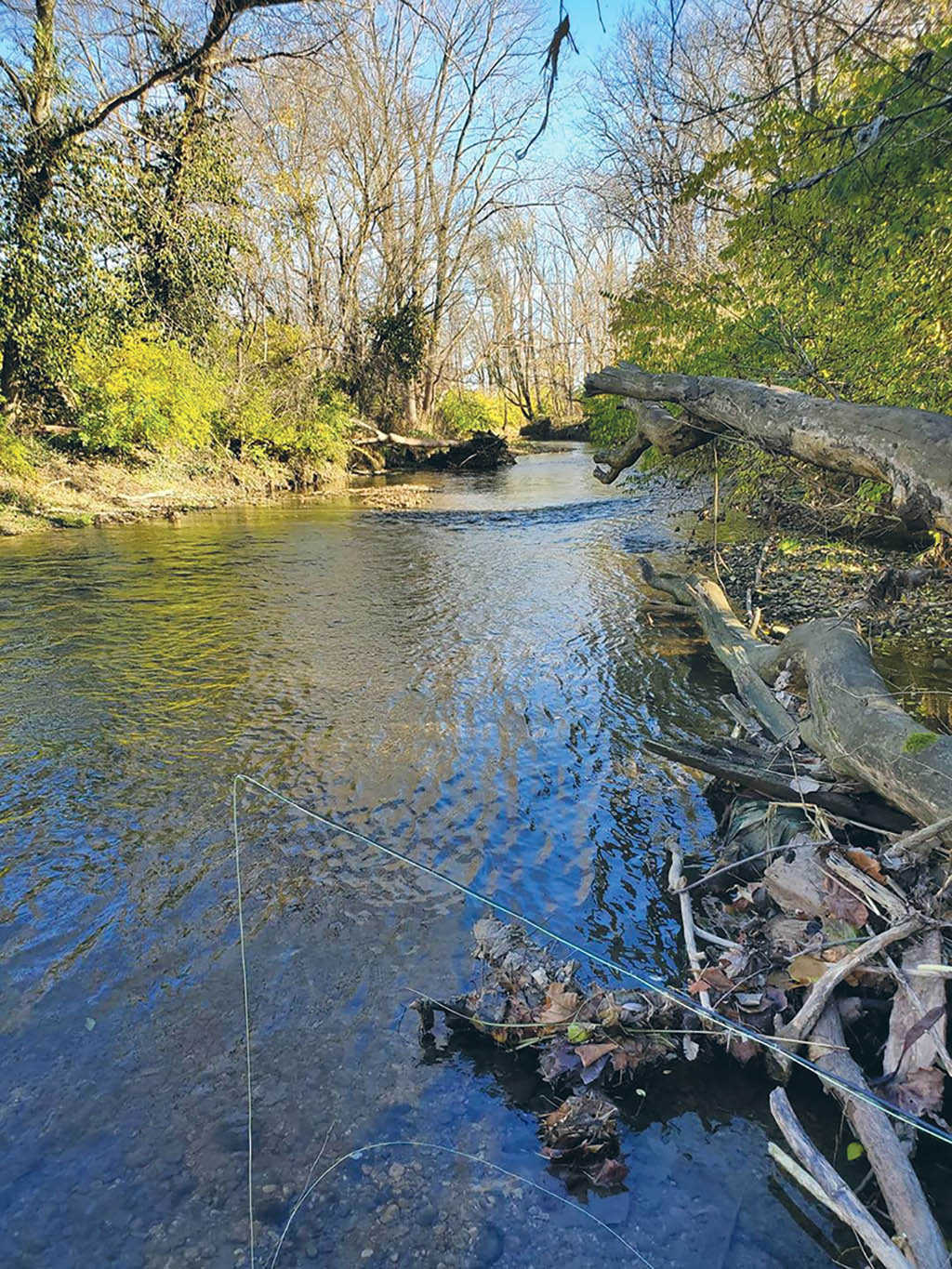
Then there’s the art of the cast — in my case, abstract art. Overhanging trees have always been my bane and the Mad River is well known for its canopy. If a single limb is hanging over the water, my hook finds it faster than any nearby fish lips. It once frustrated me, then I realized it’s part of the game. If you’re fishing areas of that creek that are most likely to hold fish, you’re destined to get tangled up. This includes the trees that have fallen into the water with their submerged tentacle-like limbs looking to grab any passing hook. Experience helps reduce the mishaps — at least that’s what I’ve been told.
I haven’t even mentioned wading since anyone following me would describe my attempts as something between a splashing waltz, playing Twister and an old-school baptism. Thankfully, during this time of year, the Mad River offers comfortable wading with most pools easily handled.
Yes, fly fishing employs more skill than tossing a bobber and a worm. While some may look at it as complicated, I see it as providing a multitude of excuses — something handy for any ardent angler carrying a growingly useless net.
Surprisingly, I managed to catch two young, inexperienced brown trout and one creek chub with an attitude. As I should have suspected, the fly the fish all chose wasn’t the purportedly proven bead-head nymphs or dace patterns I tossed. It wasn’t even the little ant imitation that caught their attention.
It was a very small royal coachman dry fly; a classic first created in 1878, designed to attract attention rather than imitate anything in particular. The idea of using the old fly came as something of an epiphany while I was casting into the pools — I’d just lost my last Adams fly to a rogue branch and was stuck. The coachman was the last dry in my box. Honestly, I’ve seldom fished them, preferring to try to match my best guess of what the current edibles are on or in the water — and apparently, I may need to rethink that tactic.
While I was surprised that the coachman caught the fish’s attention, it proves that there’s a reason why the fly is still a prominent option for many experienced anglers. It also sort of validates my belief that desperate fly choices can simply frustrate a fish into a sympathy strike. I can thank my fly-tying friend Kevin Ramsey for the few I had on hand.
The Mad River is birthed in the rolling topography near Zanesfield in Logan County, Ohio, and empties into the Miami River in downtown Dayton. Its name wasn’t always the Mad. The Shawnee called the stream Hathennithiipi, and the new settlers and explorers in the area used the names Mad Creek, Tiber River and Fiume Mad. The Mad River isn’t angry at all, its name referring to the stream’s broken and rapid current. Personally, I think it was named after some long-gone pioneering angler who’d lost his last fly to a willow.
The spring-fed Mad River is the largest cold-water fishery in Ohio and one of the few streams in the state that hold native brook trout. The Ohio Department of Natural Resources Division of Wildlife regularly stocks brown trout in the stream though natural reproduction is low due to sedimentation, extensive agricultural runoff and diminishing habitat. Nevertheless, some nice browns lurk under overhanging (read, “hook-sucking”) vegetation and undercut banks as they lay in wait for their next meals.
There are at least five public access points from Zanesfield to Urbana. A map of the area is available online at wildlife.ohiodnr.gov. Use the site’s search bar for “river and stream fishing maps” and you’re ready to go.
If you want to learn more about fishing the Mad River or want to get involved with like-minded anglers working to improve the stream’s ecology, visit the Trout Unlimited Mad River Chapter on Facebook www.facebook.com/TUmadriver or on the web at tumadriver.org. They’re involved in stream health monitoring, youth programs and with Project Healing Waters which uses fly fishing to help disabled military service personnel and disabled veterans. You can locate other Trout Unlimited groups around Ohio by visiting: https://www.tu.org/chapters/ohio/.
“Maybe your stature as a fly fisherman isn’t determined by how big a trout you can catch, but by how small a trout you can catch without being disappointed.”
— John Gierach