

July is really the start of summer and county fair season. The kids and grandkids are getting their 4-H and FFA project animals ready for the fair. Hopefully, that first cutting of hay is put up, and the corn and soybeans are off to a great start.
Summer can also bring some grazing challenges to the farm. Some of those include overgrazing, summer slump and pasture weeds.
1. Overgrazing (or undergrazing)
The first challenge can be overgrazing. Even undergrazing is common in large pastures that are continuously stocked and not rotated often. Have you noticed areas that are grazed to the ground while other areas of the same pasture are left untouched? Grazing animals are selective and will revisit their favorite spots in a pasture. They will stay close to water, shade and feeding areas where the grass is going through the tender regrowth stage or the area may contain grass species that they like. As a result, this can cause fertility hotspots in the pasture with excess nitrogen and other nutrients from an uneven distribution of manure, nature’s natural fertilizer.
This selective grazing pattern can lead to more weeds. Weeds can thrive in ungrazed patches and can diminish overall pasture quality. The overall effect is that your pasture’s potential productivity is not fully achieved and becomes harder to manage.
Break the cycle. The solution to fixing pastures that are over- or undergrazed is to break the cycle of selective grazing. It can be done by implementing rotational grazing or another controlled grazing strategy. When we subdivide pastures into smaller paddocks and rotate livestock through them, we prevent animals from regrazing their favorite spots.
Remember that livestock should be rotated to another pasture around every seven days or when the grass is down to three or four inches high. Any number of paddocks is better than a single continuous pasture; even a two-paddock rotation is an improvement and will give more control, eliminating selective grazing.
2. Summer slump
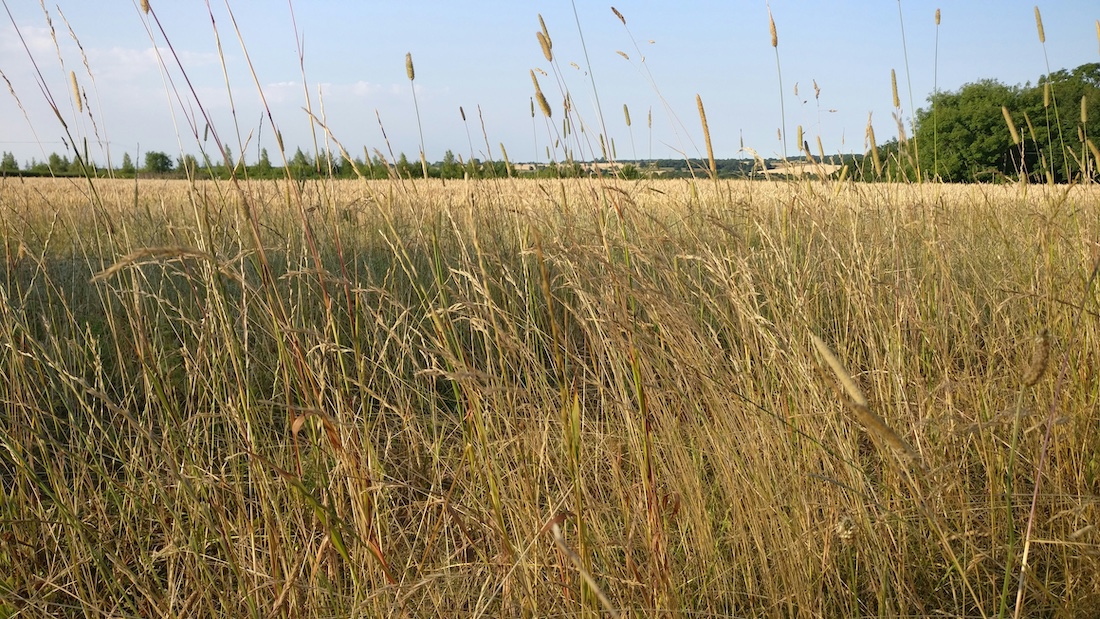
The second challenge facing grazing is the summer slump. This slump usually hits all of us when it gets hot and dry in July and August. Mother Nature doesn’t always cooperate with our grazing plans. Weeks of drought can leave pastures brown and bare, with animals grazing closer to the soil to get a mouthful. This time of year is when cool-season grasses, like fescue, stop growing. One of the issues is that your animals will run out of grass to eat.
During these two months, continuous grazing can be disastrous. Livestock will overgraze everything because nothing is regrowing, harming the plant’s roots and crowns. Recovery after hot, dry weather can be patchy and slow, with unwanted weeds thriving.
Be flexible. The solution to helping pastures survive the summer slump of July and August is using a grazing system that is flexible. Rotational grazing helps ration out available feed and protect pasture grasses. By moving livestock off a pasture once it is down to that 3 or 4-inch level, you at least save the base of the plant. This maintains the ground cover for when rain does finally come, so the pasture can recover and bounce back.
3. Weeds
The third grazing challenge that everyone faces is weeds. Toxic plants and weeds hurt the quality of your pastures. Weeds compete with the good grasses in your pastures and can overtake them.
Pastures that are overgrazed can result in areas of bare soil patches that invite weeds to germinate. Undergrazing a pasture can let weeds mature and seed. The solution to control weeds in your pastures is to improve grazing management in the form of weed control.
Rotating livestock and occasionally concentrating them in either a mob-grazing or strip-grazing pattern can force them to consume or trample weeds. Another strategy is multi-species grazing with cattle followed by sheep or goats as they eat different plants and even weeds.
Scout early. The solution to controlling weeds is to scout your pastures early in the grazing season. Never let seed heads mature on weeds and mow them off before they do. Use chemical weed control in problem areas where weeds have taken over. Maintaining a healthy grass population through rotational grazing is the best defense against weeds.
Every farm can face grazing challenges, but each challenge can give us the opportunity to improve our grazing practices that result in more productive pastures. Consider using the hay testing program that is currently being offered by Ohio State University Extension. Testing is $15 for the first sample, $20 for each additional sample. Contact your local OSU County Extension Office for more details. Samples must be delivered to local county extension offices by July 30.