




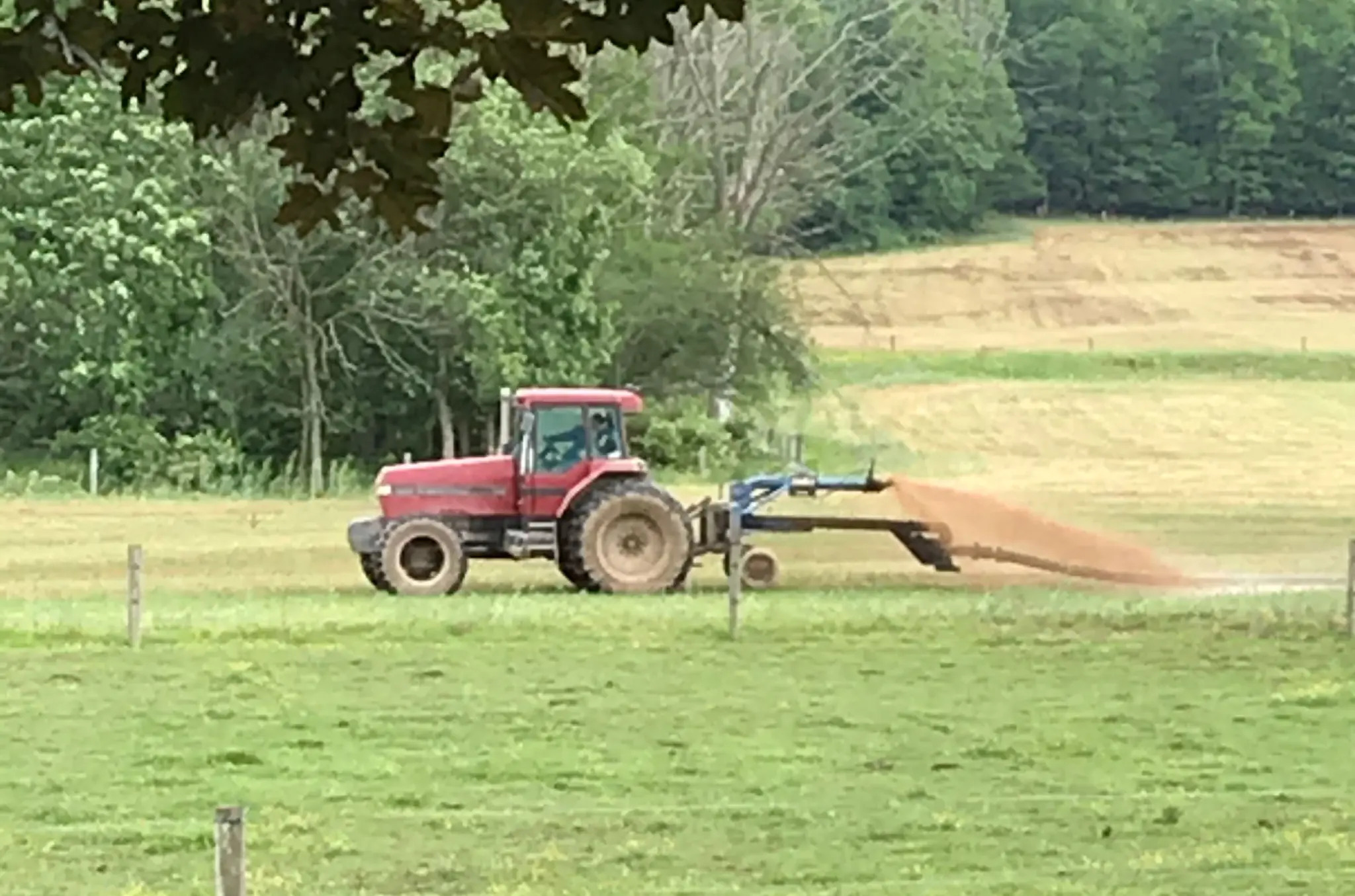
SALEM, Ohio — After years of complaints from residents and debate among lawmakers, Pennsylvania has enacted a new bipartisan law aimed at strengthening oversight of food processing residuals (FPRs) used on farmland.
Signed into law July 12 as part of the state’s 2026-27 Fiscal Code package, the measure does not outright ban the use of FPRs but instead will establish a framework for regulating how the materials are transported, stored, managed and applied to farmland.
Food processing residuals are notoriously smelly byproducts from commercial food processing facilities, including vegetable scraps, chitterlings like various meat trimmings and other organic waste.
“It stinks worse than anything; the odor has a lot of methane in it, and we have had a couple wells tainted by it, and the methane is actually causing some health issues in children and the elderly,” Rep. Barbara Gleim, R-Cumberland, told the Pennsylvania Catholic Conference in November. Gleim has been a proponent of regulating their transport and application for years. Farmers have used the materials as a lower-cost alternative to traditional fertilizers, but residents in some communities have raised concerns for years about the strong odors, air quality and impacts on drinking water.
“For four years I’ve been working with stakeholders and with lawmakers on both sides of the aisle and in both chambers to pass protective legislation,” said Rep. Paul Friel, D-Chester, in a statement released by the Pennsylvania House Democratic Caucus. “The process was extensive and worthwhile, because it led us to legislation that could pass with wide support, be signed into law, and get the job done.”
Friel, for his part, said in the release that the new law is intended to strike a balance between protecting communities and supporting agriculture.
“By embedding these critical protections directly into state law, we are establishing the oversight needed to protect our communities, our drinking water and our farmland,” Friel said. “This is a massive win for Pennsylvania farmers who want to protect their soil, and for neighbors who deserve clean air and water.”
Under the new law, the State Conservation Commission will take the lead in developing regulations in partnership with the Pennsylvania Department of Agriculture and the Department of Environmental Protection. The regulations will establish standards for nutrient testing, storage, application rates, recordkeeping and best management practices. The law also creates a certification program for FPR haulers and brokers, gives the State Conservation Commission enforcement authority and includes civil penalties for violations.
The Pennsylvania Farm Bureau, which supported the legislation, said the changes represent years of collaboration among lawmakers, agricultural organizations and environmental stakeholders. The group said the law creates a science-based regulatory framework while providing farmers with clearer guidance for safely managing FPRs.
Residents in communities affected by FPR applications say the legislation is long overdue. Dickinson Township in Cumberland County has received thousands of complaints over the years related to odors and concerns about groundwater and private wells.
“I would say we’ve had thousands of complaints over the years,” Dickinson Township Supervisor Jen DeGaetano told CBS 21/WHP. “We just want to ensure the materials that are being put on the ground are safe for our residents. And this is really the only way to do that, is to develop some rules and regulations around it.”
DeGaetano said the next several months will be critical as state agencies work to develop the regulations that will ultimately govern how FPRs are used across Pennsylvania.
Related content
Blood in the well: One town’s fight against the slaughterhouse polluting it