



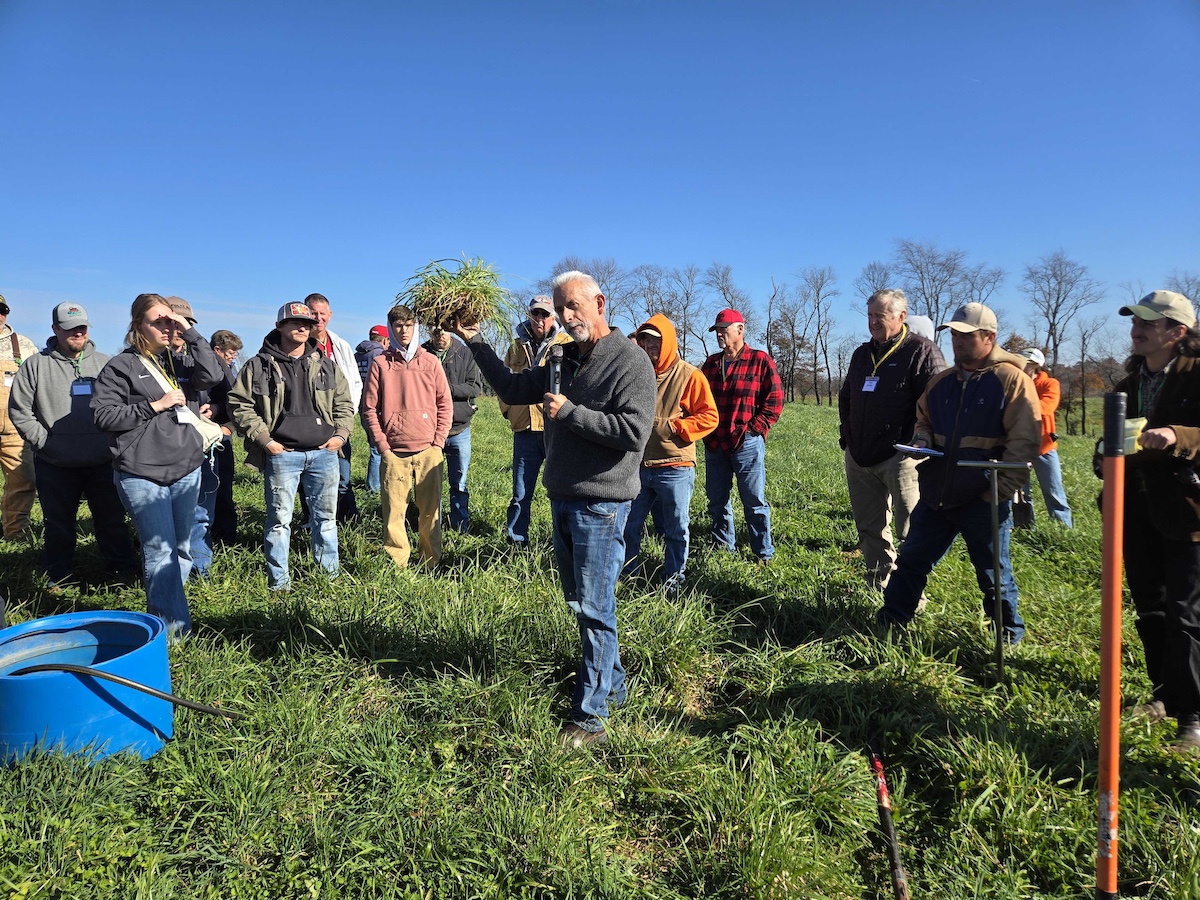
HANOVERTON, Ohio — Ray Archuleta pushed the shovel into the field at Pete Conkle’s farm in Hanoverton, Ohio, and brought up a clump of sod.
Moments earlier, Conkle admitted he was a bit apprehensive about allowing anyone to dig up his stockpiled pasture, even if it was in the name of proving his farm’s superior soil health. But if you want anyone digging in your field, it’s Archuleta.
Archuleta is a retired U.S. Department of Agriculture employee turned soil health evangelist. He’s consulted for farms across the world and spoken before thousands of people about the benefits of biomimicry and agroecology.
“This is beautiful,” he said, as he pulled off a clump of the brown aggregated soil, rolled it in his hand and smelled it.
Then, he held up the mass of earth to show the crowd of people gathered around him. More than 50 people attended the Soil Health Field Day held Nov. 11 in Columbiana County to hear Archuleta make the case for regenerative agriculture and see what those practices look like on two Ohio farms. The event included a tour of Conkle’s beef farm and Betty Mills’ crop farm in Kensington, Ohio.
A different approach to soil
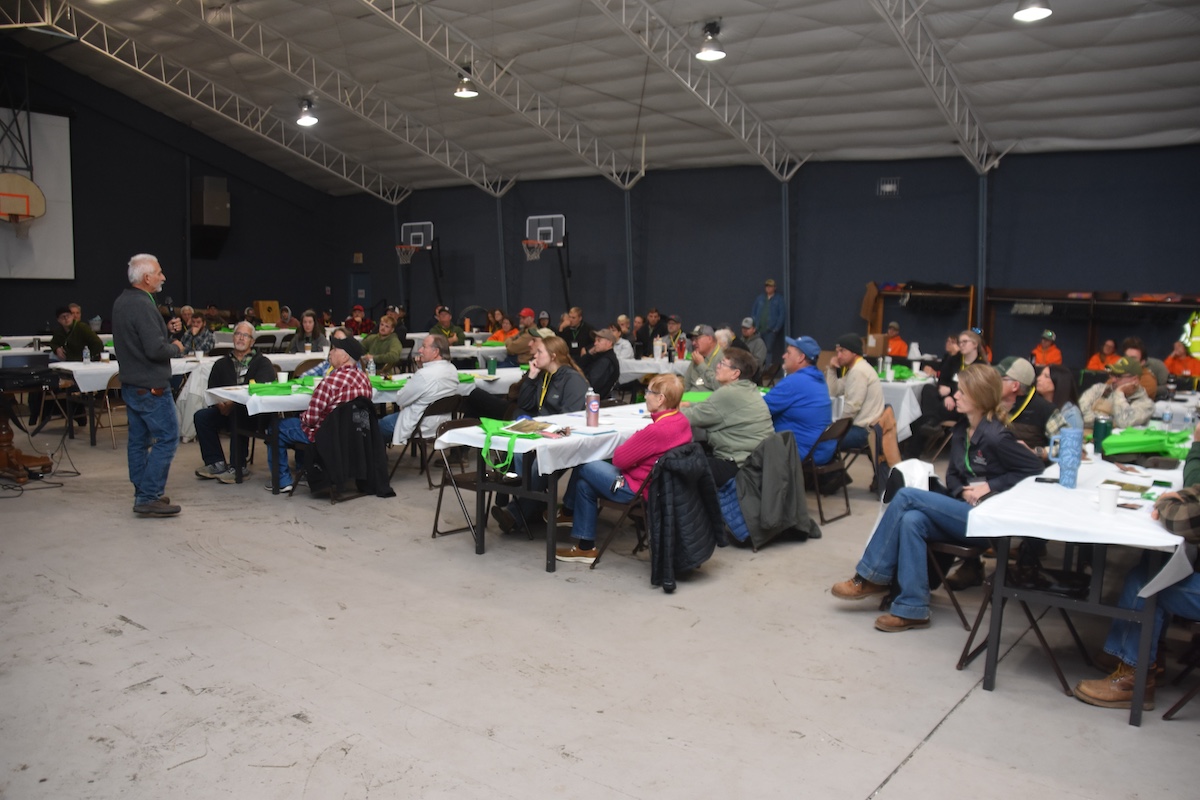
For Archuleta, seeing is believing. His morning presentation at the Soil Health Field Day was full of photos and videos from farms and ranches across the world that serve as living proof that investing in soil health pays off. It felt, at times, like equal measures of motivational speech and soil science talk.
His goal was to open the minds of the field day attendees before showing them the proof in the pudding at the two farm stops.
After growing up in northern New Mexico and earning degrees in livestock science and agricultural biology, Archuleta spent 30 years with the USDA Natural Resources Conservation Service, much of that time working on irrigation in the West.
That’s what led to his crisis of conscience while he was working as a district conservationist in Oregon. He watched the Snake River, which separated Oregon and Idaho, turned to chocolatey brown with runoff each summer during irrigation season. He also saw farmers struggling to turn a profit, even on 500 acres of prime ground.
“I would ask my peers, ‘Why can’t we make a living on 500 acres?’ People would laugh and say ‘Do your job, get the programs out, blah, blah blah,'” he said. “But that wasn’t enough.”
Then, he got a new position within NRCS based in North Carolina to build a soil health program, and, in his words, “it changed my life.”
He began to see how practices such as planting cover crops, diversifying rotations and integrating livestock could improve soil health and farm productivity. Archuleta prefers to call cover crops “service crops,” emphasizing the role they play in feeding and protecting the soil.
“I see hope coming for agriculture that I never have before,” Archuleta said.
Archuleta retired from the NRCS and co-founded regenerative agriculture consulting business Understanding Ag, LLC and the non-profit Soil Health Academy. He has been featured in the documentaries Kiss the Ground, Common Ground and Dominion.
He also practices what he preaches at a 150-acre ranch in Missouri with his wife, Sonja, where they raise beef cattle and sheep.
Putting soil health into practice
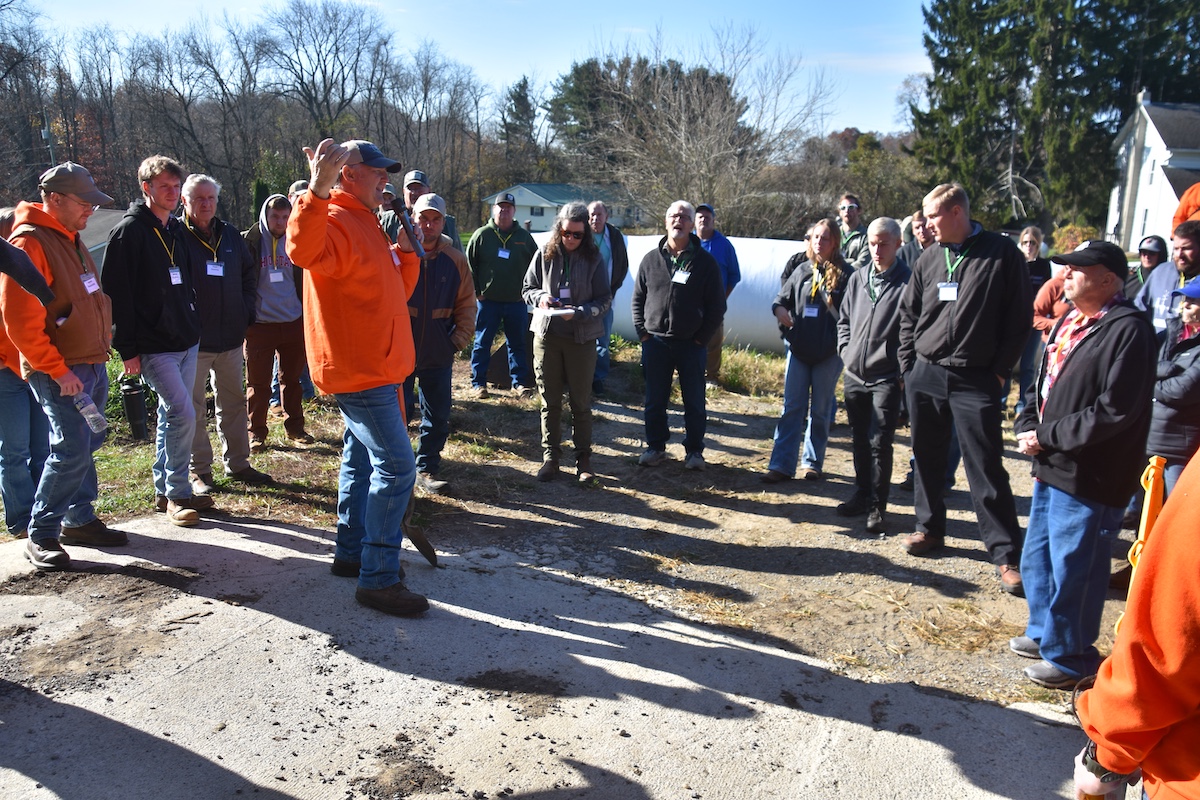
Back at Conkle’s farm, Archuleta asks the crowd what they noticed walking from the barn to the knoll where he dug up the sod. A few people offer observations: “Green grass.” “Clover.”
But Archuleta is looking for something else.
“There was an aura of change as you walked in here,” he said. “Did you guys notice that?”
He then turns to something more tangible: how much of the ground is covered? That’s the first thing he looks at on any farm because it tells him whether beneficial ecological processes are happening.
“Capture sun, water cycle, nutrient cycle, biodiversity. Four things every square inch has to have,” he said. “And it has to be right here on top of that surface. When I walk onto an operation and I don’t see that, I know those processes aren’t working.”
That ground cover didn’t happen by accident. Conkle bought the farm in 2002 to raise cattle, but continued renting some of the fields to a crop farmer. In 2010, he made the decision to convert the entire farm to grass.
Conkle’s farm is a good example of that, Archuleta said, as 99.9% of the ground is covered in perennial grasses and legumes. “This ground right here has got beautiful aggregates,” he said.
Conkle bought this farm in 2002 to raise cattle on, but continued renting some of the fields to a crop farmer. Finally, in 2010, he converted the entire farm to grass and hasn’t looked back.
Committing fully to grass and building a pen pack barn are two of the best decisions they’ve ever made, Conkle said. They calve about 60 cows each spring and use the barn to wean and background their calves. The barn and the grass give them flexibility in how and when they market their calves.
“It’s made us price makers instead of price takers,” he said.
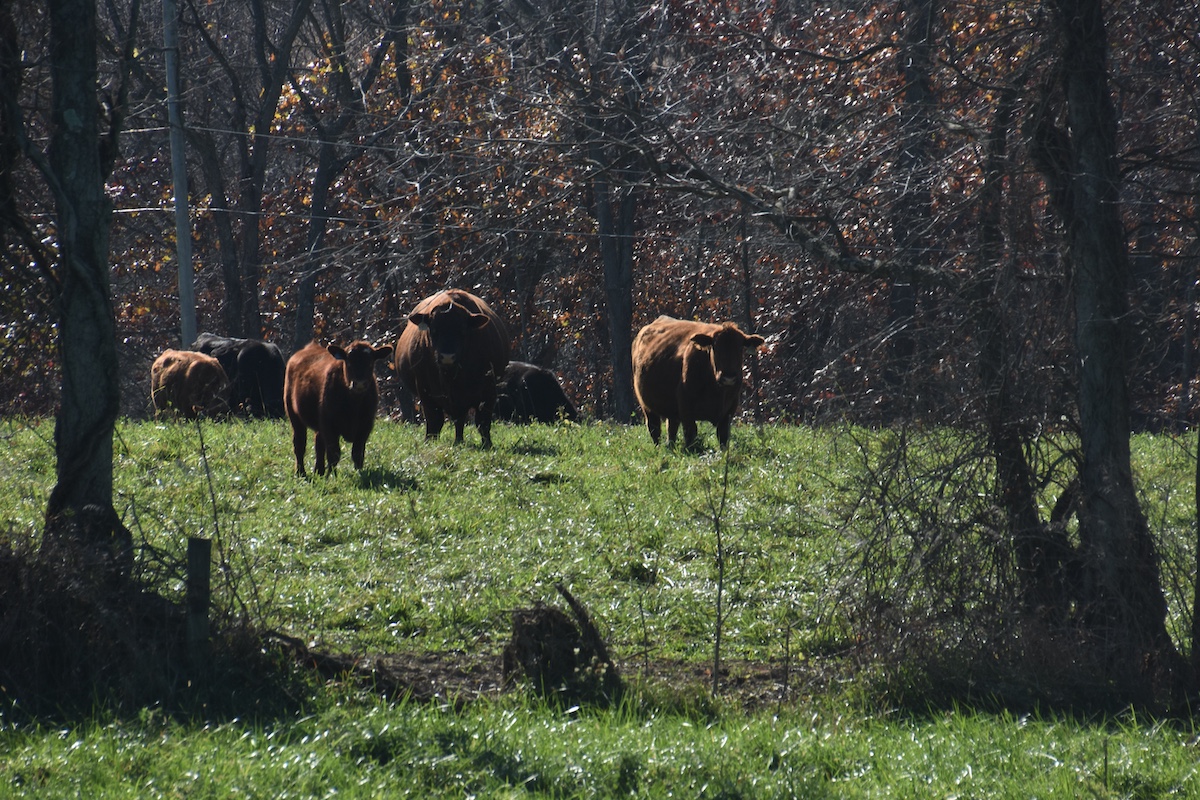
Conkle, who runs the farm with his father, Larry, intensively grazes his cow-calf herd of primarily red Angus cattle, moving them once a day to fresh grass and allowing grazed areas to rest for at least 40-45 days. He also interseeds cereal rye into pastures that need a little help with cover.
Conkle said they buy in all their hay because he’d rather spend time in the field with the cows than sitting on a tractor seat.
“I get accused of piddling a lot. Because I’m out here on my 4-wheeler, watching the cows graze,” he said.
The grazing system has increased forage production and improved gains on calves and replacement heifers, Conkle said. He’s also seen more diversity in the wildlife, insects and plants on the farm.
“The more you bring animals in, the more you have insects, the more you have life, the better the farm’s going to work and the less you have to write a check,” Archuleta said.