

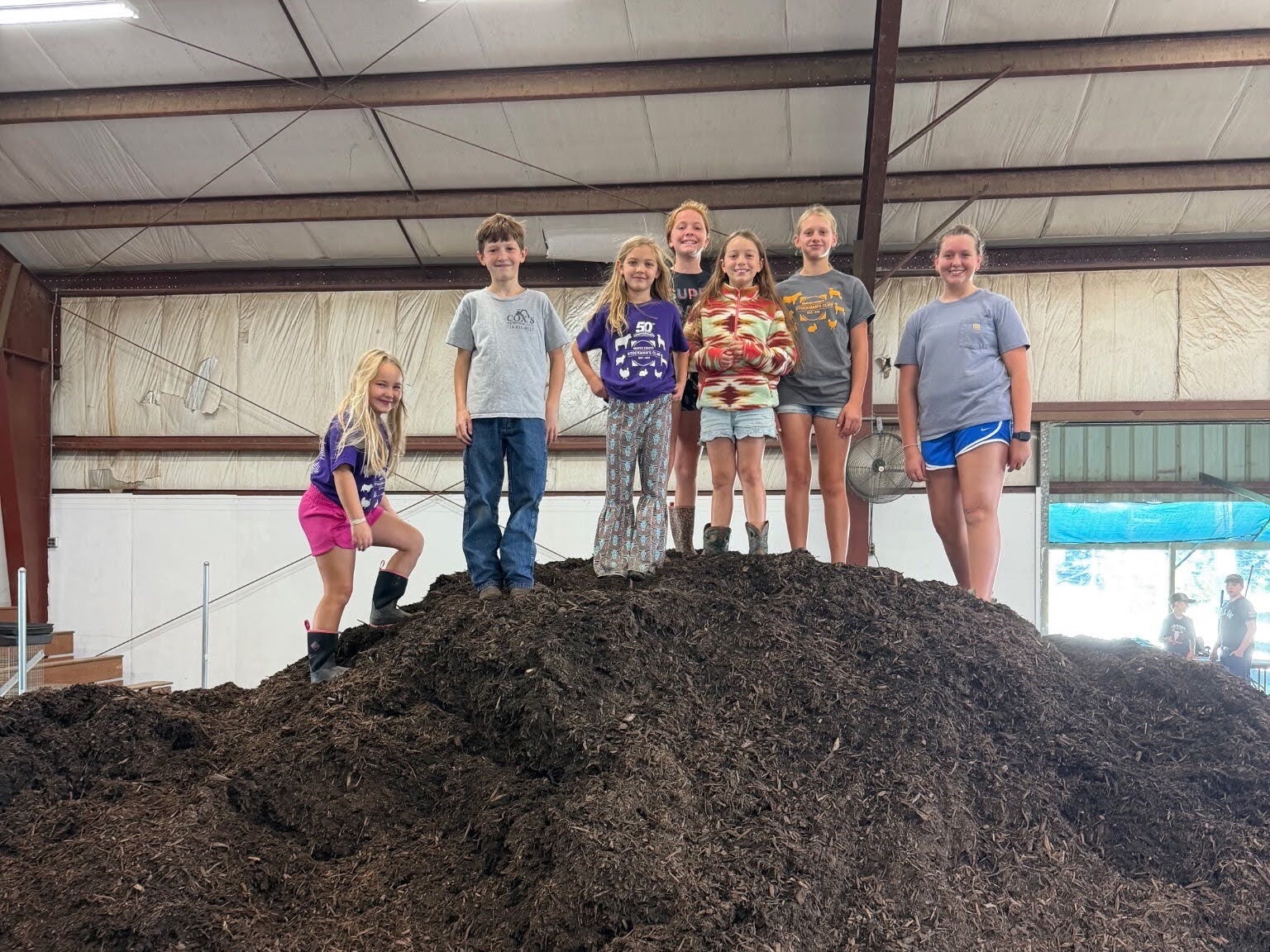
HOOKSTOWN, Pa. — In 2015, there were 409 divorces and annulments recorded in Beaver County, Pennsylvania. But those weren’t the only breakups that year: the Beaver County Stockmen’s Club and the Big Knob Livestock Club also split with their longtime respective 4‑H affiliations. Irreconcilable differences were to blame.
Beaver County has always done things a little differently. Instead of one big fair, it leans on two Grange‑run ones — Hookstown and Big Knob — each with its own board, culture and way of doing business. The Stockman’s Club’s 52nd annual show and sale took place from Aug. 25 to 29 this year at the Hookstown Fair, while the Big Knob livestock show and sale is back Sept. 3.
More than a decade ago, things came apart between the fairs and 4-H when Penn State Extension imposed standardized rules that, among other things, capped youth at four livestock projects a year. It also put more decision-making power in the hands of a regional advisory committee.
For their part, leaders of the Stockmen’s Club felt the changes didn’t benefit their kids or respect local control, so they called it quits. The group’s longtime home was at the Hookstown Fair, but after the divorce from 4‑H and the loss of its charter, the fair board at that time told the club they could no longer bring their show and sale to the grounds. Forced to improvise, the club started a new chapter as an independent youth organization at a different venue, spending about two seasons on its own before eventually returning to Hookstown to begin again.
At first, members weren’t sure there was life after leaving. But a decade later, most everyone agrees they are better for it.
Rough start
Trevor Pugh, an alum and treasurer of the club who grew up in the barns at Hookstown, said the split forced leaders to decide what really mattered and who they were serving.
It was “about protecting what we thought was right for the kids at the time,” he said in an interview with Farm and Dairy.
After Penn State Extension rolled out the new rules, the Stockman’s reorganized as a 501(c)(3) non-profit and moved their show and sale to another barn a short drive away, taking every pen and panel they owned with them. For two years, the Hookstown fair — a place many locals associated first and foremost with kids leading steers into the ring — “didn’t have any market livestock. There were zero animals in the fair,” Pugh said.
Those were anxious times. Club leaders who had grown up under the green clover of 4‑H suddenly found themselves explaining to families that the animals, the sale and the experience would go on, just under a different banner. And back then, some wondered whether kids would stick with a small, independent club that lacked the cachet of the largest youth development organization in the United States behind it.
Years later, it was a largely new fair board, feeling the hole left by the loss of market livestock, that invited the Stockman’s Club to return, and leaders on both sides came to see that reuniting would restore something essential to Hookstown’s identity. But Pugh remembers the early membership numbers feeling like a gut‑check.
“It’s really great to see the membership exploding,” he said. Club membership has more than doubled in just a few years, climbing from a skeleton crew of roughly 30 members to more than 60 today, with a deep bench of younger kids coming up behind them.
At first, the headcount in the steer barn was pretty minuscule, too.
“We had a very rough couple of years,” Pugh said. “I remember in 2019, we only had five steers at our fair. And three of them were from our farm.”
Today, he cites that low point as a benchmark: this year, the club brought 24 steers to Hookstown. It wasn’t Columbiana County’s 90‑plus head, he admitted, but for a small Grange fair tucked into the hills of southern Beaver County, it feels like a comeback.
The sale sheets back that up: in 2021, the club’s auction totaled about $88,000; by 2025, it had swelled to more than $260,000 on 137 lots, with stronger prices and more animals crossing the block across every species.
The club’s structure has shifted with that growth. Leaders allow up to three “barnyard” projects these days — the larger animals like steers, hogs, lambs and goats — as well as two “backyard” ones such as poultry and rabbits. The flexibility reflects both demand and a different philosophy than the one that led to the split with 4‑H.
Pugh said seeing the club rebound in its old home has been gratifying.
“It feels great to see the club growing, especially being an alumni and having young children that are going to be coming of age to be part of the club soon. It’s a good thing, it’s a good feeling,” he said.
Extended family
A spokesperson for Penn State Extension emphasized that 4‑H is still active in Beaver County; 17 youths aged 8 to 18 are currently enrolled in livestock projects along with eight K-3 Cloverbuds, and the organization plans to grow both programs. In response to written questions, Jeff Hyde, associate dean and director of Penn State Extension, said in a statement that 4‑H plays an important role in building leadership and life skills. He added that the program partners with other youth‑serving organizations and, as the world around it changes, often adjusts its operations and programs, striving to do so collaboratively. He declined to revisit Beaver County’s 4-H-gate in detail, saying no one directly involved remains on staff and that any judgment about how things were handled then would be speculative.
For Laura Miles, who served as secretary through the transition at Big Knob Livestock Club, panic never won the day, but those first months on their own were scary.
“We didn’t know what was going to happen,” she said.
That first year, Miles and other volunteers raised money for the fair by selling hot dogs outside the local Tractor Supply every weekend. They leaned hard on parents, the Grange and a handful of loyal buyers to keep the club afloat.
For the kids, she said, the chance to show was everything.
“They just wanted to be there. They wanted to be at the fair. They wanted to have their animals, they wanted all that. They didn’t even care,” said Miles.
For Miles, 13 years of fair fun, hard work and hot-dog fundraisers went by in a flash before she knew it was time to step away, beginning a transition of her own.
“It was hard for me to leave,” she said.
When she walks through the fair now, she sees more kids than ever, and a long list of names she doesn’t recognize. But that feels like proof the gamble worked. The club, she says, has money for fans, pens and a good PA system, and remains centered on the kids and the community that rallied around them.
Today, Big Knob’s independent livestock club is bigger than the one Miles helped steer through the split. Board president Amanda Wall said membership has risen sharply during her five years on the board, growing from the low 20s to a peak of 42 children last year. Steer, hog, lamb, goat and poultry projects fill the barns.
Wall grew up in the old Big Knob 4-H Livestock Club and said the nurturing feeling has endured. The club, she said, has become something more for kids and parents to belong to.
“And that’s what it was for me growing up. It was literally a second — it was a whole extended family, and I like being able to say, you know, that that’s kind of what it feels like here.”
Building community
Dan McLaughlin, chairman of the Hookstown Fair Board of Directors and a Stockman’s Club member since 1979, understands that it’s all about relationships, too. He has watched the club grow back slowly over time. And now, everyone’s on the same side.
“The relationship between the fair board and the Stockman’s has gotten a lot stronger,” he said. “It’s allowed them to get more stuff done, and it’s more fun for the kids. The atmosphere is a lot better when the board and the club can get along. And it’s gone well.”
From McLaughlin’s vantage point, the rebound is real. He’s happy with the club’s climbing sale totals, noting that last year already marked a strong auction and that this year’s receipts are on track to come in even higher. For him, that renewed energy comes with a sense of duty.
“I grew up with this fair. I’m a 100% pay-it-forward person,” he said. “I just feel like it’s my — and every other adult that’s been here — (our) responsibility to provide it for the upcoming kids and to give them the opportunities that we had here.”
One way they might have done that is by giving their kids a chance to stand out in a place that feels like the center of the known world. Over time, the Stockman’s Club has become as much a social hub as a show barn: one board member met his wife through the club and now their children make memories ringside. Several current directors are first cousins whose parents all showed there before them.
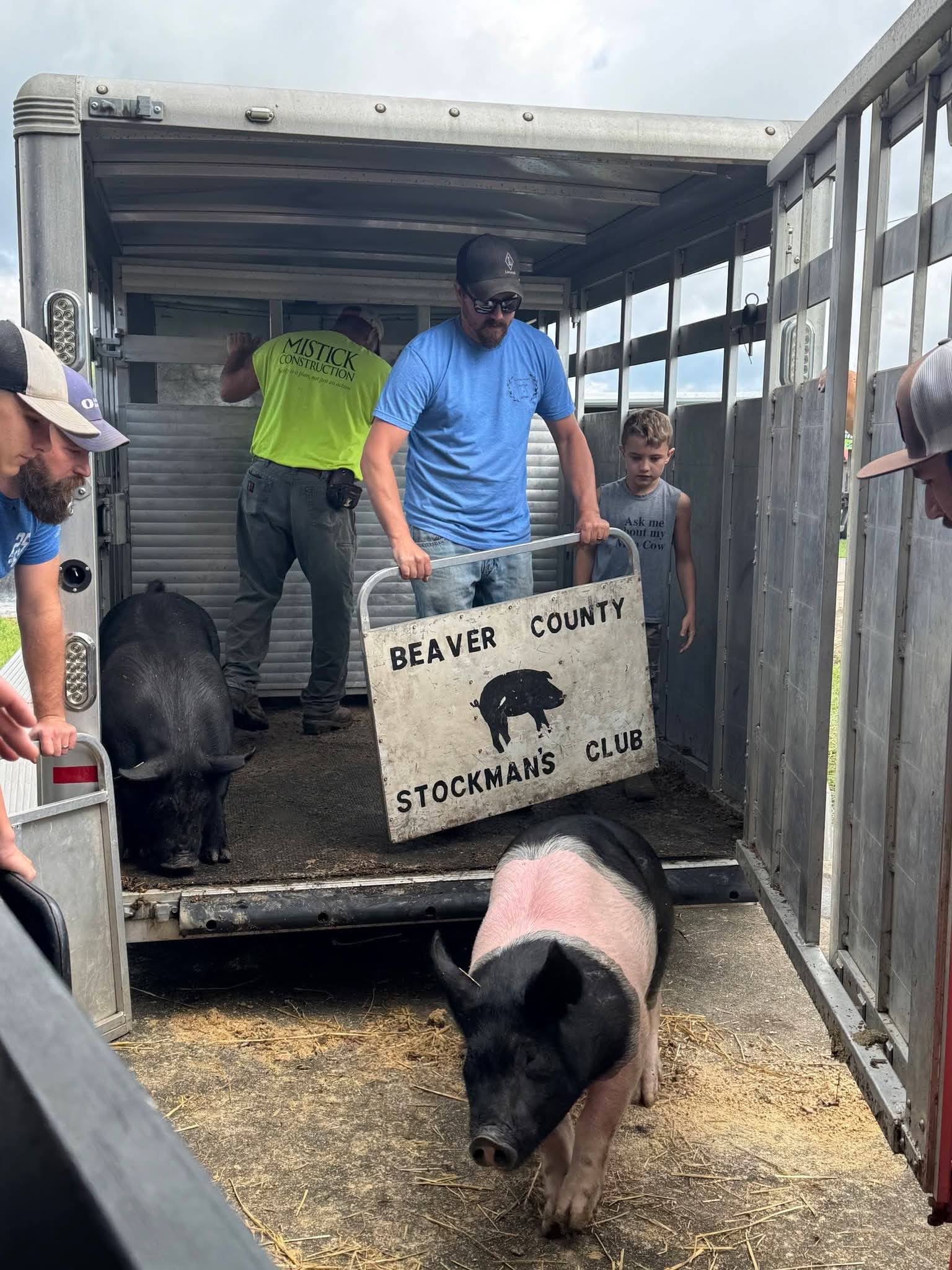
Jared Kramer, the current board president, said he’s tried to make the monthly meetings more than just a sign‑in sheet. In his two years as president, he has pushed to turn them into real learning opportunities rather than simple roll‑calls, bringing in nutritionists, veterinarians and feed representatives in addition to organizing species‑specific clinics so that exhibitors get more hands-on education with their animals.
Around the barns, the results speak for themselves: kids confidently talking about feed rations, parents trading notes on showmanship, buyers hearing about scholarships and a program that funnels meat to local food banks.
Through it all, the club’s unofficial mission statement has been tested and, members say, proven out. When the group left 4‑H, it couldn’t use the national motto anymore, so it wrote its own: “bringing the community together.”
And building community is cool.
“You see the (older) teens, they’re starting to date,” he said. “Other people that aren’t in the club, they start flocking in just to see friends and stuff.”
Once fair week hits, the barns swell with even more people.
“They’re everywhere. All the friends are hanging out. It’s cool to do again,” Kramer said.




