
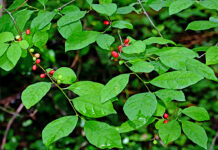

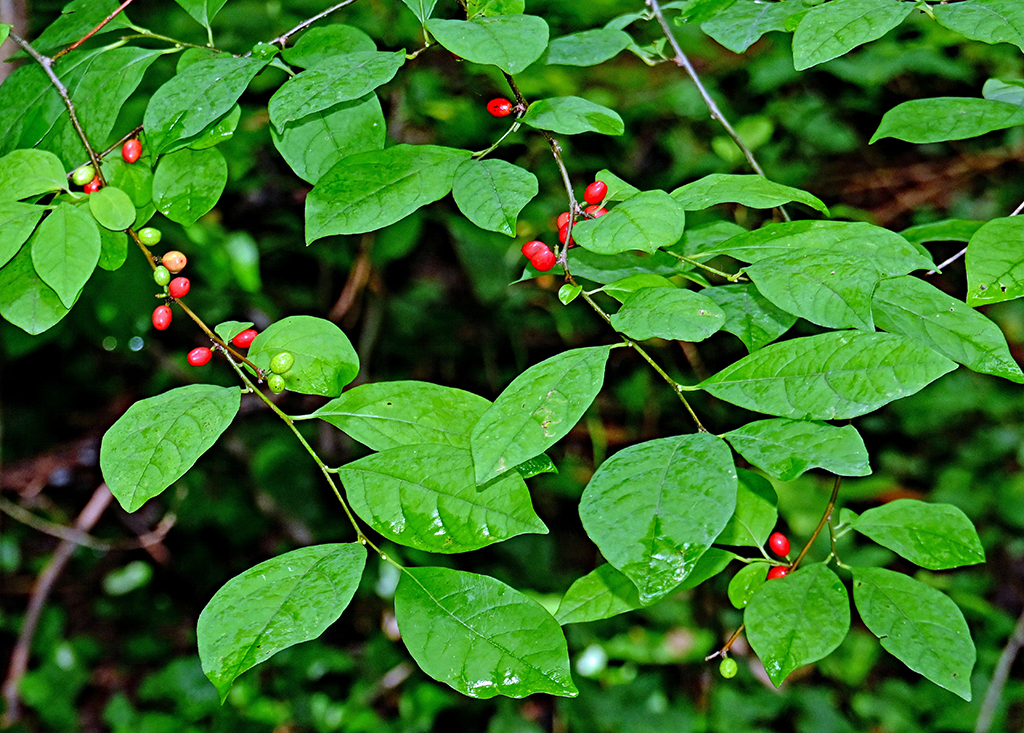
Spicebush (Lindera benzoin) is a member of the laurel family. Also referred to as wild allspice or Benjamin bush, it is associated with rich, woodland habitats, flourishing beneath the canopy of the forest, often along streams.
Native to the eastern half of North America, spicebush is considered a shrub, maturing at heights between 6 and 12 feet and occurring gregariously, a result of their ability to spread by the process of root sprouting.
Spicebush is appropriately named after the sweet, citrusy aroma produced by all parts of the plant. When I am on a hike through the forest, I just can’t help myself as I pluck a leaf from the plant to crush between my fingers and hold against my nostrils as I carry on. In fact, a hike without the scent of spicebush wafting around me would be very disappointing indeed.
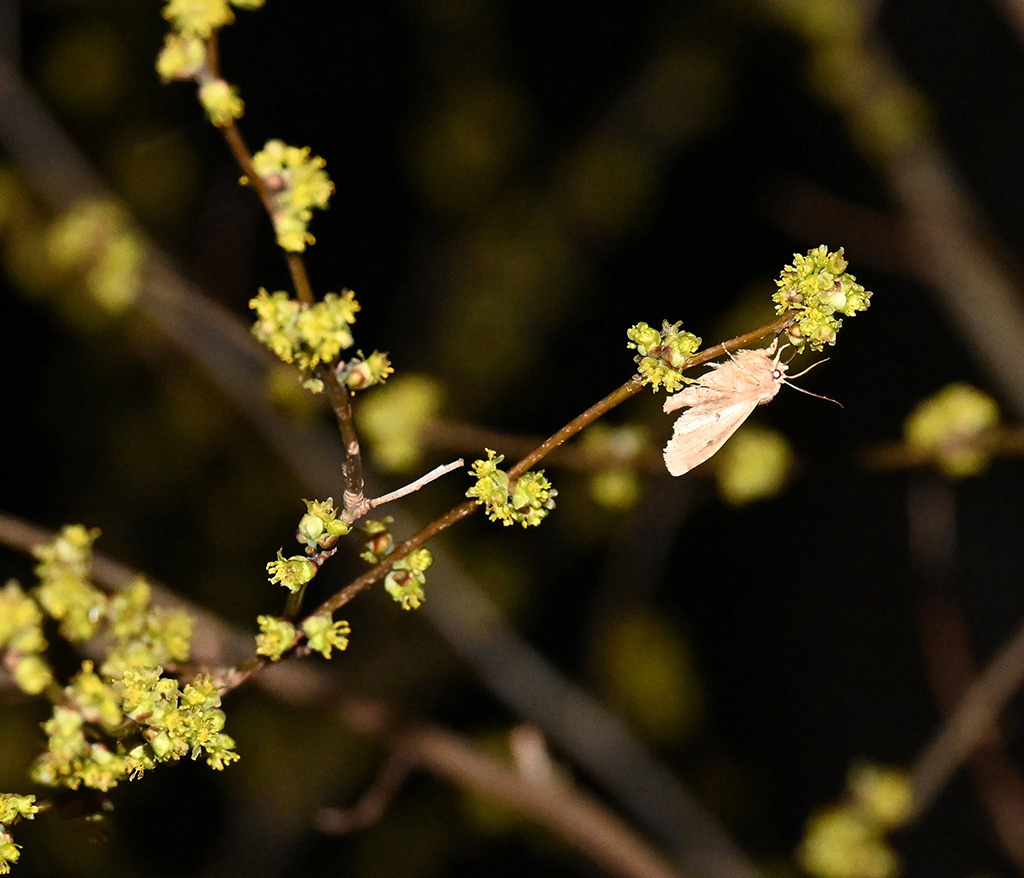
In the early spring, before its leaves have burst from their buds, the spicebush explodes into bloom. Delicate clusters of yellow flowers engulf the plants, luring in some of the earliest pollinators.
An exquisite spicebush specimen just outside of our front door gives me a front-row seat to dozens of moths which visit the blossoms beneath the cover of darkness. As I observe them with the aid of a flashlight, I am amazed at their efficiency in visiting each and every flower, ensuring pollination.
Interestingly, individual spicebush plants are either male or female, never both, a term referred to as dioecious. Pollinators such as bees and moths transfer pollen from the male plants to the females as they forage, ensuring future seeds. As summer progresses, the seeds on these female shrubs become visible, first as berries as green as the plants themselves, then slowly turning a bright, cherry-red as they ripen.
Each spicebush berry contains a single seed. As the berries become visible, I can see that, at least in my woods, the number of male plants far exceeds those of females.
Have you ever wondered why many plants produce seeds in the form of berries which are so very conspicuous they just can’t be overlooked? This is because they rely on animals to disperse them.
Spicebush is incredibly beneficial to wildlife for many reasons. Their beautiful tic-tac-shaped berries are chock full of lipids that are so important for migratory birds. At the onset of fall migration, the spicebushes in my woods act like magnets to many passing songbirds, especially wood thrushes. Birds ingest the berries and continue on their journeys. As their bodies digest the precious outer nutrients, the single seeds that remain within then pass through and out of the animals’ digestive systems to hopefully germinate where they land the following spring. In addition to songbirds, other bird species including wild turkey, ruffed grouse, bobwhite quail as well as several species of mammals and insects relish this plant.
Happy host
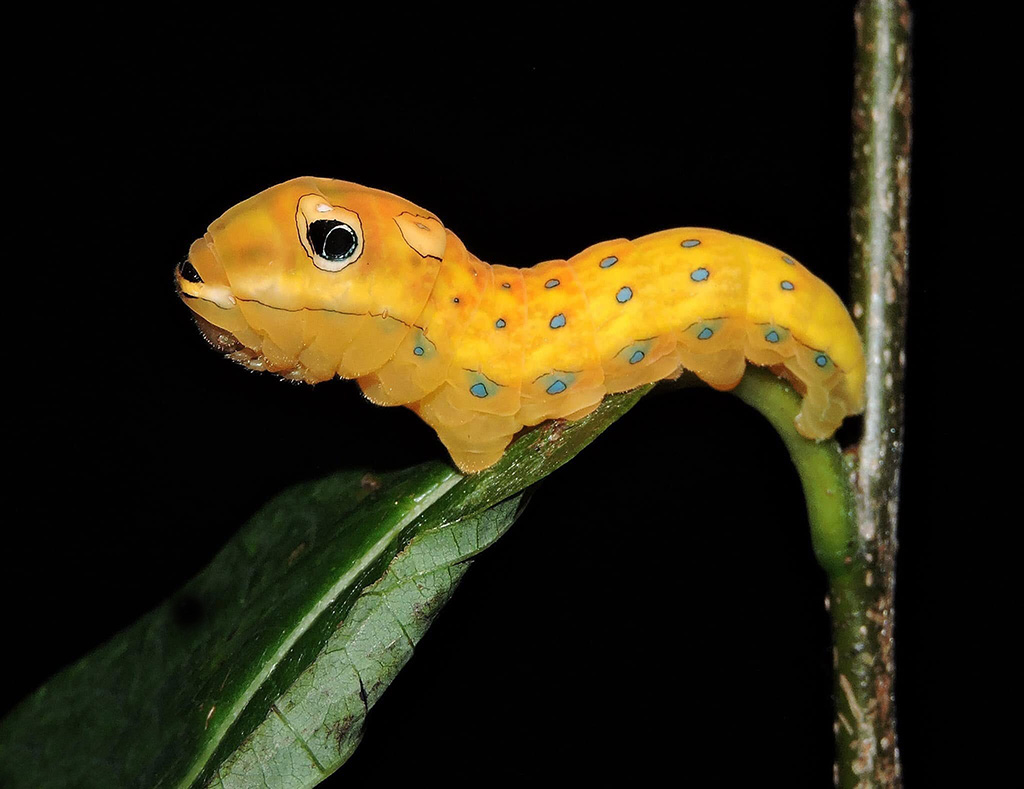
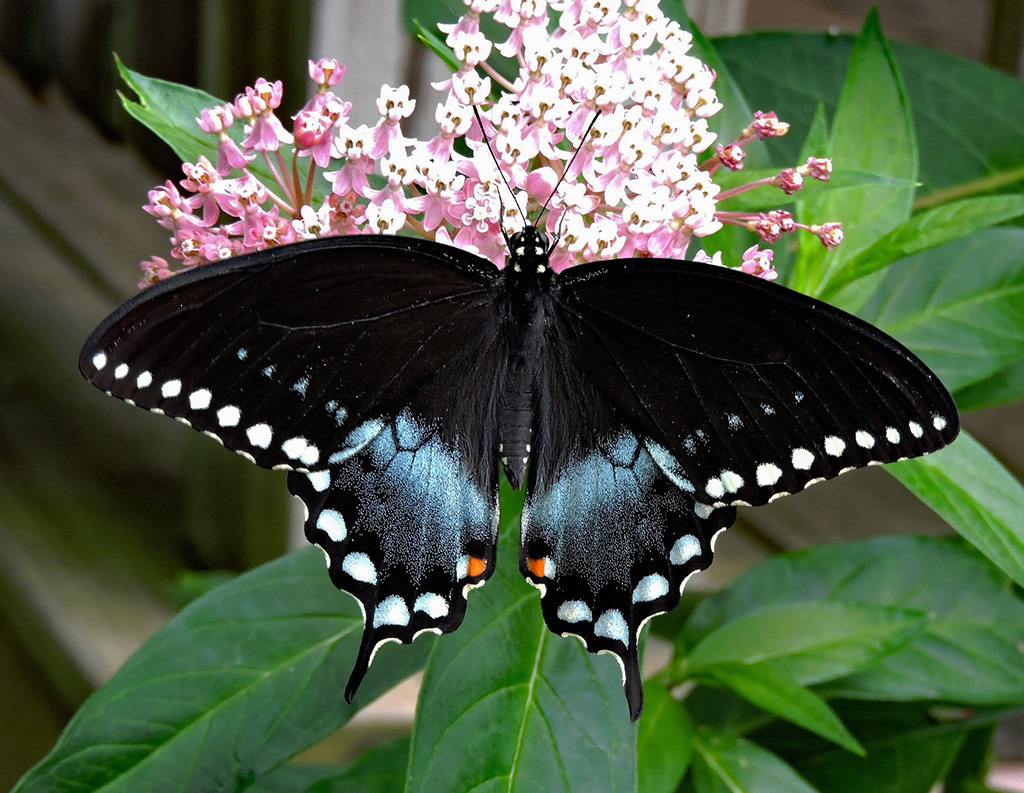
Spicebush is the host plant for two species of lepidoptera: the Promethea silk moth and the spicebush swallowtail. Swallowtail butterflies begin depositing their eggs upon the plant’s leaves in early spring so that their caterpillars will have an abundant source of food.
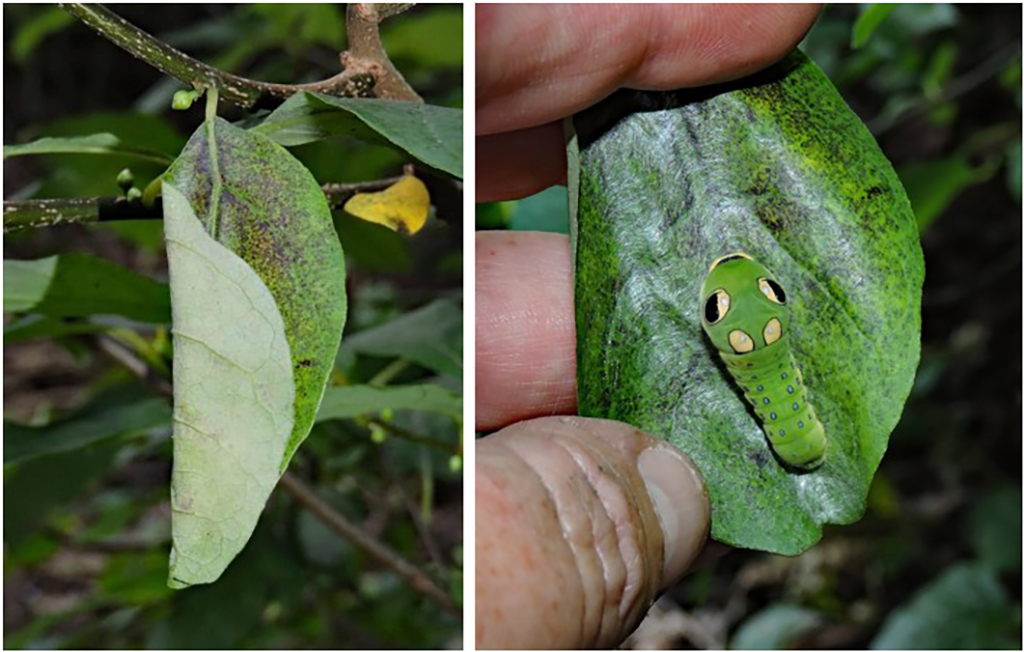
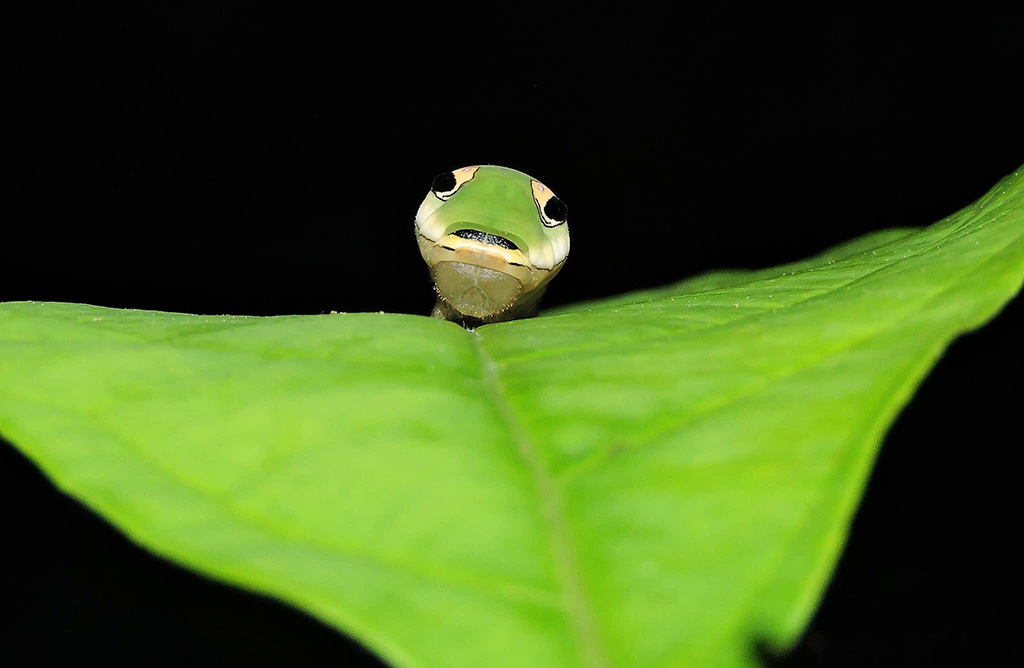
Spicebush caterpillars are incredibly unique, using their silk to hold a fold of the leaf over themselves to keep hidden. The caterpillar emerges from this “cave” to feed for short periods on other parts of the plant, before returning to safety. Beneath the leaf fold, it is hidden from hungry birds and parasitic wasps. The caterpillar has yet another defense, in the form of bold eyespots. By puffing up the area beneath these spots, they are enlarged and transformed into resembling the scary face of a snake, causing predators to think twice about nabbing the caterpillar as a meal.
During its first instars, the spicebush caterpillar resembles a shiny bird dropping, then changes to a vivid green color. When it is ready to form a chrysalis, it changes to a bold shade of tangerine before departing the plant to find a sheltered spot in which to complete its metamorphosis into a breathtaking butterfly.
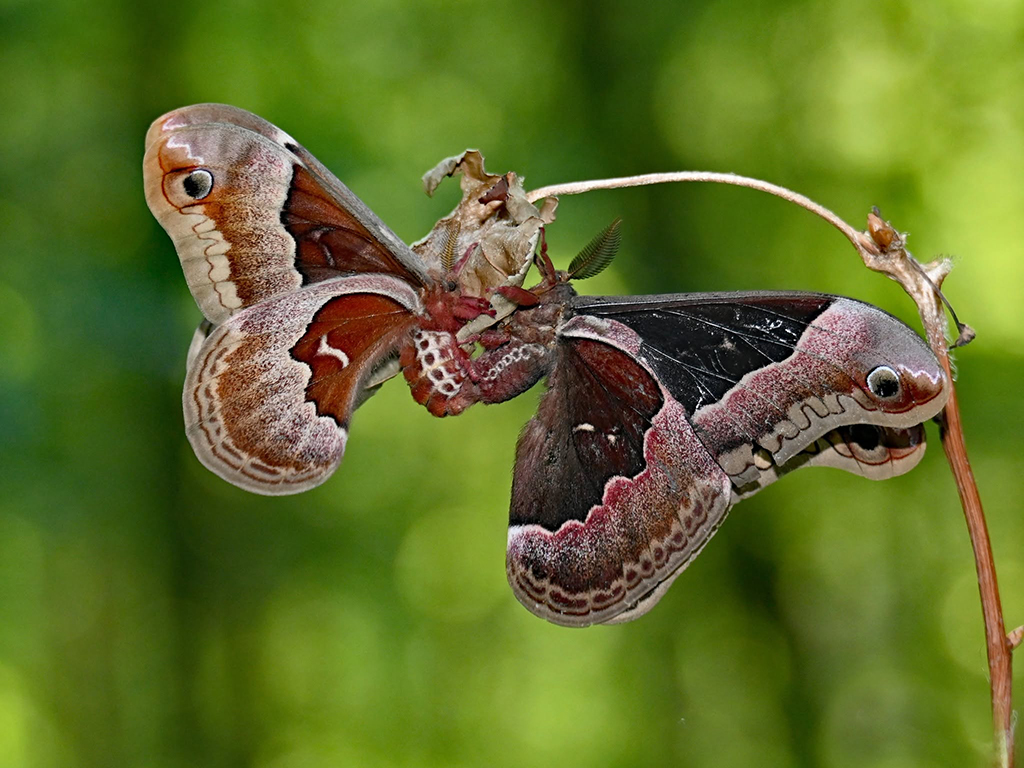
In early summer, the Promethea silk moth emerges from its cocoon which has been dangling from the spicebush plant all winter long. The female will remain on the cocoon, sending out pheromones until she attracts a mate, after which, she spends the next several nights depositing her fertilized eggs throughout patches of spicebush.
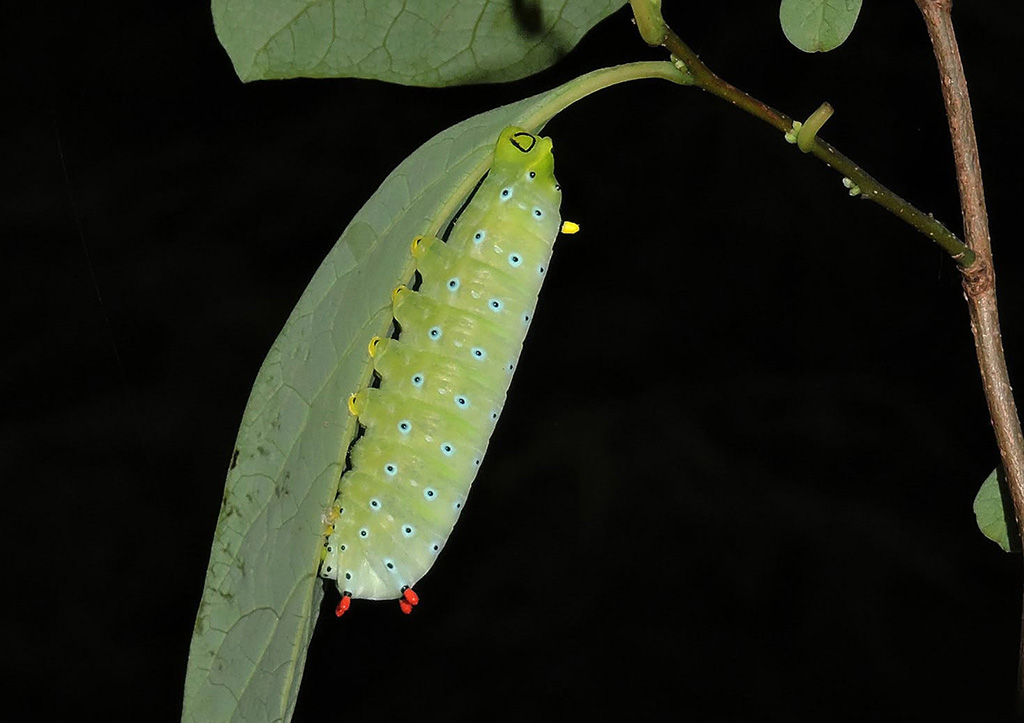
The caterpillars grow to around 2 inches in length and rest in a downward position on the backside of a leaf, their pale green bodies accented by black and blue spots and red and yellow knobs. Finally, when the caterpillars can’t muster another bite, they wrap themselves in a fresh, unblemished leaf, firmly attaching its stem to the bush with a sturdy layer of silk which will allow it to remain in place throughout the coming winter. Having our house situated in the woods surrounded by spicebush plants, I can’t help but rear a few individuals of each of these species every year.
People pleasers
Spicebush is not only enjoyed by wildlife, but by people alike. A glimpse back through historical records reveals that Native Americans relied on the plant for several reasons. They used its bark to treat multiple ailments by creating a medicinal tea. The bark could also be used as a substitute for cinnamon when dried and crushed.
Spicebush berries, when thoroughly dried and finely ground, can be used as a substitute for allspice and was often utilized by the pioneers. Yet, my favorite treat has become a spring tradition. Walking out our front door and into the woods, I clip a small handful of twigs, new growth, from the ends of the branches. Inside, I place them in a pan, cover them with water and simmer. When the sweet aroma in the kitchen can no longer be ignored, I strain the liquid, sweeten to taste, and enjoy the most wonderful cup of spicebush tea.
As the summer winds down, the spicebush offers one final windfall. As a grand finale, its leaves turn a canary-yellow creating an ethereal glow throughout the forest before softly falling to the ground. Yes, spicebush truly is a benefit to all!