
With the apple butter making finished up as the final agricultural rite of the fall season, it was time to look ahead to butchering. Butchering was widely thought of as the first major event of the winter season and took place at the exact moment the weather took a turn for the worse.
It is said that the old-timers could unerringly sense when the time for butchering was at hand, which was the first frosty day the temperatures plunged to near freezing and the skies were clear. That was the day that the hog, or hogs, that had been fattening during the past six months would meet their demise and become food for the family.
During the summer, the hogs had the run of the woodland, gorging themselves on mast of all kinds, including acorns and hickory nuts. When they reached a weight of around 350 pounds, it was deemed they were ready to be butchered.
And the farmer had to be ready for the butchering process. Of the myriad jobs that needed to be done around the farmstead during the year, none required as much and as diverse equipment as did butchering. In the coming chapters, the many interesting — and now largely forgotten — tools that were required to perform this rather gruesome task will be examined and their uses explained.
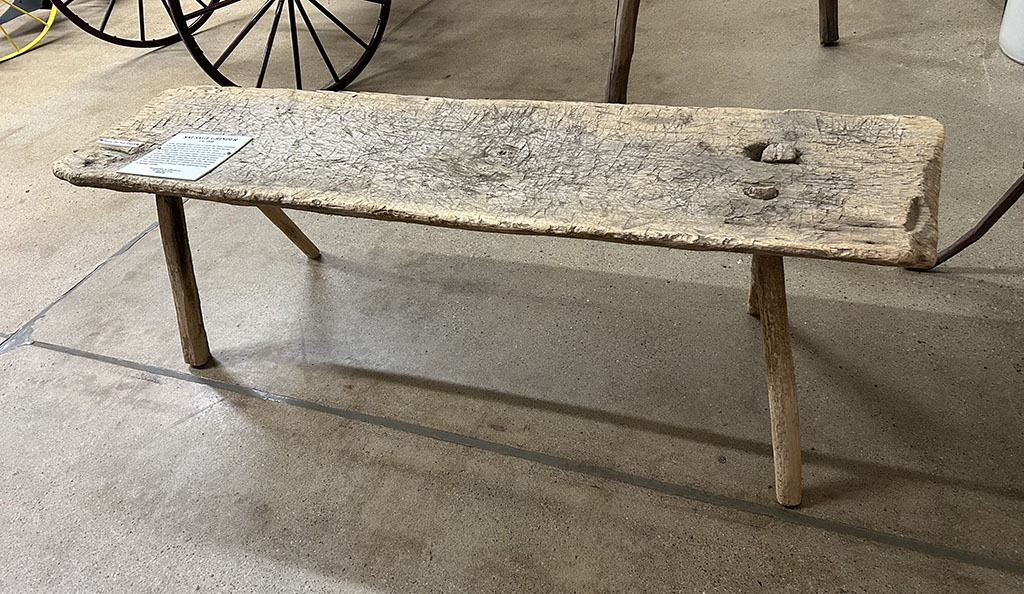
Butchering plank
One of the single most important pieces of equipment involved in butchering was the butchering plank or butchering table. It was an item found on almost every early farm across the Ohio country. The butchering bench was usually crafted from a heavy wooden plank about 8 feet long, about a foot-and-a-half wide and 2 inches thick. It stood waist high on four sturdy wooden legs, splayed for stability. If a family didn’t have a butchering bench, it used a butchering plank of similar dimensions. In this case, the plank was laid across the backs of two wooden chairs. Butchering benches and planks are readily identified by a myriad of scars left by axes, cleavers and knives over the years. Because it was used only once or twice a year, the butchering surface needed to be thoroughly scrubbed before use.
Kettle
The farmer also needed at least two large iron kettles or cauldrons for the process. One of these would be used to heat water for the scalding and cleaning process, while the other would be used to boil the fat from the carcass, which would be rendered for lard. These items also needed to be rigorously cleaned for the butchering activities.
Tripod. In addition, the farmer also needed to drag out from an obscure corner of his barn the butchering tripods, one for each of the hogs he planned to butcher. The tripods — or hog gallows as they were sometimes called — were about 10 feet in height and used to suspend the hog upside down during much of the butchering process. These were traditionally made from three saplings of roughly equal diameter. The bark had been removed from them with a drawknife and they were tapered at the end that would become the top. Each of the three pieces were then bored with a hole and loosely joined together with a long iron bolt. This enabled the legs of the assembly to stand sturdily, even on unlevel ground. A chain was then wrapped around the bolt and a pulley was secured to it, enabling the hog carcass to be hoisted into proper position for the work ahead.
Knives
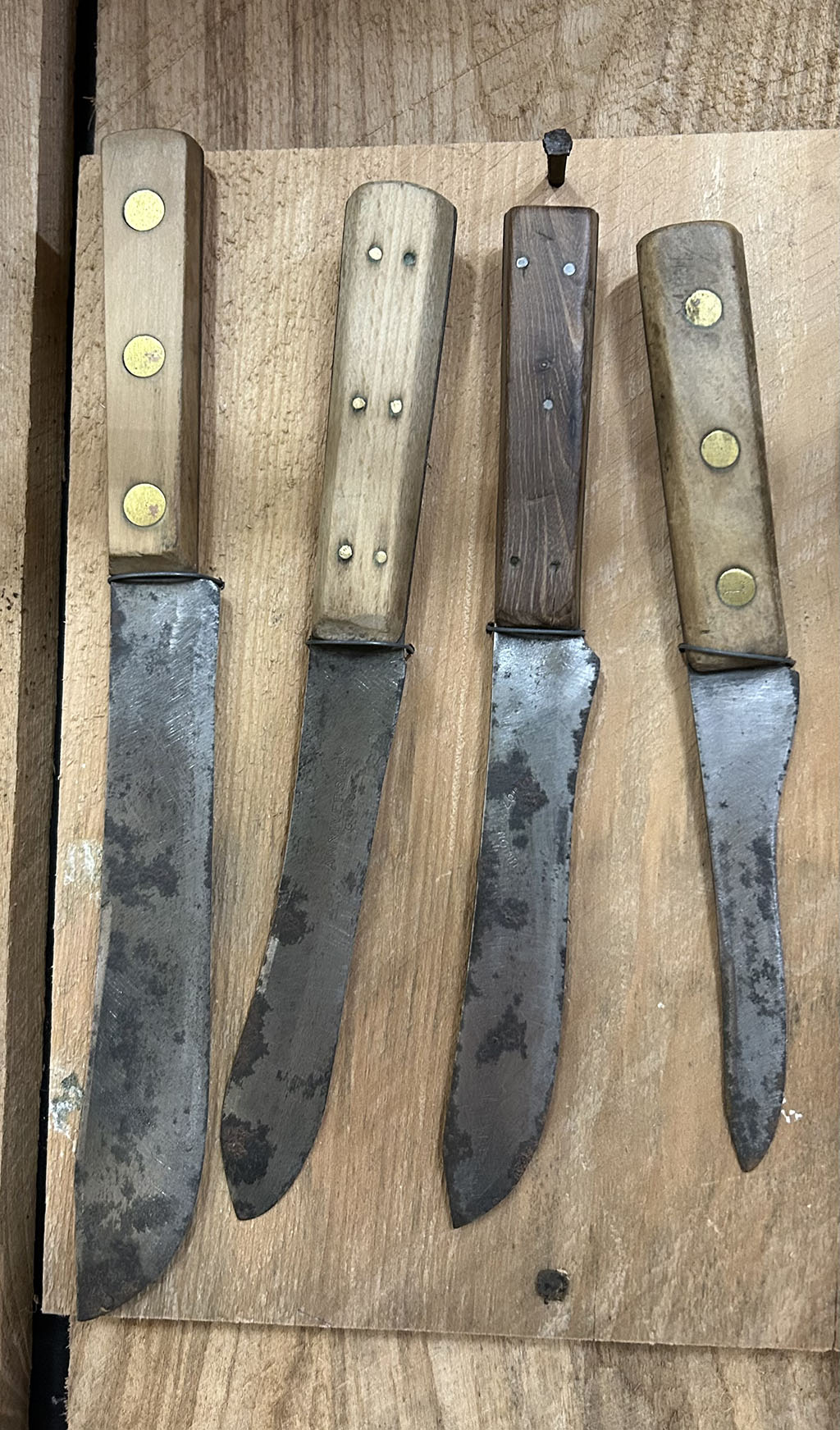
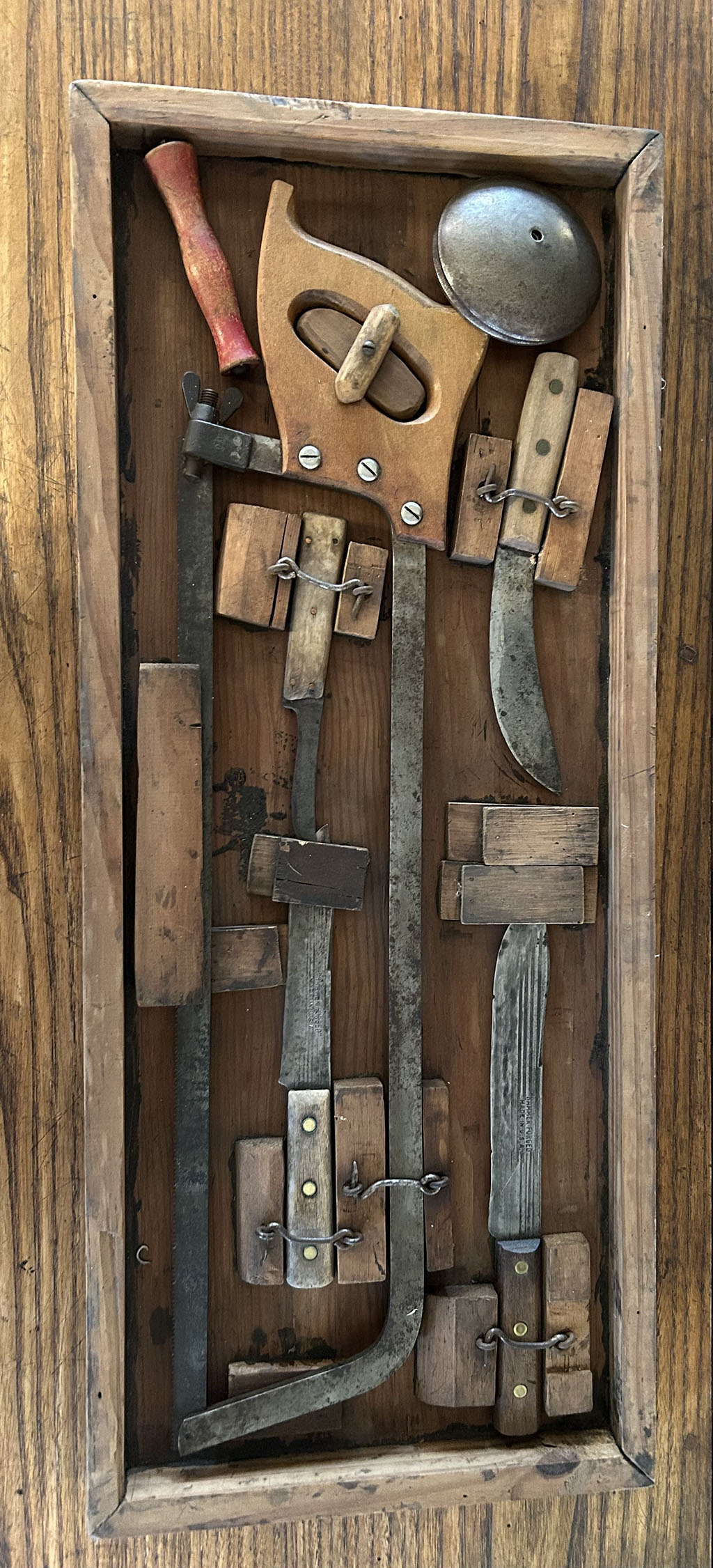
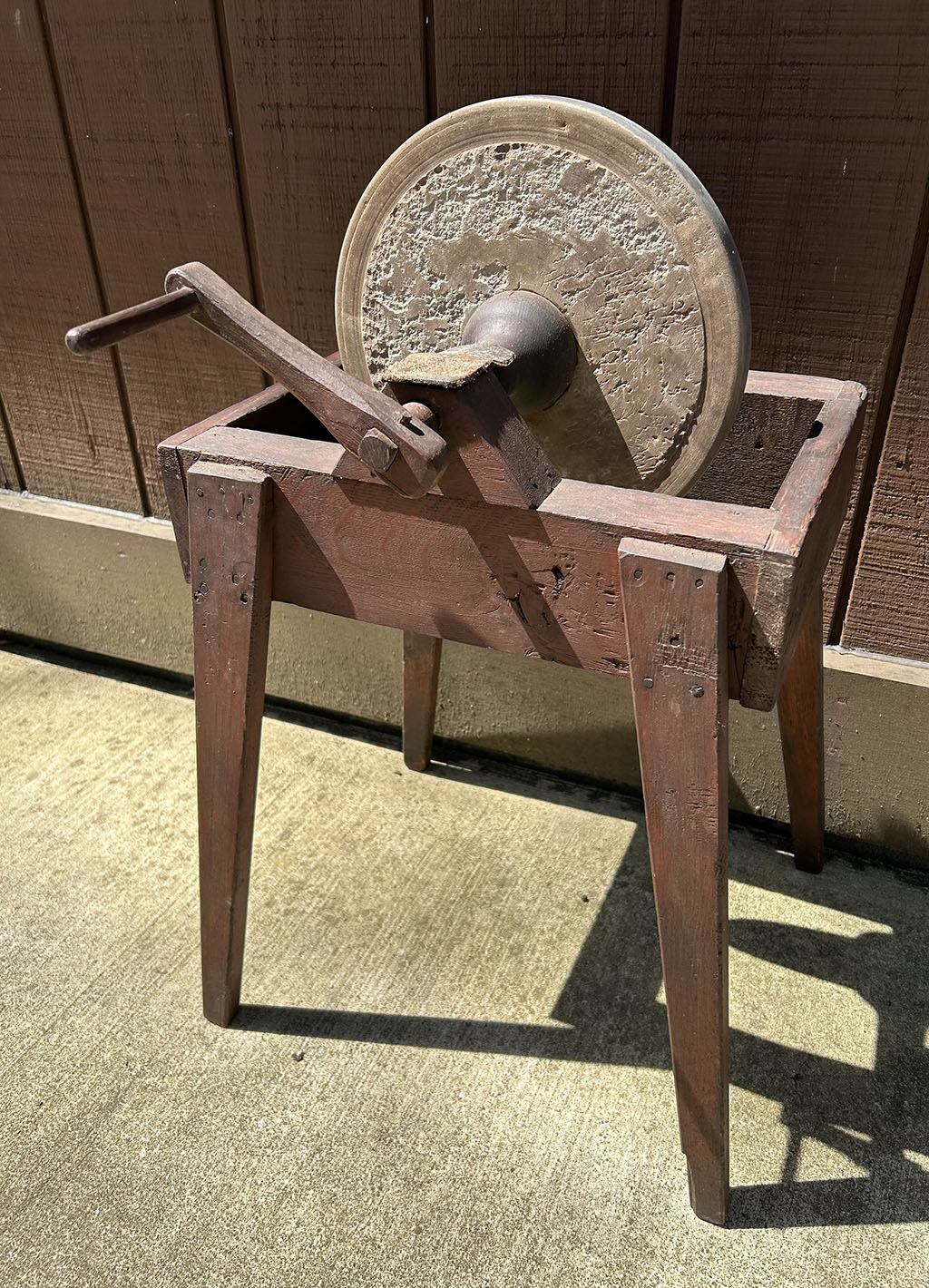
Next, the saws and knives that would be used in the process had to be cleaned and sharpened. There really is no such thing as an actual set of butchering knives, per se. Some farmers had only one or two knives, while others might have several. Each farmer sharpened and shaped the blades of their knives to their own particular style of cutting, often using a small, hand-cranked grinding wheel. Thus, butchering knives found on the market tend to baffle viewers regarding the odd shapes of the blades. And if a farmer couldn’t afford his own butchering knives, well, there were businesses that actually rented out knives for the purpose.
Another little-known fact was that in each developing settlement, there was a resident designated as the master butcher, whose job it was to essentially prevent the amateur butchers from poisoning themselves. The master butcher, who traveled from farm to farm during the season, carried his own butchering tools in case his customers didn’t have their own. He made sure that proper safety measures were taken at every step of the process, monitored cooking temperatures, made certain that the carcass didn’t lie in the sun too long, and much more. Without the assistance of this individual, who typically had long experience in the butchering profession, the number of settlers in any given community might have declined markedly late every year.