
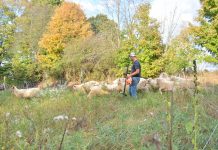

As winter draws closer and the days get shorter, it is time to think about feeding our livestock over the winter. Instead of writing this article on “mud,” which we all know is bound to happen, I have decided to concentrate on improving soil health during the winter.
Our pastures need to do more than survive the winter; they need to thrive. Being proactive with our winter feeding will not only increase animal health and productivity but will also improve the soil health and give our pastures a jump start in the spring.
According to Beef Magazine, “Mud 4-8 inches deep will reduce (animal) gain by 14% and mud 8-24 inches deep will reduce gain by 25%.” The damage done to pastures during winter feeding can make them susceptible to soil erosion, causing sediment and nutrient runoff that can contaminate surface water. Excessive soil compaction will reduce the soil’s ability to filter water and inhibit plant growth.
When cattle break through the wet soil surface, they inadvertently bury and uproot desirable species that are already stressed from two summers of drought and overgrazing.
What can we do to help improve soil health during winter feeding? Before winter really digs in, late-season grazing of stockpiled tall fescue pastures and hayfields will help delay early bale feeding. Fescue retains its nutritional value longer than other forages, making it a great stockpile choice.
Strip-grazing the pasture will not only extend the grazing period but also reduce waste and spread manure evenly. This will break down over the winter, supplying much-needed nutrients to the soil.
To prevent compaction from machinery and livestock eating out of hay feeders, try unrolling hay bales. Unrolling bales in the pasture allows livestock to graze the hay and spread manure more evenly. There will be more hay waste, but that waste will not only give animals a dry place to lay down, but it will also break down and add organic matter to the soil. Organic matter helps to improve soil structure, water holding capacity, and nutrient storage. Grass seed from the hay will also help reseed the pasture.
Sometimes stockpiling and unrolling bales are not an option. Feeding round bales in hay rings is also a good option for winter feeding. Using the feeder can reduce waste from trampling. Feeding in areas that are high and dry or well-drained is the key. Rotate the feeding area to keep soil compaction to a minimum and reduce the chance of mud. Heavy-use pads made from stone or concrete are an option when dry areas are not available. Manure from the pad can be scraped into a pile and spread on the fields at a later date.
The last option would be a sacrifice lot. Locking livestock off grazing areas will prevent trampling, overgrazing, soil compaction and soil erosion particularly when the ground is soft or muddy and the plants are stressed or dormant. This rest period will allow for the desirable plants to maintain healthy roots and promote faster growth in the spring. The sacrifice area should be easy to get feed to, fairly flat to prevent erosion, and an area that can be easily reseeded to repair damage done over the winter.
Every farm is different, and winter-feeding options need to be flexible to meet the challenges of weather, terrain and management. Having a plan will not only make the long winter a little less miserable, but it will also give livestock, pastures and soil the jump start they need to flourish in the spring.
All of the staff and supervisors at Noble Soil and Water Conservation District would like to wish everyone a happy and safe holiday season.