


Grassed waterways are a familiar sight on many farms, quietly doing their job year after year. Because they often blend into the landscape, it can be easy to overlook just how important they are to protecting your soil, your yields and your long-term productivity.
Grassed waterways are an excellent erosion control tool, but it is just as important to understand their limitations, expected lifespan and the maintenance they require to continue functioning as intended.
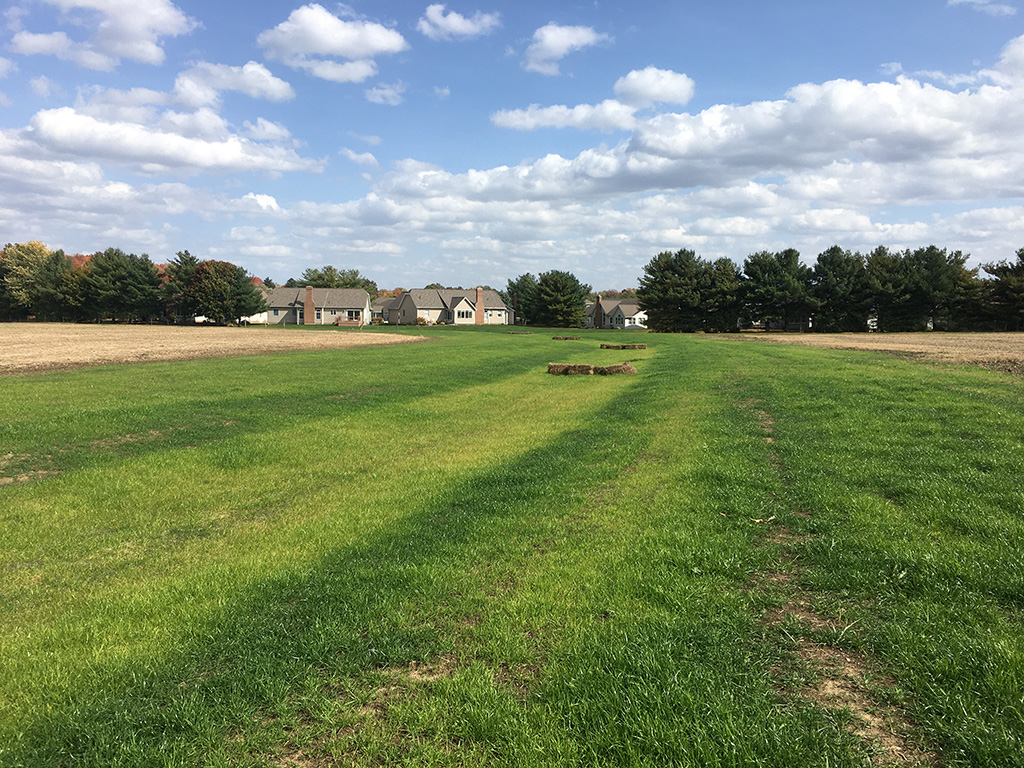
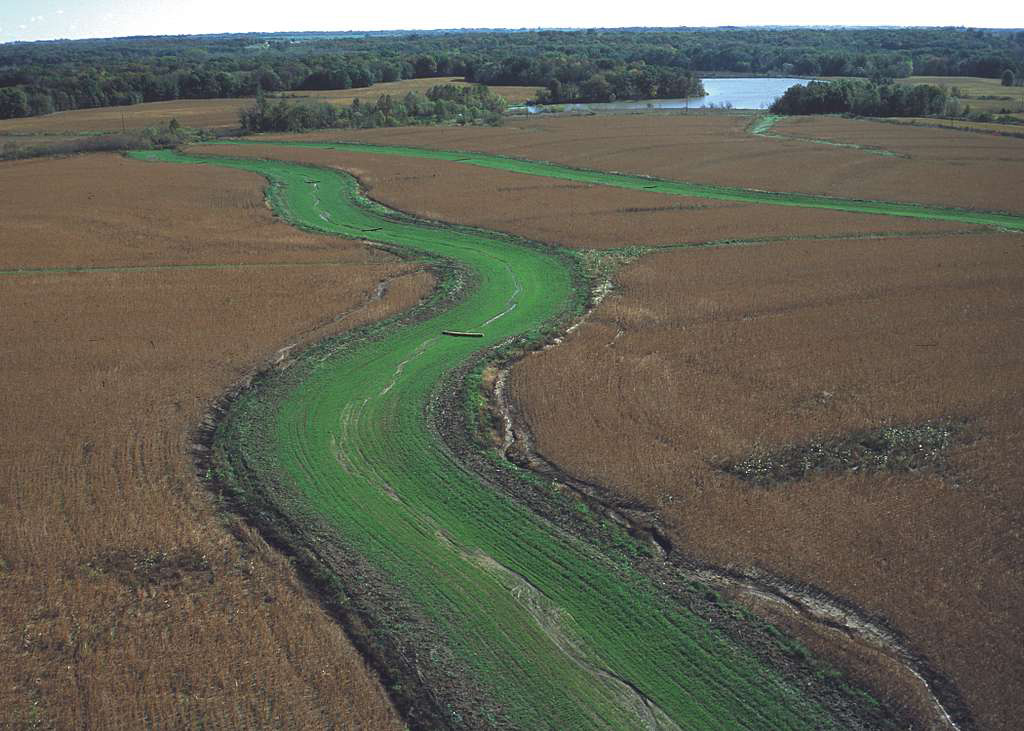
At their core, grassed waterways are designed to safely convey water through a field. During heavy rain events, water naturally accumulates and accelerates as it moves downhill.
Without a designated outlet, that concentrated flow can cut gullies, carry away valuable topsoil and create problems that worsen with each storm. A properly designed and maintained grassed waterway slows that water down, spreads it out and protects the soil surface from erosion.
Strong roots
The strength of a grassed waterway lies in its root system. Dense, established vegetation holds soil in place while allowing water to pass through the center of the channel.
As water flows, sediment is captured and trapped by the grass rather than being carried off the field. This process helps keep soil where it belongs and reduces the amount of sediment that leaves the field and enters downstream ditches, streams, and waterways.
Life span. However, grassed waterways are not a forever solution. Under typical conditions, they have an expected life span of around 30 years. In some cases, that life expectancy can be longer, depending on factors such as slope, soil type, rainfall intensity and farming practices used in the surrounding field. Reduced tillage, residue cover and careful equipment operation can all help extend the usable life of a waterway.
Micro dam
Over time, the very function that makes grassed waterways effective can also lead to their deterioration. Because they are designed to capture sediment, soil gradually builds up within the waterway.
This sediment accumulation often occurs at the edge where the grass meets the cropped field. As soil continues to settle there, the edge slowly rises in elevation, creating what is sometimes referred to as a “micro dam.”
When this happens, water no longer flows smoothly down the center of the grassed waterway as intended. Instead, runoff runs parallel to the raised edges and travels down both sides of the waterway.
Once water stops entering the waterway, exposed soil on the edges will often erode. These side channels can quickly cut into the field and make the waterway ineffective as an erosion control practice.
Regular maintenance
The good news is that regular maintenance and timely repairs can significantly extend the life of a grassed waterway.
Periodic inspections after large rain events are a good place to start. Look for signs that water is no longer flowing through the center: bare spots in the vegetation, rills forming along the edges or areas where sediment has clearly built up. Addressing these issues early is far easier and less costly than waiting until the waterway has failed.
Maintenance may include reshaping the waterway, removing excess sediment, re-establishing vegetation or reinforcing areas that receive the most flow.
In some cases, a full revamp or reconstruction may be necessary to restore proper grade and function. While that can feel daunting, these improvements often pay for themselves by preventing ongoing soil loss and protecting the rest of the field.
Producers should also know they are not alone when dealing with grassed waterway concerns. Your county’s soil and water conservation district is often the best first call. SWCD staff can help evaluate what is happening in the field, discuss potential solutions, and connect landowners with technical and financial resources.
In many situations, cost-share assistance may be available through the Farm Service Agency or the Natural Resources Conservation Service. Programs such as the Conservation Reserve Program, Environmental Quality Incentives Program or other conservation initiatives may help offset the cost of installing, repairing or upgrading grassed waterways. Availability and eligibility vary, but these programs are designed to support farmers who are working to protect their soil and water resources.
Grassed waterways remain one of the most practical and effective tools for managing concentrated runoff and erosion on farmland. With realistic expectations, good farming practices and proactive maintenance, they can continue doing their job for decades. Paying attention to small warning signs today can help ensure your grassed waterways remain an asset well into the future.