



I was new to duck hunting.
Growing up, most hunters I knew were interested in rabbits, squirrels and pheasants, so their dogs tended to be a mix of beagles, bassets, spaniels and pointing breeds. Many owned Labs, but even those were mostly pheasant dogs.
Not many duck dogs in that mix.
My first experience with ducks came during college — not sitting quietly in a blind while mallards investigated a carefully arranged spread of decoys.
We were floating the Hocking River in a canoe, hunting squirrels, when some wood ducks appeared. We shot at them. I suppose that counts.
It wasn’t until my career took me closer to Lake Erie that I began spending time around serious waterfowlers. They owned a lot of gear.
A LOT of gear.
Decoys of every conceivable size and posture. Different blinds. Different boats. Several varieties of waders and rain gear. Enough camouflage patterns to disappear almost anywhere in North America.
And guns.
The older hunters often carried Browning A-5s, Winchester Model 12s, Ithaca 37s, Remington 870s and 1100s, along with an occasional double or over-under. Most were scratched and worn from years of boats, wet blinds, rain and snow.
Some had belonged to fathers or grandfathers. They weren’t abused.
They were used.
And every gun seemed to have a story.
Younger hunters tended toward newer synthetic-stocked autoloaders. They looked a little soulless to me. Maybe someday they’d have stories, too.
Then there were the dogs.
Chesapeakes. Labs in all three colors. And the faithful swamp collie — the golden retriever.
Hunters told stories about their guns.
They told even better ones about their dogs.
The dogs were the heroes of the marsh. The legends.
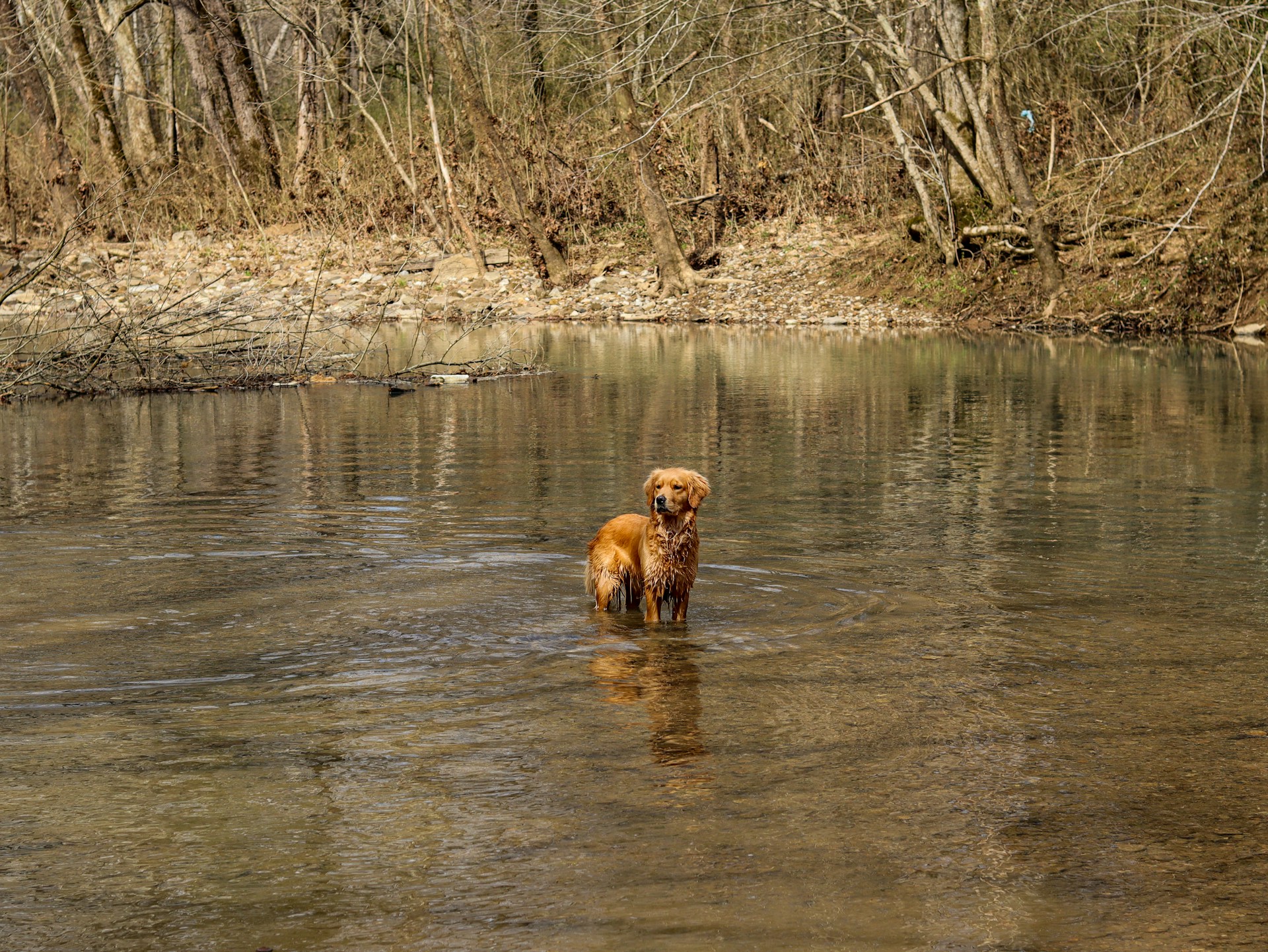
My first real duck hunt was with one of them. Her name was Brandy. Her golden coat nearly matched the tawny winter grasses along the marsh.
Like most goldens I’ve known, she was gentle around people and impossibly enthusiastic when something interesting was about to happen.
She bounced through the early-morning preparations. Once inside the truck, though, she settled down and slept most of the way to the marsh.
At the parking area, the enthusiasm returned. She often trotted ahead while Bud and I carried decoy bags through the predawn darkness.
At the blind, we stowed our guns and waded into cold water to set the spread.
A thin skim of ice had formed overnight. We pushed through it while placing decoys.
Brandy followed through water nearly to her shoulders, apparently supervising the operation. Once or twice, Bud moved a decoy after receiving one of her looks.
It’s good luck to respect everyone’s opinion in a duck blind.
Duck hunting involves a fair amount of luck. And bad weather.
Ducks like bad weather. Therefore, duck hunters — and duck dogs — learn to appreciate it, too. By the time we settled into the blind, a cold rain mixed with an occasional spit of snow was blowing directly into our faces.
Perfect.
Canada geese were silhouetted against the gradually brightening sky. We checked our watches. Waterfowlers pay close attention to time.
So do their dogs.
Brandy sat quietly beside us. Her eyes occasionally drifted toward the package of miniature doughnuts I’d pulled from my jacket. Then toward the steaming coffee Bud poured from a dented Stanley thermos.
Somewhere in the distance, a mallard talked.
Brandy sat upright.
The lid went back on the thermos. We checked our watches again. A quiet nod.
The guns came from their racks.
Ducks began moving through the gray morning. Some passed silently. Others announced themselves.
Bud answered with his call. Other blinds around the marsh offered their own invitations.
Naturally, ours sounded better.
A small flock of teal came racing low across the water, half-hidden by the overcast and rain.
Too fast. Too sudden. Gone.
Then we saw larger birds in the distance. Mallards. High, but interested. Bud called again.
Brandy’s eyes locked onto the sky. She’d seen them, too. Her entire body trembled. She didn’t move. Neither did we.
The birds circled. Then began dropping.
Their feet came down. Their wings rocked against the wind as they glided toward the decoys like airplanes approaching a runway.
I was new at this. I waited.
Brandy shook beside me.
I matched her shake.
“Now!”
I came up with the Winchester as the birds flared.
Bud and I each fired. We both connected as two birds hit the water almost simultaneously.
So did Brandy.
She drove through the decoys and into the chop.
The wind had picked up considerably, and waves were beginning to build.
She reached one mallard quickly and took it in her mouth.
But instead of turning back, she kept swimming away from us.
Bud called. Brandy continued.
There was another bird somewhere beyond her. We couldn’t see it.
With the rain and growing waves, I couldn’t imagine how she could.
Bud called again. Nothing. She kept going farther into the lake.
Brandy would disappear behind a wave then pop back into vision.
Now, Bud was worried. He stood and began pulling off his waders.
I started tugging at my boots.
Then Brandy suddenly pushed herself higher in the water.
She dropped the bird she’d been carrying. Lunged forward.
And disappeared beneath a wave.
For a moment, we couldn’t see her.
Bud and I stood staring into the rain. We stopped breathing.
Then a small wake appeared. A head.
Brandy was coming back.
She had both mallards in her mouth.
One was still alive. Apparently, it had been trying to escape.
It didn’t.
Not from a legend.
“Not every legend is a myth, some are flesh and blood.”
— Arnold Schwarzenegger