




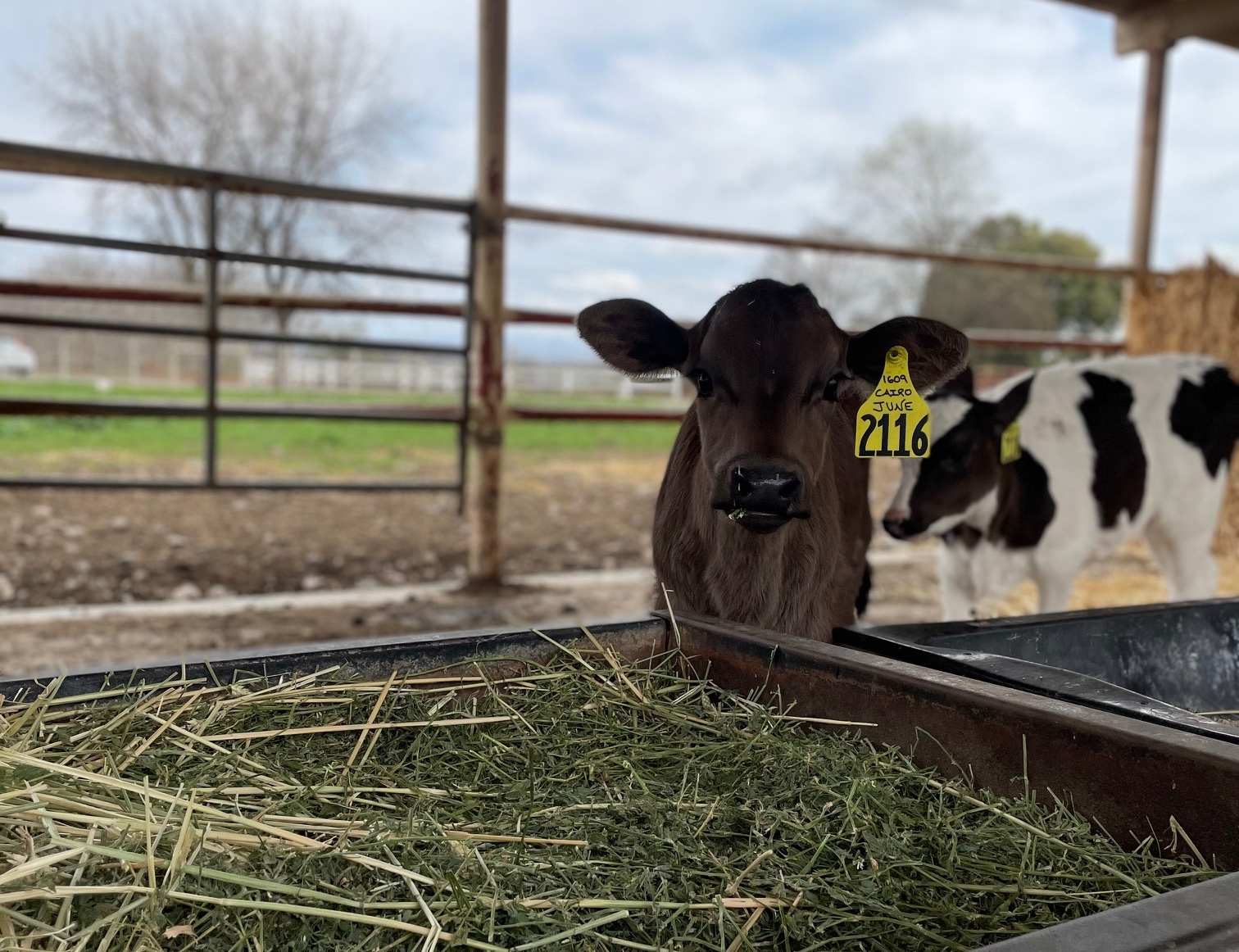
Raising calves should be viewed as the most important long-term investment on your dairy. Research on developmental programming shows that early-life nutrition influences growth, immune competence, age at first calving and lifetime milk production.
While nutrition alone does not guarantee performance, the first two months create a biological foundation that connects calf welfare, health, and future productivity.
To maximize this investment, focus on four pillars of preweaning management: colostrum, milk allowance, water and solid feed.
1. Colostrum management: the health foundation
Colostrum delivery is the single most time-sensitive decision on the farm. Calves are born without circulating antibodies, relying entirely on colostrum for passive immunity and gut-maturing growth factors. Ground your program in four core rules:
Timing: Feed high-quality colostrum within 1 to 2 hours of birth. Antibody absorption capacity drops rapidly after 4 hours.
Quality: Test every batch using a Brix refractometer; aim for ≥22%, with ≥25% preferred.
Quantity: Deliver 10% to 12% of the calf’s body weight at the first feeding.
Cleanliness: Sanitize all harvesting, storage, and feeding equipment. Bacterial contamination impairs antibody absorption and increases disease risk.
Pro Tip: Extend transition milk feeding beyond day one. Local antibodies protect the gut lining, easing environmental transitions. Measure success by testing serum total protein at 24 to 48 hours: ≥6.2 g/dL indicates excellent passive transfer (≥5.8 g/dL minimum target).
2. Milk allowance: more milk, better growth, better welfare
Providing calves with higher milk allowances drives preweaning average daily gain and long-term yield. Across studies, each additional pound of preweaning ADG is associated with roughly 600 to 1,100 pounds more milk in the first lactation when paired with adequate starter intake, good health and a gradual weaning program.
Milk allowance: Feed high-quality whole milk or replacer at ~20% of body weight daily (8 to 12 quarts for Holsteins) or offer ad-libitum access.
Meal frequency and slow-flow teats: Deliver smaller, frequent (3x/d) meals using slow-flow teats. Pairing this with higher milk allowances satisfies biological hunger and nursing urges, reducing non-nutritive sucking.
Consistency: Maintain predictable milk volume, solids concentration, temperature (100 F–104 F), and timing.
3. Water: the essential catalyst
Milk bypasses the rumen via the esophageal groove, so calves require separate access to free water for rumen fermentation, starter intake and hydration. Withholding water reduces starter intake by 31% and body weight gain by 38%.
Offer early: Provide clean, free-choice water starting on Day 1. Open buckets are easier for calves to access and generally encourage greater voluntary water intake than nipples.
Sanitation: Rinse buckets daily. Organic buildup or manure contamination reduces voluntary intake by up to 28%.
Dehydration checks: Monitor hydration using a neck skin tent. A 2- to 5-second tenting indicates dehydration requiring electrolyte therapy based on the underlying cause.
4. Solid feed & smooth weaning
Transitioning from liquid to solid feed requires balancing grain starter and physical forage:
Texturized starter: Feed a coarse, texturized starter (20-22% CP, 35-40% starch, <5% fat). Starter fermentation produces volatile fatty acids, including butyrate, that drive rumen papillae development; particle structure also supports intake and rumination.
Chopped forage: Offer coarsely chopped forage (1-2 inches) in a separate container starting by week 2 (at ~12% of total DM) to expand rumen physical capacity and motility without displacing grain.
Weaning readiness: Begin weaning only when calves are at least 8 weeks old and consuming 2.5 to 3.0 pounds of starter daily for three consecutive days. Always implement a 7- to 14-day gradual milk step-down; this helps reduce post-weaning growth slumps, weaning distress and vocalization.
Viewing calf rearing as an investment rather than a cost can generate biological, economic and welfare returns. By coordinating colostrum delivery, milk allowance, water access and solid-feed management into an integrated system, producers can help heifers achieve better health, smoother weaning and a stronger foundation for lifetime productivity.
The complete, detailed four-part article series is available in Buckeye Dairy News on the Ohio State University CFAES website at dairy.osu.edu/newsletter/buckeye-dairy-news.