



Since birth, all of us have been taught not to take things that are simple and make them complicated. “Don’t make a mountain out of a molehill” is an idiom fully ingrained in the psyche of most people as they grow up.
In the early Ohio country, however, there was a piece of fireplace equipment that completely ignored that admonition altogether. That item was the toasting fork, among the most mundane utensils ever to be involved with food.
One of the simplest and most easily crafted of all the wrought iron wares that graced the pioneer hearth, the toasting fork was an item that the blacksmith’s greenest apprentice could learn to craft adequately within an hour, tops.
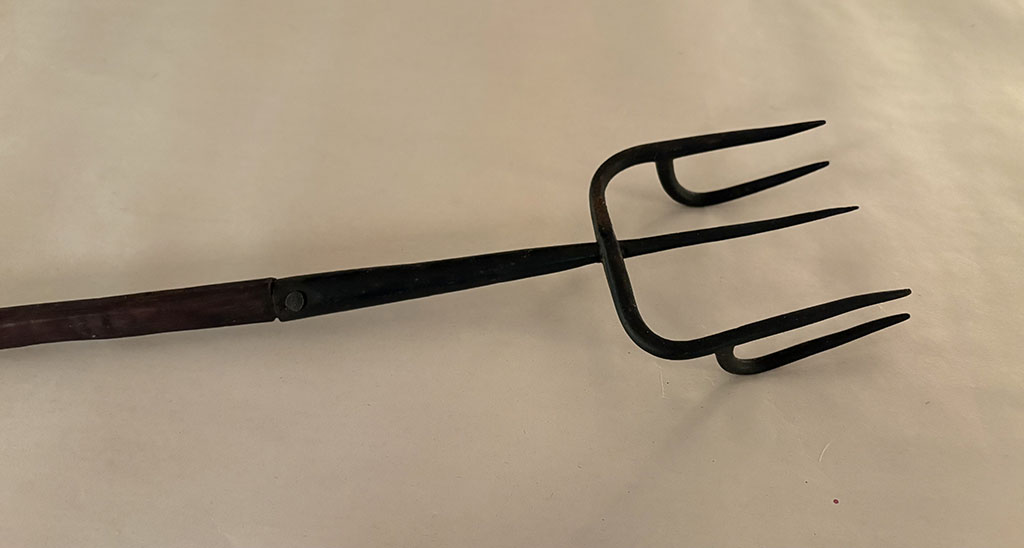
In its most basic form, making a toasting fork involved little more than taking a flat, narrow bar of iron of desired length, using a chisel to split one end into two halves to form prongs, and bending the opposite end over to create a hanging hook.
That said, no self-respecting blacksmith or whitesmith worth his salt would allow such a plain, unadorned utensil to leave his shop with his name stamped on it.
Common wedding gift
The first thing you have to know about toasting forks — also widely referred to as flesh forks — is that in pioneer days they were often given as wedding presents, as popular an item for a bride and groom starting life on the frontier as gifting cookware and bakeware is in the present day.
Because of this the blacksmiths and whitesmiths often poured the full range of their imagination, skills and creativity into creating examples of this most basic of all household utensils that would be cherished by the newlyweds and passed down in families for generations to come.
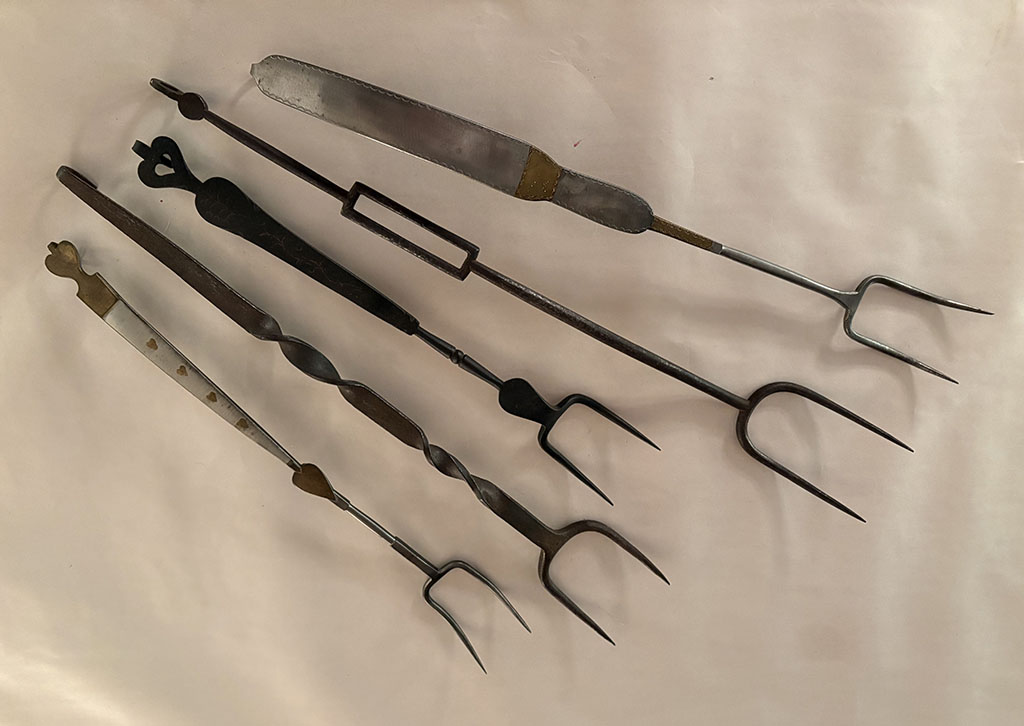
Some of the best examples of American folk art in the early ironware genre are toasting forks, with decorations thereon running the gamut of all types of metalworking. To start with, most flesh forks were typically crafted by the whitesmith.
Whitesmith techniques
Somewhat more skilled than the blacksmith, the whitesmith forged an iron utensil and then filed the entire surface to make it a bright silver color. He then employed multiple techniques to transform the fork or other utensil into a true work of art. One of these was to turn a portion of the handle on a lathe to break up the monotony of a flat surface. He then used files to shape the handle in a variety of ways, particularly at the end of the handle which he worked into a delicate “rat tail” hanging hook, as well as at the point where the handle evolved into prongs.
With the basic silhouette of the handle now defined, the whitesmith was free to use his imagination — limited only by the tools at his disposal — to create small works of art. One of these techniques was to use a series of small metal punches in such a manner that they created simple borders along the edge of the fork handle, or make more complex designs such as hearts, flowers, snakes, vines or other motifs. Sometimes handles were decorated with a series of small circles or stars.
Another popular decorative technique was to do an overlay on the polished handle with bright bands of brass or copper, or sometimes both. These helped add another ornamental touch to an everyday object and could be further enhanced by filing. In some instances, dates, designs, patriotic motifs or initials were inscribed within these bands.
Another technique — probably the rarest because of the difficulty in doing it — was inlay work. Using a tiny chisel, the whitesmith would scribe a design channel in the handle. Into this channel he would flow molten brass or copper.
When it hardened, the excess metal would be filed away, leaving the design that was chiseled into the handle in bright brass or copper. When they turn up on the antiques market today, such inlaid utensils command hefty prices due to their rarity.
Yet another technique that many whitesmiths used was pierced decoration. Oftentimes the smith would flare out the end of the fork handle into a circular, urn- or heart-shaped silhouette, allowing him to cut out a design.
Such motifs often took the form of hearts, stars, diamonds, birds, fylfots or other folky motifs.
Blacksmiths are no slouches
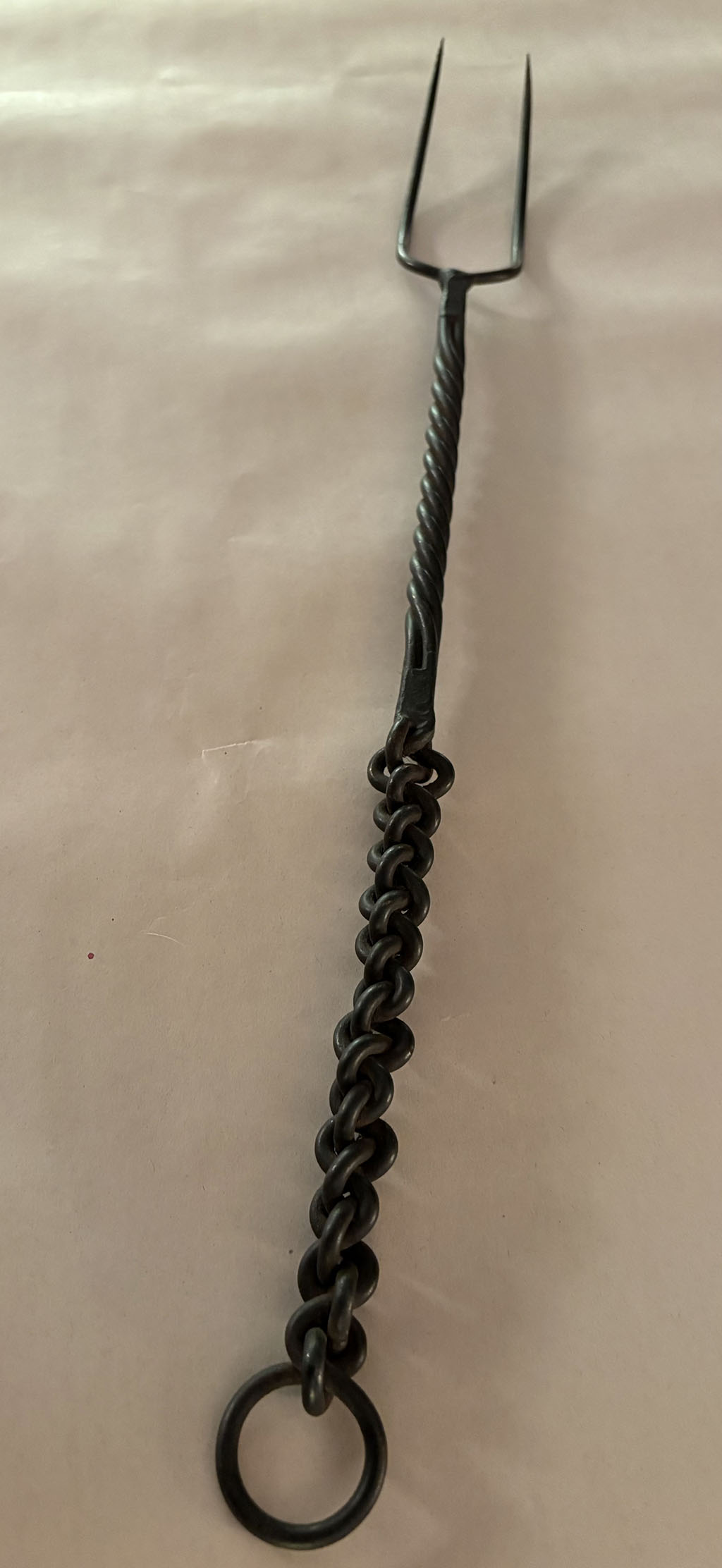
Blacksmiths also did their fair share of decorating toasting forks, but generally did not perform file, inlay or overlay work at the same level as the more highly trained whitesmiths. Nevertheless, blacksmiths also did highly respectable decorative work, including punchwork, stamping in dates, doing some lathe turning work, file work and putting decorative twist in the metal.
One of the most impressive blacksmith-made forks I have ever seen involved the craftsman splitting the handle into multiple thin strands, rounding each, and then doing highly complex braiding of the strands to create the handle. The work is beyond impressive.
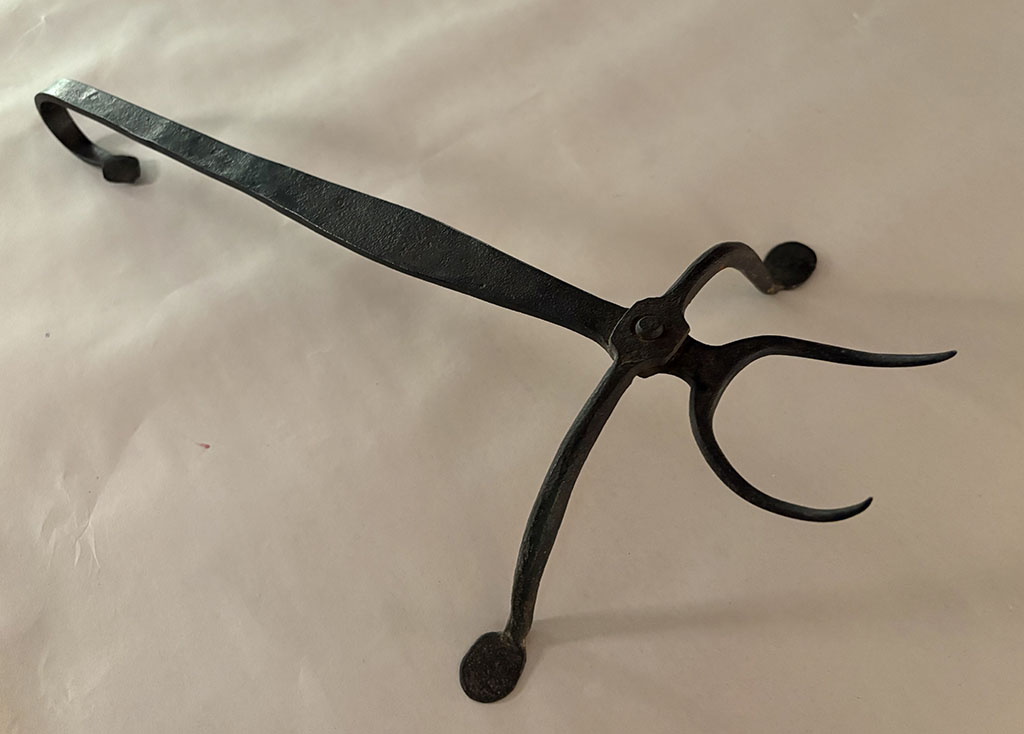
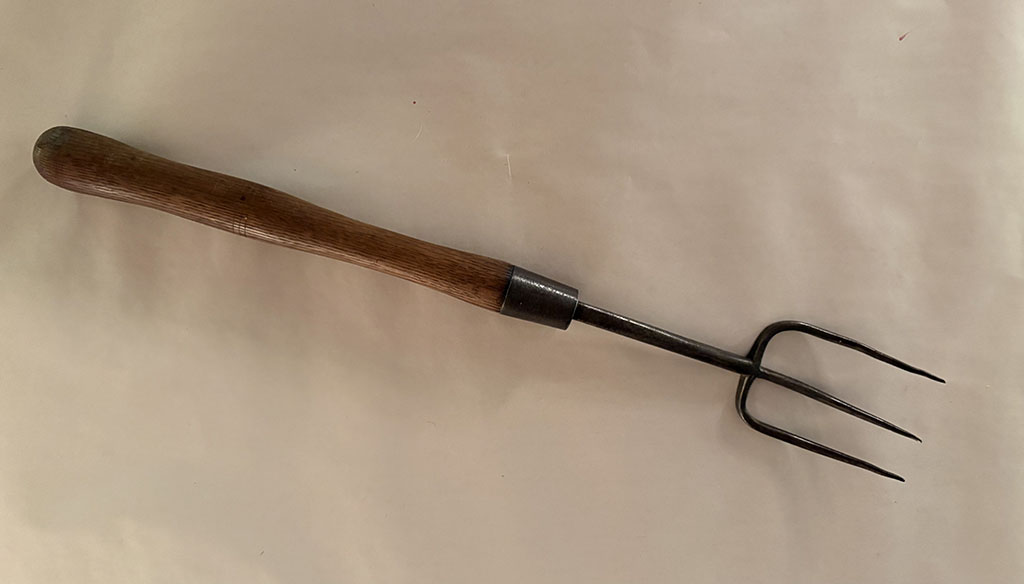
Toasting forks could come in an endless variety of sizes and heftiness, depending on the job they were needed for. Some such forks are three to four feet in length and could double as log “tormenters” to rearrange burning wood in a fireplace. Others had exceptionally strong iron shafts and prongs while the handle was a hefty wooden one. These did double duty in working with animal carcasses during the butchering process. Some toasting forks incorporated feet set near the prongs and could be used to hold meat over hot the embers while it cooked.
In short, toasting forks — mundane as their use was — brought out the best in terms of pioneer-era craftsmanship and remain as mute testimony to a unique skill set that has now almost been lost to time.