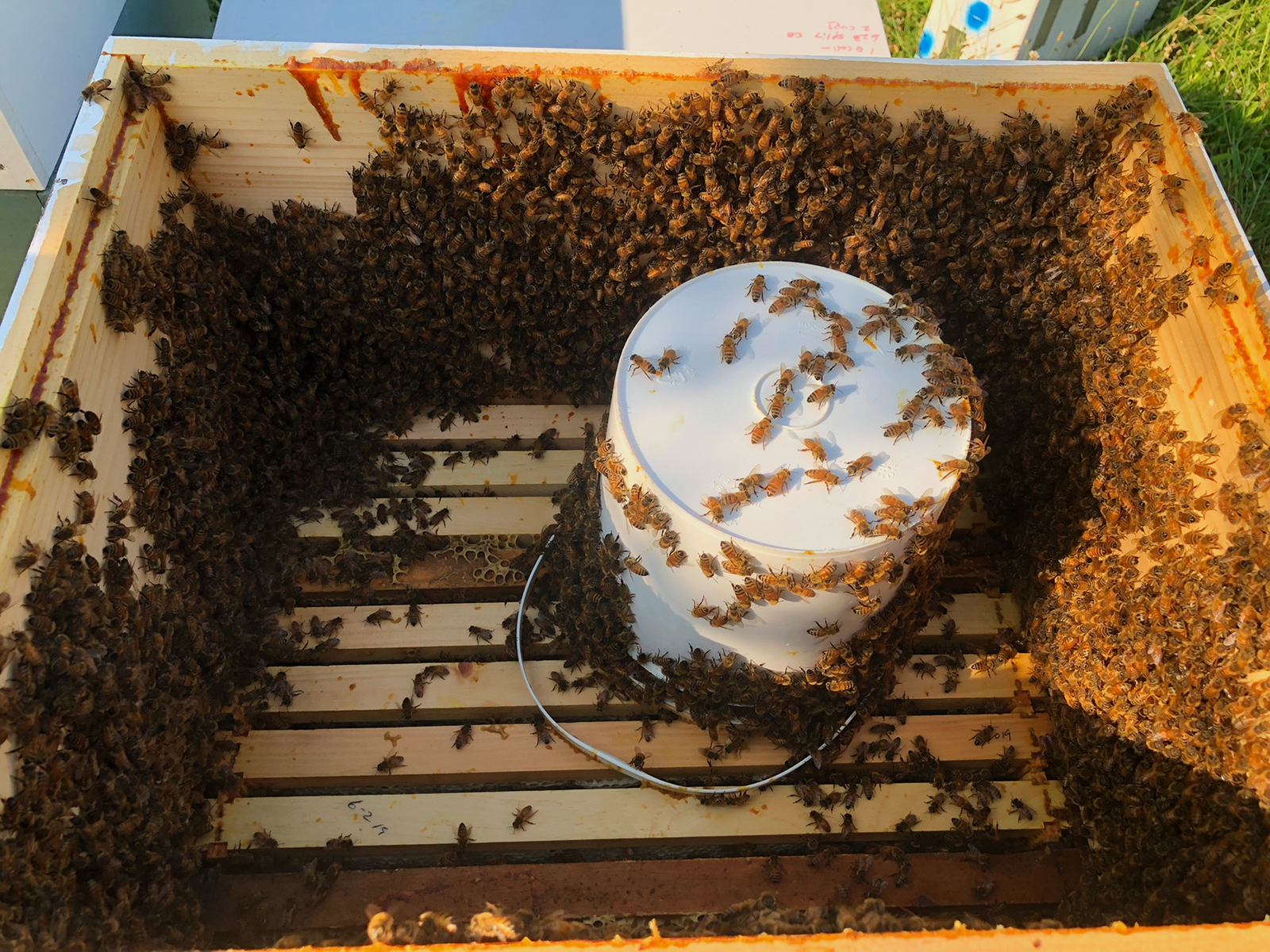




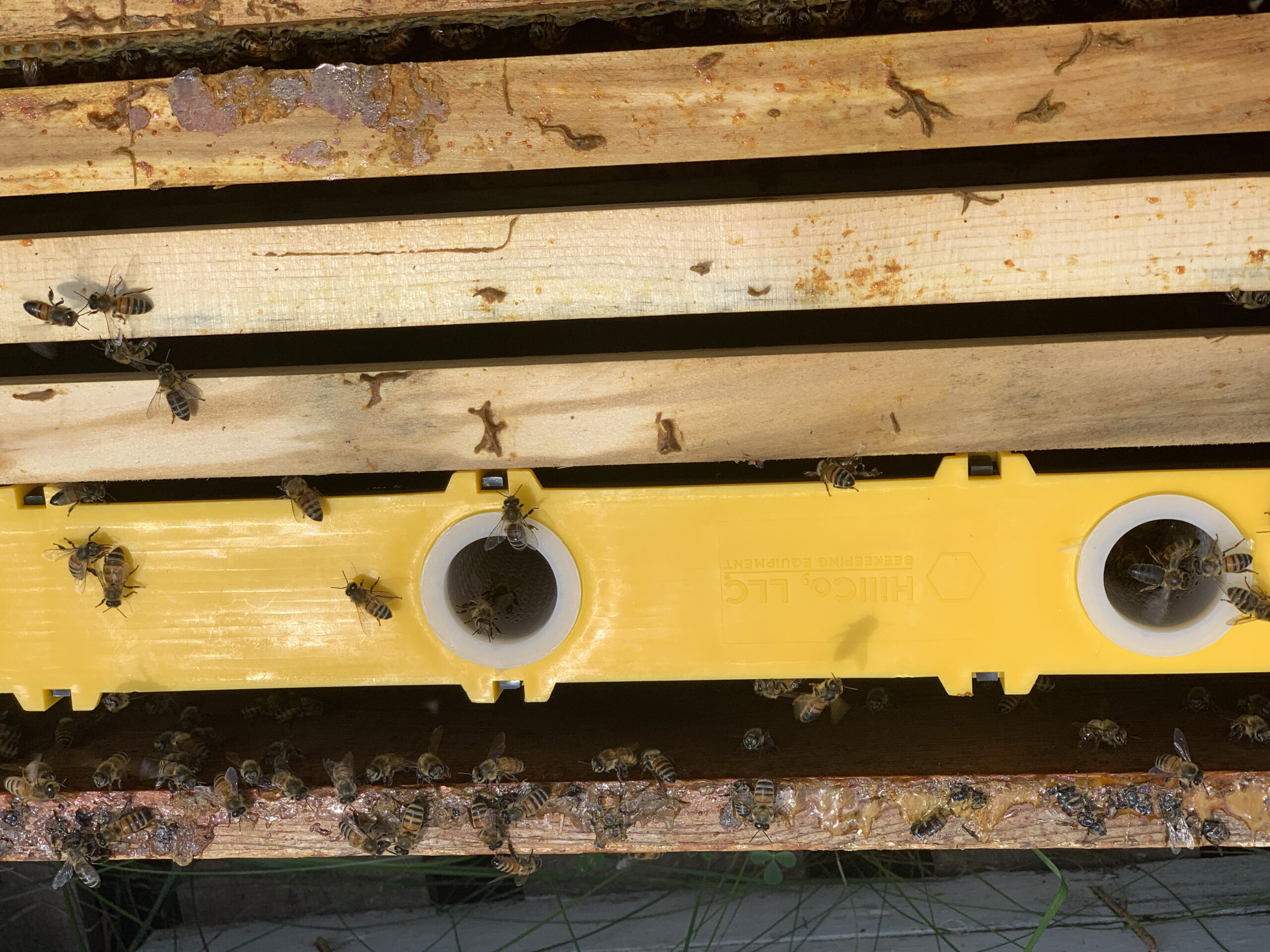
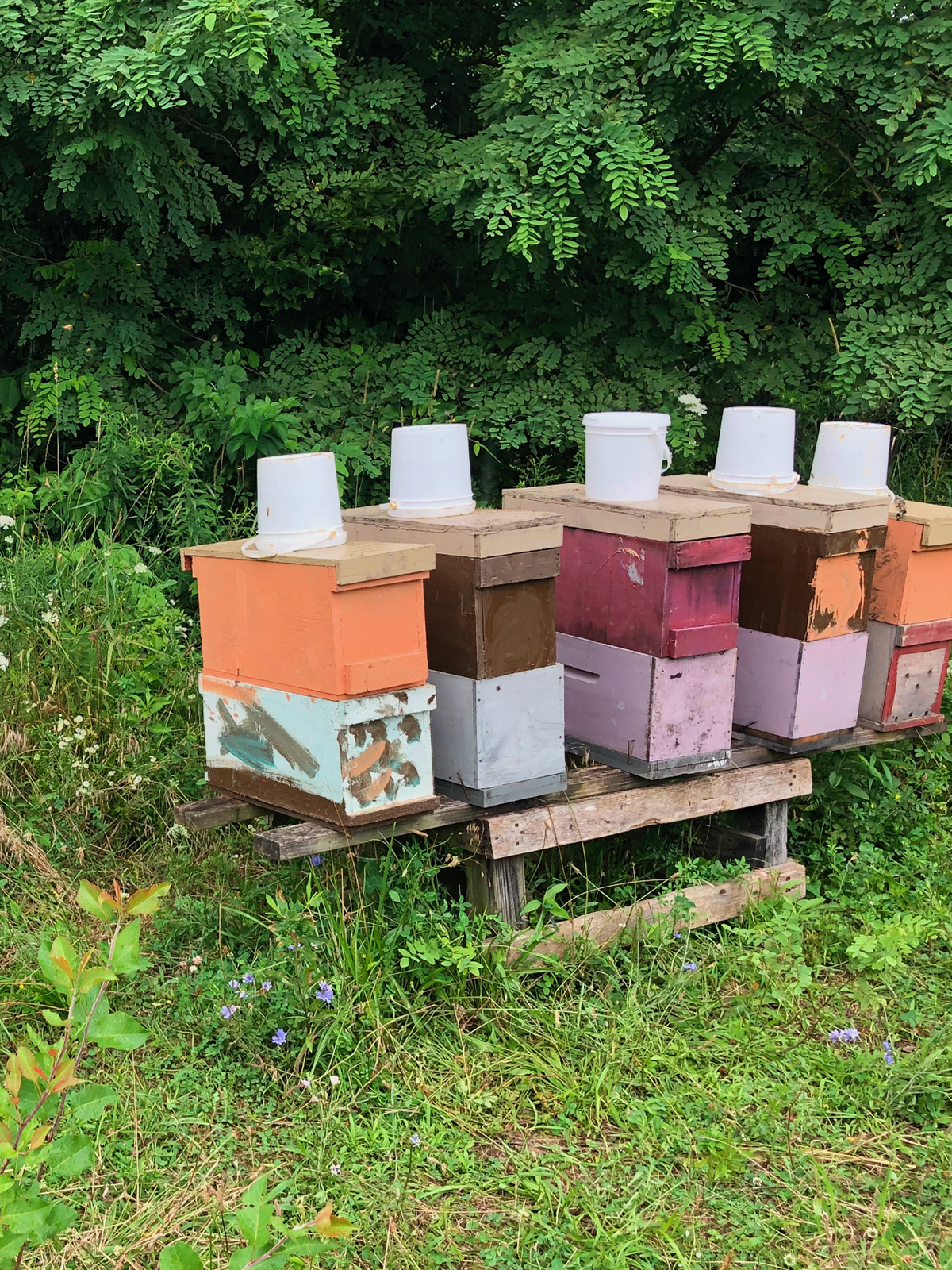
One of the most frequently asked questions when feeding bees is how much sugar, or what is the ratio of sugar to water to mix for your feeder. The general school of thought in this question is that a thinner sugar solution is used to stimulate wax production and brood rearing early in the season, and a heavier solution or ratio towards the end of the season for the bees to easily store the sugar for fall or winter stocks.
An example of a 1:1 ratio for thin sugar would be 4 pounds of sugar to about a half gallon of water. Water and sugar weigh approximately the same by volume, with water being about 8 pounds to the gallon. A heavier fall feeding for a 2:1 ratio would consist of 8 pounds of sugar to a half gallon of water. I mention these ratios because many beekeepers will feverishly spend more time and energy following their idea of the perfect sugar/water blend than needed.
Preferences
Sugar is defined by the Food and Drug Administration as sucrose obtained from cane and beet plants. Producers of cane and beet sugars are not required to mention the source of their product by law; only sweeteners derived from cane and beet can carry the declared food label “sugar.”
Some beekeepers have a particular preference when feeding white sugar, with many favoring cane sugar over beet sugar. How this preference started and circulated is another 40 wonders of the beekeeping world. Both cane and beet sugars are about 99.95 % sucrose. The remaining 0.05 % is water and impurities. The composition of impurities is not the same in cane sugar because they come from different crops, which require different refining methods. The raw material for cane sugar uses the whole stem of the plant that grows above ground, while the raw material for beet sugar grows below ground.
There are some applications in cooking or baking where differences in caramelization and baking performance have been reported, even though most people cannot notice any differences between cane or beet sugar. I equate this to water. Water is water, chemically speaking, but I can taste the difference between my city water, well water and many of the bottled waters on the market. As far as the bees are concerned, sucrose is sucrose, chemically speaking and provides the exact same calories and nutritional value whether from cane or beet sugars.
GMO bias
I’m not going to leave this conversation before putting a fork into the GMO conspiracy theories. GMO or genetically modified varieties of sugar beets are grown in the U.S. Sugar cane used to be a non-GMO crop, but since 2017, Brazil has been growing GMO cane. This is relevant to the U.S. because Brazil is one of the top cane producers of raw sugar cane, and the U.S. is one of the top importers. Once refined, sugar no longer has any traces of GMOs in it. A sucrose molecule is identical whether it comes from GMO plants or not. Don’t worry about GMO sugar, the bees won’t tell the difference, and neither will you. Just feed the bees.
Wax production and sugar
Randy Oliver, a professional beekeeper and scientist from California, conducted a series of experiments with the idea of finding out how much sugar bees use in making wax and drawing out comb, and determining the best ratio of sugar to feed the bees. In summary, Oliver found that it required 1.6 pounds of sugar used to draw out a deep foundation for both sides. His experiments covered a wider range of interesting topics, but the takeaway was that there was no difference in final weight gain and comb production from feeding a lighter or heavier ratio of sugar solution. Oliver found that the bees will take down or consume a lighter syrup solution faster than a heavier one, but the end result after three weeks was that colonies fed the same amount of syrup, adjusted for dry weight, and had the same growth rate in terms of brood and wax production. The takeaway here is feed your bees the stronger solution and don’t worry so much about the ratio, just get the sugar to them.
Feeders
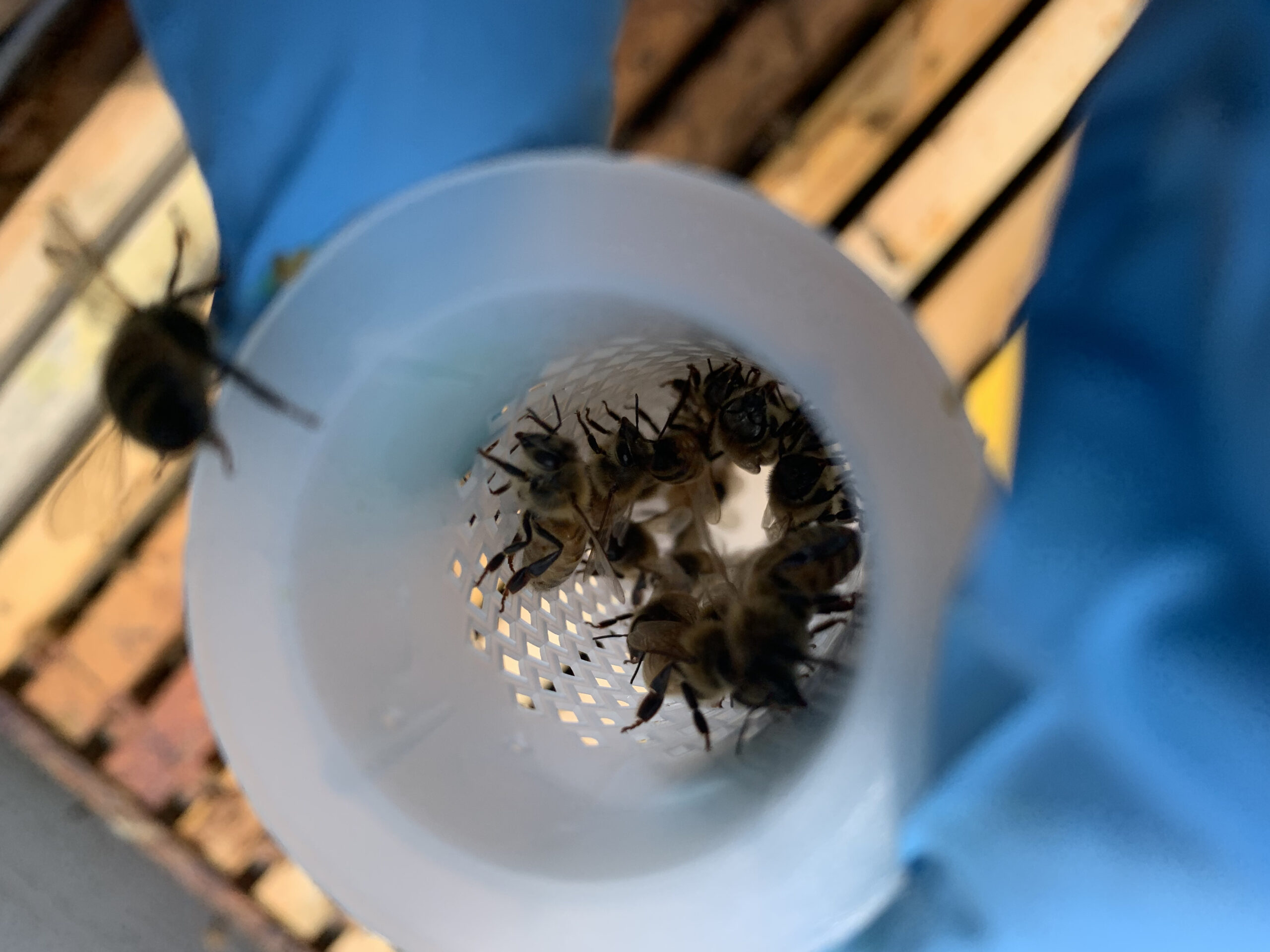
Boardman feeders are the most popular feeders for the commercial beekeeper because they hold more syrup and are easier to use. The downside to this feeder is that you will lose some bees to drowning, but the amount is minimal compared to the benefits. The outside feeder can encourage robbing, as some syrup may leak outside the feeder and attract other bees to that location.
Bulk feeding using the cheap kiddie pools can be done, but the downside can be drowning and attracting unwanted critters like raccoons and opossums for a free sugary beverage. To minimize this, you can feed small amounts and put some straw on top of the pool for the bees to land and drink. This solution should be on the lighter side, so if your bee yard is big, a huge amount of bees won’t fight over the syrup and get sticky and drown. A lighter solution will make cleaning themselves off easier if they crowd the pool.
Finally, the easy method I stumbled on to mix dry sugar was to use my power washer. I used a 55-gallon drum to mix the solution first, then blasted the mix with the power washer. This caused the sugar to liquefy and stay in suspension, and I no longer need to heat my sugar to feed the bees. However you feed the bees, you will see the results of a stronger, healthier colony by providing them with the additional food they need to grow.