


So, we’re back to the bloody business of pioneer-era butchering — the squeamish need to perhaps consider indulging in some other type of reading at this point.
All right then, where were we in the process? Oh, yes, after the skin was removed, the hog carcass was brought to the butchering table or plank. The first part to be removed was the rectum and the intestines so that any bacteria left therein would not contaminate the meat.
At that point, it was time to remove all the major organs from the body cavity, which was easily done with knives.
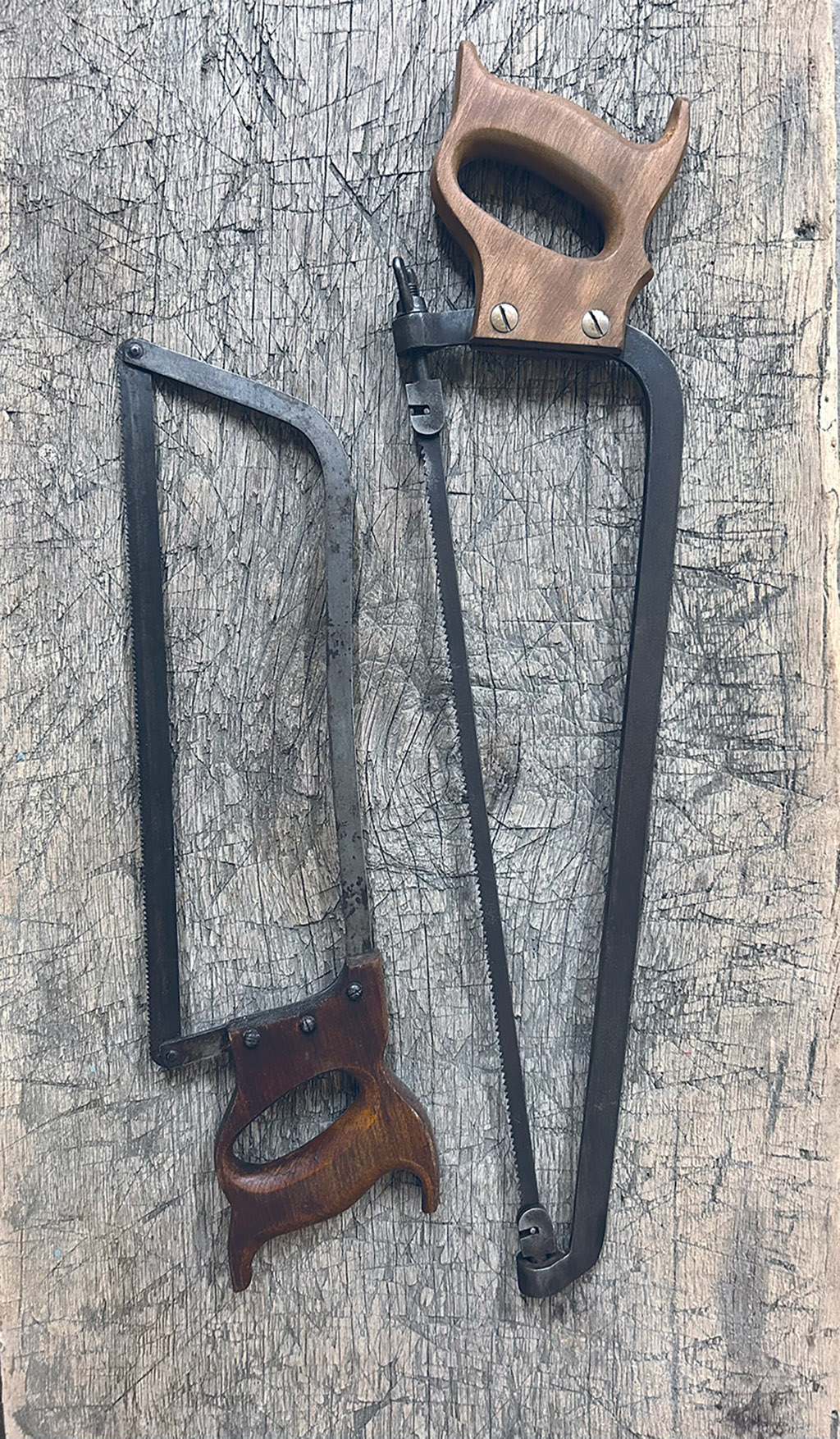
Then it was time to divide the carcass lengthwise into two halves, and there were two ways to accomplish this. The first, and probably most laborious method, was to use a butchering saw to cut the carcass from top to bottom, following the spinal channel.
The other was to use a carcass splitter or a carcass axe. These huge, heavy versions of a meat cleaver, sometimes as long as four feet in length, with a blade length of 18 inches, were typically made entirely of wrought iron, the product of a local blacksmith.
Butchering
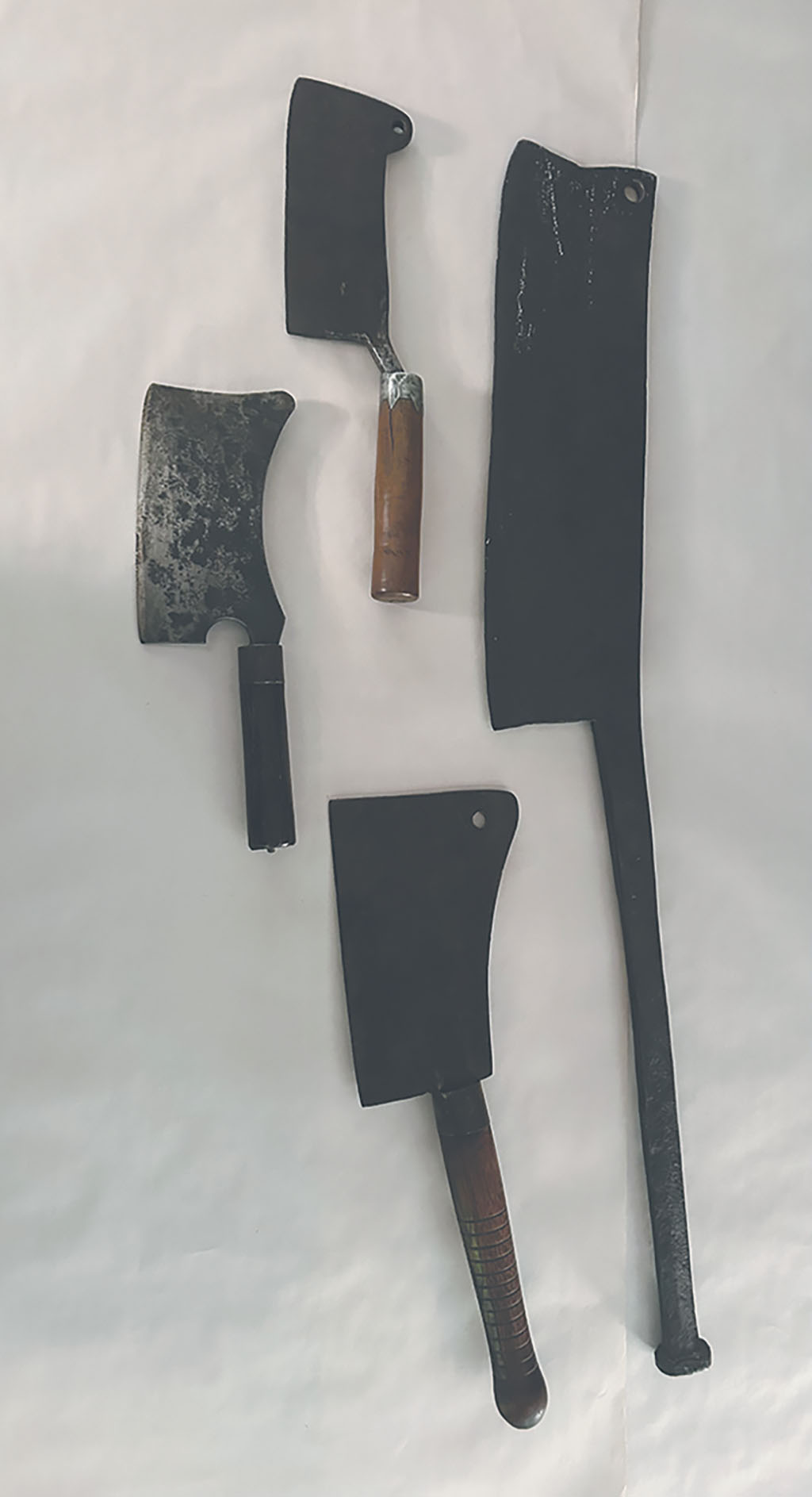
Using this axe, the butcher could readily divide the carcass into two equal pieces. This not only enabled two butchers to be working at the same time, but also made it easier to maneuver the pieces to harvest the choice cuts of meat using knives and smaller cleavers. One of the first cuts to be taken was the ribs, followed by the strips of tenderloin, and then the pork chops. Next to be removed were the bacon, belly and the hams.
In between the removal of the primary cuts, the butchers encountered layers of fat, which were put aside to be rendered for lard. The lard rendering was done immediately in a second iron cauldron, which was set up initially to boil water for the scalding trough.
Making sausage
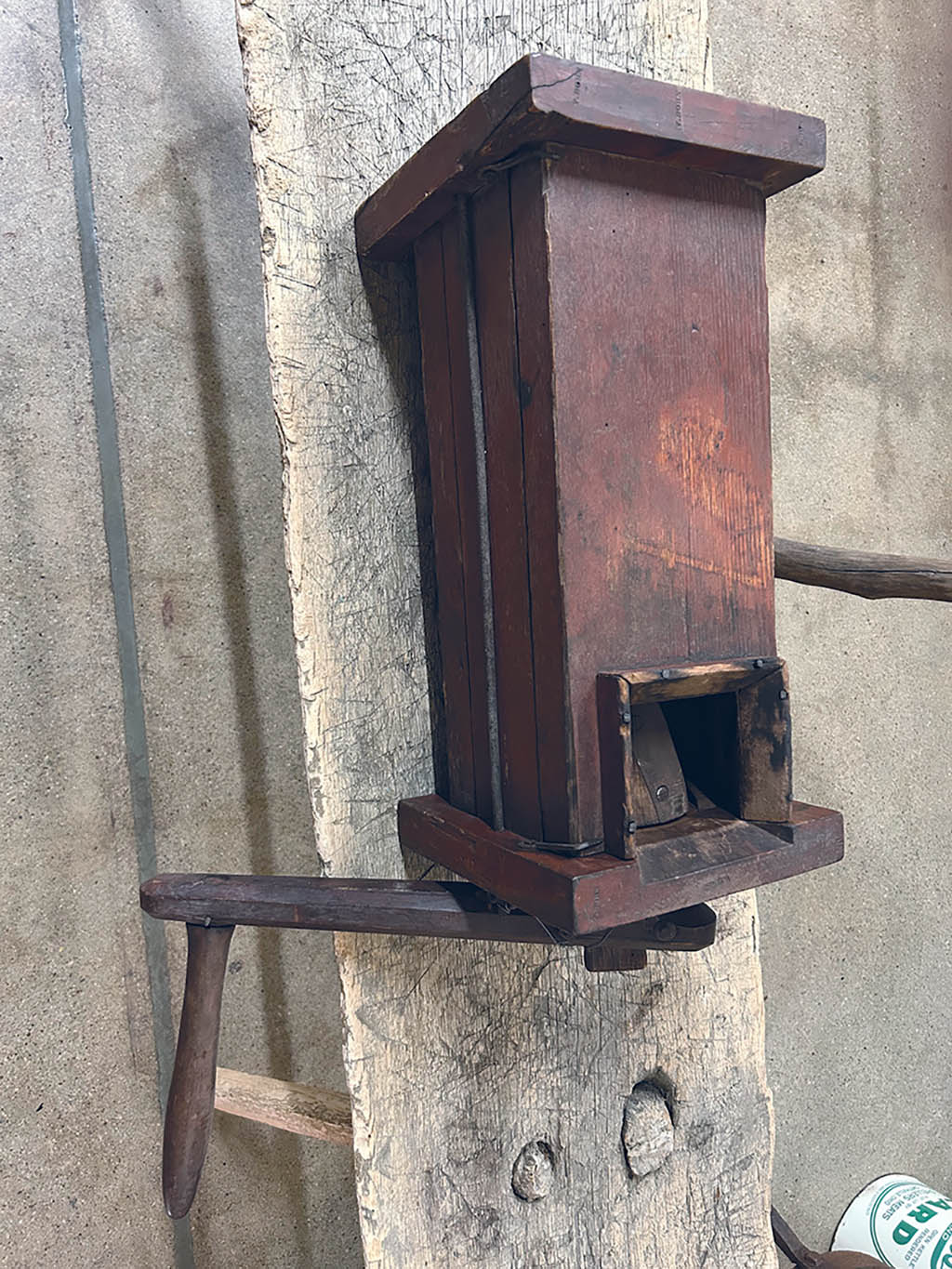
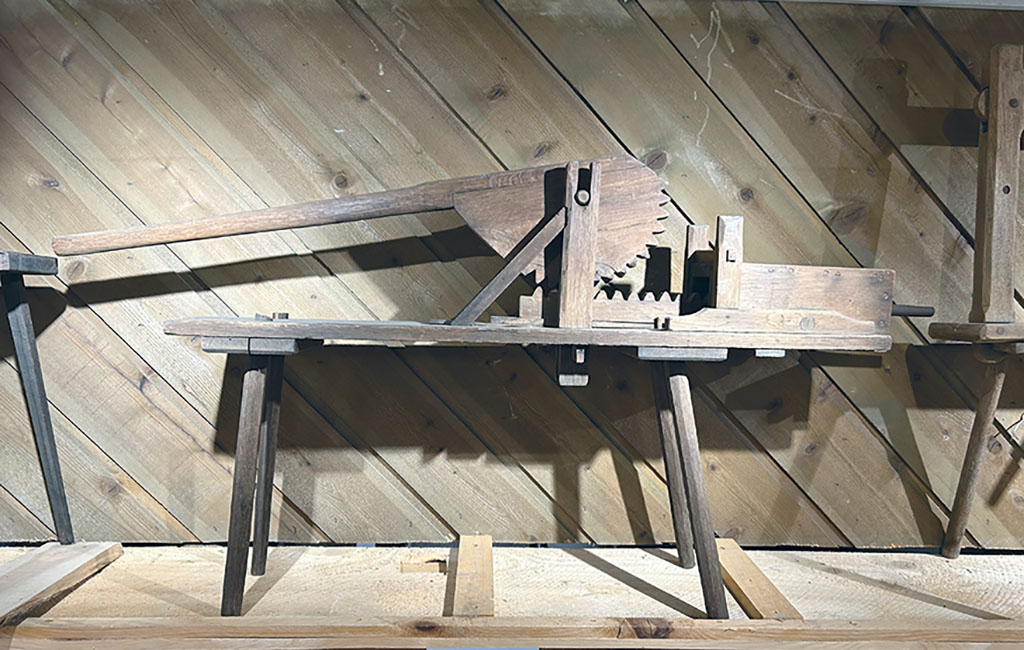
After all the choicest cuts of meat had been removed, the smaller, less desirable pieces of meat were taken. These would become sausage.
Such pieces would be fed into a hand-cranked sausage grinder. These were heavy, wood-cased grinders. The wooden or wrought iron crank was connected to a wooden roller within the case. That roller was studded with dozens of wrought iron pegs mounted in the wood so that they spiraled around the entire length of it. These pegs were also arranged so that they moved between sharp, hand-forged iron blades that lined the interior of the case. There was a hole in the top of the case to feed pieces of meat in, and a hole in the lower part of the opposite end where the ground meat was ejected. Pieces of meat were fed into the top of the case, and the handle was turned, propelling the meat along the series of blades that repeatedly sliced and diced it before sending it out the back of the case. Some meat grinders — known as “mom and pop” models — had a handle on either side, allowing for two people to perform the laborious work at the same time.
When enough sausage meat had been accumulated, it was placed in a bowl and a variety of seasonings and spices were blended into it. Like so many other products made by pioneers of the Ohio country, each family had its own closely guarded recipe for how sausage should be made — recipes that had come down through previous generations.
Once the sausage meat had been ground and seasoned, it was ready to be stuffed into the casing (intestine), which had been scraped clean and thoroughly washed.
How was this accomplished? By using a sausage stuffer. Sausage stuffers, which most farm families possessed, were used to squeeze the sausage meat into the casing through the application of pressure.
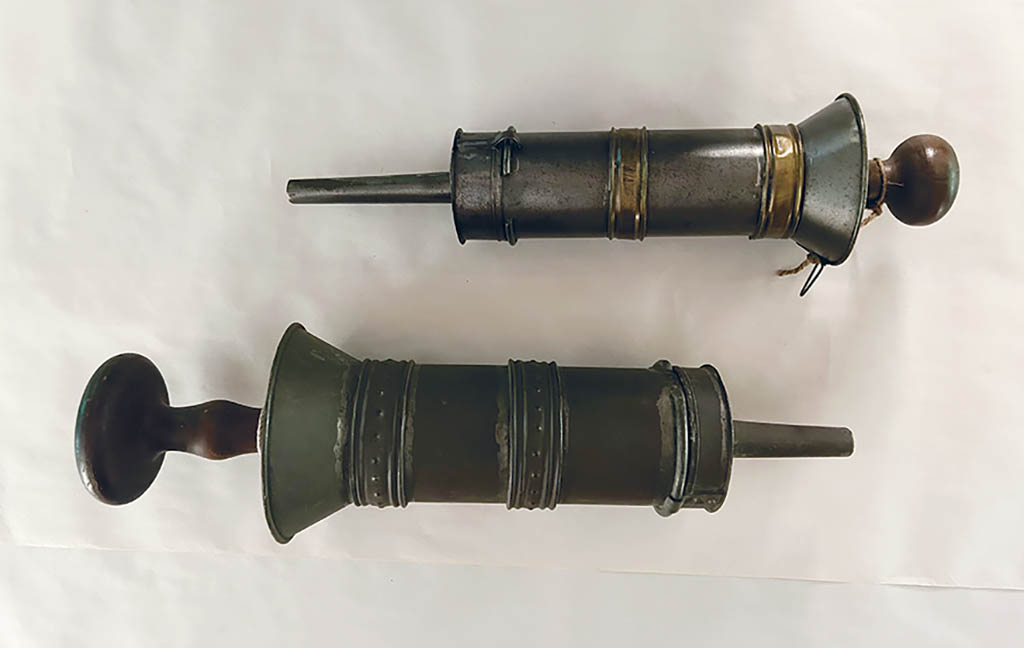
A sausage stuffer typically operated on one of three principles. The first was the lever-type stuffer in which the sausage meat was placed in a vertical wooden box, and a long lever attached to a plunger was used to push down on the sausage meat so that it squirted out through a tin tube and into the casing. A second type of sausage press utilized a vertical wooden screw with a crank handle to similarly apply pressure to the meat in the box. Still, a third kind used a horizontally mounted screw to transfer meat from the box into the casing via a tin tube. In addition to these large wooden contraptions, which were often several feet long and mounted on legs, there were cylindrical hand-held tin sausage presses (or guns) in which the meat was loaded into the tube and a wooden plunger was pushed into the large end, forcing the meat into the sausage casing.
If all of this sounds like a heck of a lot of work, it was. And there was even more to come …