


PITTSBURGH — Carl Sockaci runs his family’s 200-acre beef farm he grew up on in Fombell, Pennsylvania, and while business is good, it could certainly be better.
Sockaci would like to sell retail cuts of beef from his 50-60 head of cattle, but with limited federally-inspected meat processing options in western Pennsylvania, this market isn’t in the books.
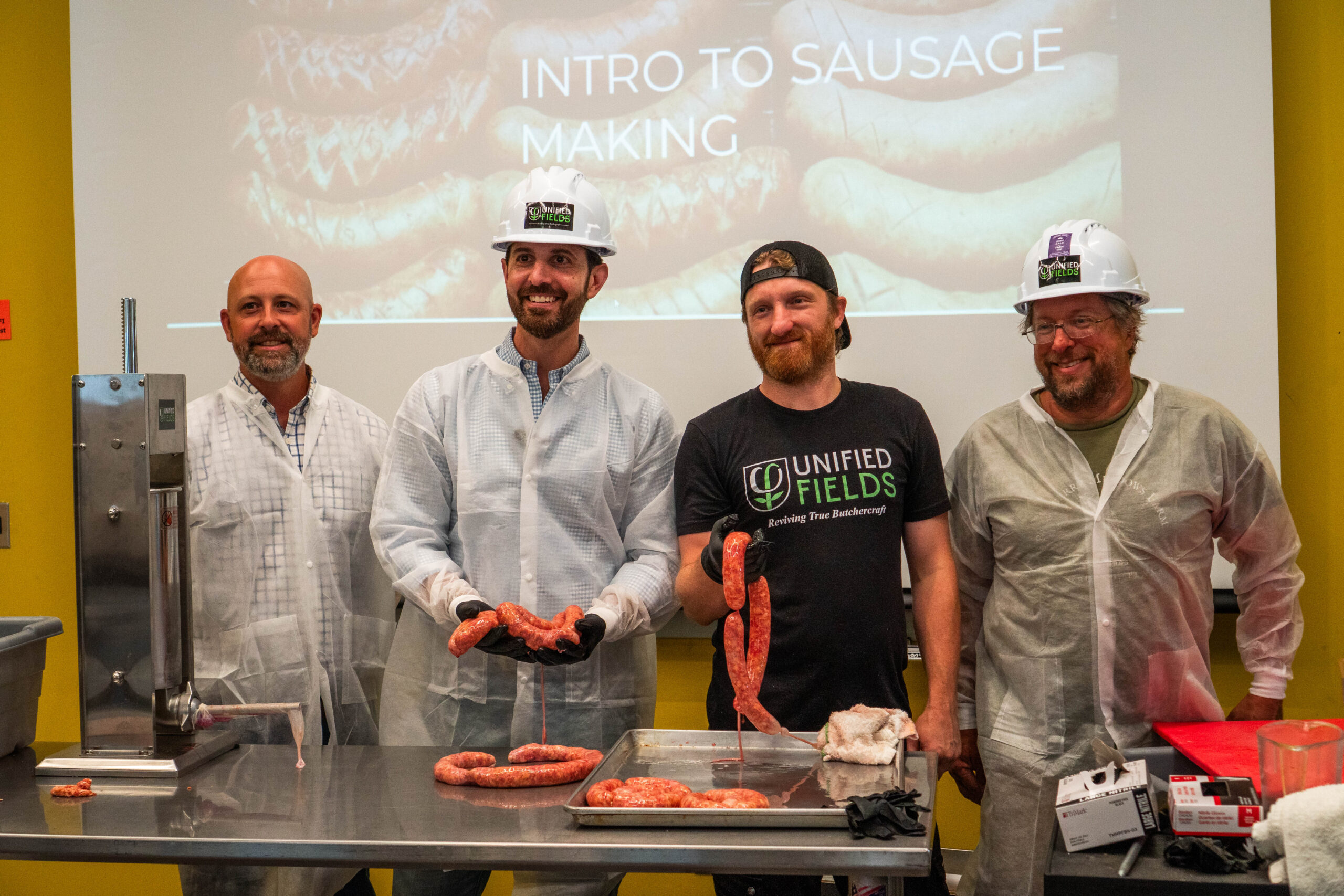
“One of the biggest things limiting is there’s not enough processors out there that can do double inspection,” Sockaci said during a sausage-making workshop at Community Kitchen Pittsburgh in Pittsburgh.
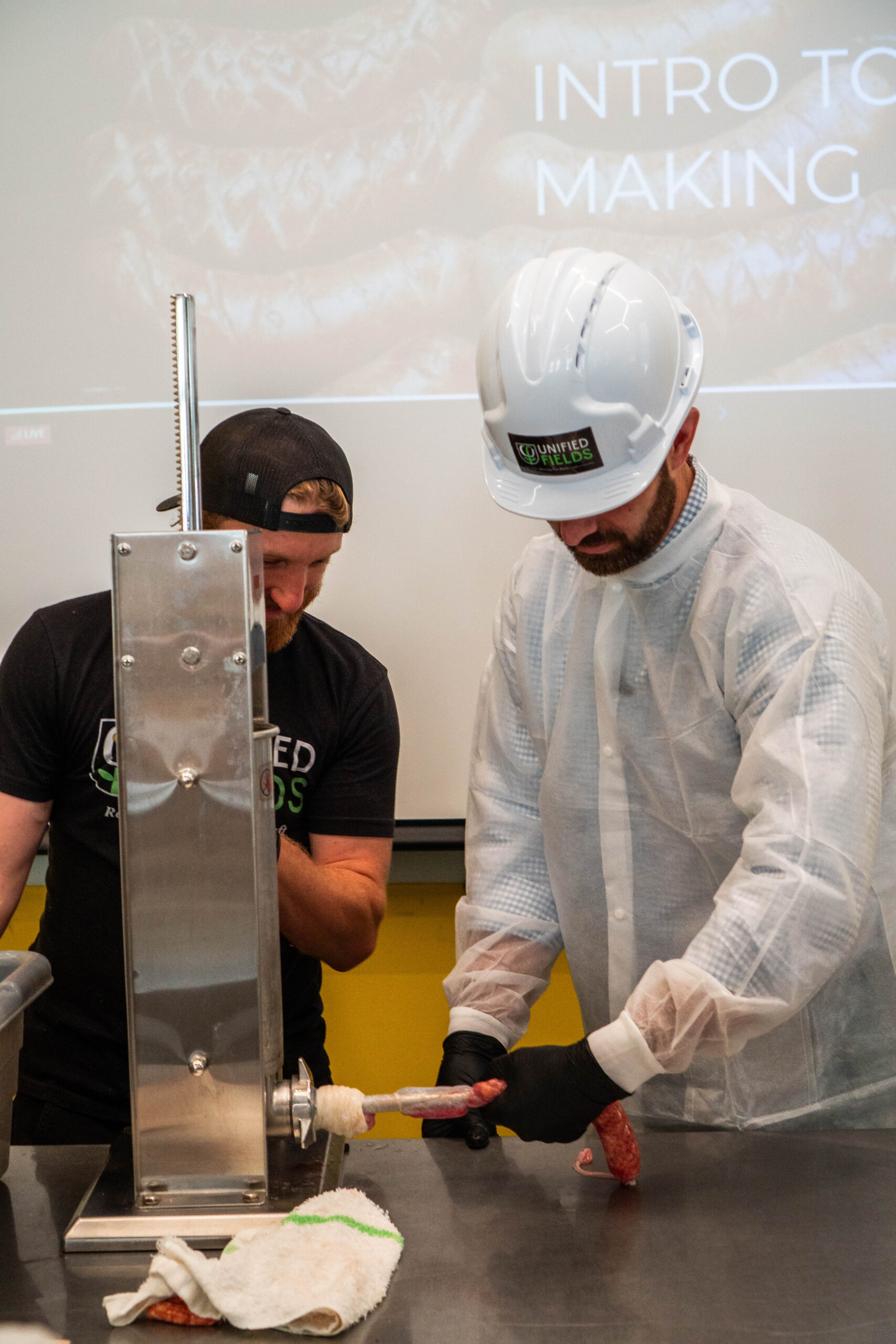
This workshop, hosted July 9 by butcher Ben Buchanan at Community Kitchen Pittsburgh, was also attended by U.S. Rep. Chris Deluzio, a Democrat representing Beaver County and parts of Allegheny County, who was on a weeklong agricultural tour across his district last week.
Deluzio heard from local farmers about the challenges they face with meat processing, including the high cost of butchering and a lack of processing capacity.
“We have more family-owned small businesses (in western Pennsylvania, but) they get treated much worse than those big multinationals, and so they’re not often represented well in Washington when things like the Farm Bill come up,” Deluzio said.
Problems within the industry
To sell meat by the cut, farmers need to get their animals processed at a U.S. Department of Agriculture-inspected facility, which requires a higher level of oversight than selling meat wholesale.
Sockaci says there’s only one USDA-inspected facility near him, and it’s over an hour away, but he has to book a year in advance.
“It limits you to what you can do,” he said. “I can’t retail cuts because I’m not going to book a year in advance for a product I haven’t sold yet.”
He adds that producers interested in installing their own USDA-inspected kill floor are unable to do so due to the high cost and regulatory red tape.
Greg Boulos, who attended the workshop, has also experienced some of these issues. He has operated his roughly 80-acre Blackberry Meadows Farm in Natrona Heights, Pennsylvania, since 2008, growing organic vegetables. In 2011, he started raising pigs; today, he raises roughly 200 head.
While he enjoys operating on a small scale, it isn’t without its challenges.
“Processing is a third of our annual operating costs,” he said, adding the closest USDA-inspected kill floor and butcher is roughly 40 minutes away.
High costs are impacting other aspects of the industry, too. Sockaci, who is also a vocational ag and tech ed teacher at Mohawk Area High School in Bessemer, Pennsylvania, says the younger generation has an interest in butchering, but the lack of training facilities makes it difficult to pursue.
“The cost alone to add a food processing or animal processing component to your vo-tech program would be astronomical,” he said. A lack of education has led to a shortage of qualified workers for local butchers.
Unified Fields
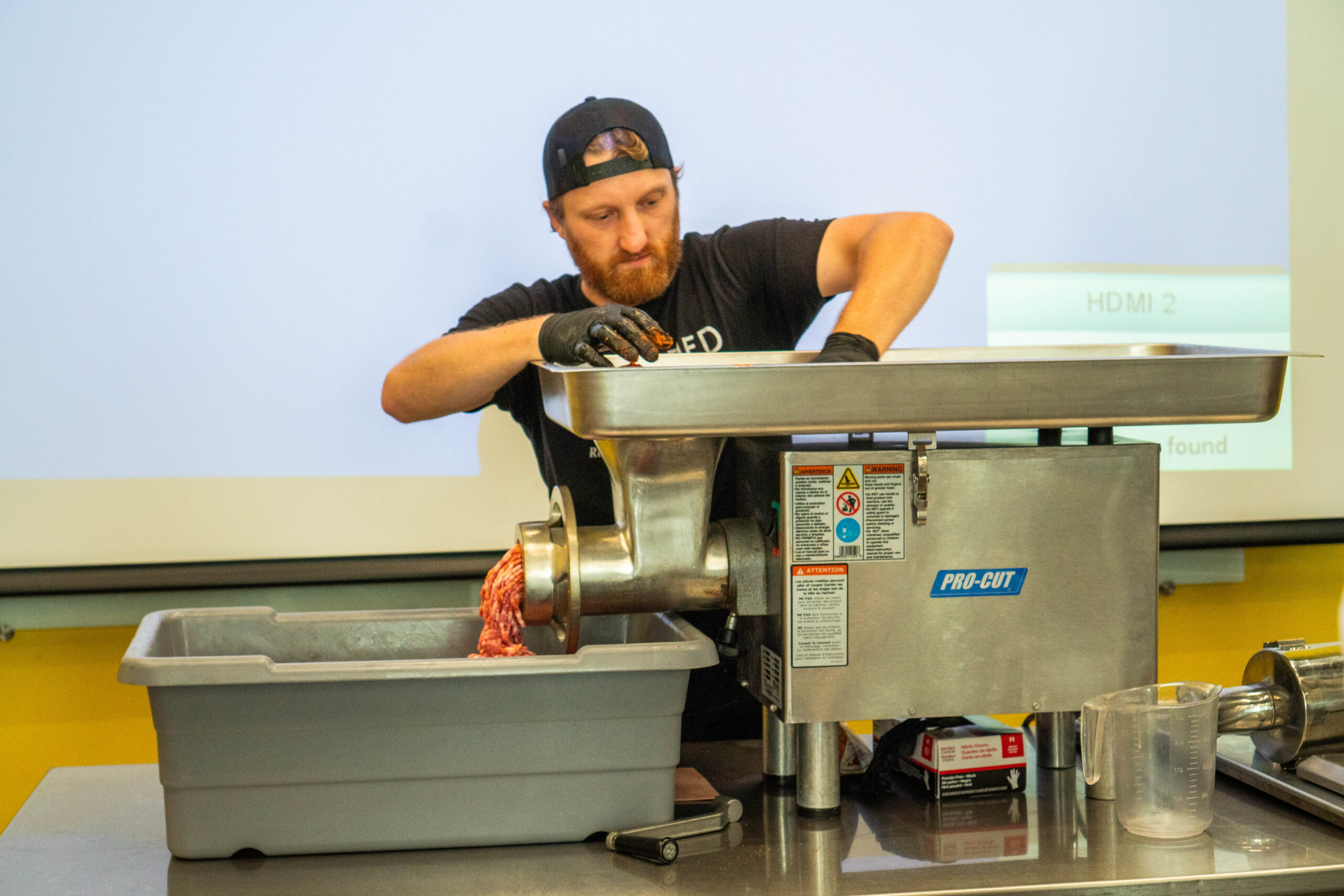
This is an issue Buchanan is trying to fix through his educational workshops at Community Kitchen Pittsburgh and a new apprenticeship program.
Buchanan is the owner of Unified Fields, a meat processing consulting and butcher training business. He also runs a custom mobile slaughter and processing unit.
Buchanan realized this critical industry was experiencing more than just labor shortages, but a skills gap. That’s when he formed a partnership between Unified Fields and Community Kitchen Pittsburgh in 2021 to teach a butchering program. Over time, what started as one program turned into several.
But Buchanan doesn’t plan on stopping there: He is currently working on an apprenticeship center that will have processing capabilities for farmers while also serving as a training center for butchery.
“(Processors) are trying as hard as they can to get out the best quality product they can, but their backs are against the wall with labor shortages,” he said.
He says the center will allow more butchers to enter the industry and farmers to expand their operations.
“If we can start churning out those plug-and-play butchers that all these folks need, then they can increase their capacity,” Buchanan said.
Boulos says “It would be a game-changer for regional farmers.”
On July 17, Deluzio introduced the Family Grocery and Farmer Relief Act, which would make it illegal for a major meatpacking conglomerate to control more than one major type of meat; imposes hard caps on the concentration of beef markets at the regional and national levels; forbids foreign leverage over the domestic meat market; directs the Federal Trade Commission to take action against discriminatory pricing practices in retail and wholesale meat markets; permits the Small Business Adminitration to provide finanical assistance, loan guarnatees and technical assistance to farmers’ cooperatives and small buisness concerns to aquire meatpacking facilities and creates penalties for corporations that fail to divest.
“Meatpacking monopolies are crushing hard-working small farmers, ranchers and business owners — and are jacking up food prices for all of us,” Deluzio said, in a statement about the bill. “In the richest country in the history of the world that likes our meat, we can’t let it become a luxury good. Let’s pass this bill to break up these monopolies and bring some relief to everyone they’re squeezing right now.”
During his farm tour last week, Deluzio also stopped at Straub Farm in Darlington Township and met with first-generation farmers Matt and Jessica Straub and toured Brunton Dairy, in Independence Township, a seventh-generation Beaver County dairy farm that sells its milk directly to consumers.
For more information, visit https://www.unifiedfields.net/ or https://www.ckpgh.org/.
Editor’s note: Updated on 7/17 to include details about the Family Grocery and Farmer Relief Act
(Liz Partsch can be reached at epartsch@farmanddairy.com or 330-337-3419.)





To a dummy like me, it’s pretty obvious what TPTB want to Happens– BIG PROCESSORS remain the “the Club” while Mom ‘n Pop operations cannot join the club due to high entry fees, time, paperwork, red-tape and the like.
In 2026–this is called “The American Way.”
Every industry is dominated by a very few.
Sad. Very sad.