



CECIL, Ohio — Along a quiet country road near an old cemetery where more neighbors rest below ground than live above, a once-overworked farm field is being given a second life.
Nestled just down the ridgeline from the Maumee River near Forder Bridge, the field was long devoted to growing corn and soybeans. Beneath the crops, drainage tiles funneled fertilizer-laced rainwater into Marie DeLarme Creek, then the Maumee River and eventually into Lake Erie, helping to fuel algal blooms that threaten drinking water, wildlife and recreation.
Now, the field is being reborn, not as farmland but as a functioning wetland. The restoration is led by the Ohio Department of Natural Resources in partnership with the Black Swamp Conservancy and funded through Gov. Mike DeWine’s H2Ohio initiative, a statewide effort to improve water quality and reduce nutrient pollution across the Lake Erie watershed.
“I don’t know that people appreciate the extent that northwest Ohio, Toledo, all the way to Fort Wayne, Indiana was a swamp,” said Rob Krain, executive director of the Conservancy, speaking to a Farm and Dairy reporter he met there along with Eric Saas, wetlands program manager with the Ohio Department of Natural Resources.
Today, waist-high cover crops shield the soil from erosion, but even now, early in its transformation, the field teems with life — sparrows dart overhead, insects flit among green stalks and flowers and small critters pinball through the undergrowth.
Among this revival, traces of a rich agricultural past remain. When the conservancy purchased the property, a weathered old barn with a grain weight station still stood, built from century-old hardwood logged from the very swamp they sought to restore. Carefully dismantled by a contractor, the lumber now awaits another turn as handcrafted furniture.
The barn isn’t the only thing being reclaimed. Across the surrounding landscape, a broader transformation is underway.
Draining the swamp
The field is the latest appendage of the Forest Woods Nature Preserve, which is owned and managed by the Black Swamp Conservancy. Krain said the organization owns about 600 acres in the area, including the deep woods bordering the field, which he called one of the best remaining examples of the Great Black Swamp that once covered much of northwest Ohio.
Over time, the conservancy has acquired surrounding farmland and steadily restored it to natural habitat. That work accelerated with the launch of H2Ohio in 2019.
“When we kicked off H2Ohio, we looked at how can we restore habitat in a way that promotes water quality,” Saas said.
The mission: restore wetlands that slow and filter runoff before it reaches major waterways.
The field near Forder Bridge, roughly 60% through the design phase, is a prime example of that work underway.
“We’ll be breaking ground out here in September,” Saas said. “Our construction phase will run through the fall, maybe into the winter. And then we’ll do our re-vegetation next spring.”
What will it look like when it’s done?
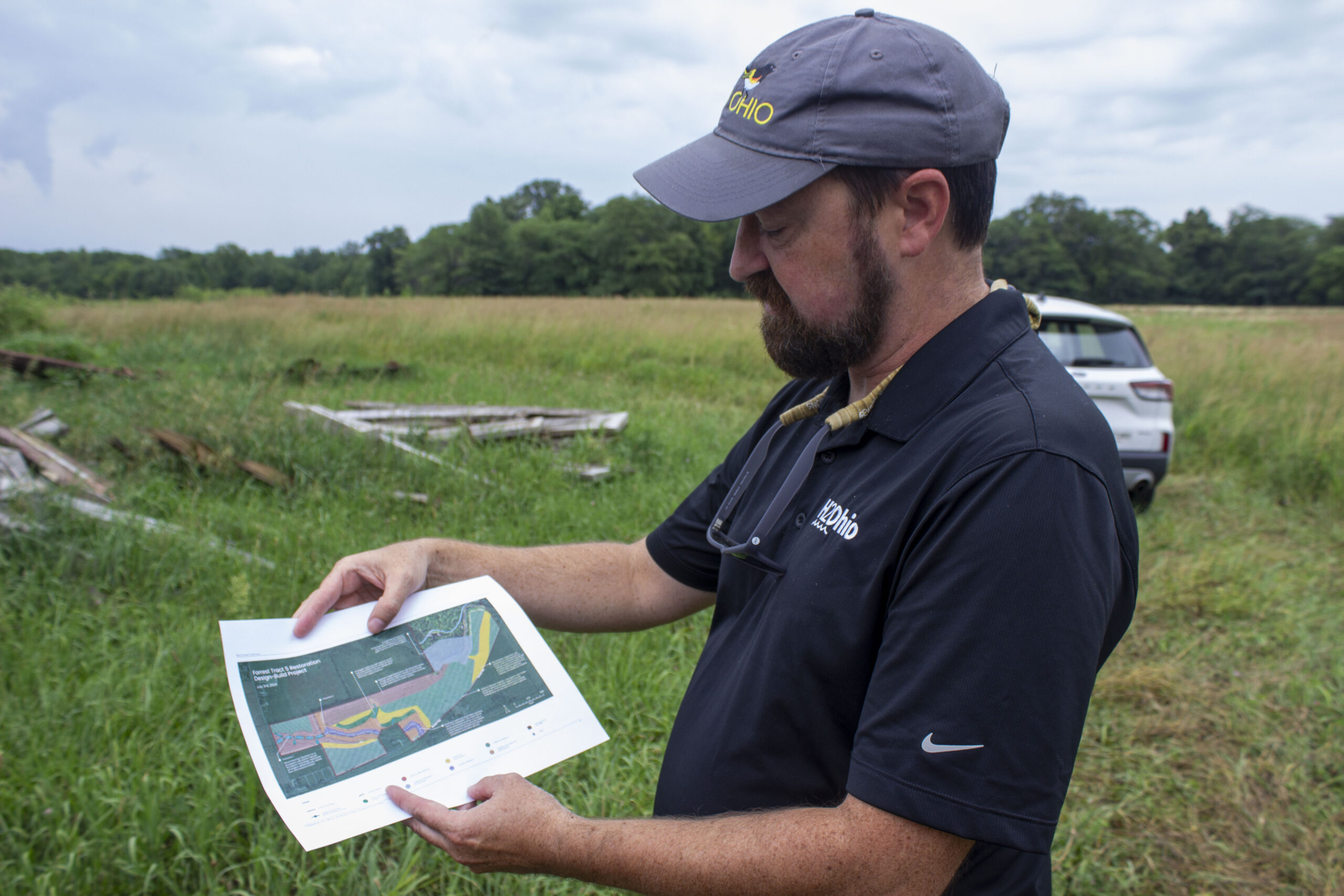
He held out a draft of the concept plan. On the map were winding flow paths, newly excavated floodplains and kidney-shaped wetland cells.
In traditional farmland drainage systems, water is funneled quickly through narrow, V-shaped channels engineered for moving water away rather than holding it back. The team is replacing them with wide floodplains that slow and spread water during heavy rains, which will soon be able to soak deluges and filter out pollutants.
The finished site will feature a range of wetland types to support both water quality and wildlife. Seasonal wetlands will be planted with deep-rooted native plants — the kind of stuff that likes its feet wet, as Saas puts it — to absorb excess nutrients. Wet meadows will bloom with wildflowers, supporting pollinators and birds, while forested wetlands will echo the dense woodlands that once dominated the region.
“If you come here in April, you are going to need muck boots,” Krain said. “And maybe earplugs for all the spring peepers.”
In northwest Ohio, he noted, wetlands were historically predominantly forested.
“It’s not the kind of marsh ecosystem most people think of when they think of wetlands,” he said, emphasizing that today, the region’s hydrology is heavily engineered.
“We think of this event where we cleared [the swamp] and drained it,” he said. “But the reality is, we continue to drain the swamp every single day.”
Measuring the impact
Meanwhile, a group of university scientists is working behind the scenes to determine whether restored wetlands are truly delivering the water-quality benefits the state hopes for. ODNR has contracted the Wetlands and Water Quality group within the Lake Erie and Aquatic Research Network (LEARN) to lead the H2Ohio Wetland Monitoring Program. Though funded by ODNR, the program operates independently and brings together about 30 researchers from six Ohio universities.
Lauren Kinsman-Costello, the program’s research lead, said the team studies wetland projects across the state to identify which designs and management strategies best reduce nutrient pollution.
In a recent interview, she described wetlands as “the kidneys of the landscape,” emphasizing their natural ability to slow and hold water, allowing biological and chemical processes to reduce nutrient loads before the water flows downstream.
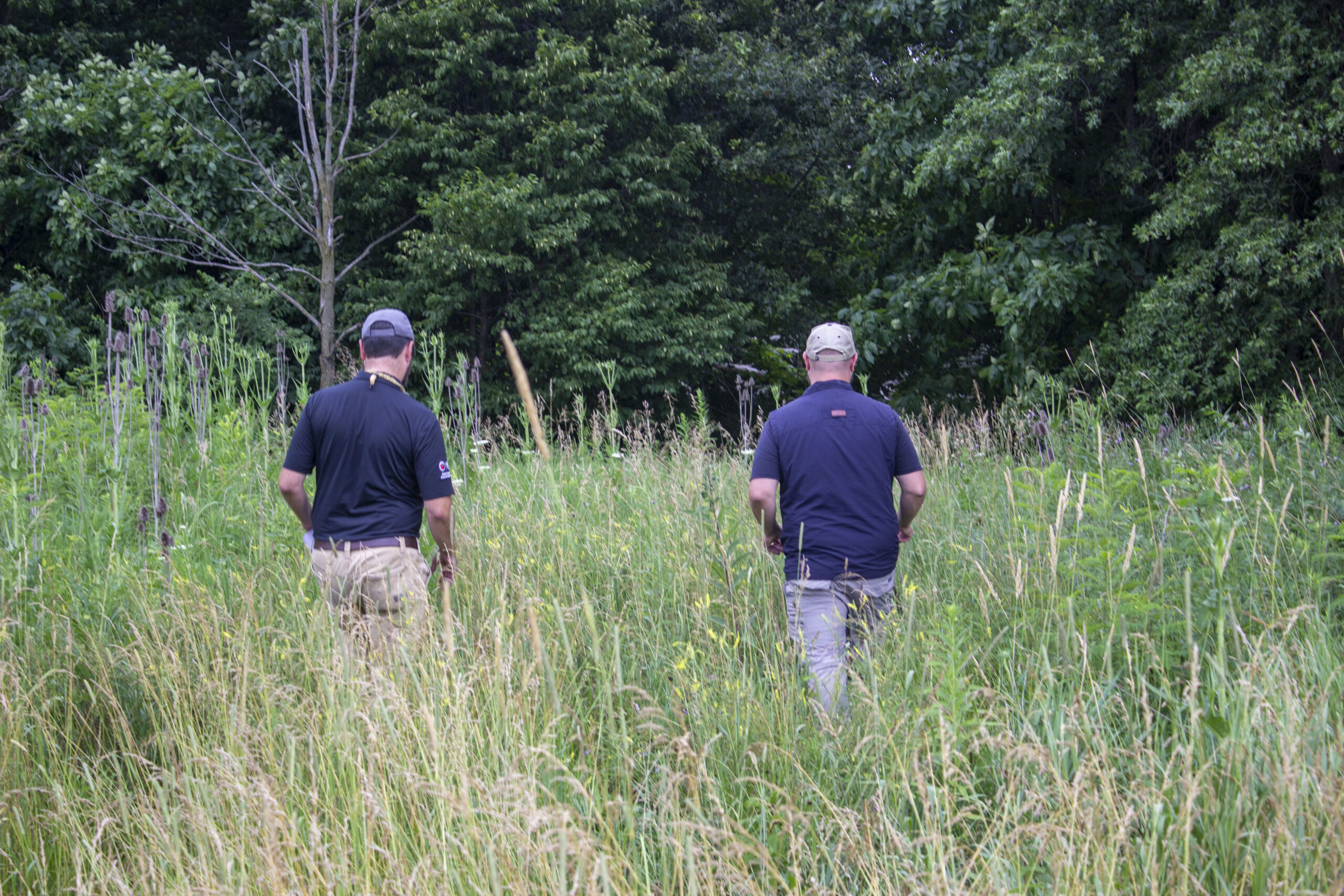
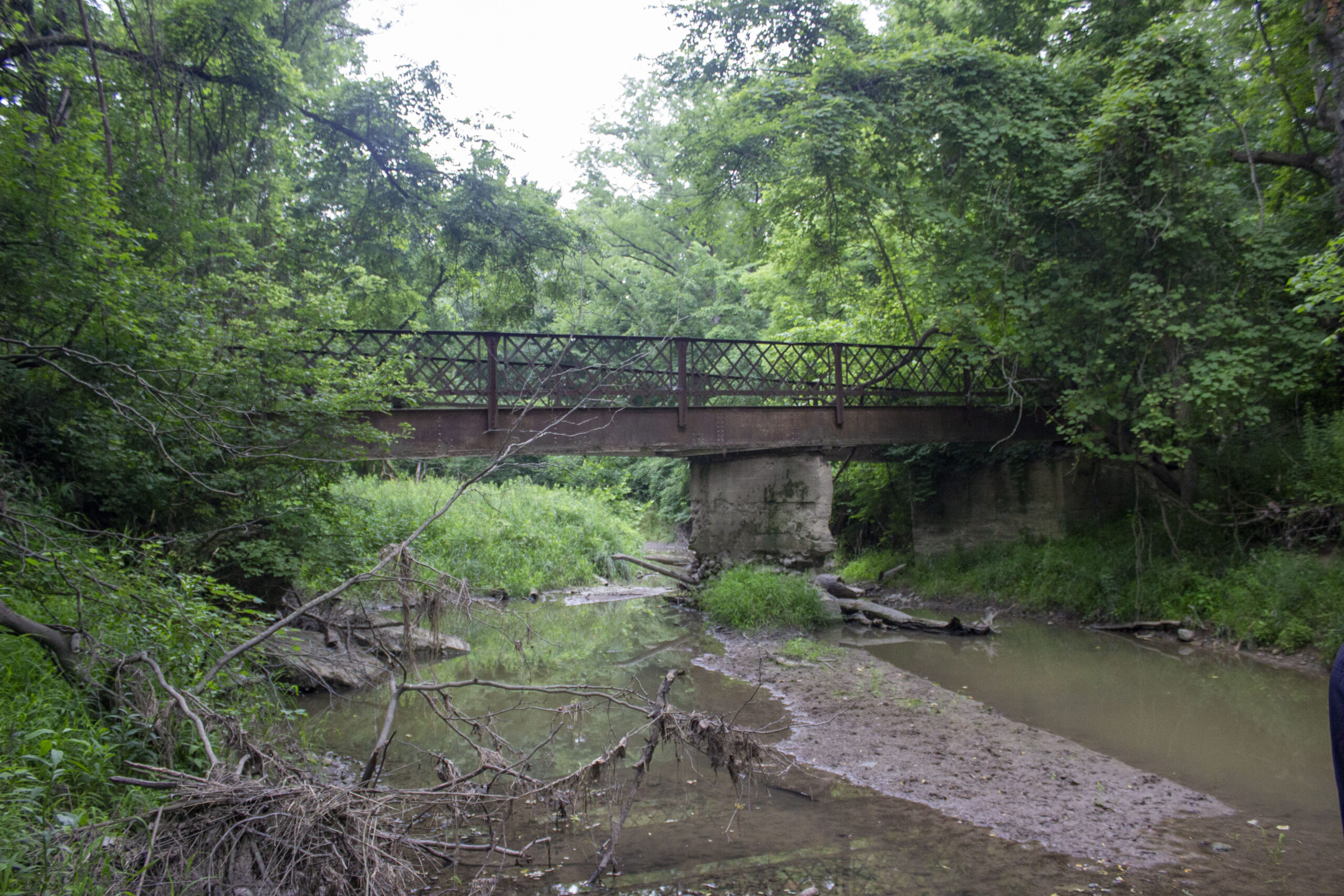
executive director of the Black Swamp Conservancy, walk toward the forest on their way to the shallow banks of
Marie DeLarme Creek. (Paul Rowley photo)
Kinsman-Costello also pointed to the challenges of collecting consistent data in a climate increasingly marked by unpredictable weather.
“Wetlands are so responsive to those year-to-year changes,” she said, explaining that a single year of data offers only a limited view of how wetlands function under typical conditions.
The team, she said, also hopes to use predictive modeling to forecast how wetlands might respond to extreme weather such as unusually wet years or severe droughts, which are expected to become more frequent as the climate changes.
“The weather’s not going to get any more predictable,” Kinsman-Costello said. “We’re going to have to build those models and continue collecting data to fully understand how best to manage the wetlands from one year to the next.”
Treatment train
Krain steered a Kubota UTV down a bumpy trail through the grounds of the Forder Bridge Floodplain Reconnection Project, wetlands restored in 2020 just up the road from the field now poised for its own restoration. He passed a LEARN monitoring station and stopped beside a wetland pool carved into what was once a drainage ditch. Here, he explained, the system is designed to filter the water before it ever reaches the Maumee River.
The Black Swamp Conservancy transformed the ditch into part of what’s known as a “treatment train,” a sequence of stream segments and wetland pools working in tandem. There are five in this stretch.
“You’ll have 80 feet of stream, and then you’ll hit a wetland pool,” Krain said. “And then that wetland pool outlets into another stretch of stream, another wetland pool, another stretch of stream, another wetland pool.”
The idea is simple: runoff from nearby farms enters the first wetland and begins to slow. Each stop along the way gradually removes more of the pollutants the water carries.
“So by the time it works its way through,” Krain said, “it’s going to hit the Maumee River on the other side of the woods and it’s going to come out clean.”
Legislative letdown
For all its promise, H2Ohio just had its budget cut by the state legislature, from $270 million in the last biennium to $165 million, a nearly 40% reduction. ODNR took a big hit, with its share of funding for implementing work for the program slashed by more than half.
“To be frank, we were very disappointed with the reduction in funding,” Krain said. “The work that’s being accomplished through H2Ohio is really critical to the future of our state, of the Maumee River and the Sandusky River and Lake Erie… It’s going to take a sustained effort to really fix the serious water quality issues and the nutrient loading issues that we have in this region.”
The budget cut won’t stop projects already in motion. After press time on July 15, ODNR celebrated the completion of a new H2Ohio wetland restoration at Moxley Wildlife Area with a ribbon-cutting ceremony in Erie County. But the loss in funding will likely slow down the pace and scope of future restoration efforts.
“We’re grateful for the funding that does exist,” Krain said. “We have other projects in the hopper, and we’re going to keep working.”
In short, they’ll do what they can with what they’ve got.
Saas, for his part, said the legislature’s current investment in ODNR’s H2Ohio work is still substantial, one that the agency is grateful to have.
“I also know what we could do with more funding,” he said.
That funding, however, doesn’t account for everything. Long-term maintenance is a major part of keeping restored wetlands healthy and functioning. ODNR covers a brief post-construction period for invasive species treatment, but the responsibility eventually shifts to the long-term landowner.
“That’s where Rob and his team take over,” Saas said.
Krain said restoring habitat from bare ground almost always draws in non-native species, and controlling them takes ongoing effort. The conservancy, he said, is ready to take on those long-term stewardship costs and manage the land. That job falls to a small but determined crew. The conservancy has one full-time staffer dedicated to preserve management, backed by an AmeriCorps service member. This summer, they were joined by a seven-person college field crew.
But even that effort faces financial headwinds. Federal budget cuts have hit AmeriCorps hard across the country, including in Ohio, leading to some program closures and staff losses.
Saas said ODNR supplements state funding with support from partners such as Intel and regional energy companies, relationships that expand the H2Ohio’s program’s reach and help guard against future funding lapses, though only so much.
“We’re trying to make sure that we’re maximizing every opportunity that we have,” Saas said.




