





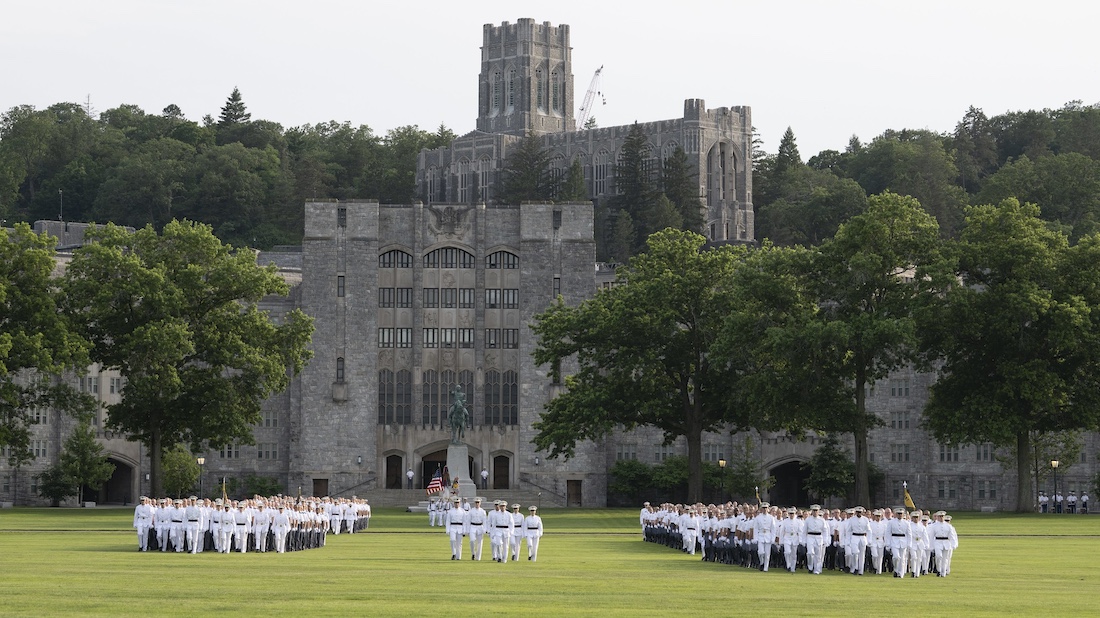
WEST POINT, N.Y. — Over 1,200 new cadets came out like waves of white and gray onto the green field on June 30 at West Point, New York. With upperclassmen leading the way, the U. S. Military Academy class of 2029 marched together for the first time to recite the cadet oath in front of family and friends.
Just hours ago, on this June day, they were typical teenagers, feeling on top of the world. Most had graduated from high school as honored scholars and athletes, celebrated in their families and hometowns. Some had already served in the military, and some had attended the military prep school.
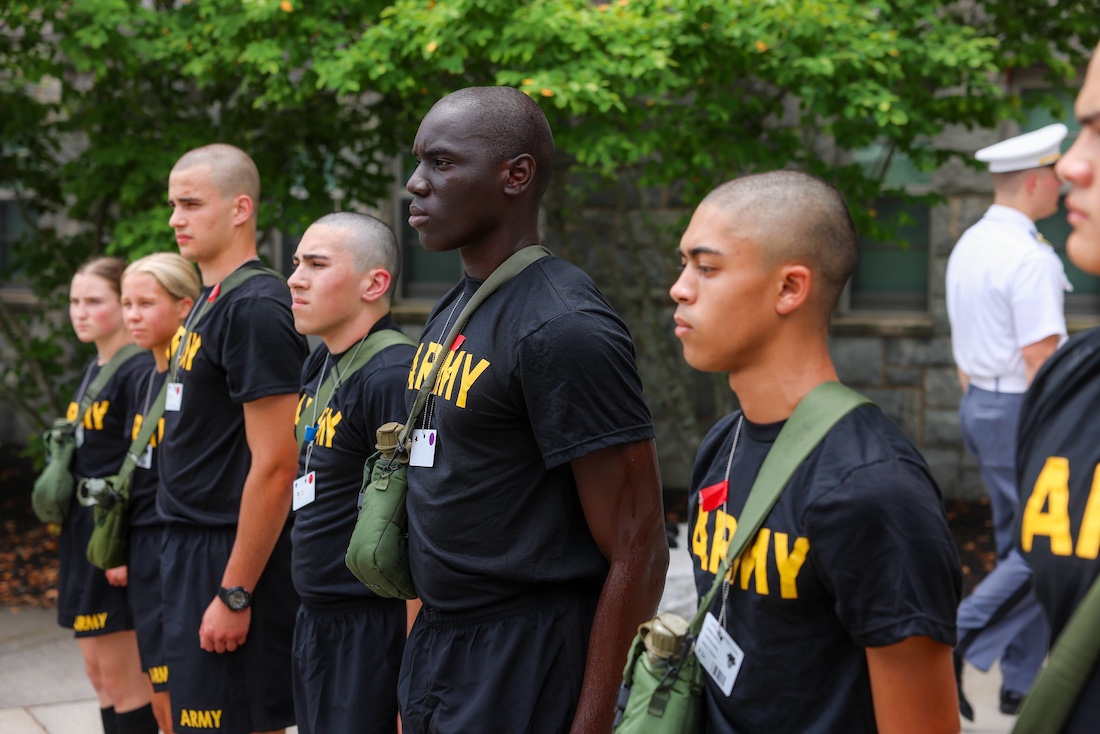
Now, all with the same white shirts and gray pants, young men with close-cut haircuts and young women with their hair pulled up tight, are barely distinguishable from one another — even the parents in the stands had great trouble trying to find their son or daughter.
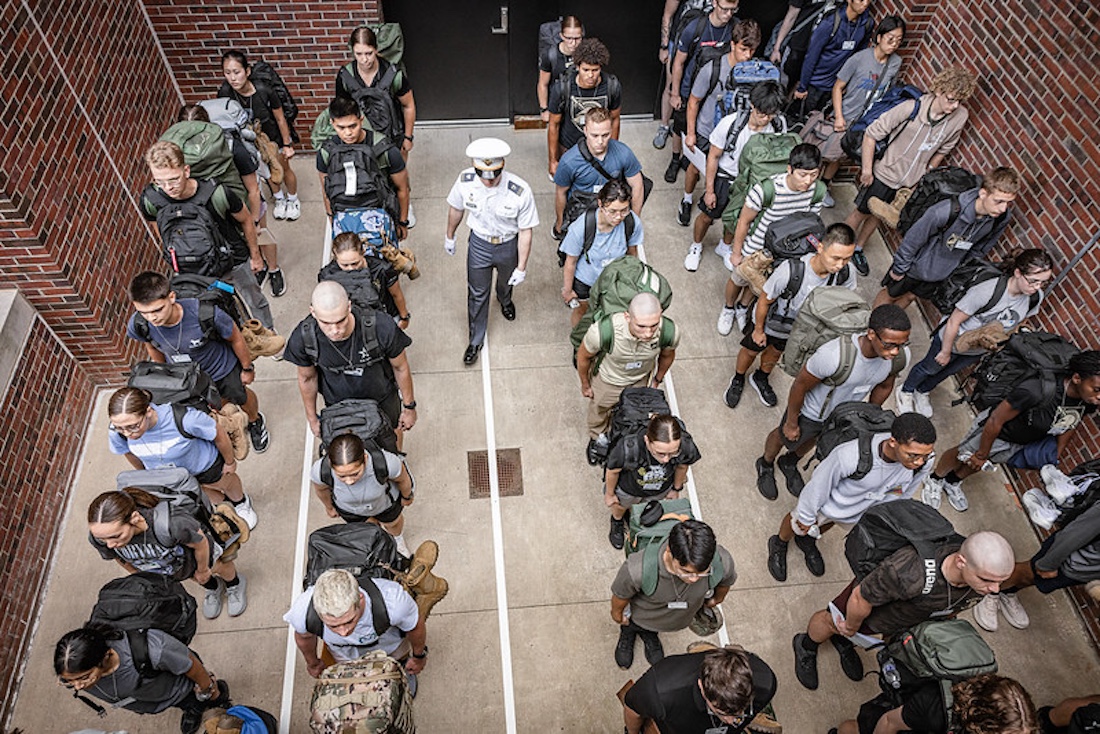
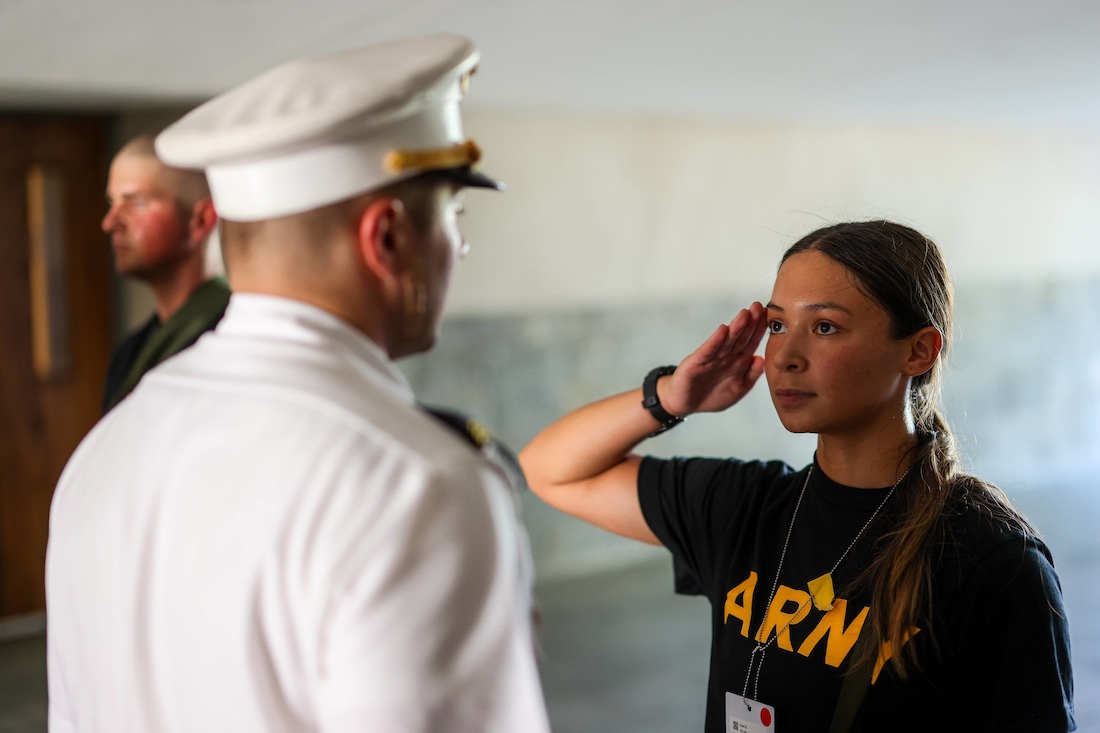
The new cadets looked exhausted and overwhelmed. While most knew what to expect on Reception Day, their experience so far was like being “beamed” into another world. Buzz haircuts, being hassled relentlessly, rushed from the medical stations to equipment issue to physical testing to learning how to salute … it all became a blur. They struggled to follow shouted orders and move fast enough while still trying to keep some composure. The heat and humidity drained them further.
These new cadets, from every state in the United States and 14 other countries, had just shared the rigors of the first day of what would be a very difficult year. They will be pushed past their believed limits of physical and mental capacities, then learn it is possible to go beyond that.
All four years, even the summers, will be very demanding, challenging in physical fitness and skills, academics, sports, leadership and personal growth. There will be no skipping classes, “free time” or fraternity parties. After graduation, there will be a required five years of military service with three more years in the reserves.
Why do they subject themselves to these difficulties when it would be easier and definitely more pleasant to attend any other college? The answer to that question is as varied as the individuals standing in the hot sun.
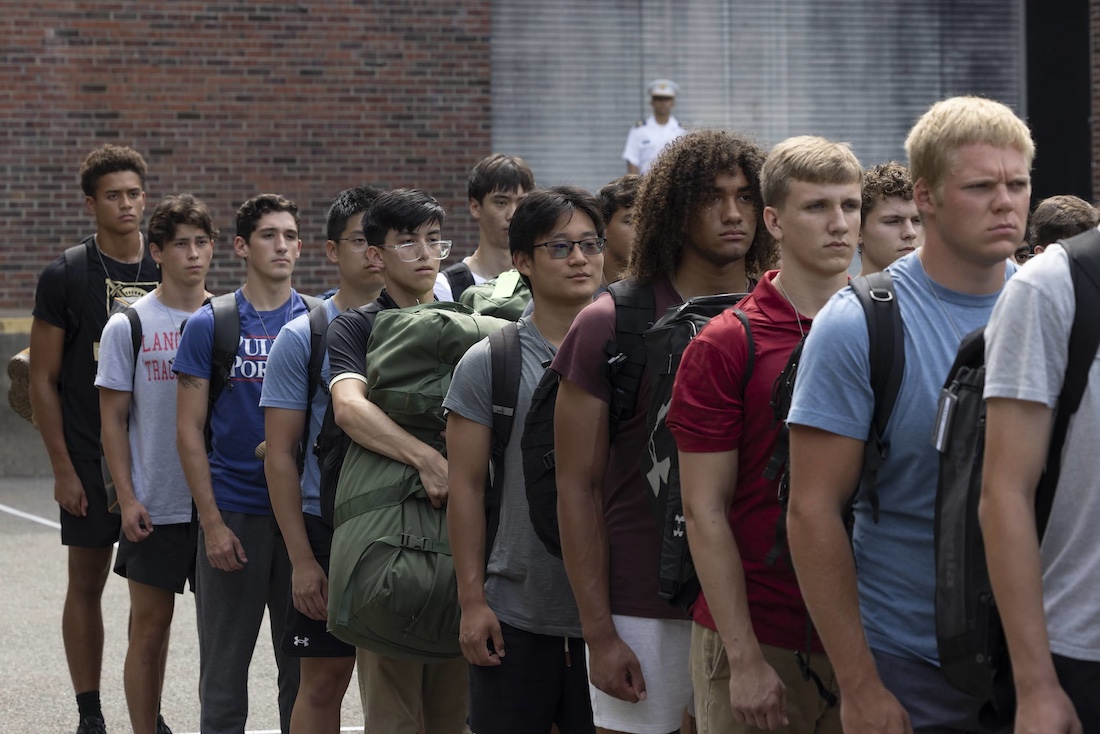
From a distance, they appeared very similar with the haircuts and uniforms, but a closer look would reveal young men and women, different nationalities, tall and short, lean and “football physique.” What could not be seen beyond the varied physical appearance was that each had their own reasons, personality, goals and life story.
Cal Tsuneyoshi, of Streitcoom, Washington, on a high school trip to the Korean Demilitarized Zone between North and South Korea, saw U.S. soldiers with Republic of Korea Armed Forces and decided to join the U.S. military. His father, Tad, who was a Vietnam draftee, encouraged him to consider West Point because of its great reputation.
Leilani Ariana Ramos, of Pennsylvania, wanted to take advantage of the highly rated college education, as well as benefit from future friendships. To reach her goals, she had already invested an extra year by attending the United States Military Academy Preparatory School. During processing, her family found themselves waiting next to a friend of her father, who was there with his candidate daughter. The two men graduated from West Point in 2003 and went to Ranger school together, but had not seen each other in 15 years.
Aric Hunter came from a rural area of New Hampshire, where he worked on a dairy farm. He, too, attended the USMA prep school because he wanted to achieve his life goal of attending West Point, which he was encouraged to do by his father, an Army veteran, and his mother, a school principal.
Klayton Allen Simmons, of Illinois, was looking for adventure and a military career, so West Point was the place for him.
Many of the candidates echoed Dillon Watt, of Texas, who’s there “to play basketball but also to become a good leader and have a great education.” A common theme was to challenge themselves.
Perhaps some were following the advice of George Washington, “If we desire peace, we must be ready for war.” David Sargent, of Washington state, was there to “serve our country in the highest capacity,” following his father’s and grandfather’s example of serving in the military.
Patriotic duty, adventure, education opportunity, challenge … Whatever reasons and stories brought the young men and women to West Point, they now stood tired, feeling alone in a huge crowd, concentrating on the moment, just trying to finish that day. The quarterback, the scholar, from the city or the suburbs, the well-to-do or the youth from poverty: All were equal.
Now, they would face an arduous six weeks of Army basic training; tackle the same obstacles as a team while learning skills and embracing values, not just for the military but for a lifetime. If they stay until August, strict academics will be added to the demands on their time and efforts.
Very soon, they will find out how they fit into a squad for the next six weeks, and later a company, the Corps of Cadets and then the Army. Together, they will conquer the “beast” — the nickname for basic training — and get through the next 47 months to join the “long gray line” of graduates. It’s not an easy journey, but they are ready to “give their all.”
The new cadets repeated the cadet oath, in what looked like a blanket of white uniforms. Really, it was like a mosaic with a multitude of tiles; individuals, each with their own unique story, goals, reasons, strengths and weaknesses. Together, they were a picture of future Army officers, and maybe company CEOs, parents, model citizens, college professors and presidents, legislators, world leaders — so many possibilities.
Col. Rance Lee, director of admissions, noted in a press release, “As we celebrate the Army’s 250th birthday, the Class of 2029 stands as a living tribute to the enduring call to serve. This patriotic group of young men and women left the comfort and safety of civilian life to devote themselves to becoming guardians of duty, honor, country and our United States Constitution.”
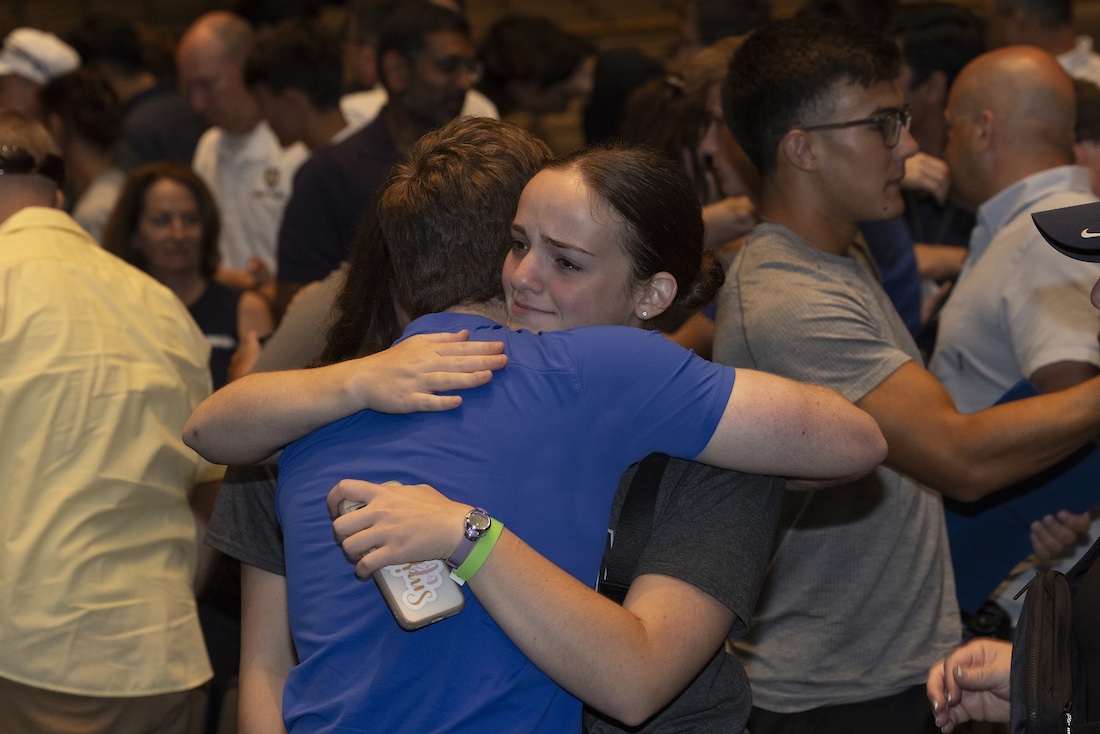
Once all of the new cadets had marched into the cavernous hall, the huge doors slammed shut, and for a few minutes, there was a stillness.
Parents had conflicting emotions. Their strongest instinct had been, for the entire life of the son or daughter, to nurture and protect them. They watched, many with tears, as their children left them to face what everyone knew would probably be the most difficult time of their lives. There was also great pride that their child had volunteered to take the challenging road, and not the easiest.
All the stories of the new cadets can’t be known, but it is undeniable that they are willing to sacrifice many comforts and put great effort into the next 47 months. Civilians just hours ago, they were already were transformed into apprentice soldiers.
Thousands are also beginning their time at the Naval, Coast Guard, Merchant Marine and Air Force Academies. In four years, they will become well-educated, well-skilled leaders in the military. After military careers, they could become legislators and the leaders of companies, agencies and colleges. The graduates will be role models for upcoming generations with high standards of character and patriotism. If he could know, George Washington certainly would be proud of what has been accomplished since 1802, when he promoted the first military academy for the United States.
About West Point
The U. S. Military Academy at West Point is a four-year, co-educational, federal service academy located 50 miles north of New York City. It was founded in 1802 as America’s first college of engineering and continues today as the world’s premier leader-development institution, consistently ranked among the top colleges in the country. Its mission is to build, educate, train and inspire the Corps of Cadets to be commissioned leaders of character committed to the Army values and ready for a lifetime of service to the Army and nation. For more information, go to www.westpoint.edu.




